Brazil’s Final 26 at the Museum of Tomorrow: What 18 May Reveal Means for the Tournament
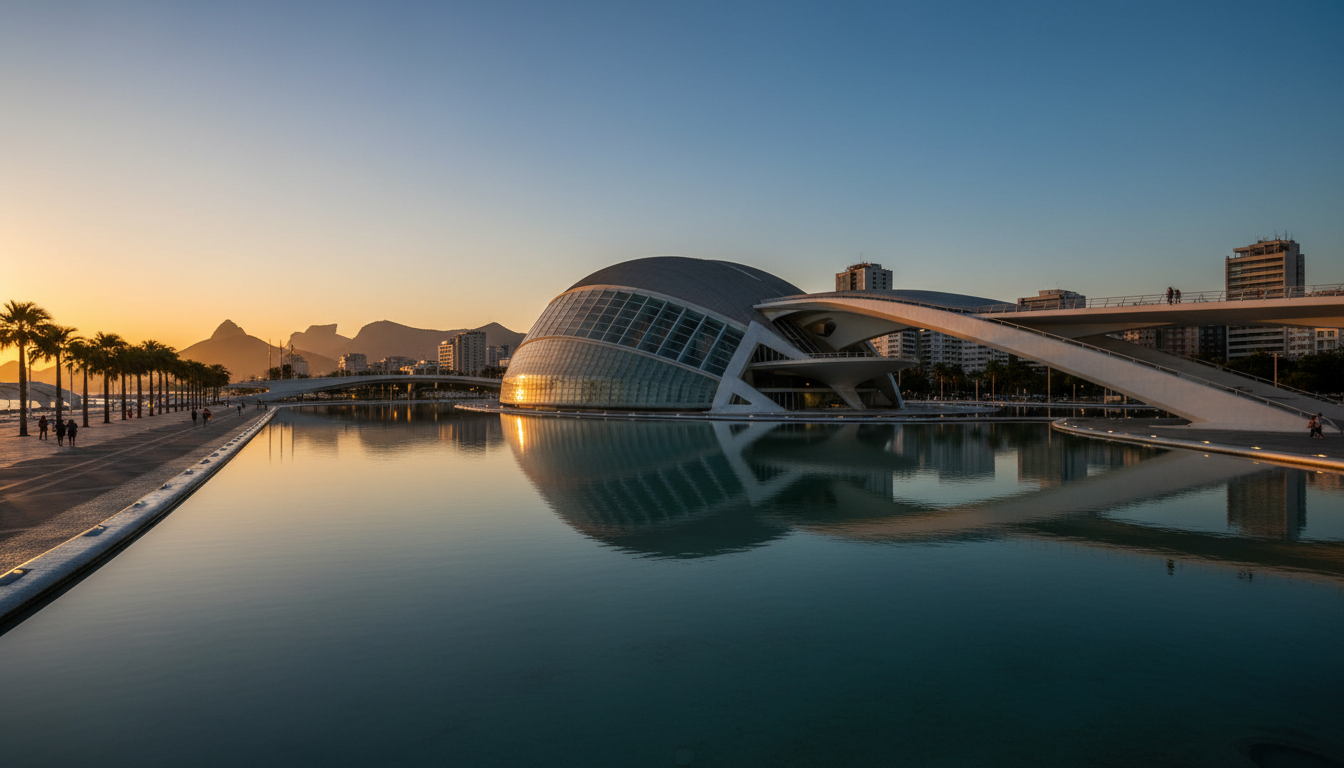
Carlo Ancelotti will reveal Brazil’s final 26-man World Cup squad on Monday 18 May at 17:00 local time at Rio de Janeiro’s Museum of Tomorrow. The location is deliberate. The selection is the most-watched in a generation. Here is what to look for.
The Symbolic Stage: A New Tomorrow for Brazil
The choice of the Museum of Tomorrow in Rio de Janeiro as the venue for Brazil’s final World Cup squad announcement is more than a mere logistical decision; it is a profound symbolic statement. This 15,000 m² science museum, which opened in 2015, stands as an architectural marvel dedicated to exploring the future of humanity and our planet. For Brazilian football, still seeking to emerge from the shadow of its last World Cup triumph in 2002, the venue encapsulates a desire to look forward, to innovate, and to chart a new course for the nation’s most cherished sporting institution. Under Carlo Ancelotti, the first foreign Brazil coach since 1965, the team is already in uncharted territory, and this announcement will solidify the foundation of his unique tenure.
Ancelotti’s squad will be meticulously cut from the 55-man provisional list submitted to FIFA on 11 May. This process, spanning just over a week, provides a critical window for final assessments, particularly concerning player fitness and tactical integration. The pressure on Ancelotti is immense. Brazil enters the tournament with outright odds around +800, positioning them among the favorites but not as an unassailable force. This valuation reflects both their historical pedigree and the competitive landscape of modern international football. The weight of expectation, amplified by over two decades without lifting the coveted trophy, means every selection will be scrutinized not just by a nation, but by global analysts and betting markets.
The announcement date itself, 18 May, places Brazil ahead of FIFA’s official deadline of 1 June for final squad submissions. This proactive approach by Ancelotti could be interpreted in several ways: a desire to provide clarity for his chosen players, an early start to team cohesion, or a strategic move to control the narrative surrounding his selections well in advance of the World Cup’s opening match on 11 June. Regardless of the underlying motivation, the choice of the Museum of Tomorrow underscores a deliberate attempt to project an image of forward-thinking leadership and a clear vision for Brazil’s campaign in the United States, Canada, and Mexico.
Neymar Jr.: The High-Stakes Gamble
Perhaps no name on the provisional 55-man list carries more intrigue and uncertainty than Neymar Jr. His inclusion on the preliminary roster was confirmed, yet his place in the final 26 remains a significant point of conjecture. The primary concern revolves around his limited recent international football since suffering an ACL injury in October 2023. This extended period of absence from competitive national team duty presents Ancelotti with one of his most challenging decisions.
Neymar’s talent is undeniable, a generational player capable of unlocking defenses and influencing games like few others. However, the analytical lens applied to squad selection in a major tournament prioritizes current fitness, match sharpness, and tactical suitability over reputation alone. Ancelotti must weigh the potential upside of a fully fit and firing Neymar against the risk of carrying a player who may not be at peak physical condition or able to withstand the rigors of a demanding World Cup schedule. The data surrounding player performance post-ACL recovery suggests a nuanced return, often requiring time to regain explosive power and agility.
The situation is further highlighted by the confirmed absence of Estêvão Willian from the provisional list due to injury. This indicates Ancelotti’s firm stance on player fitness as a prerequisite for even preliminary consideration. If a promising talent like Willian is overlooked due to injury, it sets a precedent that could logically extend to Neymar, despite his unparalleled experience and stature. The betting markets will be acutely sensitive to Neymar’s inclusion or omission. His presence in the final squad would likely see a marginal tightening of Brazil’s outright odds, reflecting increased offensive potential, while his absence might lead to a slight drift, depending on who steps into the creative void. Ancelotti’s decision on Neymar will be a defining moment for this squad, signaling his philosophy on balancing star power with pragmatic readiness.
Navigating Confirmed Absences: Rodrygo and Militão’s Impact
While the focus often gravitates towards who makes the cut, the confirmed absences of key players due to injury significantly shape the final squad composition and tactical outlook. Brazil will be without Rodrygo, sidelined by an ACL and meniscus injury, and Eder Militão, who underwent hamstring surgery. These are not minor setbacks; they represent substantial losses in critical areas of the pitch, necessitating strategic adjustments from Ancelotti.
Rodrygo’s absence removes a dynamic, versatile attacking option who could operate across the front line, providing pace, dribbling ability, and a keen eye for goal. His capacity to link play and create opportunities would have been invaluable, particularly in tight matches against organized defenses. Ancelotti will now need to rely more heavily on other wide forwards and attacking midfielders from his provisional list, potentially altering the team’s attacking profile. This could mean a greater emphasis on direct wing play, or conversely, a more central creative hub to compensate for the loss of Rodrygo’s individual brilliance out wide. The depth of Brazil’s attacking talent is considerable, but Rodrygo’s specific attributes are not easily replicated.
Eder Militão’s injury creates a void in the heart of Brazil’s defense. As a central defender of proven quality at the highest club level, his absence will test the depth of Ancelotti’s options at center-back. Militão brings a combination of aerial prowess, defensive anticipation, and comfort on the ball that is crucial for a team expected to dominate possession and play out from the back. His recovery timeline from hamstring surgery means he will not be fit for the tournament. Ancelotti will need to identify two or three reliable central defenders from the remaining provisional list to form a robust partnership, potentially elevating players who might have been considered rotation options. The defensive solidity of Brazil, a cornerstone for any World Cup hopeful, will be under immediate scrutiny, and the chosen replacements will bear significant responsibility.
These confirmed injuries underscore the brutal reality of tournament football preparation. They force Ancelotti to pivot, to trust the depth of the Brazilian talent pool, and to potentially accelerate the integration of less experienced players into crucial roles. The decisions made to fill these gaps will reveal much about Ancelotti’s tactical priorities and his assessment of the available talent.
Group C Analysis: Setting the Tone for the Tournament
Brazil’s journey in the 2026 FIFA World Cup begins in Group C, where they are set to face Morocco, Haiti, and Scotland. While these opponents might not individually possess the historical pedigree of some European or South American giants, each presents a distinct challenge that Ancelotti’s final 26-man squad must be prepared to overcome. The selection process, therefore, is not just about individual talent, but about building a squad capable of navigating diverse tactical approaches and securing maximum points early in the competition.
The opening match against Morocco on 13 June at MetLife Stadium will be particularly telling. Morocco, having demonstrated their capabilities in previous international tournaments, will likely adopt a disciplined, defensively organized approach, seeking to frustrate Brazil and exploit any transitional opportunities. This fixture will serve as an immediate test of Brazil’s offensive cohesion and their ability to break down resolute defenses. Ancelotti will need players who can provide creativity, width, and clinical finishing, ensuring that early tournament jitters do not translate into dropped points. The atmosphere at MetLife Stadium, expected to be electric, will also be a factor that Ancelotti’s chosen squad must handle with composure.
Haiti and Scotland, while perhaps viewed as less formidable on paper, cannot be underestimated. Haiti will bring athleticism and enthusiasm, while Scotland is known for its physical style and commitment. For these matches, Ancelotti will need a squad with both technical superiority and the resilience to withstand different forms of pressure. The depth of the 26-man roster will be crucial here, allowing for rotation to manage player fatigue and potential yellow card accumulation, without sacrificing quality. These group stage fixtures are not merely about progression; they are about building momentum, establishing tactical patterns, and instilling confidence within the squad ahead of the knockout rounds.
The composition of the midfield and attack, in particular, will be critical for dominating possession, controlling the tempo, and creating consistent scoring chances against these varied opponents. Ancelotti’s selections will reveal his preferred blend of playmakers, ball-winners, and goal-scorers, all geared towards ensuring Brazil tops Group C decisively and enters the latter stages of the tournament with a strong statement of intent. The success of these early games will validate Ancelotti’s choices and set the trajectory for Brazil’s entire World Cup campaign.
Ancelotti’s Proactive Stance: A Contrast to Argentina
The timing of Brazil’s squad announcement on 18 May, well in advance of FIFA’s 1 June deadline, offers a fascinating point of comparison, particularly with their traditional rivals, Argentina. Argentina, famously the “most-traded contrarian comparison” in betting markets, also announced their 55-man provisional list on 11 May but will not reveal their final 26 until 2 June, a day after the official deadline. This divergence in approach highlights Ancelotti’s distinctive management style and provides insight into his strategic considerations.
Ancelotti’s decision to announce early could stem from a desire to eliminate uncertainty for his players, allowing those selected to fully focus on preparation without the looming pressure of the final cut. This clarity can foster a stronger sense of team cohesion and purpose from an earlier stage. For the betting markets, an early announcement by a major contender like Brazil provides a more stable baseline for odds adjustments, removing a significant variable related to player fitness and selection speculation. It signals confidence and a well-defined plan, potentially minimizing the rumor mill that often accompanies delayed squad reveals.
Conversely, Argentina’s decision to wait until 2 June, effectively using every available moment before the deadline, could be interpreted as a strategy to maximize time for fitness assessments, particularly for any players carrying minor knocks or returning from injury. It also allows for a longer period of observation of players’ club form leading right up to the tournament. This ‘wait-and-see’ approach might create more volatility in betting markets for Argentina in the interim, as analysts and punters speculate on marginal selections and injury updates.
The contrast between Ancelotti’s proactive announcement and Argentina’s patient one underscores different philosophies in major tournament preparation. Ancelotti appears to prioritize early clarity and team building, laying out his cards for the world to see and allowing his chosen squad more time to mentally and physically prepare as a definitive unit. This move aligns with the ‘Museum of Tomorrow’ theme, projecting a forward-looking and decisive stance, aiming to shape Brazil’s destiny rather than reacting to the last-minute variables. For analysts and bettors, understanding these contrasting approaches is key to evaluating not just the individual squads, but the underlying strategic intent of two of the tournament’s most significant contenders.
As the football world turns its attention to Rio de Janeiro on 18 May, Carlo Ancelotti’s final 26-man squad for the 2026 FIFA World Cup will be more than just a list of names. It will be a blueprint for Brazil’s future, a testament to Ancelotti’s strategic acumen, and a clear indicator of the nation’s ambition to reclaim its place at the pinnacle of global football. Every selection, every omission, will carry significant weight, shaping the tactical approach, team dynamics, and ultimately, Brazil’s prospects for lifting the trophy in July. The decisions made at the Museum of Tomorrow will reverberate across the continent, defining the narrative for the five-time champions as they embark on their quest for a sixth star.
Sources: World Soccer Talk — Ancelotti keeps Neymar’s hope alive, Goal — Neymar in Brazil provisional squad, beIN Sports — Neymar in Brazil’s preliminary squad, FIFA — Squad submission key dates
Sources

Related news
Mexico 2-0 South Africa: Quiñones, Jiménez and Three Red Cards in a Historic Opener
Mexico beat South Africa 2-0 at Estadio Azteca on Thursday 11 June to open the 2026…
17 Days Out: The 2026 World Cup Squad Announcement Week Is Complete
Brazil, Switzerland, Germany, England and Spain have all submitted their final 26. Argentina's cut lands 2…
Manuel Neuer’s Comeback at 40: Inside Germany’s Most Talked-About Goalkeeper Decision
Manuel Neuer has come out of international retirement to be Germany's No. 1 at the 2026…