Argentina Sweat on Nahuel Molina: Thigh Injury Costs Scaloni His First-Choice Right-Back
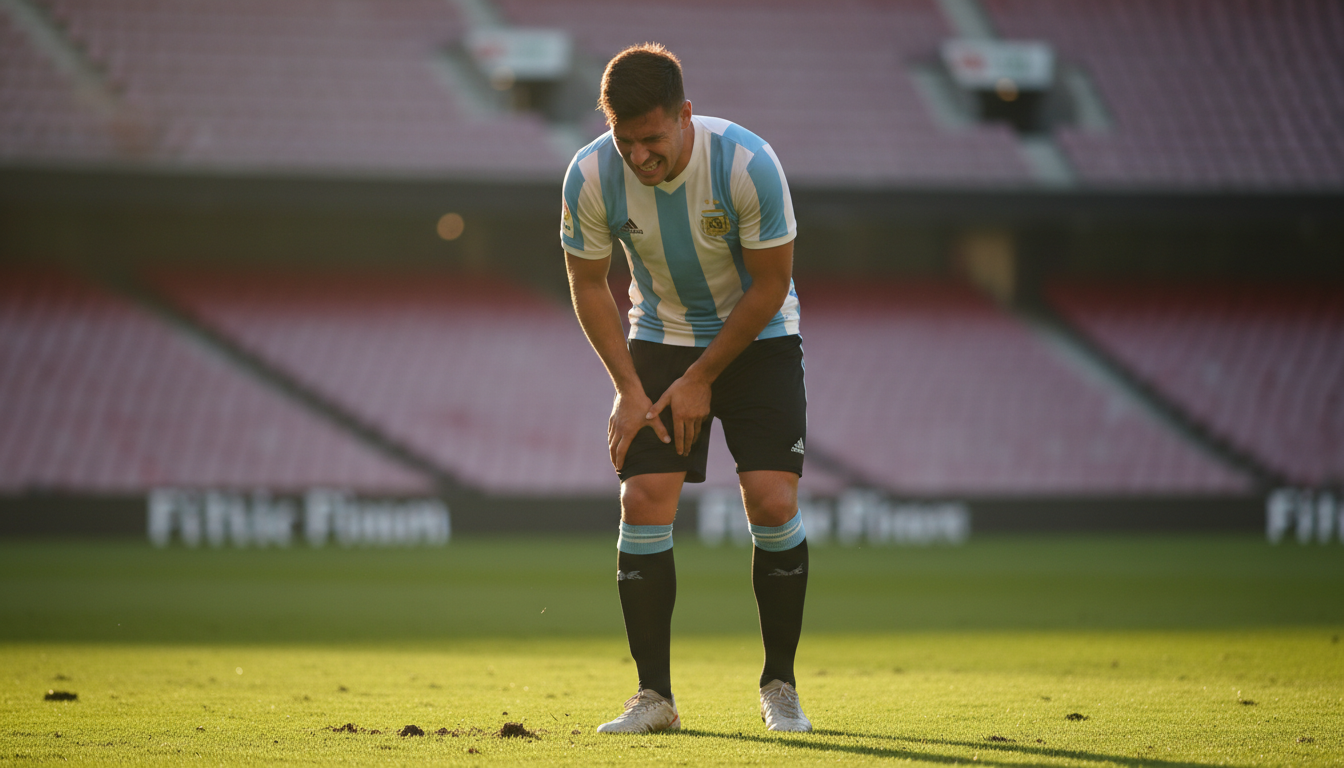
Atlético Madrid’s Nahuel Molina sustained a muscle problem in early May and is set for two to three weeks on the sidelines. The Argentina manager Lionel Scaloni now has a real selection question at right-back going into Argentina’s final 26 cut on 2 June.
The news from the Spanish capital, confirmed in early May, sent a ripple of concern through the Argentina camp and its fervent fanbase. Nahuel Molina, a cornerstone of Lionel Scaloni’s triumphant Qatar 2022 squad, has been sidelined with a thigh injury. With the 2026 FIFA World Cup looming large, commencing on 11 June across the United States, Canada, and Mexico, the timing of this setback could hardly be worse for the reigning champions. Molina’s expected recovery period of two to three weeks places him in a precarious position regarding match fitness for the tournament’s initial stages, let alone the critical pre-tournament preparation phase. This development immediately elevates the right-back position from a settled area of Scaloni’s lineup to a significant point of contention and tactical deliberation.
Argentina, currently priced at +900 to retain the coveted trophy, enters this World Cup as one of the undeniable favorites. The core of their Qatar 2022 success remains largely intact, fostering a sense of continuity and confidence. However, the path to back-to-back global titles is fraught with challenges, and injuries to key personnel represent one of the most formidable. Molina’s situation is particularly pressing given his integral role in Scaloni’s tactical framework. His ability to provide width, defensive solidity, and crucial attacking impetus from the right flank was a defining characteristic of Argentina’s play two years ago. The task now for Scaloni and his coaching staff is not merely to find a replacement, but to mitigate the tactical void left by a player who so effectively balanced the various demands of the modern full-back role.
The Timetable Tightens: Molina’s Road to Recovery and Squad Deadlines
The intricate dance between player recovery timelines and international squad deadlines is a familiar challenge for national team managers, and Lionel Scaloni is currently navigating this delicate balance. Nahuel Molina’s thigh injury, sustained in early May 2026, carries an estimated recovery period of two to three weeks. This places his potential return to full training somewhere between mid-May and the very end of May. When superimposed against Argentina’s squad announcement schedule, the gravity of the situation becomes starkly apparent.
Argentina’s 55-man provisional squad was announced on 11 May, with Molina notably included. This initial inclusion, while offering a glimmer of hope, is largely a formality for injured key players, allowing them to remain in contention should their recovery accelerate. The real pressure point arrives much sooner. Argentina’s internal submission deadline for its final 26-man squad is set for 30 May. This date precedes the official FIFA final-list submission deadline of 1 June by a mere day, suggesting Scaloni aims to finalize his decisions slightly ahead of the global mandate. The public announcement of Argentina’s final 26-man cut is scheduled for 2 June, just over a week before the World Cup kicks off.
Considering Molina’s recovery window, a return to training by the third week of May would be optimistic, placing him potentially ready for some light activity by 20-24 May. A full return to competitive training, however, would likely push closer to the 25-30 May period. This means that by Argentina’s internal submission deadline of 30 May, Molina will have barely, if at all, returned to full-intensity training. The critical question for Scaloni is not just whether Molina will be physically fit enough to travel, but whether he will be match-fit enough to contribute effectively from the outset of the tournament. The risk of carrying a player who is still rehabilitating or lacks crucial match sharpness for the opening group stage fixtures is a significant consideration, especially for a team with ambitions of retaining the World Cup trophy. Every spot in a 26-man squad is invaluable, and dedicating one to a player who might only be available for the latter stages is a strategic gamble. Scaloni will need to weigh Molina’s long-term value against the immediate needs of the group stage, where early points are paramount for building momentum.
Molina’s Indispensability: A Look Back at Qatar 2022 and Scaloni’s System
Nahuel Molina’s role in Argentina’s Qatar 2022 triumph was far more significant than a cursory glance at statistics might suggest. As the first-choice right-back, he was an integral cog in Lionel Scaloni’s meticulously crafted system, providing a crucial blend of defensive diligence, tactical awareness, and attacking impetus. His capacity to patrol the entire right flank, linking up effectively with the right-sided winger – often Ángel Di María or Lionel Messi dropping deep – was fundamental to Argentina’s offensive structure. Molina’s overlapping runs created space, stretched opposition defenses, and provided a consistent outlet for progression up the field. His understanding with his teammates, honed over numerous international fixtures, allowed for fluid rotations and intricate passing sequences that often unlocked stubborn backlines.
Defensively, Molina offered a robust presence. His positional discipline and ability to track back were vital in providing cover for the central defenders and preventing opponents from exploiting space in wide areas. In a system that often relied on the full-backs to provide both width and defensive solidity, Molina excelled at balancing these twin responsibilities. His energy levels were consistently high, enabling him to contribute effectively for the full 90 minutes, often extending into extra time during the knockout rounds. This relentless work rate, coupled with his technical proficiency, made him a truly complete full-back in Scaloni’s eyes.
The impact of his potential absence extends beyond just the individual player. It forces Scaloni to reconsider the dynamics of his entire right flank. A replacement might offer different strengths, perhaps more defensive solidity or greater attacking flair, but it is unlikely they will replicate Molina’s specific blend of attributes and his established chemistry with the rest of the squad. This disruption, however minor it might seem in isolation, can have cascading effects on team cohesion and tactical execution, especially in the high-stakes environment of a World Cup. For a team looking to retain its title, maintaining as much continuity and familiarity as possible is often a priority, and Molina’s injury directly challenges that.
The Contenders: Analyzing Scaloni’s Right-Back Alternatives
With Nahuel Molina’s availability for the initial stages of the 2026 FIFA World Cup in serious doubt, Lionel Scaloni must now turn his attention to the established backup options within the 55-man provisional squad. The choices available present different profiles and tactical considerations, each with their own merits and potential drawbacks for the reigning champions. Scaloni’s decision will hinge on his desired balance between defensive solidity, attacking contribution, and experience within a high-pressure tournament setting.
Gonzalo Montiel (Sevilla)
Gonzalo Montiel stands out as the most direct replacement for Molina, not least because he was also a member of the Qatar 2022 winning squad. Montiel famously scored the decisive penalty in the World Cup final shootout, etching his name into Argentine football folklore. His experience in high-stakes matches is undeniable, having contributed to a World Cup triumph and also enjoying success at club level with Sevilla. Montiel is primarily known for his defensive tenacity, aggressive tackling, and unwavering commitment. He is a robust defender who prioritizes his defensive duties, offering a solid and reliable presence on the right flank. While he is capable of joining the attack, his offensive output is generally considered more conservative than Molina’s. He provides width and can deliver crosses, but perhaps lacks the same consistent penetration and intricate link-up play that Molina offers. Scaloni might opt for Montiel if he seeks a more defensively-minded right-back, particularly against opponents known for their strong left-sided attacks or if he intends to deploy a more cautious tactical approach in certain group stage matches. His familiarity with the squad and Scaloni’s system, having been part of the previous winning campaign, is a significant advantage, minimizing the need for extensive tactical adjustments.
Juan Foyth (Villarreal)
Juan Foyth offers a distinct alternative to both Molina and Montiel. Primarily a centre-back by trade, Foyth has spent considerable time at Villarreal operating as a right-back, showcasing his versatility and adaptability. His background as a central defender means he possesses excellent aerial ability, strong positional awareness, and a calm demeanor on the ball. Foyth is adept at reading the game, making timely interceptions, and is comfortable carrying the ball out from the back, initiating attacks from deeper positions. His defensive solidity is arguably his greatest asset, providing a robust shield on the right side. However, his natural inclination as a centre-back might mean his attacking contributions are less pronounced than Molina’s. While he can join the attack and provide passes, he may not offer the same consistent overlapping runs or dynamic forward bursts. If Scaloni is looking for a more defensively secure option, perhaps to shore up the backline against particularly potent attacking teams in Group J or later stages, Foyth presents a compelling case. His inclusion would suggest a tactical emphasis on defensive stability and control, potentially allowing other players in the midfield or attack more freedom.
Marcos Acuña (left foot but versatile)
Marcos Acuña presents the most intriguing and perhaps most unconventional option for the right-back role. While explicitly listed as “left foot but versatile,” his natural position is on the left side of defense or midfield. Utilizing Acuña on the right flank would be a significant tactical shift for Scaloni, akin to playing a right-footed player on the left. His versatility suggests he has the technical ability and football intelligence to adapt to different positions, but playing him on his weaker side would inherently alter his attacking profile. As a left-footer, his natural tendency would be to cut inside onto his stronger foot, rather than driving to the byline for crosses with his right. This could add an element of unpredictability to Argentina’s attack on the right, creating opportunities for inverted runs and shots on goal. However, it could also limit the traditional width and consistent crossing threat typically provided by a natural right-footed right-back. Defensively, Acuña is tenacious and experienced, but adapting to the different angles and responsibilities of the right side would require a period of adjustment. Scaloni might consider Acuña for this role if he needs a player with exceptional work rate and tactical intelligence, or if he wishes to experiment with an asymmetrical attacking setup. This option, while demonstrating Acuña’s adaptability, would likely represent the biggest tactical departure from Molina’s established role.
Scaloni’s decision will ultimately depend on his strategic vision for the early stages of the tournament. Does he prioritize defensive solidity, attacking width, or a blend of both? The choice between Montiel, Foyth, and Acuña is not merely about replacing Molina, but about subtly rebalancing the entire team’s dynamics on the right flank, impacting how Argentina approaches their Group J fixtures against Algeria, Austria, and Jordan.
Tactical Adjustments: How Molina’s Absence Shapes Argentina’s Approach
The potential absence of Nahuel Molina, or his reduced match fitness, compels Lionel Scaloni to consider tactical adjustments that extend beyond a simple like-for-like replacement. Molina’s specific profile as a dynamic, two-way full-back allowed Argentina to maintain a specific attacking and defensive shape that was highly effective in Qatar 2022. His ability to provide consistent width on the right, often combining with Lionel Messi or a right-sided midfielder, was crucial for stretching opposition defenses and creating space in central areas.
If Scaloni opts for Gonzalo Montiel, the tactical shift might lean towards a more defensively robust right flank. Montiel’s primary strength lies in his defensive attributes: aggressive tackling, strong positioning, and an unwavering commitment to preventing opposition attacks. While capable of contributing to the attack, his forward forays are generally more conservative than Molina’s. This could mean that the burden of creativity and width on the right would fall more heavily on the attacking midfielder or winger, potentially requiring that player to hug the touchline more consistently. Alternatively, Scaloni might push a central midfielder wider to compensate, altering the balance of the midfield.
Should Juan Foyth be chosen, Argentina would likely gain significant defensive solidity and aerial presence on the right. Foyth’s background as a centre-back would provide an additional layer of defensive security, particularly beneficial against teams that look to exploit wide areas with direct play or strong wingers. His comfort on the ball also allows for composed build-up play from the back. However, his attacking contributions from a wide area might be less dynamic. This could lead to a more asymmetrical attacking approach, with perhaps greater emphasis placed on the left flank for width and penetration, or a reliance on central players to provide creativity. Scaloni might also consider a tactical setup that allows Foyth to tuck in more, effectively creating a back three in possession, with a midfielder dropping deeper to cover the wide space.
The most radical tactical adjustment would involve Marcos Acuña on the right. As a left-footed player, his natural tendency to cut inside would fundamentally change the attacking dynamics of the right flank. Instead of traditional overlapping runs and crosses from the byline, Argentina might see more inverted runs, opportunities for shots from distance, and intricate link-up play in the half-spaces. While this could offer an element of surprise, it would also mean a reduction in natural width on that side, potentially making Argentina’s attack narrower. Defensively, Acuña’s experience and work rate are valuable, but adapting to the different defensive angles and responsibilities of the right-back role could present a challenge against quick wingers. This option would require significant tactical coaching and could be a high-risk, high-reward strategy.
Ultimately, Molina’s injury forces Scaloni to re-evaluate how he wants Argentina to play on the right side of the pitch. The choice of replacement will dictate whether Argentina leans more defensive, maintains a balanced approach with subtle shifts, or embraces a more unconventional, asymmetrical setup. These decisions will be critical in navigating the group stage and beyond, especially as Argentina aims to retain the World Cup trophy.
Group J Dynamics: Navigating the Opening Stages Without a Key Man
Argentina’s draw into Group J, alongside Algeria, Austria, and Jordan, presents a varied challenge for the defending champions. While on paper this group appears manageable for a team of Argentina’s caliber, the absence or limited availability of a first-choice player like Nahuel Molina could introduce unforeseen complexities, particularly in the opening fixtures. The World Cup group stage is not merely about securing qualification; it is about building momentum, establishing dominance, and ensuring key players are managed effectively for the knockout rounds.
The tactical approach Scaloni adopts for each Group J opponent will be influenced by the right-back selection. Against Algeria, for instance, a team known for its athleticism and potential counter-attacking threat, a more defensively solid right-back like Gonzalo Montiel or Juan Foyth might be preferred. Their ability to contain opposition wingers and provide robust defensive cover could be crucial in preventing early upsets. The emphasis might be on denying space and minimizing transitions, which are areas where Molina’s high positioning can sometimes expose defensive lines if not adequately covered.
Austria, often characterized by their disciplined organization and collective effort, could present a different kind of challenge. They are likely to be compact and difficult to break down, requiring Argentina to generate consistent width and creative solutions in attack. In such a scenario, the attacking impetus from the right-back position becomes more vital. If the chosen right-back, whether it be Montiel or Foyth, is more defensively inclined, Argentina’s right-sided attacker would need to shoulder a greater creative burden, or Scaloni might need to adjust his midfield to provide more support in wide areas. The option of Marcos Acuña, though unconventional on the right, could offer unpredictable attacking angles against a compact defense, though it comes with its own set of risks.
Jordan, likely the perceived weakest opponent in the group, might offer an opportunity for Scaloni to experiment or give minutes to players returning from injury. However, even against less fancied opposition, maintaining a high standard of performance and tactical cohesion is essential. A strong performance in the group stage, with convincing wins, not only boosts team morale but also sends a clear message to future opponents. A less than optimal right-back situation could lead to disjointed performances, even if the eventual result is a win, potentially fostering unease within the squad and among the fanbase.
The objective for Argentina in Group J is clear: secure top spot comfortably, ideally with maximum points, and manage player fitness effectively. The uncertainty surrounding Molina’s availability complicates this. Scaloni must weigh the need for immediate results against the long-term goal of having his strongest squad available for the knockout stages. The tactical decisions made regarding the right-back position in these crucial opening matches will be meticulously analyzed, not just for their immediate impact but for their potential implications on Argentina’s entire World Cup campaign as they look to retain their title.
World Cup Retention Bid: The Psychological Impact and Betting Implications
Argentina’s outright odds of +900 to retain the FIFA World Cup trophy underscore their status as strong contenders. These odds reflect a confluence of factors: a largely intact core from the Qatar 2022 winning squad, the continued presence of Lionel Messi, and the tactical acumen of Lionel Scaloni. However, the thigh injury to Nahuel Molina, a first-choice starter, introduces an element of uncertainty that could subtly influence both the psychological landscape within the squad and the perceptions of the betting markets.
From a psychological perspective, the news of a key player’s injury, particularly so close to a major tournament, can be unsettling. While Argentina possesses a deep and talented squad, the loss of an established starter disrupts continuity and forces unexpected changes. For a team aiming to achieve the rare feat of back-to-back World Cup titles, every detail matters. The pressure to retain the trophy is immense, and any perceived weakness or disruption can amplify internal anxieties. Scaloni’s challenge will be to project confidence and ensure that the squad views this as an opportunity for others to step up, rather than a significant setback. The team’s resilience and ability to adapt to adversity will be tested early in their campaign.
In terms of betting implications, the immediate impact of Molina’s injury on Argentina’s +900 outright odds might not be drastic. Top-tier nations often have the depth to absorb such blows, and the market tends to react more significantly to injuries to generational talents or players in irreplaceable positions. However, the sustained absence of a player of Molina’s caliber, particularly if it extends into the latter stages of the group phase or affects early knockout matches, could lead to subtle adjustments in live betting markets or even pre-tournament odds closer to the kick-off. Bettors will be keenly observing Scaloni’s choice of replacement and how seamlessly that player integrates into the team. If the chosen alternative struggles or if Argentina’s right flank appears less effective, it could lead to increased scrutiny and potentially shift perceptions about their overall strength and vulnerability.
Furthermore, the injury could influence prop bets related to Argentina’s group stage performance, such as total goals scored or clean sheets. A more defensively oriented right-back might improve clean sheet prospects but potentially reduce attacking output from that flank. Conversely, an attacking-minded but defensively less secure option could lead to more open games. The betting market will analyze how Scaloni manages this situation, looking for cues on Argentina’s tactical flexibility and depth. While the core strength of Argentina remains, Molina’s injury serves as a reminder that even the strongest favorites are susceptible to the unpredictable nature of football, and it adds another layer of intrigue to their bid to retain the most coveted prize in international football.
The coming weeks will be crucial for Nahuel Molina’s recovery and Lionel Scaloni’s final squad selection. The decision regarding Argentina’s right-back will be one of the most significant tactical choices Scaloni makes ahead of their World Cup defense. With the internal submission deadline of 30 May fast approaching, and the final 26-man squad announcement on 2 June, the Argentina manager must carefully weigh Molina’s potential return to fitness against the immediate needs of the squad and the formidable challenge of retaining the World Cup trophy.
Sources: ESPN — Messi included in Argentina 55-player provisional, FIFA World Cup News — Preliminary squads roundup, ESPN — 2026 WC injuries tracker
Sources

Related news
France vs Senegal Preview: Mbappé’s First World Cup Match Lands at MetLife
France open their 2026 World Cup campaign against Senegal at MetLife Stadium on Tuesday 16 June.…
Five Days In: Where Matchday 1 Has Left the 2026 World Cup Favourites
Mexico routine, USA emphatic, Germany sensational. But Brazil were second-best for stretches against Morocco, Switzerland could…
Scotland 1-0 Haiti: Scotland’s First World Cup Win Since 1998
Scotland beat Haiti 1-0 at Gillette Stadium in Boston on Sunday 14 June for their first…