Sweden in Group F: An Isak Fitness Watch, Gyökeres Insurance, and a Round-of-32 Path
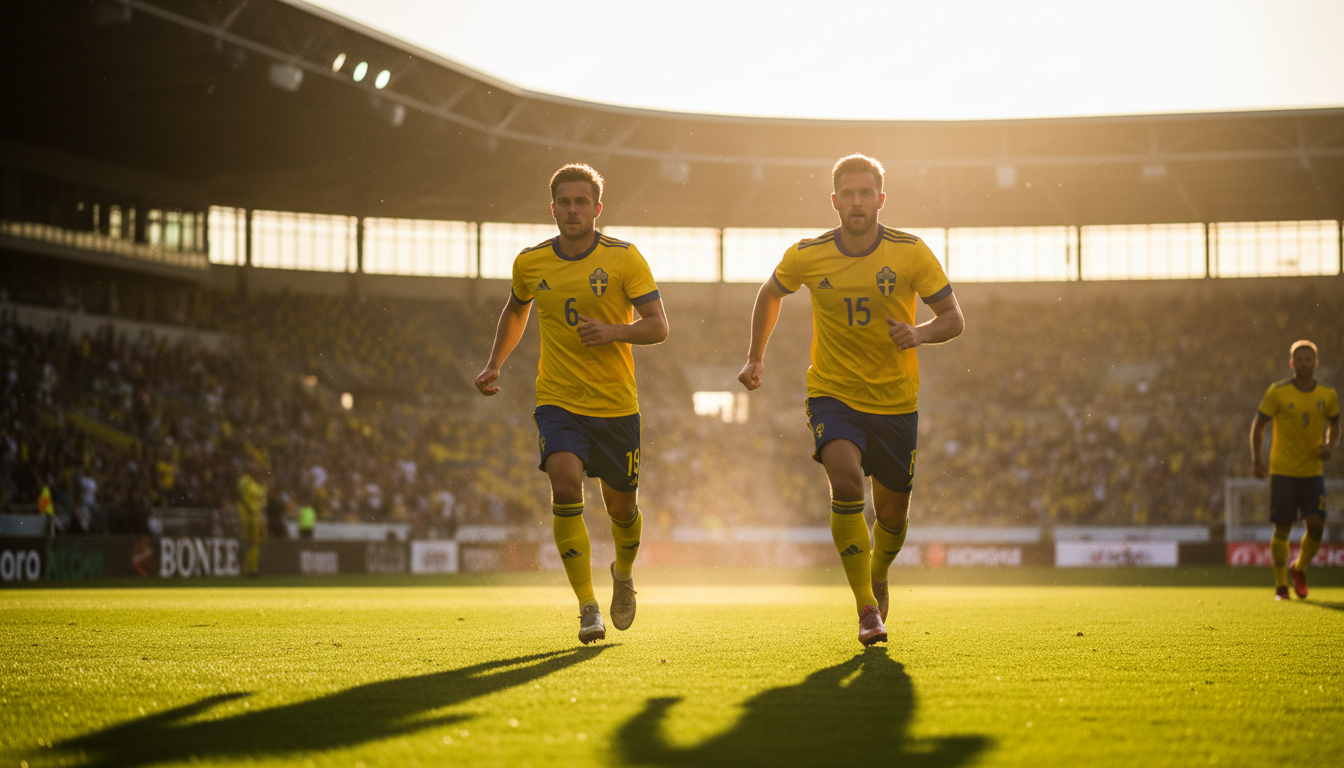
Sweden enters the 2026 FIFA World Cup in North America with a blend of anticipation and uncertainty, largely centred on the fitness of their star striker, Alexander Isak. Group F presents a formidable challenge, pitting the Swedes against European powerhouse Netherlands, the technically proficient Japan, and the resilient Tunisia. Manager Graham Potter, who assumed the helm in autumn 2025, has meticulously crafted a squad designed to navigate this complex group, announcing his final 26-man selection on May 12. The strategic deployment of Isak, coupled with the prolific form of Viktor Gyökeres, will be paramount to Sweden’s aspirations of progressing beyond the group stage, particularly as they eye a pathway into the Round of 32.
The narrative surrounding Sweden’s attack is dominated by the delicate balance between potential and preparedness. Isak, who made a record-breaking transfer to Liverpool in the summer of 2025, has endured a challenging 2025-26 Premier League season, limited to only eight starts due to injury. This significant lack of match rhythm introduces a critical variable into Sweden’s World Cup equation. Potter himself acknowledged the inherent difficulties in such a recovery, stating, ‘When you’ve had a long-term injury, it is never a straight road back; there is often one step forward and one step back. Our challenge is to get Alex into peak form because when he is at his best, he is a world-class player.’ This sentiment underscores the high regard in which Isak is held, but also highlights the precarious nature of his current condition. His ability to regain sharpness and integrate effectively into Potter’s tactical framework will directly influence Sweden’s offensive potency. The expectation, despite his recent setbacks, is that a fully fit Isak possesses the individual brilliance to unlock even the most organised defences, providing a focal point around which Sweden’s attacking strategies can revolve. The investment from Liverpool speaks volumes about his perceived talent, and Sweden will be hoping that investment pays dividends on the global stage, despite the truncated preparation period.
The Isak Conundrum and Potter’s Calculated Risk
The decision to include Alexander Isak in the final squad is a testament to his undeniable quality, but it also represents a calculated risk for Graham Potter. With only eight Premier League starts under his belt for Liverpool in the 2025-26 season, Isak’s match fitness and sharpness will be under intense scrutiny from the moment Sweden’s campaign begins on June 14 against Tunisia. His record summer 2025 transfer from Newcastle to Liverpool positioned him as one of Europe’s premier attacking talents, capable of influencing games through his pace, technical ability, and clinical finishing. However, the subsequent injury layoff has deprived him of crucial playing time, raising questions about his capacity to perform at the elite level required for a World Cup. Potter’s public comments reveal a pragmatic understanding of the rehabilitation process, acknowledging that a return from a long-term injury is rarely linear. This suggests that the coaching staff will be managing Isak’s workload meticulously in the weeks leading up to the tournament and during the group stages, aiming to peak at the optimal moment.
The challenge for Potter extends beyond merely getting Isak fit; it involves integrating him into a cohesive attacking unit with minimal preparation time. The absence of sustained competitive action could affect his rhythm, decision-making, and understanding with teammates, particularly if he is expected to lead the line as a lone striker. Furthermore, the physical demands of World Cup football are immense, and any lingering effects of his injury could be exacerbated by the intensity of multiple high-stakes matches in quick succession. The psychological aspect also plays a role; the pressure to perform after a significant layoff, especially for a player of his profile and transfer value, can be considerable. Sweden’s hopes of progressing deep into the tournament are intrinsically linked to Isak’s ability to live up to his ‘world-class’ billing. Should he fail to hit top form, the burden of creativity and goal-scoring will fall more heavily on other members of the squad, potentially altering Sweden’s tactical approach and diminishing their overall threat in Group F. The initial match against Tunisia on June 14 at Estadio BBVA Monterrey will serve as an early barometer of Isak’s readiness and Sweden’s offensive capabilities.
Gyökeres: The Potent Plan B (or A?)
While Alexander Isak’s fitness dominates headlines, Sweden possesses a formidable alternative in Viktor Gyökeres, whose inclusion provides a crucial safety net and potentially a potent partnership option. Gyökeres has enjoyed a sensational 2025-26 season with Sporting CP, establishing himself as one of the top scorers in European football. His prolific form stands in stark contrast to Isak’s injury-disrupted campaign, offering Graham Potter a proven, in-form striker who can shoulder the goal-scoring responsibility. This dynamic creates what could be considered the strongest two-striker rotation at the tournament, providing Sweden with both flexibility and depth in their attacking options.
Gyökeres’s attributes complement Isak’s well. Known for his powerful running, physical presence, and clinical finishing, he offers a different dimension to Sweden’s attack. If Isak is not deemed ready for a full 90 minutes, or if his form proves inconsistent, Gyökeres can seamlessly step into the starting XI, providing a reliable source of goals. His ability to hold up the ball and bring others into play could also be invaluable against defensively organised opponents. The ‘insurance’ aspect is significant; it means Sweden is not solely reliant on one player’s health or form for their offensive output. This redundancy reduces the overall risk associated with Isak’s current condition and ensures that Sweden maintains a high level of attacking threat regardless of individual circumstances.
Beyond simply being an alternative, Gyökeres’s form could also push him into a starting role, either alongside Isak in a two-striker system or as the primary striker if Potter opts for a single forward. His consistent goal-scoring record demonstrates a player operating at the peak of his powers, brimming with confidence. This could be a significant psychological advantage for Sweden, knowing they have a striker who is regularly finding the back of the net at a high level. The tactical implications of having two such capable strikers are profound, allowing Potter to adapt his strategy not only based on opponent but also on the specific match situation. Whether deployed as a starter, an impact substitute, or part of a dual-striker formation, Gyökeres’s presence guarantees that Sweden’s attack will possess genuine cutting edge throughout the tournament, providing a vital counterpoint to the uncertainty surrounding Isak.
Tactical Flexibility: 4-2-3-1 vs. 4-4-2
Graham Potter’s tactical approach for Sweden at the World Cup will likely revolve around the strategic deployment of his two primary strikers, Isak and Gyökeres, allowing for significant flexibility depending on the opponent and match scenario. The two most probable formations are a 4-2-3-1 with a lone striker and a 4-4-2 featuring both forwards. Each system presents distinct advantages and challenges, and Potter’s choice will be heavily influenced by the fitness of Alexander Isak and the form of Viktor Gyökeres.
In a 4-2-3-1 setup, Isak would most likely operate as the solitary striker, leveraging his pace, movement, and technical prowess to lead the line. This formation would allow Sweden to pack the midfield, providing defensive solidity and control, while also supporting the striker with attacking midfielders from deeper positions. If Isak is at peak fitness and form, his ability to drop deep, link play, and then burst into space makes him an ideal candidate for this role. However, this system places a significant burden on the lone striker to both hold up play and be a primary goal threat. Should Isak’s match rhythm be lacking, Gyökeres could also excel in this role, using his physicality to occupy defenders and his clinical finishing to convert chances created by the midfield. The challenge with a single striker is ensuring sufficient supply and preventing them from becoming isolated against well-organised defences. The omission of Dejan Kulusevski, a long-term absentee, means Sweden will need to find alternative sources of creativity from wide areas to support the lone forward, possibly through attacking full-backs or inverted wingers.
Alternatively, Potter could opt for a more direct and aggressive 4-4-2 formation, pairing Isak and Gyökeres together. This system would allow Sweden to field both of their most potent goal threats simultaneously, creating a dual-striker dynamic that could overwhelm opposition defences. Isak’s intelligent movement and Gyökeres’s powerful presence could form a complementary partnership, with one potentially dropping deeper to link play while the other runs in behind. This formation offers increased goal-scoring potential and can be particularly effective against teams that play with a high defensive line or those that struggle against two central forwards. However, implementing a 4-4-2 often requires greater defensive discipline from the wide midfielders and can sometimes leave the central midfield more exposed, particularly against teams with numerical superiority in that area. The trade-off is often between midfield control and direct attacking threat. Given the quality of both strikers, a 4-4-2 could be a powerful option, especially in matches where Sweden needs to be proactive in attack or chase a goal. The recall of seven players who missed the March playoffs suggests Potter is building a squad with versatile options, capable of adapting to these different tactical demands.
Navigating Group F: A Path to the Knockouts
Sweden finds itself in a challenging Group F, alongside the Netherlands, Japan, and Tunisia, with their World Cup campaign commencing on June 14 against Tunisia at Estadio BBVA Monterrey. The group dynamics suggest a clear hierarchy, but also a fiercely contested battle for the remaining qualification spots. The Netherlands, despite a recent setback, remain the heavy favourites to win Group F, possessing a squad rich in talent and experience. Their prospects were slightly complicated by the late April ACL tear suffered by Xavi Simons, a significant loss for their creative midfield, which could theoretically offer a marginal opening for their group rivals. However, the Dutch depth is considerable, and they are still expected to progress comfortably.
This leaves Sweden in a direct competition with Japan and Tunisia for the runner-up position, and crucially, for one of the coveted best-third-placed team slots. The opening match against Tunisia is therefore of paramount importance. A victory in Monterrey would immediately establish Sweden’s credentials, provide a vital three points, and build momentum for the subsequent, more challenging fixtures. Tunisia is known for its defensive organisation and counter-attacking threat, making them a difficult opponent to break down. Sweden will need to be patient, disciplined, and clinical to secure a positive result. Failure to win this match would put immense pressure on their subsequent games against Japan and the Netherlands, complicating their path to the Round of 32.
Japan represents a different kind of challenge, with their technical proficiency, high work rate, and intricate passing game. They are capable of upsetting established teams and will likely be Sweden’s primary rival for the second spot in the group. The match against Japan could very well be a decisive fixture, determining which team has a clearer route to the knockouts. Against the Netherlands, Sweden will likely be considered underdogs, but the World Cup has a history of surprises. A disciplined, resilient performance that secures even a single point from the Dutch could prove invaluable for their overall goal difference and total points tally, both of which are critical for best-third calculations. Graham Potter’s strategic game planning for each of these distinct opponents will be crucial, particularly how he manages his attacking options to exploit weaknesses and mitigate threats. The objective for Sweden is clear: secure at least four points, ideally more, to ensure they are firmly in contention for either second place or one of the four best third-placed berths that will advance to the knockout stages, which begin on July 19.
Potter’s Revival and Squad Depth
Graham Potter’s tenure as Sweden manager, commencing in autumn 2025, has already seen significant achievements, most notably navigating the team through the demanding European playoffs in March against Ukraine and Poland to secure their spot at the 2026 World Cup. This qualification pathway demonstrated Potter’s ability to instil resilience and tactical discipline in the squad under pressure. His arrival marked a new era for Swedish football, bringing a fresh perspective and a reputation for developing players and implementing adaptable systems.
A notable aspect of Potter’s squad selection for the World Cup is the recall of seven players who were unavailable or omitted from the crucial March playoff fixtures. This influx of returning talent suggests an increased depth and broader talent pool available to the manager, which is essential for the rigours of a major tournament. These recalls could signify players returning from injury, regaining form, or simply fitting better into Potter’s evolving tactical vision. Their reintroduction provides more options across various positions, allowing for greater rotation, strategic substitutions, and the ability to adapt to different match situations without a significant drop in quality. This expanded roster provides Potter with the flexibility to manage player fatigue, address specific opponent threats, and inject fresh impetus into games as required. It also indicates a competitive environment within the squad, where players are vying for starting berths and demonstrating their value to the team. The ability to bring in seven fresh, motivated players, especially after a successful playoff campaign, suggests a healthy and dynamic squad environment. This depth will be particularly vital in a group stage where matches come quickly, and the physical demands are immense, allowing Sweden to maintain intensity and quality throughout their Group F fixtures.
Sweden’s World Cup journey is poised on the edge of a knife, with the outcome largely contingent on the delicate balance between individual brilliance and collective cohesion. Alexander Isak’s fitness remains the central narrative, his ‘world-class’ potential offering a tantalising glimpse of what Sweden could achieve if he finds his rhythm. However, the presence of Viktor Gyökeres, a proven European goal-scorer, provides an invaluable safety net and a significant tactical asset, ensuring that Sweden’s attack will remain potent regardless of Isak’s immediate readiness. Graham Potter’s strategic acumen, demonstrated through a successful qualification campaign and a squad built for flexibility, will be tested to its fullest in navigating a challenging Group F. The path to the Round of 32 is clear but arduous, demanding peak performance, tactical adaptability, and a collective will to overcome formidable opponents. The Swedes have the tools; the question is whether they can execute when the global spotlight shines brightest, starting with their crucial opener against Tunisia on June 14.
Sources: ESPN — Isak headlines final Sweden roster, Olympics.com — Sweden at WC 2026, Khel Now — Sweden announce final squad ft. Isak, FourFourTwo — Sweden WC 2026 squad
Sources

Related news
France vs Senegal Preview: Mbappé’s First World Cup Match Lands at MetLife
France open their 2026 World Cup campaign against Senegal at MetLife Stadium on Tuesday 16 June.…
Five Days In: Where Matchday 1 Has Left the 2026 World Cup Favourites
Mexico routine, USA emphatic, Germany sensational. But Brazil were second-best for stretches against Morocco, Switzerland could…
Scotland 1-0 Haiti: Scotland’s First World Cup Win Since 1998
Scotland beat Haiti 1-0 at Gillette Stadium in Boston on Sunday 14 June for their first…