Lennart Karl Makes Germany’s 26: Bayern’s Teenage Attacker Earns His World Cup Call
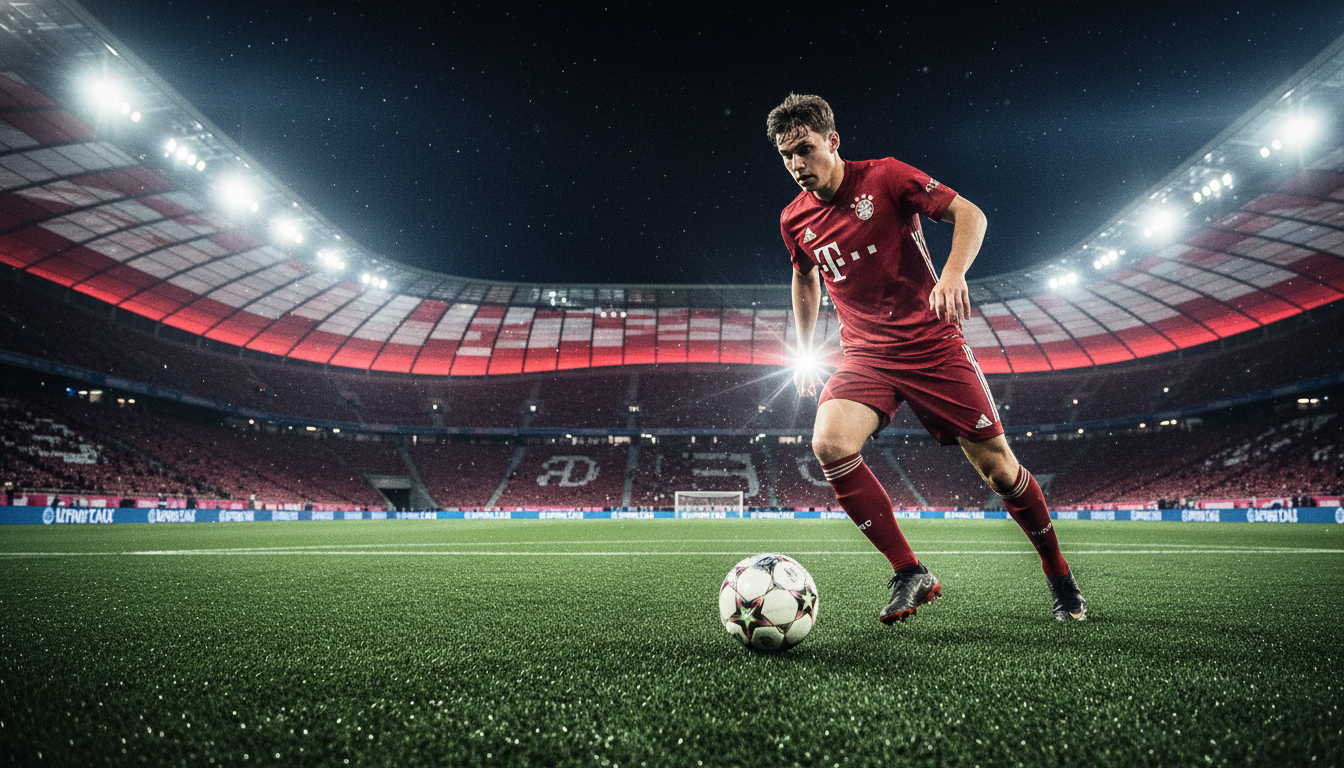
The highly anticipated squad announcement for Germany’s 2026 FIFA World Cup campaign, set for Thursday, May 21, 2026, has already generated significant discussion, particularly around the inclusion of two exceptionally young attackers. Bayern Munich’s teenage attacking midfielder, Lennart Karl, has officially made Julian Nagelsmann’s final 26-man roster. This call-up places Karl, alongside Cologne’s 19-year-old Said El Mala, at the forefront of what is one of the youngest Germany attacking generations to be taken to a major tournament in 16 years. This selection is not merely a nod to emerging talent; it is a clear strategic statement from Nagelsmann, revealing a definitive direction for Germany’s footballing future, with a discernible emphasis on development and potential extending well past the 2026 tournament cycle.
The decision to integrate Karl and El Mala into the senior squad for such a high-stakes competition underscores Nagelsmann’s conviction in their immediate capabilities and, crucially, their long-term trajectory. For Karl, who has been widely recognized as among the most highly-rated 17-year-olds in European football, this inclusion represents a meteoric rise from youth setups to the grandest stage. His presence, still in his teenage years, speaks volumes about his technical prowess, tactical intelligence, and raw athleticism that have evidently impressed the national team manager. Similarly, El Mala’s inclusion, and the fact that Nagelsmann personally informed him of his selection, highlights a direct investment from the coaching staff. This personal touch suggests a belief not only in El Mala’s talent but also in his character and readiness to contribute to the national cause despite his relative inexperience at this level. Both players operate in crucial attacking roles, positions where creativity, flair, and decisive actions are paramount, and their selection signals a desire for a fresh, dynamic approach to Germany’s offensive play.
The Youthful Vanguard: Karl and El Mala’s Ascent
The inclusion of Lennart Karl and Said El Mala in Germany’s 26-man World Cup squad represents a significant shift in philosophy for the national team. Karl, a teenage attacking midfielder for Bayern Munich, enters the tournament as one of the most talked-about young talents in European football. His rapid development at one of the continent’s elite clubs has positioned him for this opportunity, a testament to his exceptional skill set and maturity beyond his years. While specific statistics are not provided, his reputation as a highly-rated 17-year-old suggests a player with a comprehensive range of attacking attributes, likely including vision, passing accuracy, dribbling ability, and an eye for goal. Nagelsmann’s decision to fast-track Karl indicates a willingness to trust youth with significant responsibility, potentially seeing him as a game-changer or a vital option off the bench in crucial moments.
Said El Mala, a 19-year-old from Cologne, offers a complementary profile to Karl. The detail that Nagelsmann personally informed El Mala of his selection is particularly telling. This direct communication from the national team manager often signifies a deep personal belief in a player’s potential and a desire to foster a strong relationship. It suggests that El Mala is not merely a statistical outlier, but a player whose character and attitude align with Nagelsmann’s vision for the squad. As another young attacking talent, El Mala will likely bring energy, directness, and an element of unpredictability to Germany’s offensive unit. His age, while still young, positions him as slightly more experienced than Karl, potentially offering a different dimension in terms of tournament readiness or adaptability to senior international football.
The collective inclusion of Karl and El Mala signifies a deliberate move towards rejuvenating Germany’s attacking options. This marks one of the youngest Germany attacking generations selected for a major tournament in 16 years, a clear indicator that Nagelsmann is actively building for both immediate impact and sustained success. The risks associated with relying on such youthful talent are often weighed against the potential for explosive performances and the psychological boost that fresh faces can bring. For these two players, the World Cup will serve as an unparalleled platform for accelerated development, exposing them to the highest level of competition and the unique pressures of global football. Their integration into the squad is not just about their individual talents but also about the message it sends regarding Germany’s long-term strategic planning and the faith placed in the next generation of German footballers to carry the torch.
Nagelsmann’s Strategic Vision: Balancing Present and Future
Julian Nagelsmann’s strategic vision for Germany at the 2026 World Cup is evidently characterized by a nuanced balance between established, proven performers and the exciting, raw potential of emerging talents. The attacking contingent selected for the tournament perfectly illustrates this approach. The front line features seasoned and highly influential players such as Jamal Musiala, Florian Wirtz, Niclas Woltemade, Kai Havertz, and Leroy Sané. These individuals bring a wealth of experience from top-tier club football, accustomed to the pressures of high-stakes matches and capable of producing moments of individual brilliance. Their presence ensures a foundation of quality and reliability in Germany’s offensive movements, offering a blend of creativity, directness, and goal-scoring threat.
The integration of Lennart Karl and Said El Mala alongside these established names is where Nagelsmann’s forward-thinking strategy becomes most apparent. In a tactical setup predicated on a 4-2-3-1 formation with rotating advanced playmakers, the versatility and dynamic attributes of all seven attackers will be crucial. Musiala and Wirtz, for instance, are adept at operating in central attacking midfield roles, drifting wide, or even playing as inverted wingers, providing the rotational fluidity Nagelsmann often seeks. Havertz offers a more robust option, capable of leading the line or dropping deeper to link play, while Sané and Woltemade provide pace and directness from wider positions. Karl and El Mala, as attacking midfielders, are expected to contribute to this rotational scheme, bringing fresh perspectives and unburdened enthusiasm. Their youthful energy and hunger to prove themselves could provide vital impetus, especially against tiring defenses or in situations requiring a change of tempo.
Nagelsmann’s reputation as a tactical innovator suggests that he will not hesitate to deploy these young players in key moments if the match situation demands it. The concept of “rotating advanced playmakers” implies that no single player is fixed to a specific role, encouraging interchangeability and unpredictability, which can be particularly challenging for opposing defenses to contain. Karl’s profile as a highly-rated 17-year-old attacking midfielder suggests he possesses the technical foundation and footballing intelligence to thrive in such a fluid system, understanding space and timing runs effectively. El Mala, at 19, likely brings a similar, albeit perhaps more physically developed, skill set. Their inclusion provides Nagelsmann with deeper tactical options, allowing for different profiles to be introduced depending on the opponent, the game state, or simply to manage the physical demands of a demanding tournament schedule.
This strategic blend is not merely about the upcoming World Cup but, as the excerpt suggests, where Nagelsmann sees Germany going past 2026. By exposing Karl and El Mala to the pinnacle of international football now, Nagelsmann is investing in their development for future cycles. This approach fosters continuity and ensures that Germany will have a pipeline of top-tier talent ready to step up in subsequent tournaments. It is a bold statement that prioritizes long-term sustainability and a proactive approach to squad building, aiming to secure Germany’s position as a perennial contender on the international stage by nurturing its most promising young assets.
Neuer’s Return: A Veteran Anchor Amidst New Blood
Amidst the fanfare surrounding Germany’s youthful attacking contingent, the return of Manuel Neuer to the national team setup, at the age of 40, stands as a powerful counterpoint and a testament to Nagelsmann’s pragmatic approach to squad construction. Neuer, coming out of retirement to reclaim his position as Germany’s No. 1, injects a profound sense of experience, leadership, and unwavering reliability into a squad that is otherwise embracing a significant generational shift. His presence at the back is not merely about his goalkeeping prowess, which remains formidable even at his advanced age, but also about the psychological impact he has on the entire team.
As a four-time World Cup participant and a former World Cup winner, Neuer brings an invaluable understanding of tournament football – the pressures, the rhythms, and the mental fortitude required to succeed. His decision to return underscores a deep commitment to the national cause and a belief in Germany’s potential. For the young players like Lennart Karl and Said El Mala, having a figure of Neuer’s stature in the dressing room and on the pitch provides an unparalleled learning opportunity. He serves as a living example of sustained excellence, professionalism, and resilience. His leadership can help to temper the inevitable anxieties that young players might face on such a grand stage, offering a calming presence and a steady hand in critical moments.
The contrast between Neuer’s seasoned wisdom and the youthful exuberance of Karl and El Mala creates a compelling dynamic within the squad. While the young attackers are tasked with igniting Germany’s offense with their creativity and dynamism, Neuer’s primary role will be to provide an unshakeable foundation at the other end of the pitch. His command of the penalty area, his renowned sweeping abilities, and his exceptional shot-stopping capabilities will be crucial in tight matches. This blend of generational talent suggests a deliberate strategy from Nagelsmann: to combine the energy and hunger of youth with the invaluable experience and composure of a true veteran. It indicates that while Germany is looking to the future, it is not abandoning the proven qualities that have historically defined its success.
Neuer’s role extends beyond just preventing goals; he is an integral part of Germany’s build-up play, known for his exceptional distribution and ability to initiate attacks from the back. In a 4-2-3-1 system that emphasizes rotating advanced playmakers, having a goalkeeper who is comfortable and precise with the ball at his feet can be a significant advantage, allowing Germany to maintain possession and build pressure from deep. His presence as the undisputed No. 1 provides a sense of certainty in a crucial position, allowing the outfield players and coaching staff to focus on other tactical aspects, knowing that the last line of defense is in exceptionally capable hands. His return is a testament to his enduring quality and Nagelsmann’s belief that some experiences are simply irreplaceable, even in a squad geared towards the future.
Group Stage Outlook: Navigating Group E
Germany’s path in the 2026 FIFA World Cup will commence in Group E, where they are set to face Curaçao, Côte d’Ivoire, and Ecuador. This group draw presents a varied set of challenges, offering Nagelsmann’s side opportunities to establish momentum while also testing their tactical adaptability and squad depth. The opening match against Curaçao on June 14 at NRG Stadium in Houston will be particularly significant. A strong performance in this fixture is paramount for building confidence and setting a positive tone for the remainder of the group stage and the tournament as a whole.
Curaçao, while likely considered the underdog in the group, will demand Germany’s full respect. Teams from smaller footballing nations often bring an element of unpredictability and a strong desire to make a statement on the global stage. For Germany, this match could serve as an ideal opportunity for Nagelsmann to fine-tune his 4-2-3-1 system and potentially introduce some of the younger players, such as Lennart Karl and Said El Mala, into the competitive rhythm of the World Cup. Giving these promising talents early minutes could help them acclimate to the tournament environment without the immediate, intense pressure of a match against a top-tier opponent, while also providing valuable experience that could prove vital in later stages.
Côte d’Ivoire will undoubtedly present a more robust challenge. African nations often possess strong physical attributes, pace, and individual skill, making them formidable opponents. This match will require Germany to be disciplined defensively and incisive in attack, testing the cohesion of their rotating advanced playmakers. The ability of Musiala, Wirtz, Havertz, and Sané to break down a well-organized defense, coupled with the potential impact of Karl and El Mala off the bench, will be crucial. Nagelsmann will need to ensure his side maintains tactical discipline and manages transitions effectively against a potentially dangerous counter-attacking team.
Ecuador, representing CONMEBOL, will likely bring a different set of challenges, often characterized by tenacity, high-altitude experience (though not a factor in Houston), and tactical resilience. Matches against South American opposition at the World Cup are rarely straightforward, typically demanding a high level of technical precision and mental toughness. Germany will need to adapt to Ecuador’s specific style of play, which could involve a compact defense, aggressive pressing, or dynamic wide play. These varied opponents in Group E provide an excellent proving ground for Nagelsmann’s squad, allowing him to assess the readiness of his key players, experiment with tactical variations, and manage the fitness levels of his entire squad ahead of the knockout rounds. Successfully navigating this group will require a combination of tactical intelligence, individual brilliance, and a cohesive team effort, laying the groundwork for a deep run in the tournament.
Germany’s World Cup Prospects: Odds and Expectations
As the 2026 FIFA World Cup approaches, the betting markets have positioned Germany with outright odds of +1400, placing them as the seventh favorite to lift the trophy. This valuation reflects a complex interplay of factors, including the squad’s perceived strength, recent international performances, and the bold strategic decisions made by Julian Nagelsmann. The odds suggest that while Germany is certainly considered a contender, they are not viewed among the absolute front-runners, a position often occupied by teams with more settled squads or more dominant recent form.
The +1400 odds can be interpreted in several ways. On one hand, it acknowledges the inherent quality within the German squad, particularly the established talents like Musiala, Wirtz, Havertz, and Sané, who are world-class players capable of influencing any match. The return of Manuel Neuer, a proven winner and a stabilizing force, also undoubtedly contributes to their contender status. However, the seventh-place ranking among favorites likely factors in the significant youth movement within the squad, particularly in the attacking third with Lennart Karl and Said El Mala. While exciting, integrating such young talents into a World Cup squad can be viewed as a gamble, potentially impacting immediate cohesion and consistency. The market may be pricing in the possibility of an unpredictable performance curve, where moments of brilliance from the youngsters are balanced by periods of learning and adaptation.
Nagelsmann’s strategy, emphasizing a blend of experience and a youthful vanguard, could be seen as a long-term play that might not yield immediate top-tier results. While this approach is commendable for future cycles, the betting market is primarily concerned with the immediate tournament. The expectation from the public and media will be high for Germany, given their historical pedigree in major tournaments. However, the odds provide a more sober assessment, suggesting that Germany might be in a transitional phase, building towards a more dominant future rather than being an overwhelming favorite for the current edition. This places a unique kind of pressure on Nagelsmann: to not only deliver results but also to demonstrate the wisdom of his selections and the potential of his young stars.
For bettors, these odds present an interesting proposition. If Karl and El Mala can rapidly acclimate to the international stage and provide the dynamic impact Nagelsmann envisions, and if the established players perform at their peak, Germany could be seen as undervalued at +1400. Conversely, if the youth movement proves to be a step too far too soon, or if the blend of generations doesn’t gel seamlessly, the odds might accurately reflect a more challenging path to the final. The World Cup will serve as the ultimate proving ground for Nagelsmann’s vision, and the performance of this distinctive German squad will undoubtedly shape their standing in future betting markets and footballing discourse.
Julian Nagelsmann’s squad for the 2026 FIFA World Cup is a definitive statement of intent, a bold declaration that Germany is embracing its future with open arms. The inclusion of teenage sensation Lennart Karl and 19-year-old Said El Mala at the forefront of the attacking line underscores a commitment to nurturing the next generation, blending their raw talent with the experience of established stars and the legendary presence of Manuel Neuer. As the squad prepares for the tournament, with their first match against Curaçao on June 14, all eyes will be on how this unique blend of youth and wisdom performs under the immense pressure of the global stage. The journey begins in June, and the performance of this rejuvenated German side will not only define their World Cup campaign but also chart the course for German football beyond 2026.
Sources: Sunday Guardian — Germany squad announced, Karl headlines, FourFourTwo — Germany WC 2026 squad, Sports Illustrated — Germany 2026 roster confirmed, Bundesliga — How will Germany line up at WC 2026
Sources

Related news
France vs Senegal Preview: Mbappé’s First World Cup Match Lands at MetLife
France open their 2026 World Cup campaign against Senegal at MetLife Stadium on Tuesday 16 June.…
Five Days In: Where Matchday 1 Has Left the 2026 World Cup Favourites
Mexico routine, USA emphatic, Germany sensational. But Brazil were second-best for stretches against Morocco, Switzerland could…
Scotland 1-0 Haiti: Scotland’s First World Cup Win Since 1998
Scotland beat Haiti 1-0 at Gillette Stadium in Boston on Sunday 14 June for their first…