Manuel Neuer’s Comeback at 40: Inside Germany’s Most Talked-About Goalkeeper Decision
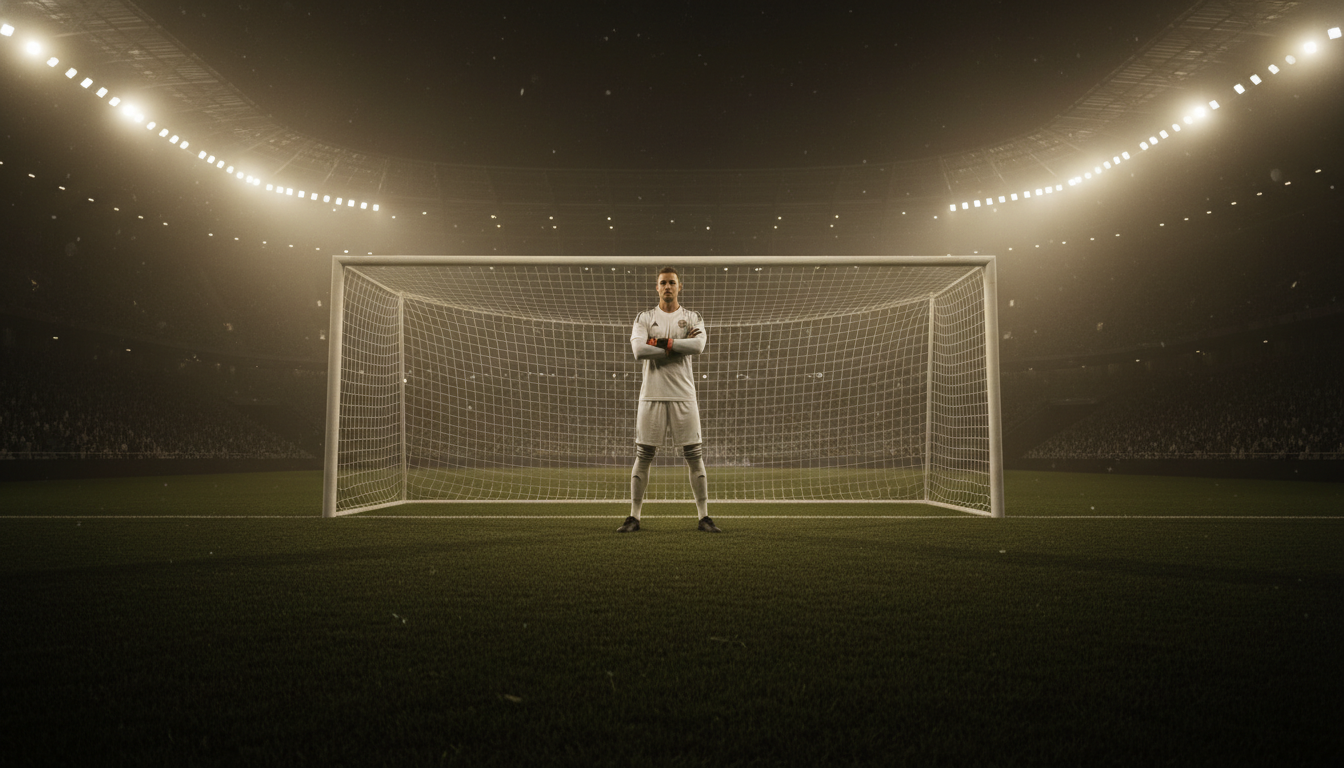
The football world, particularly within Germany, has been gripped by a decision that epitomises both daring strategy and a deep reliance on proven quality. Julian Nagelsmann, the architect of Germany’s 2026 FIFA World Cup campaign, confirmed on Thursday, May 21, 2026, what many had speculated but few truly believed: Manuel Neuer, at the age of 40, will be Germany’s undisputed No. 1 goalkeeper for the tournament across the United States, Canada, and Mexico. This announcement, coming after a period of intense scrutiny regarding Neuer’s fitness and his brief international retirement, places a veteran presence at the heart of Germany’s ambitions, overriding recent form from other contenders and signaling a clear statement of intent from the manager.
The narrative surrounding Neuer’s return is multifaceted. Having initially retired from international duty before Euro 2024, a decision that saw him briefly step away from the national setup, his comeback for the 2026 World Cup represents a remarkable pivot. His selection effectively relegates Oliver Baumann of Hoffenheim, who had been Germany’s first-choice goalkeeper in recent months, to a backup role. Furthermore, it firmly places Neuer ahead of other prominent German goalkeeping talents, including Marc-André ter Stegen, as implied by the initial context of the decision. Nagelsmann’s choice is a calculated gamble, prioritizing an unparalleled blend of experience, leadership, and a unique goalkeeping style that has defined an era.
The Unprecedented Return of a Veteran Guardian
Manuel Neuer’s name is synonymous with German football success, particularly his pivotal role in the 2014 World Cup triumph. That campaign saw him not only anchor a formidable defense but also redefine the role of the modern goalkeeper, earning him the FIFA World Cup Golden Glove. Twelve years on, the expectation for him to replicate such influence, even at 40, is significant. His return to the international fold comes after a period of careful monitoring, with his MRI results, pending in early May, ultimately clearing him for competitive action. This medical clearance was a critical prerequisite, allowing Nagelsmann to make a decision based on ability rather than fitness concerns.
The decision to bring Neuer out of international retirement underscores Nagelsmann’s belief in the veteran’s enduring quality and mental fortitude. Neuer’s club form has also been a contributing factor, with Bayern Munich securing the 2025-26 Bundesliga title, a testament to the collective strength of the team and Neuer’s continued contribution between the posts. While the Bundesliga title is a team achievement, Neuer’s presence and performance as a leader and shot-stopper undoubtedly played a role in that success. His competitive record, boasting over 124 Germany caps throughout his international career, speaks volumes about his longevity and consistent performance at the highest level. This wealth of experience is a commodity Nagelsmann clearly values, especially in the high-stakes environment of a World Cup.
Evaluating Neuer’s Enduring Quality
The analytical assessment of Neuer’s current capabilities, even at 40, suggests that his game has adapted rather than diminished. While the explosive athleticism of his younger years might have subtly evolved, his positional sense, command of the penalty area, and exceptional distribution remain elite. His ability to act as a ‘sweeper-keeper,’ a role he effectively pioneered and perfected, is still a vital asset, allowing Germany’s defensive line to play higher and compress the midfield. This tactical flexibility is crucial for Nagelsmann’s preferred aggressive, possession-based style.
Neuer’s decision-making under pressure, honed over more than a decade at the pinnacle of club and international football, provides a calming influence that can permeate throughout the squad. In major tournaments, moments of high tension are inevitable, and a goalkeeper with Neuer’s temperament and experience can be instrumental in navigating these challenges. The data points from his recent club season, culminating in a Bundesliga title, will have been meticulously reviewed by the national team staff. These would likely highlight his continued proficiency in key goalkeeping metrics, such as save percentage in critical situations, command of aerial balls, and successful distribution from the back, all essential components for a World Cup contender.
The Goalkeeper Depth Chart: Baumann’s Role and Ter Stegen’s Omission
Nagelsmann’s choice to reinstate Neuer has significant implications for the other goalkeepers in the German setup. Oliver Baumann, who had capably served as Germany’s first-choice in recent months, now drops to the backup position. For Baumann, this represents a professional setback, yet also an opportunity to learn from one of the game’s legends. His recent performances for Hoffenheim and the national team had demonstrated reliability and competence, making him a strong candidate for the No. 1 spot in many other national teams. However, the allure and proven track record of Neuer ultimately proved too compelling for Nagelsmann to overlook.
The situation also brings into focus Marc-André ter Stegen, a goalkeeper of undeniable quality who has consistently performed at a high level for his club. While the ground-truth bullets do not explicitly detail ter Stegen’s reaction or his specific standing in the squad, the excerpt implies that Neuer’s selection was made “over Oliver Baumann and Marc-André ter Stegen.” This suggests that ter Stegen was also a contender for the starting role, and his omission in favor of a 40-year-old coming out of retirement will undoubtedly be a topic of discussion among analysts and fans. Nagelsmann’s decision indicates a clear preference for Neuer’s unique attributes and leadership qualities over the alternative options, a choice that carries both potential rewards and inherent risks given Neuer’s age.
Nagelsmann’s Tactical Blueprint for 2026
The confirmation of Neuer as the starting goalkeeper provides a clearer picture of Julian Nagelsmann’s strategic vision for Germany. The tactical setup is confirmed as a 4-2-3-1, a formation that relies heavily on defensive solidity and quick transitions. In this system, Neuer’s role extends beyond traditional shot-stopping. His comfort with the ball at his feet and his expansive passing range are critical for initiating attacks and maintaining possession under pressure. Playing out from the back, a hallmark of modern football, becomes even more effective with a goalkeeper who possesses the technical proficiency of Neuer.
The defensive line in front of Neuer is set to feature Jonathan Tah and Nico Schlotterbeck as the central defensive pairing. This combination offers a blend of physical presence and ball-playing ability. Tah provides aerial dominance and strength, while Schlotterbeck offers pace and a progressive passing range. With Kimmich deployed at right-back, a decision that leverages his defensive diligence and attacking prowess from a deeper position, the defensive unit appears robust. Neuer’s ability to communicate, organise, and sweep behind this defense, particularly with a high line, will be paramount. His experience will be invaluable in guiding the two centre-backs and providing cover for Kimmich as he pushes forward.
Germany’s Group E Challenge and Tournament Outlook
Germany, as hosts of the 2006 World Cup and perennial contenders, will face a diverse set of challenges in Group E. Their opponents are Curaçao, Côte d’Ivoire, and Ecuador. The opening match for Germany is scheduled for June 14 against Curaçao at NRG Stadium in Houston. While Germany will be considered favourites to progress from this group, the modern World Cup has frequently demonstrated that no opponent can be underestimated. Curaçao, while not a traditional footballing powerhouse, will present a spirited challenge. Côte d’Ivoire and Ecuador, both with their unique styles and athletic talents, will demand full concentration and tactical discipline.
Neuer’s presence in goal will be a significant factor in navigating these group stage matches. His experience in major tournaments, coupled with his ability to make game-changing saves, will be crucial in maintaining clean sheets and building confidence early in the competition. The expectation will be for Germany to secure maximum points, or at least comfortable progression, from Group E, setting the stage for the knockout rounds. The selection of Neuer, therefore, is not just about his individual ability but also about the psychological advantage and stability he brings to the entire squad as they embark on their World Cup journey.
Betting Market Reaction and Expectations
The betting markets have reacted to Germany’s squad announcement and the confirmation of Neuer as No. 1 with a degree of measured optimism, albeit with an acknowledgement of the competitive landscape. Germany’s outright odds are currently listed at +1400, placing them seventh on the board. This valuation reflects a belief in Germany’s potential to go deep into the tournament, but also acknowledges the strength of other leading contenders. The +1400 odds suggest that while Germany is not considered among the absolute favourites, they are firmly within the tier of teams capable of making a strong challenge for the trophy.
The decision to back Neuer, a veteran at 40, will be factored into these odds. On one hand, his proven track record and leadership are positives. On the other, his age and the physical demands of a gruelling tournament could be seen as potential vulnerabilities. Analysts will be scrutinizing Germany’s early performances, particularly Neuer’s, to assess if his experience outweighs any perceived risks. The tactical setup under Nagelsmann, combined with the blend of youth and experience in the squad, presents a compelling case for Germany to outperform their current betting market valuation, provided Neuer can deliver the elite-level performances expected of him.
As the 2026 FIFA World Cup approaches, the focus on Manuel Neuer will intensify. His journey from international retirement to Germany’s starting goalkeeper at 40 is a narrative rarely seen in elite football. Nagelsmann’s bold decision, supported by Neuer’s recent Bundesliga success and medical clearance, places immense responsibility on the veteran. The tactical framework, the defensive unit, and the group stage challenges are all set, and Neuer’s performance will be a critical determinant of Germany’s capacity to contend for their fifth World Cup title. The footballing world waits to see if this calculated risk will yield another golden chapter in the illustrious career of one of the game’s most influential figures.
Sources: Sports Illustrated — Germany 2026 roster, 40-year-old legend returns, beIN Sports — Nagelsmann’s official Germany squad, Bundesliga — How will Germany line up, Sunday Guardian — Neuer returns, full list
Sources

Related news
Mexico 2-0 South Africa: Quiñones, Jiménez and Three Red Cards in a Historic Opener
Mexico beat South Africa 2-0 at Estadio Azteca on Thursday 11 June to open the 2026…
17 Days Out: The 2026 World Cup Squad Announcement Week Is Complete
Brazil, Switzerland, Germany, England and Spain have all submitted their final 26. Argentina's cut lands 2…
Lennart Karl Makes Germany’s 26: Bayern’s Teenage Attacker Earns His World Cup Call
Lennart Karl, Bayern Munich's teenage attacking midfielder, has made Julian Nagelsmann's final Germany 26. Alongside Cologne's…