Alphonso Davies Hamstring Tear: 30 Days From a Home World Cup Opener
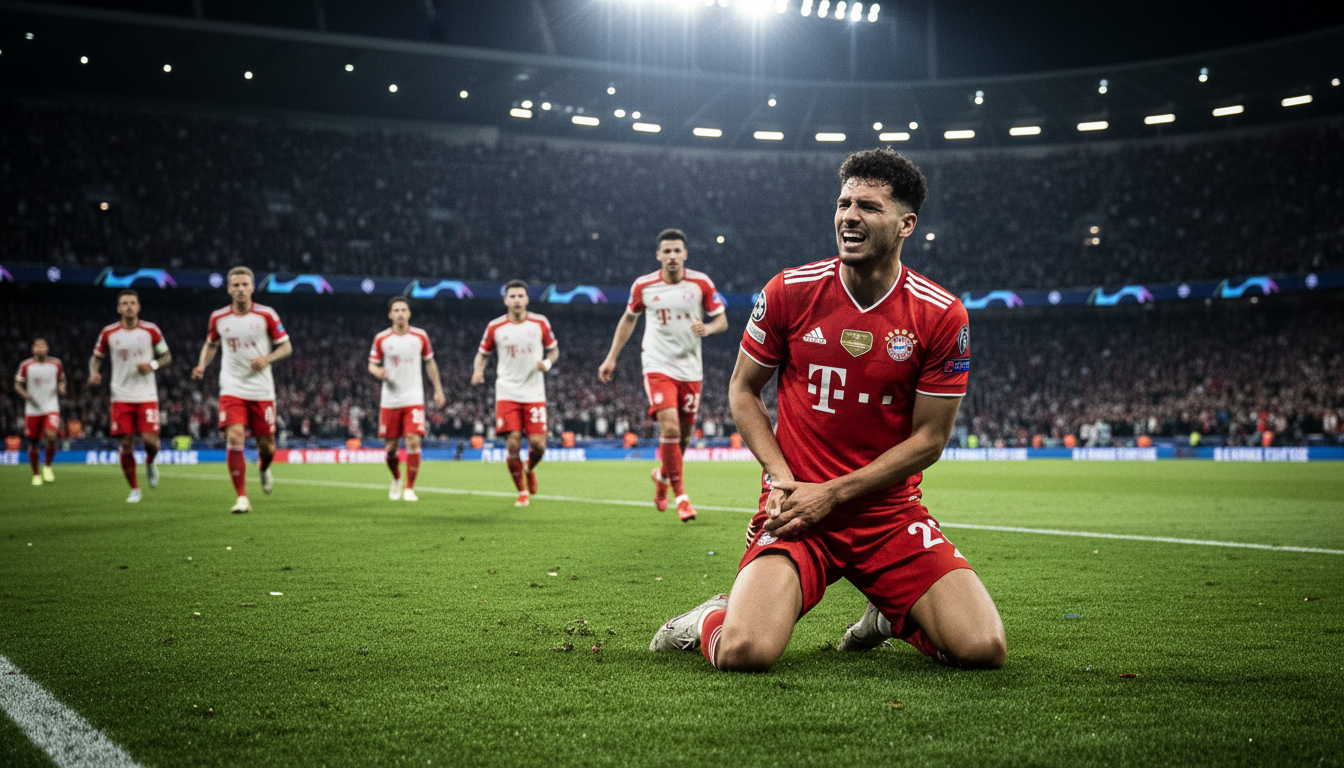
The news reverberated through the Canadian football landscape with the force of a seismic event. On Wednesday, May 6, during the second leg of the UEFA Champions League semi-final between Bayern Munich and Paris Saint-Germain, Canada captain Alphonso Davies sustained a left hamstring injury. The incident, occurring in a high-stakes 1-1 draw that ultimately saw PSG advance on aggregate, immediately cast a long shadow over Canada’s preparations for the home World Cup opener, now just 30 days away. Davies, who started on the bench, entered the fray in the 67th minute, injecting his characteristic pace and directness into the contest. Almost immediately, he made a decisive impact, assisting Harry Kane for Bayern’s equalizer, a moment that underscored his unique ability to alter the complexion of a match. However, the elation was short-lived, as Davies went down shortly thereafter, clutching his left hamstring. Bayern Munich’s subsequent confirmation of a four-to-five-week absence for their star left-back has plunged Canada Soccer into a critical period of tactical re-evaluation and contingency planning, with the World Cup opener against Bosnia and Herzegovina at BMO Field on June 12 rapidly approaching.
The Immediate Aftermath: Injury, Assist, and PSG’s Advance
The Champions League semi-final clash between Bayern Munich and Paris Saint-Germain on May 6 was a fixture laden with tension and tactical intrigue. Bayern, needing to overcome an aggregate deficit, introduced Alphonso Davies in the 67th minute, a clear signal of their intent to push for an equalizer and leverage his unique attacking attributes. The decision bore immediate fruit. Within minutes of his introduction, Davies showcased precisely why he is considered one of the most dynamic players in world football, driving forward with purpose and delivering a crucial assist to Harry Kane, leveling the score at 1-1 on the night. This moment encapsulated Davies’s capacity to deliver decisive contributions in the most demanding environments, illustrating his blend of explosive pace, dribbling ability, and vision in the final third. Yet, the very sequence that highlighted his brilliance also led to his undoing. The intensity of his sprint and subsequent movement proved too much for his left hamstring, leading to the injury that now threatens to derail Canada’s World Cup ambitions. While the match ended in a 1-1 draw, a result that might typically be viewed with some satisfaction given the opponent, the broader context of PSG advancing to the final on aggregate, coupled with Davies’s injury, left a somber mood among Bayern and, by extension, Canadian supporters. The immediate analytical focus shifted from the outcome of the semi-final to the critical implications of Davies’s fitness for the upcoming global showpiece, particularly given his status as Canada’s captain and most decisive attacking outlet.
The Critical Timeline: A Race Against the Calendar
Bayern Munich’s medical assessment confirmed that Alphonso Davies will be sidelined for a period of four to five weeks. This diagnosis sets a stringent timeline against the backdrop of Canada’s World Cup campaign. Counting from May 6, a four-week recovery period would see Davies potentially available for selection around June 3. A five-week recovery would push that date to June 10. Canada’s inaugural World Cup match, a highly anticipated fixture against Bosnia and Herzegovina at BMO Field in Toronto, is scheduled for June 12. This leaves an incredibly narrow window for Davies to not only complete his rehabilitation but also regain match fitness and integrate back into the squad’s tactical preparations. Even if he were to hit the optimistic end of the recovery timeline, returning on June 3, he would have less than ten days before the opening match. This duration is critically insufficient for a player of Davies’s explosive style, where peak physical conditioning is paramount to his effectiveness and, crucially, to mitigating the risk of re-injury. The consensus among medical and performance staff in elite football is that a player returning from a hamstring injury typically requires a gradual reintroduction to full training and competitive match play, often extending beyond the initial healing period. Consequently, while Davies might technically be cleared within the four-to-five-week window, his readiness to start, or even feature significantly, in the June 12 opener is highly improbable. Manager Jesse Marsch must, therefore, plan for Davies missing the opener at minimum, and realistically, potentially the subsequent group stage matches against Switzerland and Qatar as well, given the demanding schedule of a major tournament. The focus now shifts from “will he be back?” to “when will he be match-ready?” for the most crucial games.
Davies’ Irreplaceable Role in Canada’s System
Alphonso Davies is not merely a player for Canada; he is the fulcrum around which much of the team’s tactical identity and offensive threat revolves. His designation as Canada’s captain speaks volumes about his leadership qualities, both vocally and by example on the pitch. However, it is his unique blend of athletic attributes and technical prowess that makes him truly indispensable. As the team’s most decisive attacking outlet, Davies offers a dimension that no other player in the Canadian squad can replicate. His blistering pace, often clocked among the fastest in professional football, allows him to rapidly transition from defense to attack, creating counter-attacking opportunities that can dismantle even the most organized defenses. This speed is complemented by exceptional dribbling ability, enabling him to evade multiple markers in tight spaces or carry the ball over significant distances, drawing defenders and opening up passing lanes for teammates. Furthermore, his crossing ability from wide positions is consistently dangerous, providing service into the box for central attackers. Beyond his direct attacking contributions, Davies’s defensive recovery speed is also a critical asset, allowing Canada to play with a higher defensive line or commit more players forward, knowing that he can track back to nullify threats. In Jesse Marsch’s system, which often emphasizes verticality and high-intensity pressing, Davies’s ability to cover ground, win duels, and explode into space is foundational. His absence fundamentally alters Canada’s offensive patterns, reduces their threat in transition, and places additional strain on the defensive structure. The challenge for Marsch is not simply replacing a player, but reimagining the entire approach to compensate for the loss of a truly generational talent whose skill set is unparalleled within the squad.
Jesse Marsch’s Tactical Conundrum: Deconstructing Plan B
The absence of Alphonso Davies forces Jesse Marsch into a significant tactical recalibration for Canada’s World Cup opener and potentially beyond. The ground-truth dictates that Marsch will need to plan for Davies missing the opener at minimum, leading to a likely Plan B that involves Stephen Eustáquio deeper, Jonathan David alone up top, and possibly Tani Oluwaseyi or Cyle Larin in support. Each component of this contingency carries distinct implications for Canada’s overall structure and effectiveness.
Moving Stephen Eustáquio deeper represents a strategic shift in the midfield. Eustáquio is typically deployed as a central midfielder, often acting as a box-to-box presence or a deep-lying playmaker, dictating tempo and linking play. Placing him “deeper” suggests a more explicit role as a single pivot or part of a double pivot, tasked with increased defensive responsibility, screening the backline, and initiating attacks from a more withdrawn position. While Eustáquio possesses excellent passing range and tactical intelligence, playing him deeper could reduce his influence in the final third, where his late runs and ability to strike from distance are valuable. This adjustment might be aimed at shoring up the midfield’s defensive solidity in Davies’s absence, but it could also expose a lack of dynamism in central areas if not balanced correctly.
The instruction for Jonathan David to play “alone up top” implies a reliance on his individual brilliance and finishing prowess without the direct wide support and overlapping runs that Davies typically provides. David, a Bayern/Lille-level talent, thrives on intelligent movement, clinical finishing, and exploiting defensive gaps. However, playing as a lone striker, particularly against potentially compact defenses like Bosnia and Herzegovina’s, places immense pressure on him to create chances from limited opportunities. Without Davies stretching play and drawing defenders, David might find himself more isolated, receiving less service, and facing greater physical challenges against central defenders. His effectiveness will heavily depend on the quality of supply from midfield and the ability of wide players to push high and provide support.
The inclusion of Tani Oluwaseyi or Cyle Larin “in support” of David introduces two distinct profiles. Tani Oluwaseyi, an emerging talent, typically offers pace, directness, and an ability to run in behind defenses. His inclusion would aim to replicate some of Davies’s vertical threat, albeit from a different starting position and with a different skill set. Oluwaseyi’s ability to stretch play and engage defenders could create space for David, but his overall experience and consistency at the international level are still developing. Cyle Larin, on the other hand, provides a more traditional target man presence, with strong aerial ability and a knack for poaching goals in the box. Larin’s physical presence could offer David a foil, allowing him to play off Larin’s hold-up play or flick-ons. However, Larin’s pace and dribbling ability do not match Davies’s, meaning Canada would lose a significant portion of their ball-carrying and defensive recovery capabilities on the flanks. The choice between Oluwaseyi and Larin will likely depend on Marsch’s assessment of the opponent and the specific tactical objectives for each match, weighing speed and directness against physical presence and aerial threat. Both options represent a significant departure from the dynamic Davies offers, highlighting the profound impact of his injury on Canada’s offensive strategy.
The Depth Challenge: Beyond the Elite Duo
The factual reality that Alphonso Davies and Jonathan David are the “only Bayern/Lille-level talents” in Canada’s first XI underscores a critical challenge for the national team: a significant drop-off in elite-level quality beyond its two marquee players. While Canada has cultivated a squad of dedicated and competent professionals, the tier of talent that regularly competes at the highest echelons of European club football is exceptionally thin. This disparity becomes acutely pronounced when one of these foundational talents is absent. Davies’s injury, therefore, does not just remove a player; it removes a disproportionate amount of the team’s game-breaking ability, its capacity for individual brilliance, and its ability to consistently perform at the pace and technical level required to compete against top international opposition. The tactical adjustments discussed, such as repositioning Stephen Eustáquio or bringing in Tani Oluwaseyi or Cyle Larin, are not merely like-for-like swaps; they are attempts to mitigate the loss of a truly elite player with alternatives that, while capable, operate on a different plane of performance. The collective output of the team must rise significantly to compensate for the void left by Davies, demanding greater consistency, tactical discipline, and individual moments of quality from players who typically operate at a slightly lower club standard. This challenge is magnified in a World Cup setting, where margins are razor-thin and every moment of individual brilliance can be the difference between progression and early elimination. The reliance on Davies and David has been a cornerstone of Canada’s recent successes, and navigating a major tournament without one of them at full capacity will test the depth and resilience of the squad like never before.
Group B Implications: Navigating the Opening Fixtures
Canada finds itself in Group B for the 2026 FIFA World Cup, alongside Switzerland, Qatar, and Bosnia and Herzegovina. The opening fixture against Bosnia and Herzegovina on June 12 was always earmarked as a crucial match – a “must-win” in the context of securing early points and building momentum for potential progression from the group stage. With Alphonso Davies now highly likely to miss this opener, and potentially subsequent matches, the strategic imperative surrounding this game intensifies. Bosnia and Herzegovina, while not considered a top-tier footballing nation, will undoubtedly approach this match with organization and a desire to capitalize on any perceived Canadian vulnerability. Without Davies’s explosive pace and direct attacking threat, Canada’s ability to break down a potentially resolute Bosnian defense will be significantly hampered. The onus will fall heavily on Jonathan David to convert any chances, and on the supporting cast to provide the creative spark and defensive solidity that Davies also contributes through his exceptional work rate.
Following the opener, Canada faces Switzerland, a team consistently ranked among Europe’s stronger sides, known for their tactical discipline, robust midfield, and experienced defense. A fully fit Davies would have been instrumental in challenging Switzerland’s defensive structure and exploiting any space on the flanks. His potential absence makes this fixture even more challenging, requiring Marsch’s side to adopt a pragmatic and disciplined approach, likely focusing on defensive solidity and opportunistic counter-attacks. The final group match against Qatar, while perceived as another winnable game, also carries its own pressures. Qatar, as a World Cup host in 2022, will be eager to prove their credentials and will not be underestimated. The cumulative effect of Davies’s absence across these three group stage matches could be profound. Even if he returns for the latter stages of the group, his match fitness and ability to perform at his customary elite level would be a serious concern. The points accumulated in the group stage are paramount for progression, and the tactical adjustments necessitated by Davies’s injury will require the entire squad to elevate their performance collectively to compensate for the void left by their captain and most influential player. Canada Soccer’s official statement, confirming they remain in touch with Bayern’s medical team, underscores the continuous monitoring of Davies’s recovery, recognizing the profound impact his availability will have on the team’s World Cup aspirations.
As April 2026 draws to a close, the countdown to the FIFA World Cup is intensifying, and for Canada, it is now inextricably linked with the recovery timeline of Alphonso Davies. Jesse Marsch faces an unenviable task of preparing a squad for a home World Cup opener without their captain and most decisive attacking outlet, at minimum. The strategic adjustments, the reliance on other key players, and the collective will of the team will be tested from the very first whistle against Bosnia and Herzegovina. While the hope for Davies’s swift and full recovery remains strong, the prudent approach necessitates a robust Plan B, ensuring that Canada can compete fiercely and effectively, regardless of their star player’s immediate availability. The next few weeks will be a critical period of adaptation and resilience for the Canadian national team as they navigate the most significant tournament in their history.
Sources: CBC Sports — Davies hamstring injury, FOX Sports — Davies injures hamstring, Bundesliga.com — Davies set for spell on sidelines, TSN — Davies’ injury setback puts WC in doubt
Sources

Related news
17 Days Out: The 2026 World Cup Squad Announcement Week Is Complete
Brazil, Switzerland, Germany, England and Spain have all submitted their final 26. Argentina's cut lands 2…
Manuel Neuer’s Comeback at 40: Inside Germany’s Most Talked-About Goalkeeper Decision
Manuel Neuer has come out of international retirement to be Germany's No. 1 at the 2026…
Lennart Karl Makes Germany’s 26: Bayern’s Teenage Attacker Earns His World Cup Call
Lennart Karl, Bayern Munich's teenage attacking midfielder, has made Julian Nagelsmann's final Germany 26. Alongside Cologne's…