Germany’s 26 Lands Thursday: Nagelsmann’s Final Decisions Ahead of the 21 May Reveal
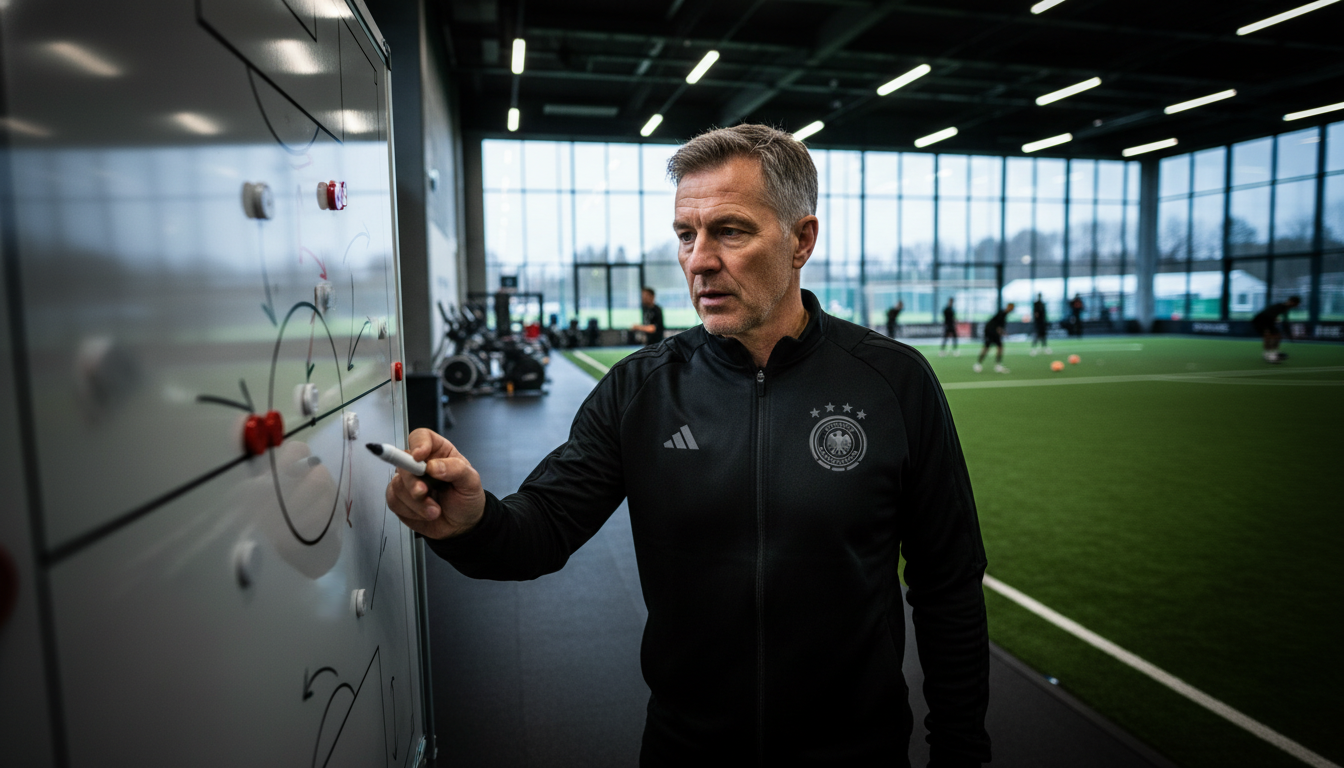
The anticipation surrounding Germany’s final 26-man World Cup squad is set to reach its climax on Thursday 21 May 2026, when Julian Nagelsmann officially reveals his selections. The announcement, originally slated for 12 May, was strategically postponed by nine days, a move designed to afford the manager a clearer picture following the conclusion of the Bundesliga 2025-26 season on 16 May and to mitigate the risk of last-minute injuries. Nagelsmann has indicated that 20 names are already locked into his roster, leaving a critical six spots still in play, subject to intense scrutiny and debate in the coming weeks. This final stretch before the reveal is characterized by a blend of certainty and high-stakes uncertainty, encapsulating the complex decisions facing the German national team coach.
Among the confirmed inclusions is Said El Mala, the 19-year-old talent from Cologne, personally informed by Nagelsmann of his place in the squad. This early confirmation for a burgeoning star signals a clear intent from the German management regarding youth integration. Conversely, the situation surrounding Bayern Munich’s veteran goalkeeper Manuel Neuer remains a dominant narrative. His potential return is highly uncertain, with MRI results still pending and crucial to the final decision. Neuer himself has notably refused to comment on his prospects, adding to the intrigue. Furthermore, reports suggest a significant snub for striker Niclas Füllkrug, a decision that will undoubtedly spark considerable discussion and analysis regarding Nagelsmann’s attacking blueprint for the tournament. With Germany set to open their World Cup campaign against Curaçao on 14 June at NRG Stadium in Houston, these final selections will shape the nation’s aspirations on the global stage.
The Strategic Delay and Nagelsmann’s Rationale
Julian Nagelsmann’s decision to push back the squad announcement from 12 May to 21 May was a calculated tactical maneuver, reflecting a meticulous approach to squad construction. The primary rationale behind this nine-day postponement was two-fold: to allow for the full completion of the Bundesliga 2025-26 season, which concluded on 16 May, and to avoid any last-minute injuries that could derail carefully considered selections. In the high-intensity environment of top-flight European football, the final weeks of a domestic season often bring unforeseen physical tolls. By extending the decision-making window, Nagelsmann has bought himself valuable time to assess player fitness, form, and availability in their most current state, mitigating the risk of selecting a player who might subsequently suffer an injury just days before the official reveal.
This strategic patience underscores Nagelsmann’s emphasis on having the most robust and ready squad possible as Germany prepares for a demanding World Cup campaign. With 20 names already confirmed in his mind, the delay specifically benefits the evaluation of those six remaining, contested spots. These are the positions where marginal gains, recent performances, or a clean bill of health could be the deciding factor. A player on the cusp of selection might have his chances boosted by a strong final league outing or, conversely, jeopardized by a late knock. The manager’s proactive approach in delaying the announcement demonstrates a commitment to making informed, data-driven decisions, rather than relying on earlier assessments that might quickly become outdated. It provides a buffer against the unpredictable nature of professional football, ensuring that the players ultimately chosen are those best equipped to contribute from day one of the training camp.
Furthermore, the 21 May reveal date provides a comfortable window before the official FIFA submission deadline, which is 30 May, with some sources also citing 1 June. This allows for any final administrative processes, potential appeals, or even emergency replacements should an unforeseen circumstance arise in the immediate aftermath of the announcement. Nagelsmann’s meticulous planning suggests a manager leaving as little to chance as possible, understanding that every detail, including the timing of a squad reveal, can have an impact on team cohesion and preparation for a tournament where Germany enters with outright odds of +1400, ranking seventh on the board.
The Youthful Intrusion: Said El Mala’s Ascent
One of the most compelling narratives emerging from Nagelsmann’s pre-announcement statements is the confirmed inclusion of Said El Mala. The 19-year-old midfielder from Cologne has secured his place in Germany’s 26-man World Cup squad, a testament to his rapid development and the manager’s willingness to integrate promising young talent. Nagelsmann personally informed El Mala of his selection, a gesture that highlights the significance of this call-up and the belief the coaching staff has in his potential. For a player of El Mala’s age, earning a spot in a senior World Cup squad is an extraordinary achievement, particularly given the depth of talent typically available to a footballing nation like Germany.
El Mala’s inclusion signals a clear strategic direction for the German national team, emphasizing a blend of established experience with youthful exuberance and future potential. In a squad where 20 names are already locked, the selection of a 19-year-old for one of the remaining six spots suggests he is not merely a developmental pick, but a player Nagelsmann believes can genuinely contribute, even if his role might initially be from the bench or as a dynamic option. His presence could inject a fresh perspective and energy into the squad, offering a different dimension to Germany’s midfield or attacking options. This move aligns with a broader trend in international football where age is becoming less of a barrier to entry for exceptional talents, provided they demonstrate the requisite skill, maturity, and tactical understanding.
The impact of El Mala’s selection extends beyond his individual story. It sends a powerful message to other young German players about the pathway to the national team under Nagelsmann. It suggests that merit and potential, regardless of age or previous international caps, are key criteria for selection. For the other players vying for those six remaining spots, El Mala’s confirmed inclusion means one less position is available, intensifying the competition. His journey from the Bundesliga to the World Cup squad in such a short span will be closely watched, and his potential contribution, however large or small, could prove to be a pivotal factor in Germany’s campaign. His presence reinforces the notion that Nagelsmann is building a team not just for the immediate tournament, but with an eye on the future of German football, balancing the need for immediate success with long-term strategic development.
The Goalkeeper Conundrum: Neuer’s Shadow and Potential Four-Keeper Strategy
The most significant unresolved question dominating Germany’s squad selection remains the status of Manuel Neuer. The veteran Bayern Munich goalkeeper’s return to the national team is shrouded in uncertainty, with crucial MRI results expected to dictate his fate. Neuer himself has maintained a steadfast silence on his potential inclusion, refusing to comment on the matter, a stance that only heightens the speculation and intrigue surrounding his fitness and readiness for the rigors of a World Cup. His situation presents a complex challenge for Julian Nagelsmann, who must weigh the immense experience and leadership Neuer brings against any lingering doubts about his physical condition.
Compounding this uncertainty is the possibility that Germany could opt to name four goalkeepers in their final 26-man squad. While FIFA regulations mandate a minimum of three goalkeepers, selecting a fourth would represent a departure from standard practice for many nations. This potential strategy, reported by Yahoo Sports, suggests a profound level of concern or a very specific tactical rationale within the German camp. If Nagelsmann indeed chooses to carry an extra goalkeeper, it would mean sacrificing an outfield player, thereby reducing the tactical flexibility in other areas of the squad. This decision would not be taken lightly and implies that the goalkeeping situation is far from settled, possibly due to the ongoing questions surrounding Neuer, or perhaps a desire to provide comprehensive cover across all scenarios.
The implications of a four-keeper squad are substantial. It hints at either a lack of absolute confidence in the fitness of the primary choices, or a desire to nurture a younger talent within the World Cup environment without the immediate pressure of being a primary backup. Given that 20 names are reportedly locked, the goalkeeping positions, particularly the third and potentially fourth spots, are likely among the six still in play. The MRI results for Neuer will be paramount; a favorable outcome could see him included, potentially as one of the locked names or as a key decision for one of the remaining spots. An unfavorable one would force Nagelsmann to pivot, potentially elevating another keeper or solidifying the choices for the three mandatory slots. The silence from Neuer himself adds another layer of complexity, preventing any definitive conclusions until Nagelsmann makes his final announcement on 21 May. The decision on the goalkeeping unit will be one of the most scrutinized elements of the entire squad, directly influencing the balance and depth of the German contingent heading to the tournament.
The Outfield Equation: Snubs, Anchors, and Attacking Flair
While some names are confirmed and others are pending critical medical evaluations, the composition of Germany’s outfield players provides a clearer, albeit still evolving, picture of Julian Nagelsmann’s tactical vision. A significant piece of news on the personnel front is the reported snub of striker Niclas Füllkrug. If confirmed, this decision would represent a notable omission for a player who has, at times, been a prominent figure in the national team setup. Such a move would underscore Nagelsmann’s preference for a different profile in attack or a belief that other forwards better suit his system, further intensifying the competition for the remaining six squad spots and potentially opening doors for alternative options.
At the forefront of Nagelsmann’s attacking plans, a projected starting trio of Florian Wirtz, Jamal Musiala, and Nick Woltemade promises dynamism, creativity, and a modern approach to goal-scoring. Wirtz and Musiala, renowned for their dribbling ability, vision, and capacity to unlock defenses, represent the vanguard of Germany’s offensive prowess. Their youthful energy and technical brilliance are expected to be key in breaking down opponents, particularly in group stage matches against Curaçao, Côte d’Ivoire, and Ecuador. The inclusion of Woltemade in the projected starting lineup suggests Nagelsmann is looking for a blend of directness and intelligent movement, completing a front line capable of interchangeability and fluid attacking patterns. These three individuals are likely among the core 20 players Nagelsmann has already locked in, forming the spearhead of Germany’s challenge.
Balancing this attacking flair, Germany’s defensive anchors provide the crucial stability and experience required for a successful tournament campaign. Joshua Kimmich, İlkay Gündoğan, and Antonio Rüdiger are expected to form the backbone of the squad, anchoring the midfield and defense with their leadership, tactical intelligence, and physical presence. Kimmich’s versatility and relentless work rate, Gündoğan’s calm distribution and game management, and Rüdiger’s commanding presence at the heart of the defense are indispensable qualities. These established figures are widely anticipated to form the backbone of the squad, presumably among the names Nagelsmann has already secured. Their ability to dictate play, win possession, and organize the defensive shape will be vital, especially as Germany navigates a group that, while not considered the toughest, still demands respect and disciplined performances. The interplay between these experienced anchors and the youthful attacking talents will define Germany’s overall approach and effectiveness as they aim to progress deep into the tournament, starting with their opening match against Curaçao on 14 June in Houston.
As the final countdown to 21 May begins, Julian Nagelsmann’s Germany squad reveal promises to be a pivotal moment. The careful balance between integrating exciting youth talents like Said El Mala, managing the uncertainty surrounding veterans such as Manuel Neuer, and making tough decisions like the reported snub of Niclas Füllkrug, all underscore the intricate challenge of assembling a World Cup-winning team. With 20 names reportedly locked, the focus intensifies on the six remaining spots, where form, fitness, and tactical fit will be the ultimate arbiters. The selections made in the coming weeks will not only define Germany’s immediate prospects against Curaçao, Côte d’Ivoire, and Ecuador in Group E, but also signal the long-term direction of one of football’s most decorated nations, as they aim to exceed their +1400 odds and make a profound impact on the 2026 FIFA World Cup.
Sources: Khelnow — When will Nagelsmann announce Germany’s squad, Bulinews — El Mala set for spot in Germany’s squad, Yahoo Sports — Germany could name four goalkeepers, Yahoo Sports — Neuer MRI results could impact decisions
Sources

Related news
France vs Senegal Preview: Mbappé’s First World Cup Match Lands at MetLife
France open their 2026 World Cup campaign against Senegal at MetLife Stadium on Tuesday 16 June.…
Five Days In: Where Matchday 1 Has Left the 2026 World Cup Favourites
Mexico routine, USA emphatic, Germany sensational. But Brazil were second-best for stretches against Morocco, Switzerland could…
Scotland 1-0 Haiti: Scotland’s First World Cup Win Since 1998
Scotland beat Haiti 1-0 at Gillette Stadium in Boston on Sunday 14 June for their first…