Graham Potter Names Sweden’s 26: Isak and Gyökeres Lead the Line
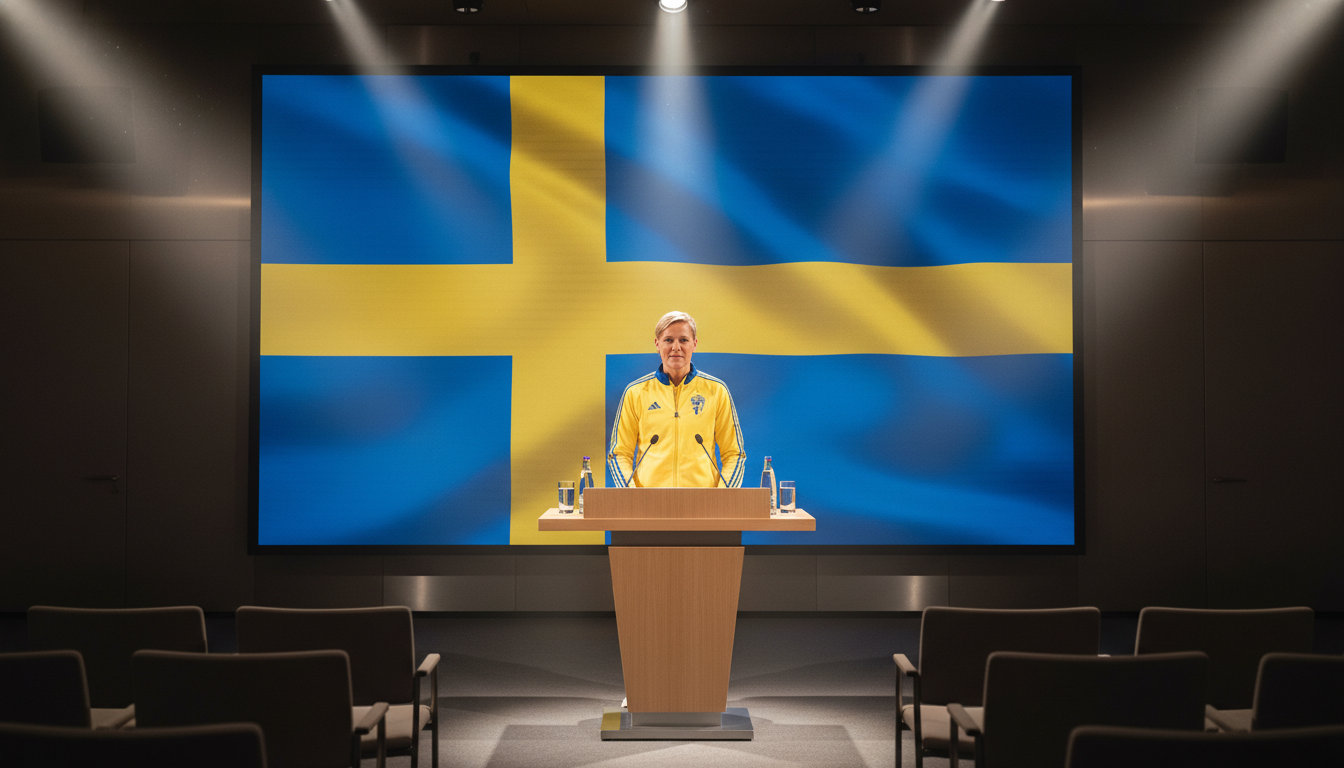
Sweden’s anticipation for the 2026 FIFA World Cup reached a new level on Tuesday 12 May, as manager Graham Potter officially named his final 26-man squad in Stockholm. The announcement, which positioned Sweden as one of the first nations to finalise their roster for the tournament running from 11 June to 19 July across the United States, Canada, and Mexico, immediately focused attention on the striking department. Liverpool’s Alexander Isak, a prominent figure recalled after missing the crucial March play-offs, headlines the selection, with Sporting CP’s Viktor Gyökeres included as a key strike pairing option. However, the squad also confirmed a significant absence, with Tottenham’s long-term absentee Dejan Kulusevski missing out, as the tournament has regrettably come too soon for his return.
Potter’s Early Declaration: Setting the Tone for Sweden’s World Cup Bid
The decision by Graham Potter to finalise his 26-man squad well in advance of the 2026 FIFA World Cup speaks volumes about his methodical approach and his desire to cultivate a clear tactical identity for the national team. Potter, who took over the Sweden job in autumn 2025, has had a relatively short period to implement his vision, making the early squad declaration a strategic move. By naming his squad on 12 May, Sweden has gained a valuable head start in preparation, allowing for focused training camps and a reduction in external speculation that often accompanies later announcements from other competing nations. This proactive stance provides Potter with an uninterrupted window to fine-tune his squad’s cohesion and tactical understanding ahead of their opening Group F fixture on 14 June.
The early finalisation of the squad also underscores a certain confidence in the chosen personnel and a readiness to commit to a core group of players. While some managers might prefer to monitor player form and fitness closer to the deadline, Potter’s approach suggests a belief in the stability and depth he has identified. This strategy can foster a strong sense of unity within the camp, as players are now fully aware of their roles and the collective objective. The journey to this point was not without its challenges, as Sweden secured their place in the World Cup through the demanding European playoff route in March. This qualification path, overcoming formidable opponents like Ukraine and Poland, demonstrated the team’s resilience and ability to perform under pressure, qualities that Potter will undoubtedly seek to harness as they enter the global stage.
Potter’s tenure, though brief since autumn 2025, has been marked by a pragmatic assessment of the available talent and a clear strategic direction. His coaching philosophy, often characterised by tactical flexibility and a focus on player development, will be crucial in shaping Sweden’s performance in Group F. The early squad announcement is not merely a procedural step; it is a declaration of intent, signaling Sweden’s readiness to approach the World Cup with a well-defined plan and a committed group of players, all under the guidance of a manager determined to maximise their potential in a short timeframe.
The Striking Equation: Isak’s Return and Gyökeres’s Partnership
The headline inclusion of Alexander Isak in Sweden’s 26-man World Cup squad represents both a significant boost and a calculated risk for Graham Potter. Isak, who missed the crucial March play-offs, returns to the national setup as a key attacking figure, his presence immediately elevating the team’s offensive potential. His recall underscores his importance to Potter’s plans, despite a club season at Liverpool that has been significantly disrupted by injuries. Since his record summer transfer from Newcastle, Isak has started only eight Premier League matches in the 2025-26 season, a statistic that highlights the challenges he has faced in maintaining consistent fitness and form. This limited game time naturally raises questions about his match sharpness and endurance for a demanding tournament.
Potter addressed these concerns directly, acknowledging the inherent difficulties in returning from a long-term injury. “When you’ve had a long-term injury, it is never a straight road back; there is often one step forward and one step back,” Potter stated, providing a realistic assessment of Isak’s recovery path. However, the manager’s subsequent declaration of confidence in Isak’s ability to reach his peak form is equally telling: “Our challenge is to get Alex into peak form because when he is at his best, he is a world-class player.” This statement not only sets a clear objective for the coaching staff during the pre-tournament period but also communicates a strong belief in Isak’s inherent quality and his potential to be a decisive player for Sweden in the World Cup.
Complementing Isak in the attacking options is Viktor Gyökeres, whose inclusion from Sporting CP provides Potter with a versatile strike pairing. The designation of Gyökeres as a “strike pairing option” alongside Isak suggests that Potter envisions various tactical formations and partnerships up front. This could mean deploying them together in a two-striker system, where their differing attributes might combine effectively, or using them as interchangeable options depending on the opponent and game situation. Gyökeres’s presence offers a different profile, potentially bringing a physical presence, hold-up play, or direct running that could synergise with Isak’s more fluid movement and finishing ability. The challenge for Potter will be to manage Isak’s fitness carefully while integrating Gyökeres into a cohesive attacking unit, ensuring that Sweden’s offensive threat is both potent and sustainable throughout the group stage and beyond.
Notable Omissions and Crucial Recalls
Graham Potter’s squad selection, while highlighting key inclusions, also brought with it a significant omission in Dejan Kulusevski. The Tottenham forward, a long-term absentee from club duties, will not feature for Sweden at the World Cup, with Potter confirming that the tournament has simply “come too soon” for his recovery. Kulusevski’s absence represents a considerable blow to Sweden’s creative and wide attacking options. Known for his dribbling ability, vision, and capacity to create chances from the flanks or central attacking midfield roles, his omission will necessitate alternative solutions for Potter. This situation will test the depth of the squad and potentially open opportunities for other players to step into more prominent roles, particularly in areas requiring flair and direct attacking impetus. The lack of a player of Kulusevski’s calibre will require tactical adjustments to ensure Sweden maintains sufficient offensive variety and penetration against strong defensive units.
Conversely, the squad announcement also marked the recall of seven players who were not part of the Sweden squad for the critical March play-offs against Ukraine and Poland. This significant number of recalls indicates a strategic shift or perhaps a broader assessment of talent by Potter since the qualification phase. It suggests that the March play-offs, while successful in securing World Cup qualification, may have also served as an opportunity for Potter to evaluate different combinations and depth players. The reintroduction of these seven individuals points towards Potter consolidating his preferred core group for the tournament, bringing back players he believes are essential for the World Cup challenge. Their reintegration into the squad will be a key task for the coaching staff, ensuring that these returning players can quickly adapt to Potter’s tactical framework and build strong relationships with their teammates ahead of the opening fixture.
The dynamic interplay between omissions due to injury, such as Kulusevski’s, and the strategic recalls of other key players, illustrates the complex decision-making process inherent in World Cup squad selection. Potter must balance fitness concerns, tactical requirements, and the need for a cohesive unit. The absence of Kulusevski will undoubtedly be felt, particularly in games where individual brilliance is required to unlock defences. However, the return of the seven players from the March play-off sidelines suggests a strengthening of the overall squad, potentially bringing back experience, specific skill sets, or a renewed sense of purpose that Potter deems vital for navigating the demanding Group F schedule.
Navigating Group F: Challenges and Opportunities
Sweden’s path in the 2026 FIFA World Cup will commence in Group F, a challenging quartet that pits them against the Netherlands, Japan, and Tunisia. This group presents a diverse set of opponents, each with distinct playing styles and strengths, demanding tactical versatility and robust performances from Graham Potter’s side. The Netherlands, a perennial powerhouse in international football, will undoubtedly be considered the group favourites. Their blend of technical quality, physical presence, and tactical discipline will provide a stern test, likely requiring Sweden to be defensively organised and opportunistic in transition. Matches against the Netherlands often hinge on fine margins, and Sweden will need to be at their absolute best to secure a positive result.
Japan represents a different kind of challenge. Known for their high-energy pressing, intricate passing, and technical proficiency, the Asian representatives can pose problems for any defence. Their speed and movement in advanced areas, combined with a disciplined midfield, will necessitate a disciplined defensive shape from Sweden and an ability to counter their quick transitions. Sweden will need to manage Japan’s periods of possession effectively and exploit any spaces left in behind their aggressive attacking lines. This fixture will likely be a battle of tactical wits, with both teams vying for control of the midfield and exploiting their respective strengths.
Tunisia, often regarded as one of Africa’s most organised and defensively resolute teams, will complete Group F. Their approach typically involves a strong defensive structure, making them difficult to break down, coupled with a threat on the counter-attack and from set-pieces. Sweden’s opening match against Tunisia on 14 June will be crucial in setting the tone for their tournament. Against such an opponent, patience, creative movement, and clinical finishing will be paramount. Breaking down a well-drilled Tunisian defence will require sustained pressure and intelligent play, avoiding frustration and maintaining tactical discipline throughout the match. The North African side’s ability to absorb pressure and launch swift counter-attacks means Sweden cannot afford to be complacent.
For Sweden, navigating Group F will require a pragmatic approach, adapting their strategy to each opponent. The collective strength of the squad, particularly in midfield and defence, will be vital, as will the ability of their key attackers, including the returning Alexander Isak and Viktor Gyökeres, to convert chances. Graham Potter’s tactical flexibility, honed during his club management career, will be heavily scrutinised as he seeks to guide Sweden through this challenging group and into the knockout stages of the World Cup. Each match will be a distinct tactical puzzle, and Sweden’s success will hinge on their ability to solve them consistently.
The Opening Statement: Sweden vs. Tunisia in Monterrey
The 2026 FIFA World Cup campaign for Sweden will kick off with a crucial Group F encounter against Tunisia on 14 June at Estadio BBVA Monterrey. This opening fixture holds immense significance, as it provides the first opportunity for Graham Potter’s newly finalised squad to make a statement and set the tone for their tournament aspirations. Playing their first match in Monterrey, Mexico, adds another layer of context, with environmental factors such as humidity and pitch conditions potentially playing a role, although all teams will face similar adjustments. The date itself, just over a month after the squad announcement, allows for a concentrated period of preparation, where Potter can fine-tune his tactical approach specifically for this initial opponent.
For Sweden, securing a positive result against Tunisia is paramount. In a group that includes strong contenders like the Netherlands and a technically proficient Japan, points from the opening match against a potentially less-fancied opponent are vital for building momentum and easing pressure for subsequent games. Tunisia, known for their defensive solidity and disciplined approach, will likely present a compact and organised challenge. Breaking down their defensive block will require creativity, patience, and precise execution from Sweden’s attacking players. The partnership of Alexander Isak and Viktor Gyökeres, if deployed together, will be under immediate scrutiny to provide the cutting edge necessary to unlock the Tunisian defence.
Potter’s tactical setup for this match will be particularly revealing. Will he opt for an aggressive, possession-based approach to dominate Tunisia, or will he favour a more cautious strategy, aiming to exploit counter-attacking opportunities? The management of Isak’s fitness, given his injury-plagued season, will also be a key consideration; Potter might need to balance his desire for Isak’s ‘world-class’ impact with the need to preserve him for the entire group stage. The opening game often dictates the narrative for a team’s World Cup journey, and a strong performance against Tunisia could instill confidence, validate Potter’s squad selections, and lay a solid foundation for Sweden’s ambitions to progress from Group F. Conversely, any misstep could immediately place them under significant pressure ahead of their more challenging fixtures.
As the 2026 FIFA World Cup approaches, Graham Potter has laid out his cards, presenting a Sweden squad that balances the return of key talents with pragmatic decisions regarding fitness and form. The early announcement of the 26-man roster, featuring the pivotal Alexander Isak and Viktor Gyökeres, signals a clear strategic intent from the manager. While the omission of Dejan Kulusevski is a blow, the recalls of seven players who missed the March play-offs highlight a refined vision for the team. Navigating Group F against the Netherlands, Japan, and Tunisia will be a demanding task, beginning with the crucial opening fixture against Tunisia in Monterrey. Potter’s challenge now is to mould this selected group into a cohesive unit capable of executing his tactical plans and fulfilling Sweden’s ambitions on the global stage.
Sources: ESPN — Isak headlines final Sweden WC roster, beIN Sports — Potter’s official Sweden WC squad, Flashscore — Sweden 26-man squad named, Tribal Football — Isak and Gyökeres in Sweden 26
Sources

Related news
France vs Senegal Preview: Mbappé’s First World Cup Match Lands at MetLife
France open their 2026 World Cup campaign against Senegal at MetLife Stadium on Tuesday 16 June.…
Five Days In: Where Matchday 1 Has Left the 2026 World Cup Favourites
Mexico routine, USA emphatic, Germany sensational. But Brazil were second-best for stretches against Morocco, Switzerland could…
Scotland 1-0 Haiti: Scotland’s First World Cup Win Since 1998
Scotland beat Haiti 1-0 at Gillette Stadium in Boston on Sunday 14 June for their first…