Neymar’s Return: A 2.5-Year International Absence Ends at the 2026 World Cup
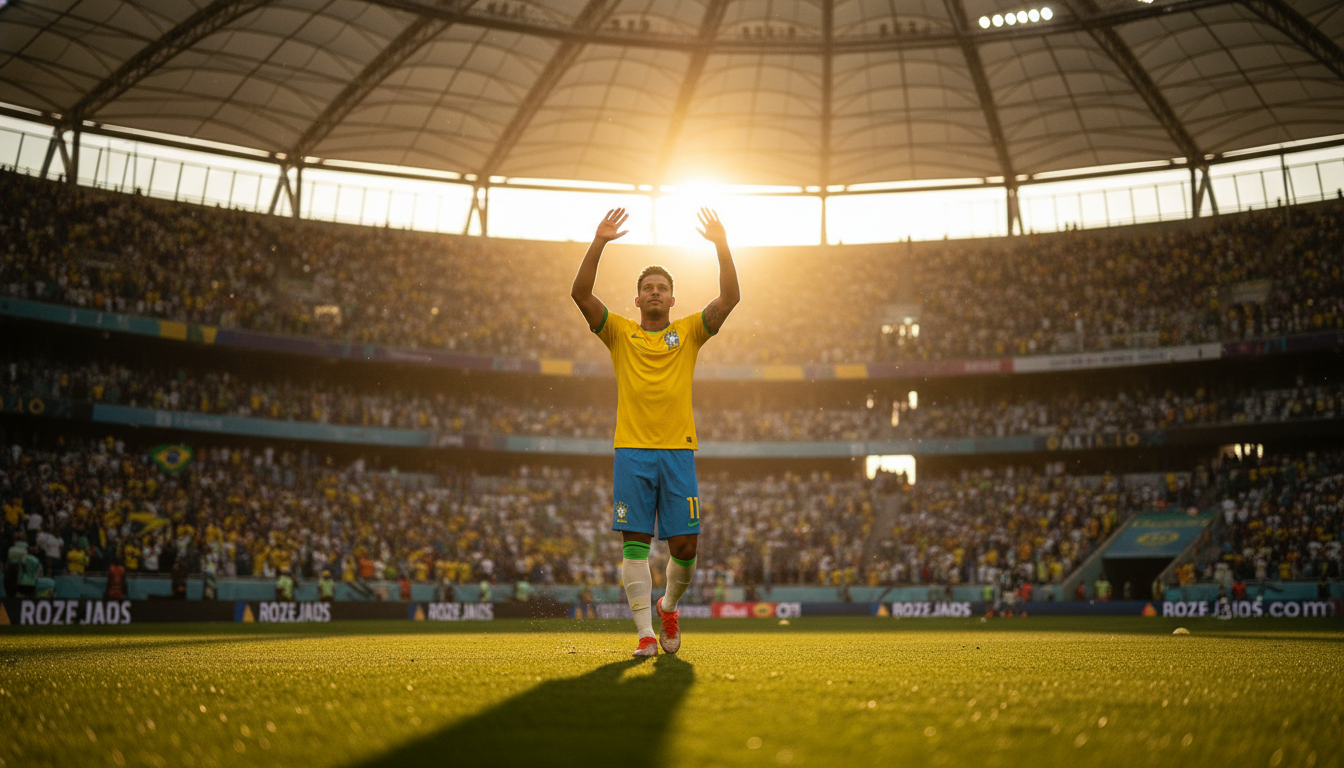
Carlo Ancelotti has done what most observers thought he wouldn’t: included Neymar in Brazil’s final 26-man World Cup squad. The Santos forward has not played for Brazil since 18 October 2023, when he tore his ACL against Uruguay. This 2.5-year international absence is set to conclude at the 2026 World Cup, marking the tournament’s most-watched comeback story. The decision, announced on 18 May, places the 34-year-old at the heart of Brazil’s pursuit of a sixth global title, a quest burdened by a 24-year drought since their last victory in 2002. Ancelotti, Brazil’s first foreign manager since 1965, has made a calculated gamble, balancing the immense experience and historical impact of Brazil’s all-time top scorer against the physical realities of a player returning from a significant injury.
The Long Road Back: Recovery and Ancelotti’s Calculated Risk
Neymar’s inclusion in the Brazil squad for the 2026 FIFA World Cup, set to commence on 11 June, represents the culmination of a demanding rehabilitation period following the ACL tear suffered on 18 October 2023 against Uruguay. This injury, occurring in a critical World Cup qualifier, initiated an approximately 2.5-year hiatus from international football, a substantial period for any player, particularly one of Neymar’s age and historical significance. At 34, the physical demands of returning from such a severe knee injury are considerable, often challenging a player’s explosiveness, agility, and endurance – attributes that have defined much of Neymar’s illustrious career. The recovery process involves not only extensive physical therapy but also a meticulous rebuilding of match fitness and confidence, a journey that Ancelotti’s staff has evidently monitored with intense scrutiny.
The decision to recall Neymar was not made lightly. Carlo Ancelotti, known for his pragmatic and detail-oriented approach, conducted a “lengthy review” of Neymar’s fitness and performance in the Brazilian league. Following his departure from Al-Hilal, Neymar’s move to Santos placed him squarely within the domestic football landscape, allowing for direct and consistent observation by the Brazilian national team’s medical and coaching staff. This period at Santos offered Ancelotti a vital opportunity to assess Neymar’s current physical condition, his ability to withstand the rigors of competitive play, and his overall contribution to his club team. It provided the empirical data necessary to make an informed judgment, mitigating the speculative nature that might have accompanied a player recovering from a major injury in a less transparent environment. Ancelotti’s willingness to base his decision on recent, observable performance in a competitive league underscores his analytical approach, prioritizing current form and fitness over past reputation alone, while still acknowledging the unique qualities Neymar possesses.
Tactical Integration: A Supporting Role for a Star
Neymar’s likely tactical role within Ancelotti’s Brazil squad reflects a pragmatic adaptation to both his current physical status and the existing strength of the team’s attacking options. The ground truth indicates his role will likely be a “free attacking role from the bench or as a No. 10 alternative.” This is a significant shift from his historical position as Brazil’s primary attacking focal point and left winger. The established presence of Vinícius Júnior as the first-choice left winger and Raphinha holding the right flank confirms that Neymar is not expected to displace either of these in the starting XI. Instead, his value will derive from his ability to provide a different dimension to Brazil’s attack, particularly in situations requiring creative incision or a change of pace.
As a No. 10 alternative, Neymar could operate centrally behind the main striker, orchestrating play, providing through balls, and linking midfield with attack. This position leverages his exceptional vision, passing range, and ability to draw defenders, creating space for others. From the bench, his impact could be substantial against tiring defenses, offering a fresh burst of creativity and unpredictability. His “free attacking role” suggests he would not be confined to a rigid position, allowing him to drift across the final third, exploit half-spaces, and engage in spontaneous combinations with teammates. This flexibility could be particularly effective in breaking down compact defensive blocks or when Brazil is chasing a goal. Ancelotti’s strategy appears to be about maximizing Neymar’s unique attributes in specific game states, rather than burdening him with the full 90-minute responsibility of a primary attacker, a role that might be too demanding given his recent injury history and age. This approach allows Brazil to harness his experience and unparalleled individual skill without compromising the team’s overall physical intensity and defensive structure.
The Weight of History: Brazil’s Drought and Neymar’s Redemption Arc
The inclusion of Neymar in the 2026 World Cup squad is inextricably linked to Brazil’s persistent quest to end their 24-year World Cup drought, a period of frustration for a nation synonymous with footballing excellence. Since their triumph in 2002, Brazil has consistently fallen short, often at the quarter-final stage, including their elimination by Croatia on penalties in Qatar 2022, which was Neymar’s last World Cup appearance. That defeat, where Neymar scored what many thought would be the winning goal in extra time, only to see it canceled out moments later, was a particularly bitter pill for the player and the nation. His return therefore carries a profound sense of redemption, both for himself and for the team.
Neymar’s career statistics for Brazil underscore his historical importance: 128 caps and 79 goals, making him Brazil’s all-time top scorer. This record speaks to a career of consistent contribution and leadership, bearing the hopes of a football-mad nation for over a decade. His experience in high-stakes international tournaments, including multiple World Cups, is invaluable in a squad that, while possessing immense talent, still requires the calm and composure that only a veteran of his caliber can provide. In the intense atmosphere of a World Cup, especially with the added pressure of a lengthy national drought, having a player who has navigated these emotional and tactical landscapes multiple times can be a critical asset. His presence, even if primarily from the bench, can serve as a psychological boost for his teammates and a tactical wildcard for Ancelotti, capable of unlocking defenses with a moment of individual brilliance or a perfectly weighted pass. This blend of historical significance and potential game-changing ability makes his comeback a narrative focal point for the entire tournament, as Brazil aims to finally reclaim its place atop world football.
Ancelotti’s Bold Call: A Foreign Manager’s Perspective
Carlo Ancelotti’s appointment as Brazil’s manager marked a significant departure from tradition, making him the first foreign manager since 1965. This historical context is vital in understanding his decision-making process, particularly concerning a player of Neymar’s stature and recent injury history. Ancelotti, unburdened by the same historical or political pressures that might influence a Brazilian coach, likely approached Neymar’s selection with a singular focus on tactical utility and verifiable fitness. His outsider perspective could be seen as an advantage, allowing him to make objective choices based purely on what he believes is best for the team’s performance, rather than being swayed by public sentiment or internal football politics that often surround iconic players.
A Brazilian manager might face immense pressure to include a national hero like Neymar regardless of fitness, or conversely, to exclude him to signal a new era. Ancelotti, however, operates from a different cultural and professional standpoint. His “lengthy review of Neymar’s fitness in Brazilian league” suggests a methodical, data-driven assessment, typical of his coaching philosophy honed at top European clubs. He would have weighed the risks associated with a returning player against the undeniable benefits of his experience and unique skill set. This decision, therefore, is not merely about Neymar’s individual talent but about Ancelotti’s broader strategy to end Brazil’s World Cup drought. By bringing in a player with Neymar’s pedigree, even in a modified role, Ancelotti is demonstrating a willingness to leverage every available resource, prioritizing immediate impact and strategic flexibility over adherence to conventional wisdom or a complete youth movement. This bold move by a foreign manager underscores a pragmatic, results-oriented approach aimed at maximizing Brazil’s chances of success in the upcoming tournament.
Opening Test and Market Expectations: Morocco and Beyond
Brazil’s 2026 World Cup campaign commences on 13 June at MetLife Stadium against Morocco, a match that will immediately test Ancelotti’s squad and strategic choices. This opening fixture, against a team that impressed in the previous World Cup, will provide the first real indication of how Ancelotti plans to deploy his full complement of players. While Vinícius Júnior and Raphinha are expected to start on the wings, the question of Neymar’s immediate involvement looms large. Will Ancelotti introduce him from the bench early in the tournament to ease him back into the rhythm of international football, or will he save his impact for later stages? The cautious approach would suggest a gradual reintegration, utilizing his “free attacking role from the bench” to inject creativity when the game demands it, rather than starting him in a high-intensity opening match following a significant injury and lengthy absence.
From a betting perspective, the market’s assessment of Neymar’s individual impact reflects these realities. His Golden Boot odds are notably long, with most US books pricing him at +5000 or longer following his inclusion. These odds are a clear indication that while his presence is significant for Brazil, he is not expected to be a primary goal-scoring threat in the same vein as he might have been in previous tournaments. The market anticipates a more supportive or catalytic role, rather than that of a leading scorer. This aligns with the tactical assessment of him being a “No. 10 alternative” or an impact substitute. The long odds suggest that bettors and analysts alike acknowledge his talent but also factor in his age, the nature of his injury, and the strength of Brazil’s other attacking options, which include players in peak form. His value to the team is thus seen more in his overall contribution to Brazil’s collective success, rather than a prolific individual scoring output, making his comeback story distinct from a traditional Golden Boot contender.
Neymar’s return to the Brazil squad for the 2026 World Cup is a multifaceted narrative, blending personal resilience, strategic pragmatism, and national aspiration. Carlo Ancelotti’s decision, rooted in a “lengthy review” of fitness and a clear tactical vision, brings a player of unparalleled experience and match-winning potential back into the fold. While his role may be redefined from his prime, his presence is undeniably a significant asset, particularly in a tournament where Brazil is under immense pressure to end its 24-year drought. His ability to influence games from a “free attacking role from the bench or as a No. 10 alternative” could be crucial, complementing the dynamism of Vinícius Júnior and Raphinha. As Brazil prepares to open its campaign against Morocco, all eyes will be on how Ancelotti integrates this returning legend into a squad aiming for ultimate glory, making Neymar’s comeback one of the most compelling storylines of the summer.
Sources: Sportbible — Ancelotti’s 26-man Brazil squad as Neymar call made, FotMob — Neymar in Ancelotti’s WC squad, World Cup Pass — Brazil 26-player roster
Sources

Related news
France vs Senegal Preview: Mbappé’s First World Cup Match Lands at MetLife
France open their 2026 World Cup campaign against Senegal at MetLife Stadium on Tuesday 16 June.…
Five Days In: Where Matchday 1 Has Left the 2026 World Cup Favourites
Mexico routine, USA emphatic, Germany sensational. But Brazil were second-best for stretches against Morocco, Switzerland could…
Scotland 1-0 Haiti: Scotland’s First World Cup Win Since 1998
Scotland beat Haiti 1-0 at Gillette Stadium in Boston on Sunday 14 June for their first…