PSG vs Arsenal at the Puskás Aréna: How a 30 May Final Reshapes the World Cup Player Pool
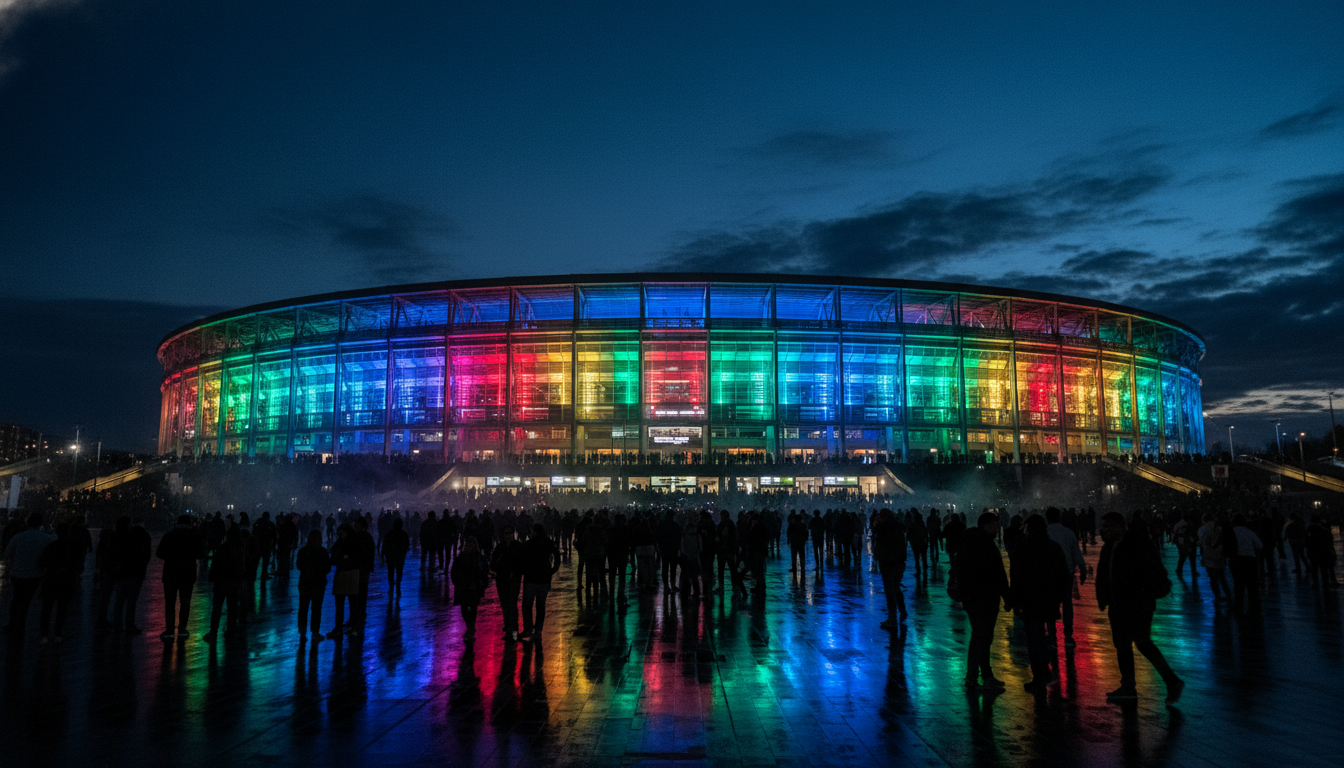
PSG vs Arsenal at the Puskás Aréna: How a 30 May Final Reshapes the World Cup Player Pool
PSG meet Arsenal in the 2026 Champions League final at Puskás Aréna, Budapest on Saturday 30 May at 18:00 CEST. Two days before FIFA’s final squad-submission deadline, players from both sides will reach national-team camps with one more 90 minutes in their legs.
The 2026 UEFA Champions League final presents a unique confluence of club glory and international ambition, positioned precariously on the precipice of the FIFA World Cup squad submission deadline. On Saturday, 30 May, at 18:00 CEST, the Puskás Aréna in Budapest, Hungary, will host its first-ever Champions League final, pitting reigning champions Paris Saint-Germain against an Arsenal side hungry for their inaugural title. This particular final, however, carries an additional layer of complexity and consequence that transcends the usual narrative of European supremacy: its timing. With FIFA’s final 26-man World Cup squad submission deadline looming just 48 hours later on 1 June, the performances, fitness, and even the mental state of dozens of elite players will be under unprecedented scrutiny, potentially reshaping national team rosters for the tournament set to kick off on 11 June across the United States, Canada, and Mexico.
For PSG, the objective is not merely to lift the trophy again, but to etch their name deeper into Champions League lore. As holders, they are bidding to become only the second club in the Champions League era to successfully defend the title, a feat last accomplished by Real Madrid with their historic three-peat between 2016 and 2018. This aspiration places immense pressure on every player, demanding peak performance and unwavering focus. For Arsenal, the narrative is one of redemption and breaking new ground. The Gunners are seeking to become the 25th club ever to lift the Champions League trophy, a significant milestone that would banish the lingering memory of their last final appearance in 2006, when they were runners-up to Barcelona in Paris. The weight of club history, combined with the individual stakes of World Cup qualification, creates a high-pressure environment unlike any other final in recent memory.
The Immediate Aftermath: Two Days to a World Cup Dream
The proximity of the Champions League final to the World Cup squad deadline transforms the match from a standalone event into a critical, final audition. National team coaches will be watching with bated breath, their provisional squads largely settled, but with the flexibility to make last-minute adjustments based on form, fitness, or, critically, injury. A gruelling 90 minutes, or potentially 120 minutes plus penalties, under the immense pressure of a continental final, carries inherent risks. Players must navigate the physical demands of the match while simultaneously being acutely aware of the potential for a career-altering knock or the psychological toll of a victory or defeat. The 1 June deadline means that any player sustaining an injury on 30 May will have virtually no time to recover or prove their fitness before their national federation must submit its definitive list to FIFA. This scenario introduces an unparalleled level of strategic consideration for both club managers and individual players.
The physical exertion of a final is considerable. Even in the absence of injury, the mental and physical fatigue accumulated over a demanding season, culminating in the Champions League showdown, could impact a player’s readiness for the World Cup training camps that will commence almost immediately after the final whistle in Budapest. For those who play significant minutes, the transition from club competition to international duty will be seamless in terms of time, but potentially jarring in terms of energy levels. The World Cup is a marathon, not a sprint, and beginning it with a depleted energy reserve could be detrimental. Conversely, a standout performance, particularly from a player on the fringes of a national squad, could solidify their place or even elevate them into contention. The stakes are thus multifaceted, encompassing not only the immediate glory of the Champions League but also the long-term ambition of a World Cup campaign.
PSG’s Global Contingent and the World Cup Grind
Paris Saint-Germain boasts a formidable array of international talent, many of whom are integral to their respective national teams’ World Cup plans. The final in Budapest will be a crucial barometer for their form and fitness. For France, Ousmane Dembélé and Désiré Doué are key figures. Dembélé’s explosive pace and dribbling ability make him a valuable asset, but his injury history means any physical strain in the final will be closely monitored by the French coaching staff. Doué, a rising star, will be looking to cement his place, and a strong showing in the Champions League final could provide the definitive statement of his readiness for the global stage. Both players will carry the dual weight of contributing to PSG’s title defense while preserving their physical condition for the World Cup.
Portugal’s contingent, Vitinha and Nuno Mendes, also face significant challenges. Vitinha’s midfield dynamism and Mendes’s prowess at left-back are vital to Portugal’s tactical setup. Playing a high-intensity final just before joining the national team camp demands meticulous physical management. Nuno Mendes, in particular, often operates in a position that requires immense stamina and defensive responsibility, making his post-final recovery period particularly important. For Morocco, Achraf Hakimi presents a unique case. He is currently recovering from a hamstring injury, and his participation in the final, if he features prominently, will be under intense scrutiny. A full 90 minutes, especially after a recovery period, could either prove his fitness unequivocally or expose lingering vulnerabilities. His national team will undoubtedly be tracking his minutes and performance with extreme caution, balancing the need for match sharpness against the risk of re-injury.
Brazil’s captain, Marquinhos, is another vital cog in PSG’s machine and his national team’s defense. His leadership and defensive solidity are almost irreplaceable. For him, the final is less about proving his place and more about maintaining peak condition. Any yellow card accumulation, or more critically, a late injury, could have profound implications for Brazil’s World Cup preparations. Ecuador’s Willian Pacho, a robust defender, also features on PSG’s World Cup-bound list. For Pacho, a strong, disciplined performance in such a high-stakes match could further solidify his standing within the Ecuador squad, demonstrating his ability to perform under extreme pressure. The collective performance of these PSG players will not only determine the outcome in Budapest but also provide critical data points for their respective national team coaches in the days leading up to the 1 June deadline.
Arsenal’s International Stars Under the Microscope
Arsenal’s squad also contains a significant number of players earmarked for World Cup duty, and their individual journeys to Budapest will be equally scrutinised. England’s contingent from Arsenal is substantial: Bukayo Saka, Declan Rice, Ben White, and Myles Lewis-Skelly. Saka and Rice are almost certainly starters for England, making their fitness paramount. A demanding final could push them to their physical limits, and any knock could send ripples of concern through the England camp. Ben White’s versatility and defensive acumen make him a valuable asset, and his performance in the final will be a final check on his match readiness. For Myles Lewis-Skelly, a younger player, featuring in a Champions League final is an immense opportunity, but also a significant physical and mental test just before potentially joining his first senior World Cup squad. The intensity of the final could be a defining moment for his international aspirations.
France’s William Saliba is another Arsenal player who will be a central figure in Budapest. His commanding presence in defense is crucial for both club and country. Like Marquinhos, his role is more about maintaining form and avoiding injury. The French national team will be relying on his defensive prowess, and any misstep in the final could be a cause for concern. For Spain, Mikel Merino’s situation is particularly delicate. He is currently racing back from a broken foot, and his involvement in the Champions League final, if he plays, will be the ultimate test of his recovery. Spanish national team coaches will be assessing not just his ability to play, but his overall match fitness, movement, and resilience. A full 90 minutes in a final could be exactly what he needs to prove his readiness, or it could highlight that he is not yet at 100%, forcing a difficult decision for the 1 June deadline.
Norway’s Martin Ødegaard, Arsenal’s captain, is another key international player. His creative influence and leadership are indispensable for both Arsenal and Norway. While Norway may not be among the top World Cup contenders, Ødegaard’s performance in a major final will be a personal benchmark and a source of pride for his nation. His physical output in the midfield will be closely observed for any signs of fatigue. Brazil’s Gabriel Magalhães, a defensive partner to Saliba, completes Arsenal’s World Cup-bound list. Like Marquinhos, his primary goal will be to deliver a strong, injury-free performance. The presence of two Brazilian centre-backs across the two finalists adds an interesting dynamic for the Brazilian national team, potentially offering a direct comparison of form and readiness in the highest-stakes club game. The cumulative impact of these individual performances will filter directly into the World Cup selection process, making the Budapest final a pivotal event for numerous national federations.
Tactical Considerations and Player Welfare
The unique timing of this Champions League final will undoubtedly influence tactical decisions and player management strategies. Both PSG and Arsenal managers will face a delicate balancing act. On one hand, the objective is unequivocally to win the Champions League trophy, demanding the deployment of their strongest possible lineups and pushing players to their physical and mental limits. On the other hand, the looming World Cup deadline introduces a layer of caution. Will managers be more inclined to make substitutions earlier if a key player appears fatigued or picks up a minor knock? Will players themselves be more hesitant in challenges, consciously or unconsciously, to avoid jeopardising their World Cup dreams?
The psychological impact cannot be overstated. For players like Hakimi and Merino, who are recovering from significant injuries, the final represents a high-stakes gamble. A triumphant return could elevate their status, while a setback could be catastrophic. For others, the mental strain of performing in a final while simultaneously contemplating the World Cup could be immense. The elation of victory or the despair of defeat will also have an immediate effect on their mental state as they transition to national team camps. A winning feeling could provide momentum and confidence, while a loss might require significant psychological recalibration in a very short timeframe. The managers of both clubs will need to be acutely aware of these dynamics, not only in their match-day tactics but also in their post-match debriefings and player support. The Champions League final is always an emotional crucible, but this year, its emotional residue will spill directly into the World Cup preparations.
Beyond the pitch, Budapest is preparing for a significant influx of fans for this historic occasion. The Puskás Aréna, which previously hosted the 2023 Europa League final, is well-versed in managing major European football events. The city will also host the UEFA Champions Festival, a fan event running from 28-31 May, providing a vibrant atmosphere leading up to and immediately following the final. To facilitate fan movement, final ticket holders will benefit from free matchday travel on Budapest Metro lines 1-4 and Tram line 1, while a Champions Express airport bus service will be in operation for final-day travel. These logistical preparations underscore the scale of the event, adding to the grandeur and the overall experience for players and supporters alike, even as the World Cup shadow looms large.
The 2026 Champions League final between PSG and Arsenal at the Puskás Aréna is set to be far more than just a contest for European club football’s most coveted prize. Its unique timing, just two days before FIFA’s World Cup squad submission deadline, imbues it with an unprecedented level of individual and national significance. Every tackle, every sprint, every moment of triumph or despair will be scrutinised not only by club supporters but by national team coaches across the globe. The outcome, the performances, and crucially, the physical condition of the players on 30 May will directly influence the composition of numerous World Cup squads, making this final a pivotal moment that will resonate throughout the summer’s international tournament.
Sources: UEFA — 2026 Champions League final info, Wikipedia — 2026 UEFA Champions League final, Sportsadda — PSG and Arsenal head for Budapest, Euronews — Budapest awaits: travel guide to the final
Sources

Related news
France vs Senegal Preview: Mbappé’s First World Cup Match Lands at MetLife
France open their 2026 World Cup campaign against Senegal at MetLife Stadium on Tuesday 16 June.…
Canada 1-1 Bosnia: Marsch’s Side Open the Home World Cup Without Davies
Canada drew 1-1 with Bosnia and Herzegovina at BMO Field in Toronto on Friday 12 June.…
Mexico 2-0 South Africa: Quiñones, Jiménez and Three Red Cards in a Historic Opener
Mexico beat South Africa 2-0 at Estadio Azteca on Thursday 11 June to open the 2026…