Spain’s Final 26 Lands Monday: De la Fuente Reveals on 25 May
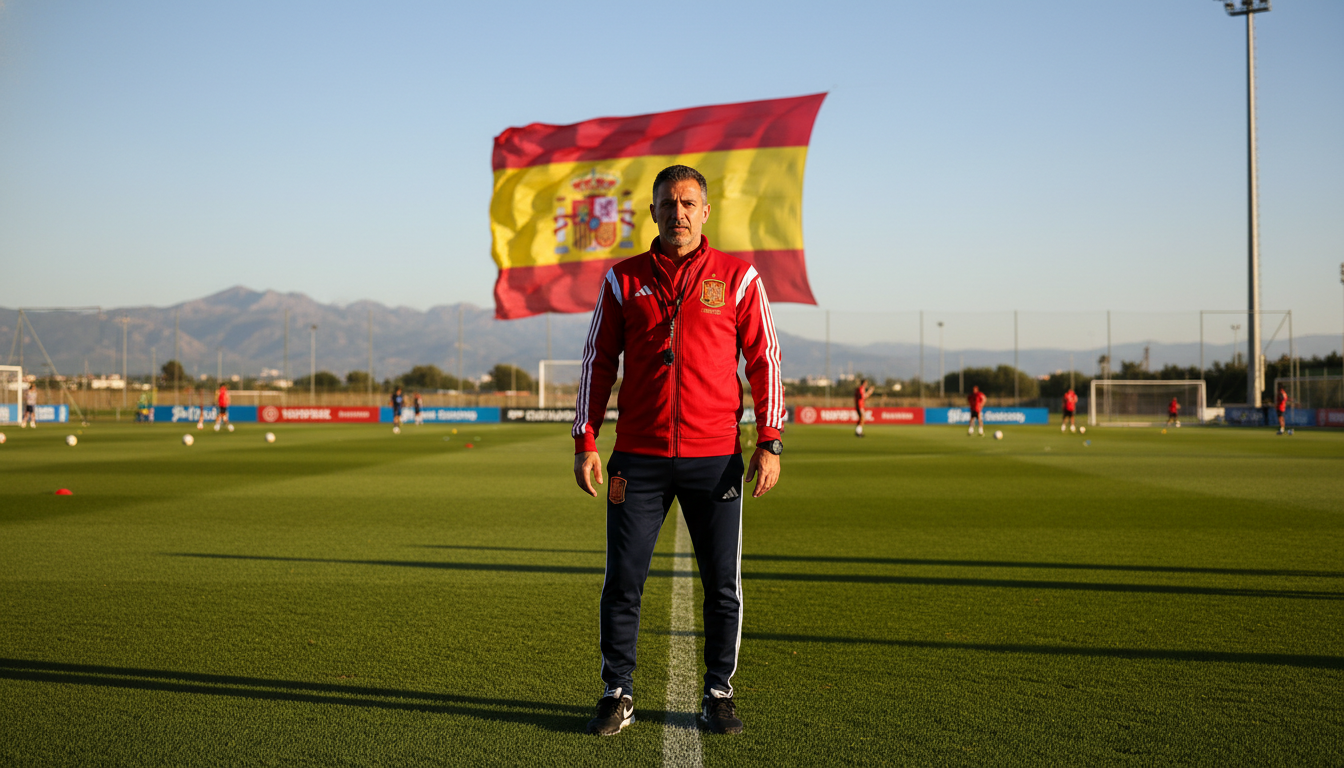
The football world turns its attention to Madrid as Spain’s head coach, Luis de la Fuente, prepares to unveil his final 26-man squad for the 2026 FIFA World Cup on Monday, 25 May. This announcement, anticipated with a mixture of excitement and trepidation, follows the submission of a provisional 55-man list to FIFA on 11 May. The stakes are exceptionally high for La Roja, who enter the tournament as co-favourites at +500 alongside France, a reflection of their perceived strength and potential to lift the trophy in July.
De la Fuente’s task is unenviable, complicated by a series of critical injury updates that have cast a shadow over Spain’s attacking prospects. The fitness of two pivotal wingers, Lamine Yamal and Nico Williams, remains the most pressing concern. Yamal, the Barcelona prodigy, suffered a hamstring tear in his left leg on 19 April, but medical reports suggest he is expected to be fit for the tournament proper. Williams, the dynamic Athletic Bilbao forward, sustained a grade-1 hamstring strain on 10 May, with a recovery timeline of 3-4 weeks. This prognosis implies Williams could miss Spain’s opening match but is projected to be available by Matchday 2, scheduled against Saudi Arabia on 21 June. These medical updates will undoubtedly dictate a significant portion of De la Fuente’s final selections, particularly in the offensive third.
While the forward line grapples with uncertainty, Spain’s midfield appears robust, anchored by the formidable duo of Pedri (Barcelona) and Rodri (Manchester City). Both players are considered locks for the squad if fit, and current indications suggest they are healthy and ready to dictate play. Their presence provides a vital spine of control, creativity, and defensive solidity, which will be crucial for Spain’s ambitions. The delicate balance De la Fuente must strike between managing injury risks, integrating returning players, and ensuring tactical cohesion will define Spain’s preparation over the coming weeks.
The Attacking Conundrum: Yamal and Williams
The situation surrounding Lamine Yamal and Nico Williams presents De la Fuente with his most significant selection dilemma. Yamal’s hamstring tear, sustained just over a month before the final squad announcement, is a significant concern given his explosive style of play. While the expectation is that he will be fit for the tournament, the question of match sharpness and susceptibility to re-injury looms large. Yamal’s ability to create chances, his directness, and his burgeoning talent make him a potentially transformative player for Spain. Omitting him would remove a unique offensive weapon, yet including him carries an inherent risk if his recovery is not absolute. De la Fuente will have to weigh the potential upside of his inclusion against the tactical disruption and physical gamble involved. The decision will not be merely about fitness, but about the manager’s confidence in Yamal’s ability to perform at peak levels under immense pressure after a significant layoff.
Nico Williams’ injury, a grade-1 hamstring strain, offers a clearer but still challenging timeline. A 3-4 week recovery period from his 10 May injury means he will be on the cusp of full fitness as the tournament commences. Spain’s first match against Cabo Verde on 15 June at the Mercedes-Benz Stadium in Atlanta appears unlikely for Williams. However, the projection that he will be back by Matchday 2 against Saudi Arabia on 21 June provides a glimmer of hope. This timeline suggests De la Fuente is likely to include Williams, banking on his availability for the crucial latter stages of the group phase and the knockout rounds. The manager will need to consider how to manage Williams’ minutes in the early stages to prevent any recurrence of injury, while also ensuring the team performs effectively without one of its primary wide threats in the initial fixture. The absence of both Yamal and Williams, even for a single match, would severely limit Spain’s natural width and direct attacking options, placing greater creative burden on other offensive personnel.
Midfield Certainties and Contenders
In contrast to the uncertainty in attack, Spain’s midfield foundation appears remarkably solid, primarily due to the availability and form of Pedri and Rodri. These two players are not merely squad members; they are the strategic and tactical lynchpins of De la Fuente’s system. Rodri, with his unparalleled ability to break up play, dictate tempo, and initiate attacks from deep, provides the defensive shield and passing precision that allows Spain to control games. Pedri, on the other hand, offers the creative spark, dribbling prowess, and incisive passing in advanced areas, linking midfield with attack and unlocking stubborn defenses. Their partnership is fundamental to Spain’s possession-based identity and their ability to dominate the centre of the park.
Beyond these two stalwarts, the midfield depth is bolstered by positive injury news. Mikel Merino, returning from a broken foot, offers a versatile option. His work rate, aerial presence, and ability to contribute both defensively and offensively make him a valuable asset, providing De la Fuente with tactical flexibility and a different profile to Rodri or Pedri. Merino’s return ensures a robust option for rotation or tactical shifts, particularly in games where a more physical presence or direct approach might be required. The situation with Fabián Ruiz, who is “racing back” from a knee injury, adds another layer of intrigue. If Ruiz can prove his fitness, his ability to drive forward from midfield, his powerful shot, and his passing range could offer a distinct dimension to Spain’s attacking play. De la Fuente’s decision on Ruiz will hinge on the medical team’s final assessment and whether the PSG midfielder can regain the sharpness required for a demanding tournament. The depth in midfield, even with injury concerns for Ruiz, provides De la Fuente with a strong platform, allowing him to adapt to various match scenarios and opponent strengths.
The Striker Battle: Oyarzabal and Torres
The central striking role for Spain has historically been a position of intense scrutiny, and the 2026 World Cup is no exception. Luis de la Fuente’s primary option appears to be Mikel Oyarzabal of Real Sociedad. Oyarzabal offers a blend of intelligent movement, clinical finishing, and strong link-up play. His ability to drop deep and connect with the midfield, as well as his instinct in the penalty area, makes him a well-rounded forward. He is not a traditional target man but rather a versatile attacker who thrives on intelligent positioning and well-timed runs. His experience and leadership for Real Sociedad will be valued in a high-stakes tournament environment.
As an alternative, Ferran Torres provides a different profile. While often deployed on the wing for his club, Torres has shown a capability to play centrally, leveraging his pace, directness, and eye for goal. His inclusion as a central option offers De la Fuente the flexibility to adopt a more fluid attacking setup, potentially using Torres’s movement to create space for others. The choice between Oyarzabal and Torres, or even the decision to include both, will heavily influence Spain’s tactical approach in the final third. With the potential absences or limited availability of Yamal and Williams in the early stages, the burden on the central striker to convert chances will be immense. De la Fuente will need to decide whether he prioritizes Oyarzabal’s more traditional centre-forward instincts or Torres’s dynamic, albeit sometimes less conventional, central presence. The pre-tournament friendlies will be crucial in assessing their current form and how they integrate into the team’s attacking patterns, especially given the injury concerns impacting the wider forward positions.
Defensive Foundation and Goalkeeping Decisions
While the ground-truth information does not specify individual defensive or goalkeeping personnel, the importance of a robust backline and a reliable goalkeeper cannot be overstated for a team with co-favourite status. De la Fuente’s choices in these areas will be critical in providing the necessary stability for Spain’s attacking talents to flourish. A strong defensive unit is the bedrock of any successful tournament campaign, especially for a side that aims to dominate possession and play a high line.
The manager will undoubtedly be looking for a blend of experience and emerging talent across the defensive positions. Centre-backs will need to possess not only strong positional sense and aerial ability but also the comfort and composure to play out from the back, aligning with Spain’s characteristic style. Full-backs will be expected to provide both defensive solidity and attacking impetus, offering width and overlapping runs to support the wingers. In goal, the selection will likely prioritize consistency, shot-stopping ability, and excellent distribution, given Spain’s emphasis on building play from the back. The provisional 55-man list would have allowed De la Fuente to assess a broad range of options, and the narrowing down to 26 will reflect his preferred defensive partnerships and individual profiles. The manager’s decisions here will be less about individual star power and more about creating a cohesive unit that can withstand the pressures of knockout football against the world’s best attacks. A well-drilled defense and a confident goalkeeper will be indispensable for Spain to navigate their group and progress deep into the tournament, providing a crucial counterbalance to the offensive firepower and potential injury disruptions.
Group Stage Outlook and Tournament Ambition
Spain finds itself in Group H, alongside Cabo Verde, Saudi Arabia, and Uruguay. On paper, this group presents a manageable path for the co-favourites, but no World Cup group stage is without its potential pitfalls. Spain’s opening match against Cabo Verde on 15 June in Atlanta will be a crucial test of their early tournament form and their ability to adapt to a potentially physical and unpredictable opponent. Cabo Verde, while considered an underdog, will bring enthusiasm and a desire to make an impression on the global stage, requiring Spain’s full concentration and tactical discipline.
The second fixture, against Saudi Arabia on 21 June, is where Nico Williams is projected to return, adding significant impetus to Spain’s attack. Saudi Arabia has historically shown flashes of resilience and tactical discipline, particularly in major tournaments, and will likely present a compact defensive challenge. Spain will need to demonstrate patience and precision to break down their resistance. The final group match against Uruguay is arguably the most challenging. Uruguay, with their rich footballing history and often robust style, will provide a sterner test, potentially determining the group winner. This match will require Spain to be at their tactical and physical best, and the full availability of their key players will be paramount. Navigating these three fixtures successfully will be crucial for building momentum and securing a favourable draw in the knockout stages. As co-favourites at +500, anything less than topping the group and making a deep run into the tournament would be considered a significant underperformance for Luis de la Fuente’s squad.
Final Preparations and Tactical Considerations
With the squad announcement looming, De la Fuente will have a limited window for final preparations. The scheduled pre-tournament friendlies against Iraq and Peru in early June offer invaluable opportunities. These matches will serve multiple critical purposes: allowing the manager to fine-tune his tactical systems, build cohesion among the selected 26 players, and provide crucial minutes for those returning from injury. For players like Lamine Yamal, Nico Williams, and Fabián Ruiz, these friendlies will be essential tests of their fitness and match readiness. Their performances in these warm-up games could either validate De la Fuente’s decision to include them or highlight lingering concerns that might require tactical adjustments.
Beyond individual player assessments, these friendlies will be vital for De la Fuente to experiment with different formations and personnel combinations, particularly in attack, given the injury landscape. He can assess how the team functions with different central striker options, how the midfield adapts to various roles, and how the defensive unit maintains its shape against different attacking styles. The results and, more importantly, the performances in these early June fixtures will provide the final pieces of information needed for the coaching staff to finalize their strategic blueprint for the World Cup. The pressure to integrate returning players seamlessly, while simultaneously ensuring the entire squad is peaking for the 15 June opener against Cabo Verde, will be immense. Every minute on the training pitch and in these friendlies will be meticulously analyzed as Spain aims to convert their co-favourite status into tangible success.
As 25 May approaches, the footballing world will hold its breath for Luis de la Fuente’s final 26-man World Cup squad. The manager faces a complex puzzle, balancing the immense talent at his disposal with critical injury concerns, particularly in the attacking third. The decisions made will not only shape Spain’s immediate tournament prospects but also reflect the strategic direction of one of football’s most decorated nations as they aim to live up to their billing as co-favourites. The blend of established stars, returning key players, and emerging talents will define Spain’s challenge for the ultimate prize in North America this summer.
Sources: Sky Sports — WC 2026 squad lists, ESPN — 2026 WC squad lists, GiveMeSport — World Cup 2026 squads
Sources

Related news
France vs Senegal Preview: Mbappé’s First World Cup Match Lands at MetLife
France open their 2026 World Cup campaign against Senegal at MetLife Stadium on Tuesday 16 June.…
Five Days In: Where Matchday 1 Has Left the 2026 World Cup Favourites
Mexico routine, USA emphatic, Germany sensational. But Brazil were second-best for stretches against Morocco, Switzerland could…
Scotland 1-0 Haiti: Scotland’s First World Cup Win Since 1998
Scotland beat Haiti 1-0 at Gillette Stadium in Boston on Sunday 14 June for their first…