Switzerland Confirm Their 26-Man Squad on Wednesday 20 May
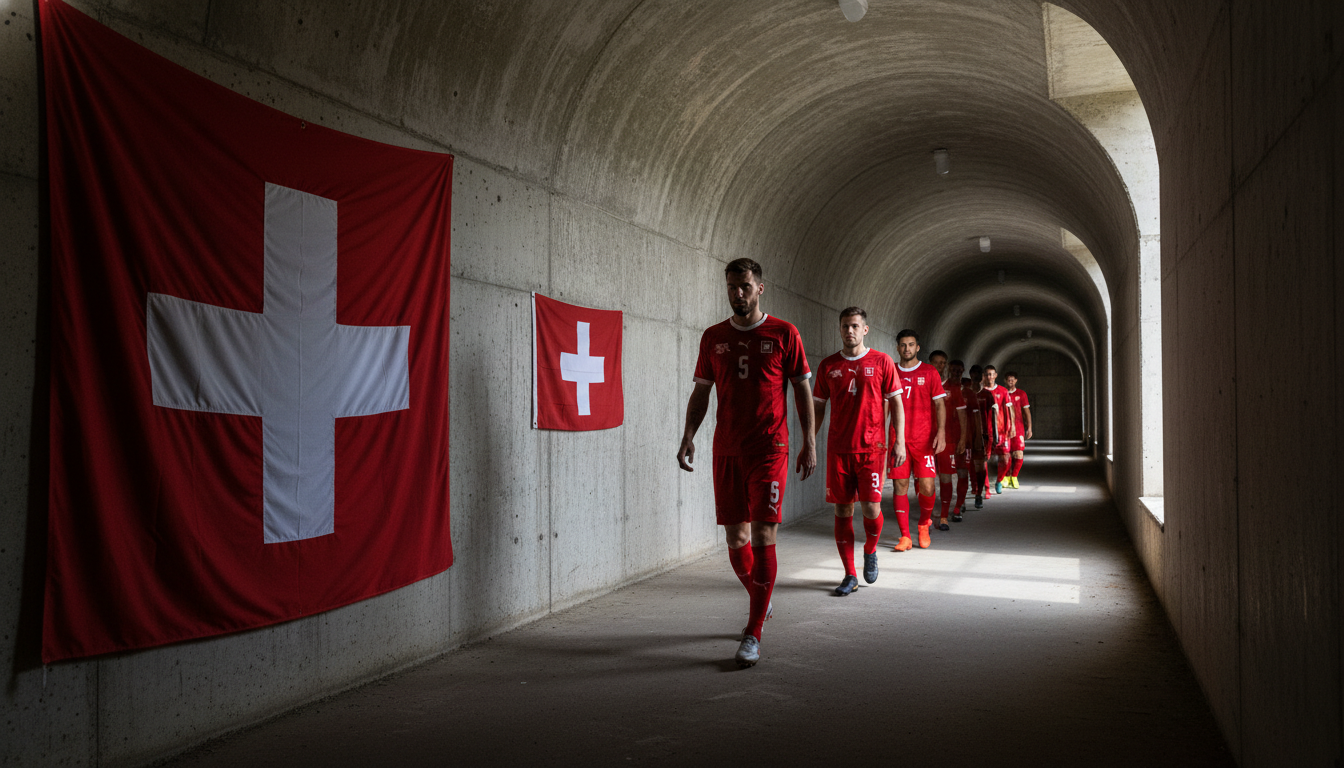
Switzerland’s national football team is set to confirm its final 26-man squad for the 2026 FIFA World Cup on Wednesday, 20 May. This announcement, scheduled just ahead of the FIFA submission deadline of 30 May / 1 June, will cement Murat Yakın’s selections for what many perceive as one of the most favorable group draws in the tournament. With the World Cup commencing on 11 June, the Swiss camp is expected to finalize preparations for their Group B fixtures, which include encounters with Canada, Qatar, and Bosnia and Herzegovina. The anticipation surrounding Yakın’s final roster reflects a blend of optimism stemming from a kind draw and a pragmatic assessment of a squad that has consistently performed at a competitive level in recent international tournaments.
The decision to name the squad on 20 May provides Yakın with a crucial window for final assessments, allowing for any last-minute adjustments based on player fitness or form without undue pressure from the ultimate FIFA deadline. This strategic timing ensures that the coaching staff can observe players in their club commitments through late April and early May, making informed choices about the composition of a squad designed to navigate a challenging global tournament. The expansion to a 26-man roster, a feature carried over from recent major tournaments, offers Yakın enhanced tactical flexibility and depth, crucial for managing injuries, suspensions, and the physical demands of a compressed schedule across multiple venues in the United States, Canada, and Mexico.
Switzerland’s journey to the 2026 World Cup saw them qualify comfortably from their European group, which featured Romania and Israel. This qualification campaign underscored the team’s consistency and its ability to secure results against various opponents. The efficiency with which they navigated their qualifying fixtures speaks to the stability under Murat Yakın’s management and the established tactical framework within the squad. Such a comfortable qualification process often allows a manager to experiment and integrate new talents, providing a broader base of experience for the final tournament. For Switzerland, this period of assured qualification has likely been instrumental in refining their 4-2-3-1 tactical setup and solidifying key partnerships across the pitch. The absence of a high-stress, last-gasp qualification scenario means the team can approach the World Cup with a degree of composure, focusing on tactical refinement rather than addressing fundamental performance issues.
The Road to the 2026 World Cup: A Swiss Perspective
Murat Yakın’s tenure as manager has been characterized by a blend of tactical pragmatism and a clear understanding of Switzerland’s strengths. His leadership has guided the team through a period of sustained competitiveness on the international stage. The comfortable qualification for the 2026 World Cup, ahead of challengers like Romania and Israel, serves as a testament to the organizational discipline and collective effort instilled by Yakın. This qualification pathway was not merely about securing points; it was about demonstrating a consistent level of performance that affirmed Switzerland’s status as a reliable presence in major tournaments. The team’s ability to manage various match scenarios, often dictating tempo and exploiting opponent weaknesses, was a recurring theme throughout their qualifying campaign. This consistency is a critical asset heading into a tournament where every point is contested fiercely.
The manager’s influence extends beyond results; he has cultivated a distinct identity for the Swiss national team, one built on resilience, tactical intelligence, and a strong collective spirit. This identity was evident in their previous World Cup appearance in Qatar 2022, where they reached the Round of 16 before a challenging encounter with Portugal. While the 6-1 defeat to Portugal in the knockout stage was a stark reminder of the gap to elite-tier nations, the journey to that point showcased the team’s ability to navigate group stages effectively and compete under pressure. Similarly, their run to the quarter-finals of Euro 2024, where they were eventually eliminated on penalties by England, further solidified their reputation as a team capable of pushing deep into major competitions. These experiences, though ending in elimination, provide invaluable lessons in tournament football, particularly regarding managing knockout stage pressure and the fine margins that often decide tightly contested matches.
Yakın’s approach is often described as detail-oriented, with a focus on preparing his squad for specific opponents while maintaining a core tactical philosophy. The comfortable qualification process allowed him the luxury of observing a broader pool of players, assessing their suitability for the rigors of a World Cup. This period of evaluation is crucial for identifying individuals who can perform under the immense pressure of the global stage, as well as those who can offer tactical versatility from the bench. The manager’s commitment to a settled core, anchored by experienced players, while also integrating emerging talents, has been a hallmark of his strategy. This balance is vital for maintaining squad cohesion while ensuring there is sufficient dynamism and fresh impetus to adapt to different game situations and opponent styles throughout the tournament.
Tactical Foundations: Yakın’s 4-2-3-1 and Key Personnel
Murat Yakın’s preferred tactical setup, the 4-2-3-1 formation, has become a cornerstone of Switzerland’s playing style. This system offers a robust defensive base, with two holding midfielders providing protection for the back four, while simultaneously facilitating dynamic attacking transitions through the wide areas and a central attacking midfielder. The efficacy of this formation relies heavily on the inter-relationship between its components, demanding high levels of positional discipline and fluid movement from the attacking players. The two central midfielders are pivotal, tasked with breaking up play, initiating attacks, and controlling the tempo of the game. Their ability to shield the defense and distribute the ball accurately under pressure is fundamental to the system’s success. The full-backs in this setup often have license to push forward, providing width and overlapping runs, which adds another dimension to Switzerland’s offensive capabilities.
At the heart of this system is captain Granit Xhaka, whose role as the midfield anchor is indispensable. Xhaka’s influence extends beyond his technical abilities; his leadership, tactical intelligence, and commanding presence dictate much of Switzerland’s play. Operating from deep in midfield, he is responsible for breaking up opposition attacks, dictating the tempo with his precise passing range, and orchestrating offensive movements. His ability to switch play, drive forward with the ball, and deliver incisive passes into the final third makes him the primary fulcrum around which the team’s attacking and defensive phases revolve. Xhaka’s experience from numerous major tournaments, including Qatar 2022 and Euro 2024, provides a calming influence and a deep understanding of what is required at the highest level of international football. His consistent performance levels are a key factor in Switzerland’s ability to compete with higher-ranked nations.
Leading the line in Yakın’s 4-2-3-1 is Breel Embolo, the team’s primary striker. Embolo brings a potent combination of physicality, pace, and a clinical eye for goal. His ability to hold up the ball under pressure, bring teammates into play, and make intelligent runs behind defenses provides a crucial focal point for Switzerland’s attack. Embolo’s presence often occupies opposition central defenders, creating space for the attacking midfielders and wide players to exploit. His aerial prowess also offers an alternative attacking threat, particularly from set-pieces and crosses. The striker’s capacity to convert chances is paramount in tournament football, where opportunities can be scarce, and Embolo’s track record suggests he can be relied upon to deliver in crucial moments. His partnership with the attacking players around him will be key to unlocking defenses in Group B and beyond.
Complementing Embolo in the attacking third is Dan Ndoye, operating from the right wing. Ndoye provides pace, directness, and dribbling ability, essential attributes for generating offensive momentum and creating goal-scoring opportunities. His capacity to beat defenders one-on-one, deliver dangerous crosses, and cut inside to shoot adds a dynamic threat from the flank. In Yakın’s system, the wingers are expected to contribute defensively as well, tracking back to support their full-backs, but their primary role is to provide attacking impetus. Ndoye’s energy and flair will be vital in stretching opposition defenses and creating imbalances that the central attacking players can exploit. The synergy between Xhaka’s distribution, Embolo’s central presence, and Ndoye’s wide play forms the core of Switzerland’s offensive strategy, aiming to leverage individual strengths within a well-defined team structure.
Group B Analysis: Navigating a Favorable Draw
Switzerland’s placement in Group B, alongside Canada, Qatar, and Bosnia and Herzegovina, has been widely characterized as one of the kindest top-tier draws on the board for the 2026 World Cup. This assessment is not an underestimation of their opponents but rather a reflection of Switzerland’s consistent performance levels in recent major tournaments and the relative rankings and experiences of the other teams in the group. For a nation that consistently reaches the knockout stages, this draw presents a clear opportunity to progress as group winners, thereby potentially securing a more favorable path in the Round of 32.
The strategic advantage of such a draw is multifaceted. It allows Switzerland to approach their group stage fixtures with a degree of confidence, focusing on executing their tactical plan rather than being overwhelmed by a group of death scenario. The opening match against Qatar on 13 June at Levi’s Stadium in Santa Clara will be a crucial fixture. Kicking off their campaign against the host nation, albeit a co-host, offers Switzerland an immediate opportunity to establish dominance and secure three vital points. Qatar, while having the advantage of some home support, typically represents a less formidable challenge compared to traditional footballing powers. A strong start against Qatar could set the tone for the remainder of the group stage, building momentum and confidence within the squad.
Canada, another North American representative, brings a different challenge. Their qualification campaign will have tested their resolve, and they will likely rely on athleticism and a direct style of play. Bosnia and Herzegovina, the final opponent, historically presents a resilient and often unpredictable challenge from Europe. While not considered among the continent’s elite, they possess the capacity to frustrate and exploit any complacency. Switzerland’s experience in navigating diverse European qualifying groups, including against teams like Romania and Israel, will serve them well in adapting to these varying styles of play within Group B.
The primary objective for Murat Yakın’s side will be to secure maximum points and top Group B. Winning the group is not merely about progression; it is about strategic positioning for the knockout rounds. The projected path for the Group B winner is to face the runner-up from a potentially strong Group A, which could feature teams like Brazil or Morocco. Therefore, a dominant group stage performance is not just a desirable outcome but a tactical imperative to potentially avoid a premature clash with one of the tournament’s heavyweights. This favorable draw provides Switzerland with an excellent platform to not only advance but to do so in a manner that optimizes their chances for a deeper run in the tournament.
Learning from Past Campaigns: Resilience and Evolution
Switzerland’s recent history in major international tournaments provides a compelling narrative of resilience, tactical evolution, and the capacity to compete at a high level. Their journey to the Round of 16 at
Sources

Related news
France vs Senegal Preview: Mbappé’s First World Cup Match Lands at MetLife
France open their 2026 World Cup campaign against Senegal at MetLife Stadium on Tuesday 16 June.…
Canada 1-1 Bosnia: Marsch’s Side Open the Home World Cup Without Davies
Canada drew 1-1 with Bosnia and Herzegovina at BMO Field in Toronto on Friday 12 June.…
17 Days Out: The 2026 World Cup Squad Announcement Week Is Complete
Brazil, Switzerland, Germany, England and Spain have all submitted their final 26. Argentina's cut lands 2…