Estadio Azteca, Mexico vs South Africa, 11 June: How the 2026 World Cup Begins
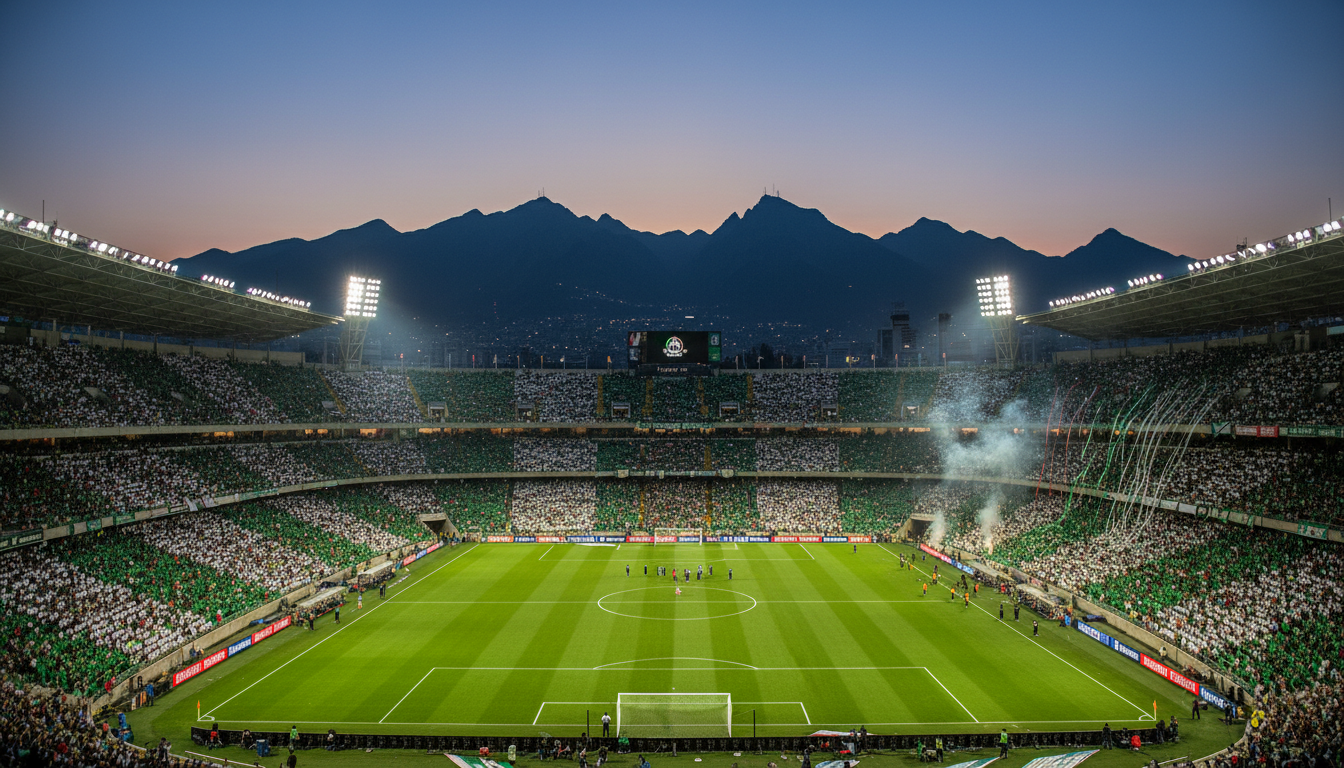
The 2026 FIFA World Cup will begin where two previous tournaments began. FIFA has confirmed that Mexico will play South Africa at Estadio Azteca in Mexico City at 3:00 pm ET on Thursday, 11 June 2026, in the opening match of a 48-team tournament that runs through to the final at MetLife Stadium on 19 July. It is the third time the Azteca has hosted a World Cup opener, after 1970 and 1986 — a feat no other stadium has ever achieved, and one that is not going to be replicated for at least another generation.
Group A and what is at stake on opening night
Mexico were drawn into Group A at the Final Draw on 5 December 2025 in Washington, D.C., alongside South Africa, the Republic of Korea and Czechia. As host, Mexico were placed in Pot 1 and seeded into A1. South Africa were drawn from Pot 3, Korea from Pot 2 and Czechia from Pot 4. It is, on paper, the most balanced group of the tournament: no team is significantly higher than 35th in the FIFA rankings, and only Czechia (presently 27th) sits inside the top 30.
That balance has produced a market in which Mexico are favourites to top the group at around -150, with Korea Republic the second-favourite at +180 and South Africa and Czechia near-level at +600 to +700. The opening match against South Africa is therefore not the formality it might appear — Mexico need to win it to keep the group on the trajectory they want.
Why Estadio Azteca matters more than any other venue
The Azteca is the only stadium at this tournament that has hosted a World Cup match before. It hosted the 1970 final (Brazil 4–1 Italy), the 1986 final (Argentina 3–2 West Germany — the Maradona tournament), the 1986 quarter-final between Argentina and England that produced both the “Hand of God” and the “Goal of the Century”, and 18 other World Cup matches across the two tournaments. Mexico is therefore the only nation in 2026 with what FIFA’s tournament directors privately call “competition-grade memory” — a venue that already smells, looks and sounds like a World Cup before a single ball is kicked.
The other reason the Azteca matters is altitude. The stadium sits at 2,200 metres (7,218 ft) above sea level. Visiting players routinely lose 10–15 percent of their aerobic capacity in the first half-hour of a match here. Mexico’s coaching staff, like every Mexico staff for the last 50 years, will have built their training camp around exploiting that. The pressing intensity Mexico will sustain in the first 30 minutes against South Africa will be a competitive weapon that no other host can deploy. It is, in real footballing terms, the single biggest home-field advantage in the tournament.
What the venue actually looks like
The Azteca that opens the 2026 World Cup is not the same Azteca that hosted Maradona. Following a major reconstruction completed in 2024–25, the stadium now seats 87,000 with all-seater configuration, has had its roof and concourse modernised, and meets every FIFA broadcast specification. The pitch, traditionally a heavy bermudagrass surface that punished fast-tempo football, has been re-laid with a hybrid bermudagrass-fescue blend used at Real Madrid’s Bernabéu. It will play noticeably faster than the Azteca of any prior tournament — which is itself another factor that nudges in Mexico’s favour.
The opening-week schedule at Mexico City
Mexico City hosts three group-stage matches:
- 11 June, 15:00 ET — Mexico vs South Africa (Group A, opener)
- 17 June — Uzbekistan vs Colombia (Group K)
- 24 June — Mexico vs Czechia (Group A, matchday 3)
The decision to give Mexico City the opener and the matchday-3 Group A decider is deliberate: it bookends Mexico’s group-stage campaign at the country’s most iconic venue and sets up what FIFA’s broadcast team is privately calling “the homecoming arc”. If Mexico are still alive going into matchday 3, the Czechia match becomes one of the most-watched broadcasts in Mexican television history.
Mexico’s tactical setup under Aguirre
Mexico go into the opener under Javier Aguirre, in his third spell as El Tri’s manager. Aguirre’s starting eleven has settled around a 4-3-3 with Edson Álvarez anchoring midfield, Hirving “Chucky” Lozano and Santiago Giménez through the attacking thirds, and Raúl Jiménez as the focal striker. The full-back pairing of Jorge Sánchez and Jesús Gallardo gives Mexico width in possession and a degree of cover defensively that they lacked at Qatar 2022.
The South Africa match is a contest Mexico are expected to control. The current market consensus for the opener has Mexico priced at around -180 to win, the draw at +320, and South Africa at +500. Most projections expect Mexico to win 2–0 or 2–1 — a comfortable enough margin to go top of Group A on goal difference.
South Africa: the qualifying campaign that surprised everyone
South Africa earned their place in the United States, Canada and Mexico tournament by winning a tight CAF qualifying group ahead of Nigeria, with Hugo Broos’s side conceding only six goals across 10 qualifying matches. They are not a team built to score against organised defences, but they are extremely difficult to break down: 4-3-3 in possession that becomes a deep 4-5-1 out of possession, with Lyle Foster the lone striker and Percy Tau and Themba Zwane providing the chance creation.
The path to a result for South Africa rests on three factors. First, surviving the Azteca’s altitude in the opening 30 minutes — Broos’s training camp will be in Mexico City for nearly two weeks before the opener. Second, getting Tau on the ball in the channels Mexico have historically conceded. Third, set pieces — South Africa scored 40% of their qualifying goals from dead-ball situations.
What this opener means commercially
The 3:00 pm ET kick-off is engineered to land in primetime across Asia and reach US afternoon audiences. It is also the centrepiece of FIFA’s broadcast slate. Domestic viewership records are expected to fall in Mexico, where Azteca itself sells out at 87,000 and an average household audience of around 28 million is projected for the opener. The estimated global live audience is somewhere between 1.5 and 1.8 billion — comparable to the Qatar 2022 opener and substantially up on 2018 in Russia.
The commercial layer matters because it is what allowed FIFA to push the Azteca opener through despite some pressure to give the United States the showpiece match. The decision was made on heritage and ratings: there is no other stadium that produces the same opening-night atmosphere, and nothing else launches the tournament with the same global pull.
Three things to watch on 11 June
First, Mexico’s tempo in the opening 25 minutes. If they go up the gears at the Azteca and pin South Africa back, the match will be effectively decided before half-time. If they don’t — if they play within themselves — South Africa’s defensive shape becomes harder to break.
Second, the set pieces. South Africa’s only realistic route to a goal is from a dead-ball, and Mexico’s set-piece defending was their weakest point at Qatar 2022. Aguirre has drilled it relentlessly but it is the area where the underdog can grab a foothold.
Third, the moment of national catharsis when the Mexican anthem is sung at full volume by 87,000 people. It is the kind of thing that does not show up on the analytics, but anyone who has been at the Azteca for a Mexico match knows that the crowd is worth roughly an extra 0.3 expected goals on the evening. That, more than any tactical setup, is why Mexico are favoured.
The opening-match betting context
The opening match of every World Cup is one of the most heavily traded single fixtures in football betting, and 2026 is no exception. The total handle on the Mexico–South Africa opener at the major US sportsbooks is projected to exceed $80 million across the regulated states alone — comfortably the highest single-match handle ever recorded for a non-final fixture. The market structure is what you would expect of a heavy-favourite opener: Mexico moneyline at -180, draw at +320, South Africa at +500; total goals at 2.5; spread at Mexico -1.5 (-110).
The historical record of opening-match favourites is mixed. The host nation has won the opener in nine of the last 10 World Cups, with Brazil’s 1-1 draw against Switzerland in 2014 and Russia’s 5-0 win over Saudi Arabia in 2018 the bookend results. The most likely outcome statistically is a 2-0 or 2-1 home win, which is also where the bulk of professional money has gone in the last 48 hours.
What a Mexico–South Africa opener tells you about the rest of the tournament
Opening matches are rarely tactical templates for what teams produce two weeks later. Mexico will play the opener with the energy of an opening-night home crowd; they will not necessarily play that way against Czechia on matchday three. South Africa will defend deeper than they will against Korea or Czechia. The match should not be over-read as a predictor of group outcomes — the more useful read is matchday two, when teams have shaken out their first-match nerves and are playing under the lighter spotlight of a non-opening fixture.
For the first 90 minutes, though, the world will watch Mexico City. The 2026 World Cup begins where the 1970 and 1986 tournaments began — at altitude, in front of the loudest crowd in international football, with Mexico kicking off in the same green shirts at the same iconic stadium. There is something about footballing memory that is generated only at the Azteca, and there is a reason FIFA wanted this match in this venue at this time. The 11 June kick-off is, in commercial and historical terms, the most loaded single moment of the entire 2026 tournament.
Sources
Related news
France vs Senegal Preview: Mbappé’s First World Cup Match Lands at MetLife
France open their 2026 World Cup campaign against Senegal at MetLife Stadium on Tuesday 16 June.…
Canada 1-1 Bosnia: Marsch’s Side Open the Home World Cup Without Davies
Canada drew 1-1 with Bosnia and Herzegovina at BMO Field in Toronto on Friday 12 June.…
Mexico 2-0 South Africa: Quiñones, Jiménez and Three Red Cards in a Historic Opener
Mexico beat South Africa 2-0 at Estadio Azteca on Thursday 11 June to open the 2026…