Lamine Yamal Hamstring Tear: Spain Face an Anxious Wait Before the 2026 World Cup Opener
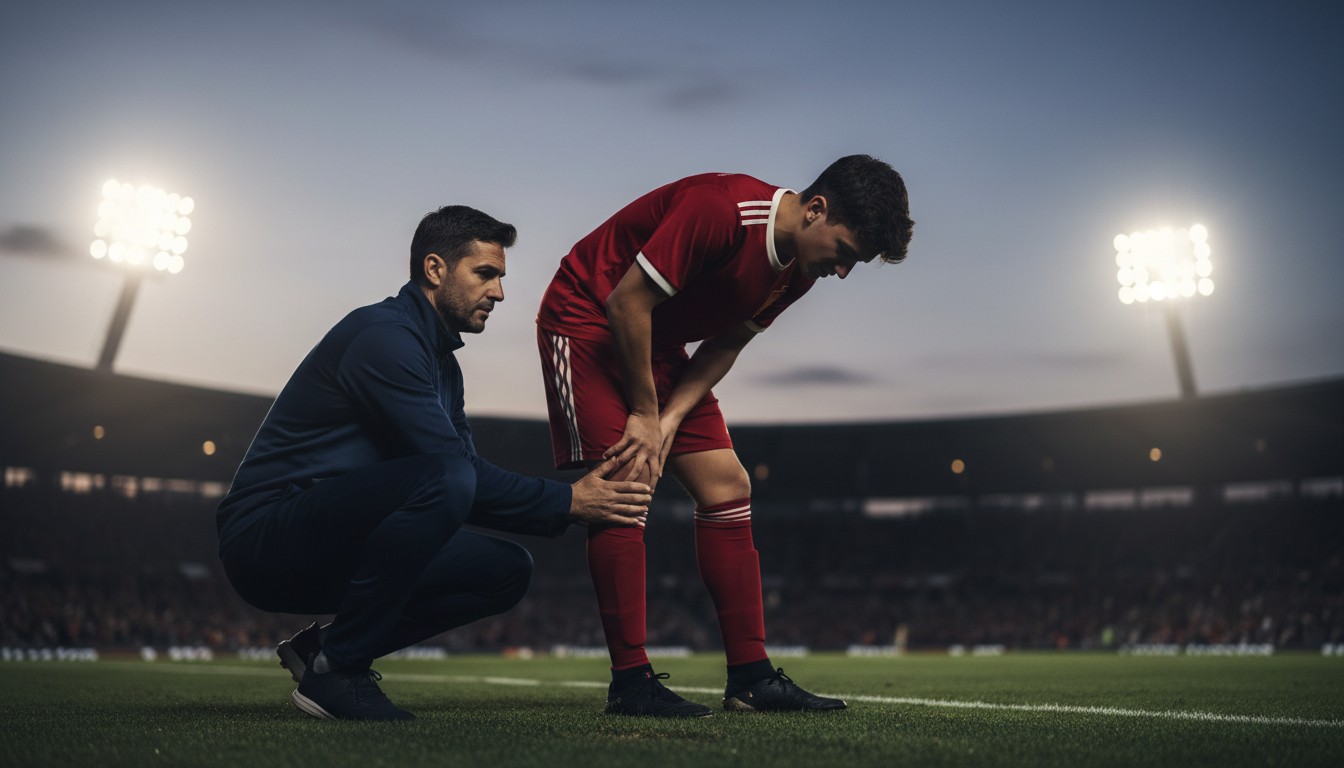
Spain’s biggest star going into the 2026 World Cup has a hamstring problem. Lamine Yamal, the 18-year-old Barcelona right winger who shouldered a Spain attack at Euro 2024 that won the tournament, suffered a tear of the biceps femoris in his left leg during Barcelona’s match against Celta Vigo on 19 April. He has been ruled out of Barcelona’s six remaining La Liga fixtures and the run-in to the Champions League. The recovery timeline given by Barcelona’s medical staff is six weeks. Spain’s first World Cup match — against Cabo Verde at Mercedes-Benz Stadium in Atlanta on 15 June — is now 52 days away.
The arithmetic is uncomfortable. A clean six-week timeline puts him available the first week of June. That is in time for the friendly window in which Luis de la Fuente’s squad will play their final pre-tournament matches, but it leaves no margin for any soft-tissue setback. The medical view, summarised by independent specialists who have spoken to Spanish outlets in the last 48 hours, is that Yamal is likely to miss the opener against Cabo Verde and be available from matchday two onwards — Spain face Saudi Arabia on 21 June and Uruguay on 27 June in the remainder of Group H.
What the injury actually is
The biceps femoris is the largest of the three hamstring muscles. The injury is graded II — a partial tear with intact connective tissue. Recovery from a Grade II biceps femoris tear typically runs five to seven weeks for an elite athlete, with the variable being how aggressively the player can be pushed back into running, sprinting and change-of-direction work. The risk in this kind of injury is not the initial recovery — it is the relapse rate. Players who return inside five weeks have a 25–30% relapse rate within four weeks of returning. Players who return at six to eight weeks have a relapse rate closer to 8–10%.
Barcelona’s medical team will have drawn the obvious conclusion. Holding Yamal out of the title run-in costs the club a player they desperately need; the alternative is a setback in the tournament where Spain need him most. The club has already publicly accepted the trade-off. Barcelona’s communications staff briefed Spanish journalists on 23 April that the club was, in effect, requesting Spain handle Yamal carefully — a private conversation made public.
What Spain’s attack looks like without him
Spain’s preferred 4-3-3 has Yamal on the right, Mikel Oyarzabal central and Nico Williams on the left, with Pedri, Rodri and Fabián Ruiz behind. Without Yamal, the right wing devolves to Ferran Torres or Bryan Zaragoza, neither of whom replicates what he gives the team. Yamal is not just a chance creator — he is Spain’s only fully-formed one-on-one beater in the final third. La Roja’s possession game, which generates 60–65% of matches in any opposition category, requires someone who can break a low block by going past a full-back. That is what he does, and it is the role nobody else in the squad can fill.
The tactical Plan B is to invert Nico Williams to the right and bring Mikel Merino into the front three on the left in a 4-2-3-1, which is the system Spain used for half of qualifying. It works against weaker opposition. Cabo Verde, Saudi Arabia and Uruguay are precisely the kind of opponents Spain need to beat 2-0 with positional comfort, and the tactical Plan B is enough for that. The question is what happens against a top-tier opponent in the round of 16 or the quarters.
Other Spain injury concerns
Yamal is not the only Spain player on the medical staff’s whiteboard. Fabián Ruiz has been absent from PSG’s lineup since mid-January with a knee injury, and his return-to-play timeline is also targeted at the friendly window. Mikel Merino has not been involved for Arsenal since picking up a broken foot in early March, and is racing to recover in time for a World Cup spot. Pedri has, separately, been managing recurring back issues that have limited his minutes at Barcelona since February.
The cumulative picture for Spain is that the deepest squad on paper has been stress-tested by injuries to most of its key players in the spring — and that fragility is part of why the +500 outright price is, on inspection, fair value rather than the obvious overlay it might once have looked.
Why the market has reacted modestly
Spain’s outright price has moved from +450 (mid-April) to +500 (24 April) — a relatively modest drift given that the most important attacker in the squad has just gone down. The reasoning behind the modesty: Yamal is expected to be back from matchday two, which means he plays the games that decide the tournament. The market is implicitly trading him as a 70–75% chance to be fit for the round of 16, and an 85% chance to be fit for the quarter-finals onwards. Those are reasonable numbers given his medical timeline.
The Golden Boot market, where Yamal sat at +1600 before the injury, has seen a similar adjustment. He has drifted to +2000 at most US books and +2500 at some European books. The implied probability has fallen from 5.9% to 4–5%. He is still in the top six on the board, and given Spain’s projected deep run he remains plausible value at +2000 if you believe in the medical timeline.
What to watch in the next four weeks
The two information points that will move Yamal’s price are: (1) confirmation of his inclusion on Spain’s provisional 35-man squad on 11 May — almost certain given the medical timeline; and (2) confirmation of his inclusion on the final 26-man squad on 30 May. The harder data point is whether he plays minutes in the friendly window in early June. If he does — even 30 minutes off the bench — his Golden Boot price could shorten back below +1800 and Spain’s outright could re-tighten to +475.
The harder bearish scenario, which is in nobody’s projection but is the one the market is implicitly insuring against, is that Yamal suffers a relapse during his return-to-play period in late May. That would push his match-1 absence into match-2 and potentially into match-3, and it would reshape the tournament for Spain. Soft-tissue injuries tend to relapse on contact runs at speed, which is exactly what Yamal does for a living.
The Spain case at +500, after the injury
Spain at +500 is still the rational top-of-the-board pick if you believe two things. First, that Yamal will be back from matchday two onwards — the consensus medical view. Second, that the rest of the squad — Pedri, Rodri, Fabián, Oyarzabal, Williams, Cucurella, Le Normand, Carvajal — is in form. The first looks reasonable. The second, after the injury wave that swept the squad’s spine in the spring, is now a real question. Spain are still the team most likely to win the tournament if they reach July fully fit. The shorter answer is whether they reach July fully fit at all.
If you are betting Spain at +500, you are taking a price on a squad that needs at least 22 of its 26 players healthy for the knockouts. That probability is, on a sober reading, roughly 60–65%. Multiply through by Spain’s win probability conditional on full strength, and you get roughly a 20–22% implied tournament probability. The bookmakers are pricing 16.7%. The overlay is real but it is not as obvious as it would have been on 18 April — the day before Yamal’s hamstring went.
Why Yamal matters more than any other Spain player
To understand why a single hamstring injury moves Spain’s price at all, look at how Spain are built tactically. La Roja’s possession game is the most extreme in international football — 65% average possession across the qualifying campaign, the highest of any team in Europe. That possession is converted to chances in two ways: positional play through the centre, and one-on-one breakthroughs from the wings. The central play is run by Pedri and Rodri. The right-wing breakthrough is Yamal’s department, almost exclusively.
Without him, Spain become a team that creates from possession but struggles to break low blocks. At Euro 2024 Spain dispatched Italy, Croatia and Albania in the group stage with comfortable possession-driven wins, then beat Germany, France and England in the knockouts with Yamal’s right-wing creation as the deciding factor. Spain’s two best moments of the tournament — the goal against France and the assist against England — both came from Yamal isolating his full-back, beating him on the dribble, and creating a shooting opportunity. There is no plan B in the squad that produces those moments.
How the rest of the squad picks up the load
The tactical workaround Luis de la Fuente has been working on in training, according to Spanish journalists who attended the closed sessions in March, is a 4-2-3-1 with Nico Williams shifted to the right (his less-natural foot but the more productive shooting angle for an inverted left-footer), Mikel Oyarzabal on the left in a free-eight role, and Mikel Merino as the No. 10. The shape is more compact and less reliant on width. It is plausibly more secure defensively. It is also less productive going forward.
The other variable is Ferran Torres. The Barcelona forward has had a strong 2025–26 club season — 14 La Liga goals, his best return at the club. If de la Fuente trusts him to start on the right, Spain’s attack retains some natural width. If de la Fuente prefers Bryan Zaragoza or Yeremy Pino, the right wing is competent but not creative. The squad announcement on 11 May will tell us which way the manager is leaning.
The closing read on Spain after the injury wave
Spain go into this tournament with the deepest squad on paper, the best midfield in the field, the most-controlled possession game, the easiest group, and a manager who has already won a major tournament with this generation. They also go in with their most decisive attacker recovering from a hamstring tear, their first-choice deep playmaker working back from a knee injury, and their most likely No. 10 racing to be fit. The ceiling is the trophy. The floor is a quarter-final exit if the squad cannot get all three of Yamal, Fabián and Merino back to full fitness by July. The +500 price is honest given the bipolar distribution of outcomes — Spain are the team most likely to win the tournament if they reach July fully fit, and one of the teams most likely to under-perform if they do not.
Sources
Related news
Mexico 2-0 South Africa: Quiñones, Jiménez and Three Red Cards in a Historic Opener
Mexico beat South Africa 2-0 at Estadio Azteca on Thursday 11 June to open the 2026…
17 Days Out: The 2026 World Cup Squad Announcement Week Is Complete
Brazil, Switzerland, Germany, England and Spain have all submitted their final 26. Argentina's cut lands 2…
Manuel Neuer’s Comeback at 40: Inside Germany’s Most Talked-About Goalkeeper Decision
Manuel Neuer has come out of international retirement to be Germany's No. 1 at the 2026…