Sixteen Stadiums, Three Nations: A Complete Guide to the 2026 World Cup Venues
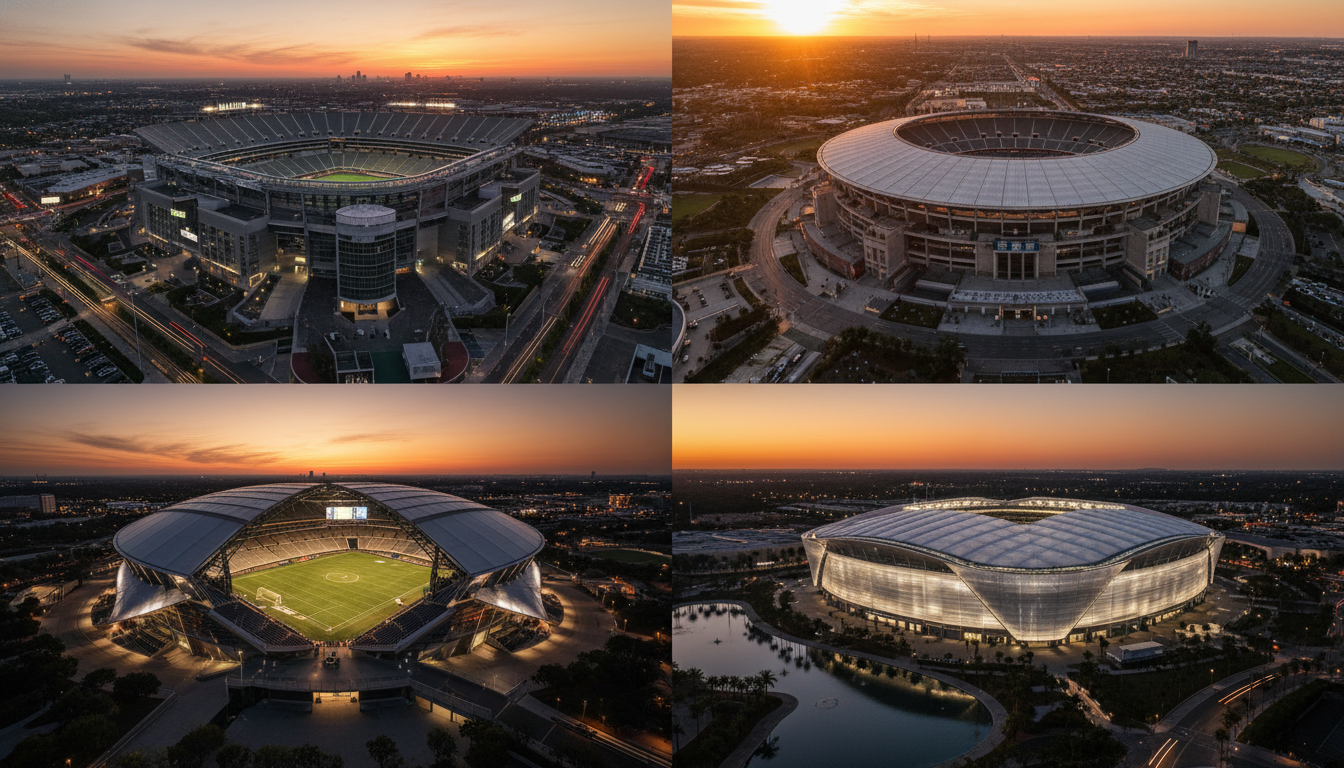
The 2026 FIFA World Cup, set to commence on 11 June and conclude with the final on 19 July, represents a monumental undertaking in global sports. With 16 host stadiums spread across three nations – the United States, Canada, and Mexico – this tournament will feature the most venues since the 2002 edition co-hosted by Japan and South Korea. This expansive geographical footprint, combined with diverse climatic conditions and varying stadium architectures, introduces a complex layer of tactical and logistical considerations for competing nations. From the rarefied air of Estadio Azteca, slated to host an opening match, to the sea-level spectacle of the final at MetLife Stadium in New Jersey, every venue presents a unique challenge and opportunity. This comprehensive guide details each of the 16 arenas, analyzing their capacities, environmental factors, and the tactical implications they are poised to present.
The Scale and Scope: A Tournament of Unprecedented Reach
The decision to host the 2026 World Cup across three North American nations signifies a new era for FIFA’s flagship event. A total of 16 cities will welcome teams and fans, with 11 venues situated in the United States, 3 in Mexico, and 2 in Canada. This distributed model aims to leverage existing world-class infrastructure, ensuring that each host city can provide a robust and engaging experience. However, the sheer scale of this tournament also places unprecedented demands on team travel, acclimatization, and logistical planning. The strategic grouping of venues into distinct geographic clusters – an East cluster, a Central cluster, and a West cluster – is designed to mitigate some of these challenges, facilitating more efficient movement between match locations for teams advancing through the group stage and beyond. This structure, while providing a broad reach across the continent, necessitates a thorough understanding of each region’s specific conditions.
The collective capacity of these 16 stadiums underscores the immense appetite for football in North America. While exact cumulative attendance figures will only be known post-tournament, the potential for record-breaking crowds is significant. Stadium sizes range from Toronto’s BMO Field with a capacity of 45,000 to Dallas’ AT&T Stadium, capable of holding 94,000 spectators. This spectrum of capacities will undoubtedly influence the atmosphere of individual matches, with larger venues amplifying the sense of occasion, particularly in critical knockout rounds. The average capacity across all venues is substantial, ensuring that a vast number of fans will have the opportunity to witness World Cup action live, further cementing football’s growing prominence in the region. The extensive network of stadiums also reflects the significant investment in sporting infrastructure across the three host nations, promising world-class facilities for players and an exceptional experience for spectators.
North American Capitals: Mexico’s Historic Venues and Altitude Advantage
Mexico brings a rich World Cup heritage to the 2026 tournament, with three host cities poised to deliver a distinct challenge: Mexico City, Guadalajara, and Monterrey. Estadio Azteca in Mexico City stands as a truly iconic venue, unique among the 16 selections for its storied past, having previously hosted World Cups in 1970 and 1986. This historical significance imbues the stadium with an unparalleled aura, making it a focal point for the tournament’s early stages. However, it is its geographical positioning that presents the most profound tactical consideration for any team scheduled to play there.
Estadio Azteca sits at a staggering 2,200 meters (7,218 feet) above sea level. This high altitude is a critical factor that will demand careful preparation from any team scheduled to play there. The reduced oxygen levels at this elevation can significantly impact player stamina, aerobic capacity, and recovery times. Coaches will need to devise specific training regimens and potentially adjust their tactical approaches, favoring more conservative play, focusing on efficient possession, or ensuring deep squad rotations to manage player fatigue. The ball’s flight characteristics also change at altitude, often traveling faster and with less air resistance, which can affect long passes, crosses, and set pieces, potentially leading to unpredictable outcomes for goalkeepers and defenders. With a capacity exceeding 87,000, the atmosphere at Estadio Azteca will be formidable, adding another layer of pressure to the physiological demands.
Beyond Mexico City, the other two Mexican host venues, Estadio Akron in Guadalajara and Estadio BBVA in Monterrey, also share the defining characteristic of elevation. While their exact altitudes differ from Estadio Azteca, both cities are notably elevated, contributing to what FIFA has termed a “Concacaf concentration” of high-altitude playing conditions. Estadio Akron in Guadalajara offers a capacity of over 48,000, providing an intimate yet vibrant setting for matches. Meanwhile, Estadio BBVA in Monterrey can accommodate more than 53,500 spectators, offering a modern facility with a strong local footballing tradition. The consistent presence of altitude across all Mexican venues means that any team drawn to play multiple matches in Mexico will face a sustained physiological challenge. This regional climatic pattern is a significant tactical consideration that technical staffs will be meticulously analyzing as the tournament approaches. The ability to adapt to these conditions, both physically and tactically, could prove instrumental in navigating the group stage and beyond for teams playing in the Central and West clusters that link with these Mexican cities, necessitating specialized acclimatization protocols.
The Canadian Contingent: Strategic Outposts in the North
Canada’s participation as a co-host nation brings two vibrant cities into the World Cup fold: Toronto and Vancouver. These venues represent the northernmost reach of the tournament, offering distinct environments and adding to the overall geographic diversity. The two Canadian stadiums, BMO Field in Toronto and BC Place in Vancouver, are modern facilities designed to host major sporting events, and their inclusion underscores the growing footballing culture and infrastructure in the country. Their strategic locations provide important links within the broader geographic clusters.
BMO Field in Toronto, with a capacity of 45,000, is the smaller of the two Canadian venues and among the more intimate stadiums in the entire 2026 lineup. This capacity can foster a particularly intense atmosphere, especially if the Canadian national team plays a match there, creating a strong home-field advantage. The climate in Toronto during June and July is typically warm but can be subject to varied conditions, necessitating preparedness for both heat and potential humidity. Logistically, Toronto is part of the broader Central cluster, which includes US cities like Dallas, Houston, and Kansas City, as well as Mexico City and Monterrey. This positioning allows for strategic travel planning within this segment of the tournament, minimizing excessive travel distances for teams. The proximity to major population centers in the eastern US also makes it an accessible destination for many international fans, ensuring robust attendance.
Further west, BC Place in Vancouver provides a larger setting, capable of hosting 54,000 spectators. As an indoor stadium, BC Place offers a controlled environment, mitigating any concerns regarding summer weather conditions, whether it be excessive heat, rain, or strong winds. This controlled climate can be a significant advantage for teams, ensuring consistent playing conditions irrespective of external factors, which can be crucial for technical play and player comfort. Vancouver’s location places it firmly within the West cluster, alongside US cities such as Los Angeles, San Francisco, and Seattle, and also linking with Guadalajara in Mexico. This clustering facilitates a relatively compact travel schedule for teams assigned to this region, allowing for less disruptive transitions between matches and more focus on training and recovery. Both Canadian venues are crucial components of the expanded tournament format, providing high-quality facilities and passionate fan bases to the global spectacle, while also contributing to the logistical efficiency of their respective clusters.
United States: The Sprawling Landscape of Modern Football Arenas
The United States, with 11 host cities, forms the backbone of the 2026 World Cup infrastructure, contributing the majority of the stadiums and offering an unparalleled array of modern sporting facilities. These venues span the breadth of the country, from the Atlantic seaboard to the Pacific Northwest, and from the Great Lakes region down to the Gulf Coast. The sheer number and geographic spread of US venues present a unique logistical puzzle for FIFA and participating teams, necessitating a careful distribution across the three defined clusters to optimize travel and minimize player fatigue. Each stadium, while state-of-the-art, brings its own set of characteristics in terms of capacity, playing surface, and local climate, all of which will factor into team preparations and tactical decisions during the tournament.
The average capacity of the US stadiums is notably high, reflecting the American tradition of large-scale sports entertainment. This ensures that the tournament will be played in front of massive crowds, enhancing the spectacle and providing a significant home-field advantage for the US national team when they play in front of their fervent supporters. The stadiums range from the 65,000-seat Hard Rock Stadium in Miami to the colossal 94,000-seat AT&T Stadium in Dallas, offering a diverse array of match-day experiences. The diverse climates across these 11 cities also mean that teams will need to be adaptable, potentially facing conditions ranging from the humid summers of the South and East to the more temperate, but still warm, conditions of the West Coast. This variety underscores the comprehensive challenge presented by the US portion of the tournament, demanding versatility in tactical approaches and physical conditioning.
US East Cluster: Coastal Clashes and Strategic Locations
The East cluster of US host cities comprises Boston, New York/New Jersey, Philadelphia, Atlanta, and Miami. This grouping offers a blend of historic sporting markets and rapidly growing football hotbeds, all situated along or near the Atlantic seaboard. The logistical advantages of this cluster are clear: relatively shorter travel distances between venues compared to cross-country flights, which can aid team recovery and fan mobility. However, the summer climate in this region, particularly in the southern parts like Atlanta and Miami, will introduce significant environmental factors that teams must meticulously prepare for.
MetLife Stadium in New York/New Jersey, with a substantial capacity of 82,500, holds the distinct honor of hosting the World Cup final on 19 July 2026. This marks the first time the final will be played in the New York metropolitan area, a testament to the region’s global appeal, robust infrastructure, and capacity to host events of immense magnitude. The atmosphere for the final is expected to be electric, providing a fitting climax to the tournament. Gillette Stadium in Boston and Lincoln Financial Field in Philadelphia also feature prominently in this cluster, offering large capacities and established fan bases. While specific capacities for Boston and Philadelphia are not detailed, their inclusion signifies major venues capable of hosting significant World Cup matches. These northern venues within the East cluster generally offer slightly milder summer temperatures than their southern counterparts, though humidity remains a factor that can impact player performance and ball dynamics.
Further south in the East cluster, Mercedes-Benz Stadium in Atlanta, with a capacity of 75,000, and Hard Rock Stadium in Miami, accommodating 65,000, will present unique environmental challenges. Both cities are known for their hot and humid summer conditions. Playing in such environments will demand peak physical conditioning and tactical adjustments, potentially favoring teams with strong endurance and an ability to manage possession effectively in draining conditions. Water breaks and careful substitution strategies will likely be critical components of game management. The high humidity can also make the ball feel heavier and affect its flight, requiring players to adapt their touch and passing. The blend of major metropolitan areas and diverse climatic conditions within this East cluster ensures a varied and demanding experience for teams and fans alike, setting the stage for compelling, physically demanding football.
US Central Cluster: Heartland Battles and Transnational Links
The Central cluster for the 2026 World Cup spans a vast geographic area, incorporating US cities such as Dallas, Houston, and Kansas City, and crucially linking with international venues in Mexico (Mexico City, Monterrey) and Canada (Toronto). This cluster represents a significant logistical challenge but also offers fascinating tactical implications due to the diverse environments within it. The shared link with high-altitude Mexican venues means that teams potentially playing within this cluster might experience a wider range of climatic and environmental conditions than those confined to single-nation clusters, demanding exceptional adaptability.
AT&T Stadium in Dallas stands out as the largest venue in the entire tournament, boasting an impressive capacity of 94,000. This colossal stadium is capable of generating an immense atmosphere, making it a prime location for high-stakes matches and potentially quarter-final or semi-final fixtures. Dallas, like Houston, typically experiences extremely hot and humid summers. Matches played during the day in these cities will require careful consideration of player welfare and tactical pacing, often leading to slower tempos or relying on bursts of speed. NRG Stadium in Houston, with a capacity of 72,000, is another major facility in this cluster, offering a similar environmental profile. The heat and humidity in these Texan cities will necessitate robust hydration strategies and potentially influence game tempo, making rapid, high-intensity pressing or attacking play more challenging over 90 minutes. Teams with deeper benches and strong physical conditioning will likely thrive.
GEHA Field at Arrowhead in Kansas City, while its specific capacity is not detailed, is known for its passionate sports culture and will contribute significantly to the atmosphere of the Central cluster. Kansas City’s summer climate is generally warm, though perhaps slightly less extreme than Texas, but still humid. The strategic importance of the Central cluster lies in its transnational connections. Teams assigned to this cluster could potentially navigate matches between sea-level, hot environments in the US, high-altitude venues in Mexico, and the more temperate conditions of Toronto. This variability underscores the need for comprehensive acclimatization plans and flexible tactical frameworks to succeed in this diverse segment of the tournament. The ability to adapt to these shifts, both physiologically and tactically, will be a hallmark of successful teams in the Central cluster, requiring strategic squad management and preparation for different playing conditions.
US West Cluster: Pacific Powerhouses and Climatic Considerations
The West cluster of US host cities brings together Los Angeles, the San Francisco Bay Area, and Seattle, creating a distinct Pacific corridor for the tournament. This cluster also integrates the Canadian venue of Vancouver and the Mexican venue of Guadalajara, forming a cohesive western geographic grouping. The climate in this region, particularly along the coast, tends to be more temperate than the southern US, though summer heat can still be a factor, especially inland. The blend of iconic cities and modern stadiums ensures a high-profile presence for the World Cup on the West Coast, attracting significant global attention.
SoFi Stadium in Los Angeles, with a capacity of 70,000, is a premier modern facility known for its architectural innovation and ability to host major events. The climate in Los Angeles during June and July is typically warm and dry, often providing ideal playing conditions with clear skies, which can be advantageous for fluid, technical football. Similarly, Levi’s Stadium in the San Francisco Bay Area, with a capacity of 70,909, offers a comparable environment, often benefiting from cooler coastal breezes. These stadiums are likely to host significant matches given their capacities and locations in major metropolitan areas, attracting large crowds and global attention. The strategic placement of these venues within the West cluster allows for efficient travel between matches along the Pacific coast, minimizing
Sources
Related news
Mexico 2-0 South Africa: Quiñones, Jiménez and Three Red Cards in a Historic Opener
Mexico beat South Africa 2-0 at Estadio Azteca on Thursday 11 June to open the 2026…
17 Days Out: The 2026 World Cup Squad Announcement Week Is Complete
Brazil, Switzerland, Germany, England and Spain have all submitted their final 26. Argentina's cut lands 2…
Manuel Neuer’s Comeback at 40: Inside Germany’s Most Talked-About Goalkeeper Decision
Manuel Neuer has come out of international retirement to be Germany's No. 1 at the 2026…