Germany at +1400: Nagelsmann’s Rebuild Is Quieter Than the Outright Price Suggests
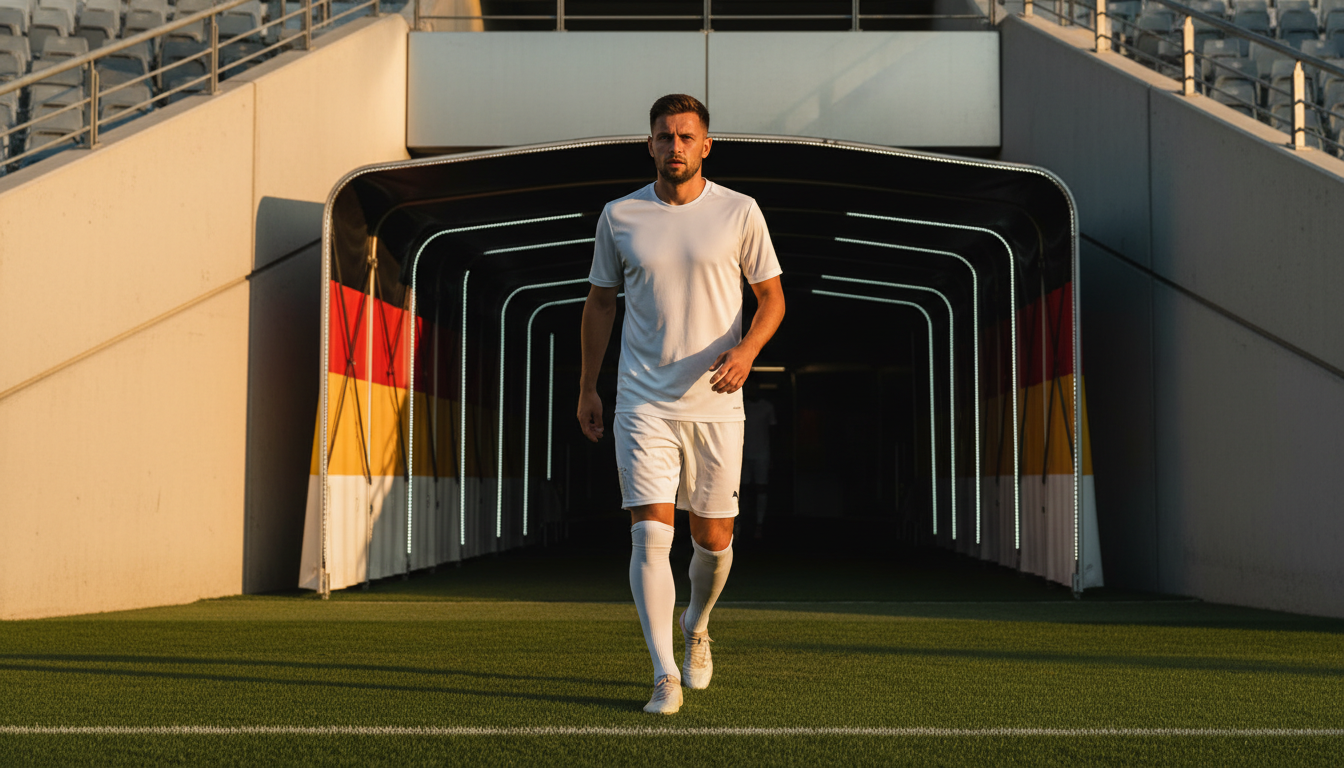
Germany, priced at +1400 to lift the 2026 FIFA World Cup trophy, represents a compelling value proposition for serious bettors. This outright price, placing them seventh on the board with an implied probability of just 6.7%, appears to significantly undervalue a squad that has quietly undergone a strategic rebuild under Julian Nagelsmann. While the noise around other traditional contenders might be louder, Germany’s settled spine, the burgeoning partnership of Florian Wirtz and Jamal Musiala, a prolific new central striker, and one of the tournament’s most navigable group draws combine to make them a quintessential tournament-team flier. The narrative often focuses on past disappointments, but the current trajectory and structural improvements suggest a team far more formidable than their current odds indicate, especially as the tournament approaches its 11 June kick-off.
The Nagelsmann Effect: A Foundation Rebuilt
Julian Nagelsmann’s tenure as Germany manager, which commenced prior to Euro 2024, has been characterized by a pragmatic yet progressive approach aimed at re-establishing a clear identity and competitive edge. His initial challenge was to stabilize a squad that had, in recent tournaments, struggled to convert individual talent into cohesive team performances. The tactical blueprint he has implemented, a consistent 4-2-3-1, has been fundamental to this revitalization. This system provides a robust defensive base while maximizing the creative output of his most influential players, striking a balance that is crucial for sustained success in a major tournament. The consistency in selection and strategy under Nagelsmann has allowed key partnerships to develop, fostering a deeper understanding and chemistry across the pitch, which was visibly absent in previous iterations of the national team.
A cornerstone of Nagelsmann’s tactical setup is the midfield pivot of Joshua Kimmich and Ilkay Gündogan. This pairing brings a blend of technical proficiency, tactical intelligence, and extensive experience at the highest club and international levels. Kimmich, known for his relentless work rate, defensive screening, and incisive passing from deep, complements Gündogan’s ability to dictate tempo, break lines with his distribution, and make late runs into the box. Their synergy allows Germany to control possession, transition effectively between defense and attack, and maintain pressing intensity. This central midfield duo forms the bedrock upon which Nagelsmann’s attacking ambitions are built, providing the necessary stability and control that permits the advanced playmakers to operate with freedom and expressiveness. The partnership has grown steadily since its inception, becoming a reliable engine room for the German side.
The quarter-final exit at Euro 2024, decided by an extra-time goal from Spain, serves as an important benchmark rather than a definitive failure. While elimination is never the desired outcome, reaching the last eight against a top-tier opponent like Spain, and pushing them to the brink, demonstrated significant progress. It highlighted Germany’s capacity to compete at the highest level under pressure, a stark contrast to their earlier tournament exits. That match provided invaluable experience for a squad still finding its rhythm under Nagelsmann, exposing areas for refinement while affirming the core tactical principles. It showed that the rebuild was on track, suggesting that the team was just a fine margin away from breaking through, rather than being fundamentally flawed. This experience will be leveraged as they head into the 2026 World Cup, providing a foundation of lessons learned.
Nagelsmann’s commitment to a specific system and personnel has cultivated a sense of cohesion that was previously lacking. The 4-2-3-1 formation is not merely a default choice but a carefully considered structure designed to maximize the strengths of his available players. The disciplined roles for Kimmich and Gündogan in central midfield ensure that defensive duties are shared, allowing the attacking players ahead of them to focus primarily on creating and scoring. This clear division of labor reduces ambiguity and enhances collective performance, which is a hallmark of successful tournament teams. The continuity in tactical approach and player roles has fostered a strong team identity, a critical factor for navigating the demanding schedule and high stakes of a World Cup.
The Creative Engine: Wirtz, Musiala, and Woltemade’s Ascendance
The attacking prowess of this German side is centered around an electrifying front three, spearheaded by the advanced playmakers Florian Wirtz and Jamal Musiala, with Nick Woltemade leading the line centrally. Wirtz and Musiala, both operating in the channels behind the main striker, represent the creative heart of Nagelsmann’s system. Their ability to dribble past defenders, execute intricate passes in tight spaces, and contribute goals from advanced positions makes them incredibly difficult to contain. They possess a rare blend of technical skill, vision, and tactical awareness, allowing them to interchange positions fluidly, creating confusion for opposition defenses and opening up new avenues for attack. Their individual brilliance, combined with a developing understanding, positions them as two of the tournament’s most exciting attacking talents.
Florian Wirtz, often drifting in from the left, and Jamal Musiala, typically from the right, are not merely wingers but true playmakers who thrive in the half-spaces. Their ‘peaked’ status, as noted in the excerpt, reflects their consistent high-level performances for their respective clubs and for the national team leading into April 2026. They are adept at finding pockets of space between the opposition’s midfield and defense, where they can turn and drive at defenders or release through balls. Their youthful exuberance, combined with a maturity beyond their years, allows them to shoulder significant creative responsibility. This dynamic duo provides the essential spark and unpredictability that can unlock even the most resolute defenses, making Germany’s attack multi-faceted and dangerous from various angles.
The emergence of Nick Woltemade as the central striker has provided Nagelsmann with a crucial focal point in attack, complementing the creative talents of Wirtz and Musiala. Woltemade’s sensational form in the 2025-26 Bundesliga season for VfB Stuttgart, where he scored an impressive 22 goals in 30 appearances, unequivocally marks him as one of the most prolific forwards in European football. This goal-scoring record is not only remarkable for its volume but also for its consistency, suggesting a player who has found his rhythm and confidence at the elite level. His ability to convert chances, hold up play, and link with the advanced playmakers adds a critical dimension to Germany’s offensive strategy.
Woltemade’s Golden Boot odds of +2000 further underscore his potential impact on the tournament. These odds reflect a strong belief in his individual goal-scoring capabilities, but also implicitly acknowledge the quality of service he is expected to receive from Wirtz, Musiala, and the midfield. A striker in rich vein of form, supported by two elite creative forces, presents a formidable challenge for any defense. His presence allows Wirtz and Musiala to operate with greater freedom, knowing they have a reliable target man to aim for, or someone who can create space through his movement. This symbiotic relationship within the front three is a major reason why Germany’s attack is poised to be one of the most potent at the World Cup.
A Path of Least Resistance: Navigating Group E and Beyond
Germany’s draw into Group E alongside Curaçao, Côte d’Ivoire, and Ecuador is undeniably one of the most favorable for any top-eight seeded team in the tournament. This group composition offers a relatively straightforward path to the knockout stages, allowing Nagelsmann to manage player fitness, experiment with tactical nuances, and build team cohesion without the immediate pressure of facing another continental powerhouse. The opportunity to secure early victories and potentially rotate key players in the final group match could prove invaluable as the tournament progresses, ensuring the squad remains fresh and avoids unnecessary fatigue or injuries before the high-stakes knockout rounds commence.
The defensive solidity provided by the center-back pairing of Antonio Rüdiger and his likely partner, Nico Schlotterbeck, will be crucial in navigating these group stage matches and beyond. Rüdiger brings a wealth of experience from club and international football, renowned for his aggressive defending, leadership, and aerial prowess. His presence provides a calming influence and a physical deterrent at the heart of the defense. Schlotterbeck, or whichever player ultimately partners Rüdiger, offers pace, strong tackling ability, and competence in playing out from the back, fitting Nagelsmann’s system. While not considered the most dominant defensive unit in the tournament, this pairing is robust enough to handle the challenges posed by Group E opponents and provides a reliable foundation for the team’s overall structure.
Assuming Germany tops Group E, their projected path through the knockout stages appears notably manageable, at least in the initial rounds. The round of 32 would likely see them face the runner-up of Group F, which is anticipated to be either Japan or Sweden. Both are organized and competitive teams, but neither possesses the individual quality or historical pedigree to be considered overwhelming favorites against a Germany side building momentum. This fixture provides an ideal stepping stone, allowing Germany to test their knockout credentials against a respectable opponent without immediately confronting a tournament favorite. It is a crucial stage for the team to consolidate its form and tactical approach before the true tests arrive.
The real challenge for Germany is projected to arrive in the round of 16, where they would likely face the group winner from either Argentina or Spain’s group. This is where their credentials as true contenders would be thoroughly tested. However, a relatively smooth passage through the group stage and the round of 32 would ensure Germany arrives at this critical juncture with maximum confidence, full fitness, and a well-honed tactical plan. The path is structured such that they can progressively build into the tournament, rather than being thrown into a high-stakes encounter against a fellow favorite prematurely. This gradual escalation of competition is a significant advantage for a team that has been carefully rebuilt and is looking to peak at the right moment.
Tournament Pedigree and Value: Why +1400 is Undervalued
Germany’s historical performance in major tournaments provides a compelling backdrop to their current World Cup odds. Despite some recent struggles that have perhaps unduly influenced public perception and betting markets, Germany has been a finalist in three of the last six tournaments they have entered. This remarkable record speaks volumes about their inherent ‘tournament team’ DNA – a capacity to elevate their performance on the biggest stage, navigate the pressures of knockout football, and consistently reach the decisive matches. This deep-seated pedigree suggests that the current +1400 price, implying only a 6.7% chance of victory, significantly underestimates the nation’s historical ability to contend for the ultimate prize.
The structural improvements under Julian Nagelsmann, from the settled Kimmich-Gündogan midfield pivot to the explosive Wirtz-Musiala-Woltemade attacking trio, indicate a team that is far more cohesive and dangerous than its seventh-place ranking in the outright odds board suggests. Nagelsmann has instilled a clear tactical identity, fostering an environment where individual talents can flourish within a disciplined team framework. The combination of experienced leaders like Rüdiger and Gündogan with the youthful dynamism of Wirtz, Musiala, and Woltemade creates a balanced squad capable of adapting to various game situations and overcoming adversity, traits that are essential for a deep tournament run.
Furthermore, the confluence of a favorable group stage draw and a manageable initial knockout path cannot be overstated in its impact on a team’s tournament prospects. The ability to conserve energy, avoid early high-pressure encounters, and build momentum against less formidable opponents offers a distinct advantage. This allows Germany to fine-tune their strategy and build confidence before facing the true giants of international football. Many teams with shorter odds face tougher group stages or more immediate challenges in the round of 32, which can lead to early fatigue or unexpected exits. Germany’s path is designed to allow them to peak later in the competition, precisely when it matters most.
Considering the current form of key players, particularly Nick Woltemade’s prolific Bundesliga season and the consistent brilliance of Wirtz and Musiala, Germany possesses an attacking unit that can rival any in the world. Their capacity to score goals, coupled with a solid defensive structure and a highly experienced central midfield, provides all the ingredients for a successful campaign. The +1400 price seems to be an overcorrection based on past underperformances, failing to account for the systematic rebuild and the current peak form of critical players. For a team with Germany’s historical success, current squad balance, and advantageous tournament trajectory, this price offers substantial value for a potential champion.
In conclusion, while the focus of many might gravitate towards the perennial favorites with shorter odds, Germany at +1400 stands out as a high-value bet for the 2026 FIFA World Cup. Julian Nagelsmann has meticulously constructed a side that marries tactical discipline with electrifying individual talent, all while benefiting from a highly amenable draw in the early stages of the competition. The blend of established champions and emerging stars, playing within a cohesive system, positions Germany not merely as an outside contender but as a genuine threat to lift the trophy in July. Their journey, starting in Group E and progressing through a carefully managed knockout path, underscores a quiet confidence that belies their current betting price. The implied 6.7% chance simply does not reflect the strength and potential of this revitalized German squad.
Sources: ESPN — World Cup outright odds, RotoWire — 2026 World Cup group previews, FOX Sports — World Cup Power Rankings
Sources
Related news
France vs Senegal Preview: Mbappé’s First World Cup Match Lands at MetLife
France open their 2026 World Cup campaign against Senegal at MetLife Stadium on Tuesday 16 June.…
Five Days In: Where Matchday 1 Has Left the 2026 World Cup Favourites
Mexico routine, USA emphatic, Germany sensational. But Brazil were second-best for stretches against Morocco, Switzerland could…
Scotland 1-0 Haiti: Scotland’s First World Cup Win Since 1998
Scotland beat Haiti 1-0 at Gillette Stadium in Boston on Sunday 14 June for their first…