Japan’s Quietly Dangerous Front Three: Why the Samurai Blue Are a Group F Threat
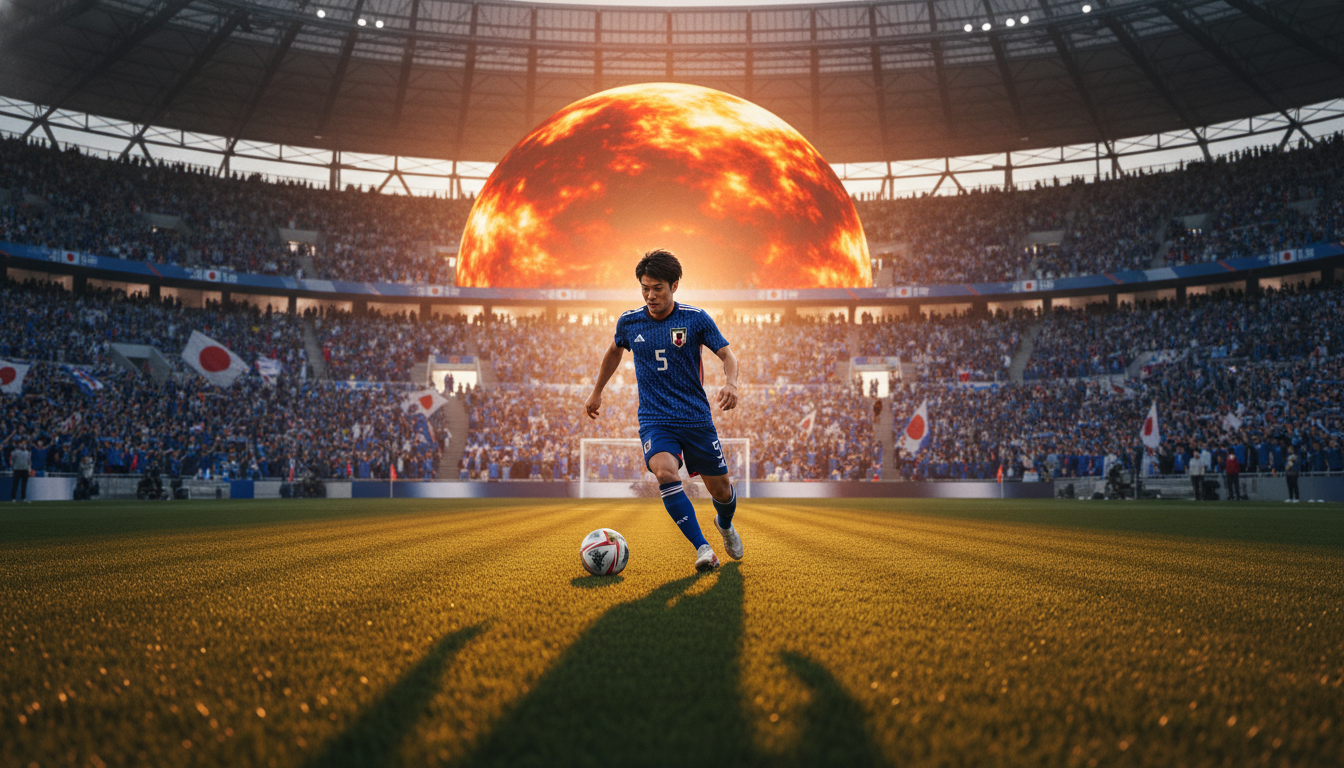
As the 2026 FIFA World Cup approaches, set to kick off in June across North America, the landscape of international football continues to evolve. While traditional powerhouses garner much of the pre-tournament discussion, savvy observers and betting analysts are increasingly turning their attention to teams poised to disrupt the established order. Among these, Japan’s national team, the Samurai Blue, stands out as a quietly dangerous proposition, particularly within a intriguing Group F alongside the Netherlands, Tunisia, and Sweden.
The narrative surrounding Japan has shifted dramatically since their impressive showing at Qatar 2022. No longer is Japan merely a plucky underdog with a ceiling at the round of 16; their trajectory, underpinned by a mature squad and a consistent tactical philosophy, suggests they are now firmly pushing for a quarter-final berth. This ambition is largely fuelled by an attack that has developed significantly at the club level, spearheaded by the dynamic duo of Takefusa Kubo and Kaoru Mitoma, who headline a front three capable of unlocking even the most resilient defences.
Manager Hajime Moriyasu, now in his eighth year at the helm since taking over in 2018, has cultivated a cohesive unit built on a well-drilled 4-2-3-1 formation. This stability, coupled with the individual brilliance and collective understanding of his key attacking players, makes Japan a formidable opponent. Their recent form, topping their AFC qualifying group with only one defeat, further underscores their readiness for the global stage. For those seeking value and analytical depth, Japan represents one of the most compelling narratives of the upcoming tournament.
The Foundation of Consistency: Moriyasu’s Enduring Vision
Hajime Moriyasu’s tenure as manager of the Samurai Blue, stretching back to 2018, is a cornerstone of Japan’s current strength and future potential. In an era where managerial merry-go-rounds are common, Moriyasu’s extended period in charge has allowed him to meticulously implement a clear tactical identity and foster a deep understanding within his squad. This longevity provides a stability that is often underestimated but is crucial for international teams, especially in the high-stakes environment of a World Cup.
The 4-2-3-1 tactical setup, consistently employed by Moriyasu, is more than just a formation; it is a philosophy that dictates how Japan approaches both phases of play. Defensively, it provides a compact structure with two holding midfielders shielding the back four, allowing the wide players to track back and support. This defensive solidity was evident in Qatar 2022, where Japan demonstrated an impressive ability to absorb pressure before launching incisive counter-attacks. The consistency in this system means that players are intimately familiar with their roles and responsibilities, reducing the need for extensive adjustments and allowing for seamless transitions during matches.
Offensively, the 4-2-3-1 is designed to leverage the technical prowess and pace of Japan’s attacking talent. The central attacking midfielder operates as a creative hub, linking the midfield with the lone striker, while the two wingers are afforded the freedom to cut inside, run in behind, or provide width. This structured yet flexible approach is what enabled Japan to achieve remarkable results at the last World Cup, notably securing victories against football giants Germany and Spain in the group stage. These weren’t fluke results; they were the product of a well-executed game plan, tactical discipline, and the collective belief instilled by Moriyasu over years of consistent application.
The enduring vision under Moriyasu has seen Japan evolve from a team capable of flashes of brilliance into a consistently competitive unit. The players understand the system implicitly, allowing them to react instinctively to game situations, whether it’s pressing high, dropping deep, or initiating a quick transition. This deep-seated tactical understanding, honed over years, will be a significant advantage when they face the varied challenges presented by Group F opponents like the Netherlands, Sweden, and Tunisia. Moriyasu’s steady hand and unwavering commitment to his tactical principles have laid a robust foundation upon which Japan’s World Cup aspirations are built, making them a formidable analytical prospect.
The Evolving Threat: Kubo and Mitoma’s Club Maturation
The core of Japan’s elevated threat level in the attacking third stems directly from the significant maturation of its star wingers, Takefusa Kubo and Kaoru Mitoma, at their respective European clubs. Both players have transitioned from promising talents to established, impactful figures, and their refined abilities are set to be pivotal for the Samurai Blue in the upcoming World Cup. Their experiences at Real Sociedad and Brighton, respectively, have not only sharpened their individual skill sets but also enhanced their understanding of high-level tactical demands, which directly translates to their international performances.
Takefusa Kubo, operating predominantly from the right wing, has continued to develop into a highly influential player for Real Sociedad. His game is characterized by exceptional close control, a low center of gravity, and a remarkable ability to glide past defenders in tight spaces. Kubo possesses a rare blend of dribbling prowess and incisive passing, allowing him to create chances for teammates as effectively as he can drive towards goal himself. His intelligence on the ball means he is adept at finding pockets of space between opposition lines, making him a constant threat to penetrate defensive structures. Furthermore, his increased consistency in decision-making and end product at club level suggests he is now ready to carry a significant creative burden for Japan, providing the kind of individual brilliance that can turn closely contested matches.
On the opposite flank, Kaoru Mitoma has cemented his reputation as one of the most exciting and effective wingers in European football with Brighton. Mitoma’s style is distinct, marked by his deceptive dribbling technique, blistering pace, and an uncanny ability to beat defenders one-on-one. His runs down the left channel are often devastating, creating numerical advantages and opening up opportunities for crosses or shots on goal. What makes Mitoma particularly dangerous is his unpredictability; he can cut inside onto his stronger right foot for a shot or a through ball, or go wide to deliver a pinpoint cross. His development at Brighton has seen him add a more robust defensive work rate to his game, making him a more complete player capable of contributing in both phases. This defensive contribution is vital in Moriyasu’s 4-2-3-1, ensuring the team maintains its shape and pressing intensity.
Together, Kubo and Mitoma represent a dual threat from the wings that is difficult for any defence to contain. Their complementary styles – Kubo’s intricate playmaking and Mitoma’s direct, explosive runs – provide Japan with multiple avenues of attack. In Moriyasu’s 4-2-3-1, they are given the freedom to roam and interchange, exploiting defensive weaknesses with their movement and technical skill. Their club maturation means they are accustomed to playing against top-tier defenders week in and week out, instilling a confidence and resilience that will be invaluable on the World Cup stage. Their individual brilliance, combined with their growing synergy, transforms Japan’s front three into a genuinely dangerous proposition, capable of producing decisive moments against any opponent in Group F or beyond.
Tactical Flexibility Upfront: Kamada or Maeda
While the wing play of Kubo and Mitoma provides much of Japan’s attacking thrust, the choice for the central attacking role, whether it be Daichi Kamada or Daizen Maeda, offers Hajime Moriyasu crucial tactical flexibility. This decision point allows Japan to adapt its approach based on the specific opponent in Group F, altering their offensive profile from creative link-up play to relentless pressing and direct running. Both players bring distinct qualities to the 4-2-3-1, and Moriyasu’s selection will be a key indicator of his game plan for each match.
Daichi Kamada embodies the more traditional creative attacking midfielder or withdrawn striker role. His strengths lie in his exceptional technical ability, vision, and capacity to link play between the midfield and the wide attackers. Kamada is adept at receiving the ball in tight spaces, turning, and distributing it effectively, often finding penetrating passes that unlock defences. He possesses a keen eye for goal himself, making intelligent runs into the box and demonstrating composure in front of goal. When Kamada plays centrally, Japan’s attack gains a significant boost in intricate build-up play and sustained periods of possession in the final third. He acts as a crucial conduit, allowing Kubo and Mitoma to operate in more advanced positions, knowing that Kamada will provide the through balls and layoffs necessary to exploit their pace and dribbling. His presence suggests a game plan focused on breaking down organized defences with precision and intelligence, controlling the tempo, and creating chances through sustained pressure and intricate passing sequences.
In contrast, Daizen Maeda offers a very different, yet equally potent, set of attributes. Maeda is renowned for his blistering pace, relentless work rate, and aggressive pressing. As a central striker, he is a constant nuisance for opposition defenders, harrying them into mistakes and providing a high-intensity defensive first line. His speed allows him to run in behind defences, stretching the play vertically and creating space for the wingers and midfielders to operate. Maeda’s directness means Japan can transition quickly from defence to attack, bypassing midfield battles and exploiting any gaps in the opponent’s backline. His presence signals a more direct, energetic approach, particularly effective against teams that prefer to build from the back or those with slower central defenders. This option is particularly valuable against opponents where Japan might seek to disrupt their rhythm, force turnovers in dangerous areas, and capitalize on counter-attacking opportunities. His ability to chase down lost causes and apply pressure for the full 90 minutes can also be crucial in wearing down opponents.
The choice between Kamada and Maeda provides Moriyasu with a tactical lever to pull, depending on the specific challenges posed by the Netherlands, Tunisia, and Sweden. Against a possession-dominant side like the Netherlands, Maeda’s pressing might be invaluable in disrupting their build-up and creating turnovers. Conversely, against a more defensively robust team like Sweden, Kamada’s creative flair and ability to pick locks could be the key. Against Tunisia, a team known for its resilience and counter-attacking threat, the choice might depend on whether Japan seeks to dominate possession with Kamada or exploit spaces with Maeda’s pace. This flexibility ensures that Japan is not a one-trick pony; they can adapt their central attacking profile to maximize their chances of success in each crucial Group F encounter, making their offensive setup genuinely unpredictable and dangerous.
Group F Dynamics: Navigating the Path to the Knockouts
Japan finds itself in Group F, a challenging but navigable quartet alongside the Netherlands, Tunisia, and Sweden. This group presents a fascinating mix of styles and strengths, requiring Japan to demonstrate tactical adaptability and consistent performance if they are to progress to the knockout stages. The experience gained from Qatar 2022, particularly their ability to defeat top-tier European opposition, provides a crucial psychological and tactical blueprint for how to approach these high-stakes matches.
The Netherlands, undoubtedly the favourites in Group F, will present Japan with their toughest test. The Dutch possess a wealth of talent across the pitch, strong tactical discipline, and a physical presence. Historically, they are a team that demands respect and a near-perfect performance to overcome. For Japan, a match against the Netherlands will likely require a disciplined defensive display, leveraging their 4-2-3-1 to contain the Dutch attacking threats, while looking to exploit spaces on the counter-attack through the pace of Mitoma and the intricate play of Kubo. The lessons from beating Germany and Spain in Qatar 2022 will be paramount here, demonstrating that Japan can indeed go toe-to-toe with European giants by executing a precise game plan and capitalizing on critical moments. A draw or even a narrow defeat against the Netherlands, while securing positive results elsewhere, could be sufficient for progression.
Sweden represents a different kind of challenge. Known for their robust physicality, disciplined defensive organization, and direct attacking style, Sweden will offer a stern test of Japan’s resilience and ability to break down a compact block. Their tactical approach often involves sitting deep, making them difficult to penetrate, and then launching quick counter-attacks or utilizing set-pieces effectively. Japan will need to demonstrate patience and precision in their build-up play, with Kamada’s creative input potentially crucial in unlocking the Swedish defence. The wing play of Kubo and Mitoma will be vital in stretching Sweden’s backline and creating numerical advantages. Japan’s ability to maintain high defensive intensity and prevent Sweden from dictating the physical terms of the match will be key to securing a positive result.
Tunisia, the third opponent, brings a different dimension to Group F. African teams are often characterized by their athleticism, resilience, and capacity for upsets. Tunisia will likely be well-organized defensively, looking to absorb pressure and hit Japan on the counter-attack with pace and directness. This match could be a test of Japan’s ability to control possession, break down a deep-lying defence, and remain vigilant against swift transitions. Maintaining focus and avoiding complacency will be critical. Japan’s experience from Qatar 2022, where they navigated a tough group, will serve them well in approaching this match with the necessary seriousness and tactical preparation. Securing three points against Tunisia will be seen as a crucial step towards qualification, making it a pivotal encounter.
Japan’s path through Group F will hinge on their ability to adapt their 4-2-3-1 system to counter the specific strengths of each opponent, while simultaneously unleashing the individual brilliance of their attacking players. Their recent form, topping their AFC qualifying group with only one defeat, underscores their current high level of performance and consistency. The belief garnered from their Qatar 2022 heroics, where they proved they could defeat two former World Cup winners, means they will enter this tournament with a genuine expectation of not just competing, but qualifying from Group F. The dynamics are complex, but Japan’s blend of tactical discipline, individual talent, and recent momentum positions them as a very strong contender for a spot in the knockout rounds.
Beyond the Round of 16: Quarter-Final Ambitions
The discourse surrounding Japan’s national team has undergone a significant transformation. Once viewed as a perennial round-of-16 contender with a tangible ceiling, their performance at Qatar 2022, coupled with their continued development, has firmly established them as a team with legitimate quarter-final ambitions for the 2026 World Cup. The narrow and agonizing elimination by Croatia on penalties in the last-16 of Qatar 2022 was not a sign of reaching their limit, but rather a testament to how close they were to breaking through, losing only on the fine margins that define elite football.
That defeat to Croatia, following their stunning group stage victories over Germany and Spain, highlighted Japan’s capacity to compete at the very highest level. They demonstrated not only the tactical discipline to frustrate and outmaneuver former champions but also the mental fortitude to recover from setbacks within matches. The experience of reaching the last-16 and pushing a seasoned World Cup finalist to penalties provides invaluable learning for a squad that has largely remained consistent under Hajime Moriyasu. This isn’t a team that will be overawed by the occasion; they have tasted the pressure and performed admirably.
The collective maturation of key players like Takefusa Kubo and Kaoru Mitoma at demanding European clubs is a principal driver of this elevated ambition. These players are no longer just promising talents; they are proven performers who consistently deliver impactful contributions in highly competitive leagues. Their enhanced tactical understanding, physical robustness, and ability to perform under pressure directly raise the ceiling for the national team. When combined with the stability provided by Moriyasu’s long tenure and his well-drilled 4-2-3-1 system, Japan possesses a blend of individual brilliance and collective cohesion that is rare.
Japan’s recent form, topping their AFC qualifying group with only one defeat, further reinforces the notion that they are not merely hoping for a good run, but actively preparing for one. This consistent success in competitive fixtures builds confidence and refines their tactical approach. The team has demonstrated its ability to manage different game scenarios, secure results, and maintain a high level of performance over an extended period. This momentum, combined with the lessons learned from Qatar 2022, positions them perfectly to push beyond their previous best.
To reach the quarter-finals, Japan will need to replicate their group stage heroics from Qatar 2022 and then overcome the psychological and physical hurdles of the first knockout round. The experience of the penalty shootout loss to Croatia will undoubtedly fuel their determination to leave no stone unturned in preparation. With a matured squad, a stable tactical system, and a track record of upsetting established powers, Japan is no longer simply aiming to compete; they are genuinely aiming to make a deep run into the tournament, and the quarter-finals are a realistic and achievable target for this quietly dangerous Samurai Blue squad.
Japan enters the 2026 World Cup not just as a popular dark-horse pick, but as a genuinely formidable contender, backed by a consistent tactical framework and a front three whose individual talents have matured significantly at the highest club levels. Their journey through Group F will be a test of their adaptability and resilience, but their proven ability to defeat elite opposition positions them well. As the tournament draws nearer, the Samurai Blue, under Hajime Moriyasu’s steady guidance, are poised to challenge expectations and potentially write a new, historic chapter for Asian football on the global stage.
Sources: FOX Sports — Player to watch from each country, RotoWire — Group previews
Related news
France vs Senegal Preview: Mbappé’s First World Cup Match Lands at MetLife
France open their 2026 World Cup campaign against Senegal at MetLife Stadium on Tuesday 16 June.…
Five Days In: Where Matchday 1 Has Left the 2026 World Cup Favourites
Mexico routine, USA emphatic, Germany sensational. But Brazil were second-best for stretches against Morocco, Switzerland could…
Scotland 1-0 Haiti: Scotland’s First World Cup Win Since 1998
Scotland beat Haiti 1-0 at Gillette Stadium in Boston on Sunday 14 June for their first…