Uruguay Under Bielsa: A Group H Trap for Spain, Cabo Verde and Saudi Arabia
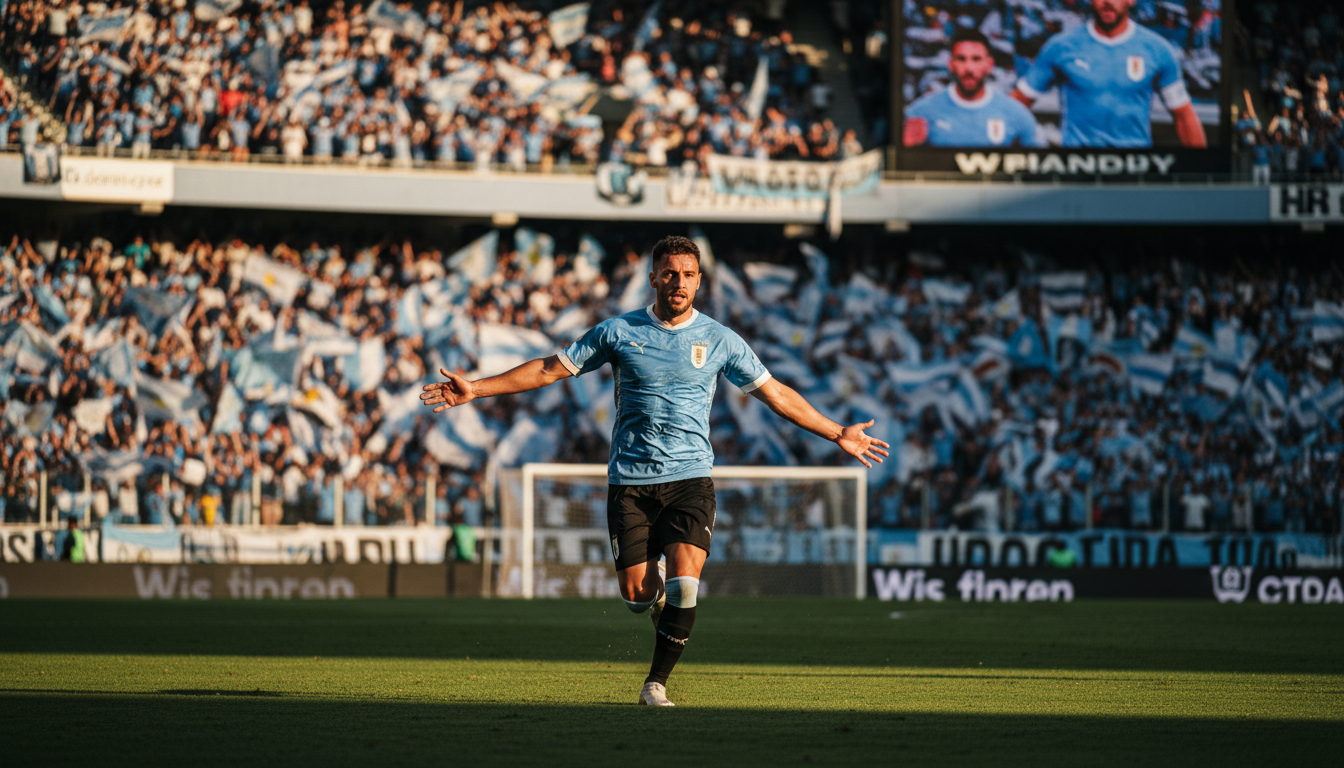
The 2026 FIFA World Cup, set to kick off on June 11th across North America, promises a tournament rich with tactical intrigue and potential upsets. Among the nations poised to disrupt traditional hierarchies, Uruguay under Marcelo Bielsa stands out as a particularly compelling case. Drawn into Group H alongside Spain, Cabo Verde, and Saudi Arabia, La Celeste enters the competition with a revitalized identity and a clear tactical mandate that could make them a formidable obstacle for any opponent, especially those expecting a comfortable passage through the knockout rounds. The narrative around Uruguay has shifted dramatically since Bielsa took the helm in 2023, moving from a team historically known for its rugged defense and individual brilliance to one that now embraces a high-octane, high-pressing philosophy. This transformation, spearheaded by key figures like Federico Valverde in midfield and Darwin Núñez leading the attack, positions Uruguay not merely as a contender for the Group H runner-up slot, but as a genuine trap for the presumed group winner, Spain, should they meet in the Round of 16.
The expectation for Group H is that Spain will top the group, leveraging their technical quality and historical pedigree. This would theoretically set them on a path to face the second-placed team from Group G in the Round of 32. However, the dynamics within Group H itself are anything but straightforward for the other contenders. While Cabo Verde and Saudi Arabia present their own challenges, Uruguay’s recent trajectory, culminating in a run to the 2024 Copa América semi-finals, losing only to a strong Colombia side, suggests they are operating at a level significantly above the other two. This makes the runner-up position in Group H theirs to lose, and in doing so, they chart a path that could lead to an early, high-stakes collision with one of the tournament favorites. The tactical blueprint laid out by Bielsa, combined with the individual talents now flourishing within it, creates a scenario where Uruguay is not just participating, but actively seeking to dictate terms, potentially throwing a significant wrench into the knockout stage aspirations of more established footballing powers.
Bielsa’s Blueprint: The High-Pressing 3-4-3
Marcelo Bielsa’s arrival as Uruguay manager in 2023 marked a definitive pivot in the nation’s footballing philosophy. Known globally as ‘El Loco’ for his unconventional and intensely demanding tactical approaches, Bielsa has instilled a high-pressing 3-4-3 formation that is a stark departure from the more conservative, often counter-attacking styles that have characterized Uruguayan teams in recent generations. This tactical setup is not merely a formation on paper; it is a comprehensive system built on relentless energy, positional fluidity, and an unwavering commitment to winning the ball high up the pitch.
The 3-4-3 under Bielsa demands extreme physical conditioning and an acute understanding of spatial relationships from every player. The three central defenders are tasked not only with traditional defensive duties but also with initiating attacks and covering vast areas when the wing-backs push high. These wing-backs are crucial to both phases of play, providing width in attack and tracking back to form a five-man defense when possession is lost. Their ability to cover ground and maintain intensity for 90 minutes is foundational to the system’s effectiveness.
At the heart of Bielsa’s 3-4-3 lies the midfield quartet. This unit is responsible for controlling the tempo of the game, distributing the ball with precision, and, most critically, leading the high press. When Uruguay loses possession, the immediate instruction is to swarm the opponent, cut off passing lanes, and force turnovers in dangerous areas. This aggressive approach aims to recover the ball quickly and launch rapid transitions into attack, catching opponents off guard before they can organize their defense. It requires midfielders with exceptional stamina, tactical intelligence, and the courage to engage in constant duels.
The front three in Bielsa’s system are not static forwards. They are the first line of defense, initiating the press from the very front. Their role involves harassing opposition defenders and goalkeepers, forcing errors, and creating opportunities through sheer pressure. When Uruguay has the ball, these forwards are expected to interchange positions, make intelligent runs into channels, and provide a constant threat in and around the penalty area. The emphasis is on dynamism, verticality, and a collective commitment to attacking football, moving the ball quickly and decisively towards the opponent’s goal. This demanding yet exhilarating style has fundamentally reshaped Uruguay’s approach to international football, making them a fascinating subject for analytical scrutiny as the World Cup approaches.
Midfield Engine: Federico Valverde’s Dominance
Central to the successful implementation of Marcelo Bielsa’s high-pressing 3-4-3 is the relentless engine and tactical intelligence of Federico Valverde. The midfielder controls the midfield for Uruguay, acting as the primary fulcrum around which both defensive solidity and offensive thrust revolve. His presence is indispensable to the system, providing the necessary balance, energy, and quality that allows Bielsa’s ambitious tactics to thrive on the international stage. Valverde’s profile is uniquely suited to the demands of a Bielsa team; he possesses an extraordinary work rate, covering immense distances during a match, combined with technical prowess that allows him to dictate play and execute incisive passes under pressure.
In the high-pressing scheme, Valverde’s role is multi-faceted. Defensively, he is often at the forefront of the press, using his speed and anticipation to close down opponents, break up play, and win back possession in critical areas. His ability to read the game allows him to intercept passes and position himself effectively to cut off passing lanes, disrupting the opposition’s build-up play before it can gain momentum. This proactive defensive contribution is crucial for a team that aims to recover the ball high up the pitch and transition quickly into attack. Without a midfielder of Valverde’s caliber to anchor this effort, the high press could easily be bypassed, leaving the defense exposed.
On the offensive side, Valverde’s influence is equally profound. Once possession is regained, he is instrumental in transitioning the ball from defense to attack, often with direct, penetrating passes that bypass multiple lines of opposition. He possesses the vision to spot attacking opportunities and the technical ability to execute complex passes that unlock defenses. Furthermore, his powerful long-range shooting ability adds another dimension to Uruguay’s attack, forcing opponents to respect his presence not just as a distributor but also as a direct goal threat from outside the box. His driving runs from midfield, often carrying the ball into dangerous areas, are a key feature of Uruguay’s offensive movements, adding dynamism and unpredictability.
Valverde’s leadership, both through his tireless effort and his calm decision-making in chaotic situations, provides a vital anchor for a relatively young and evolving Uruguay squad. He embodies the intensity and ambition that Bielsa demands, setting a standard for his teammates through his consistent high-level performances. His ability to control midfield, both defensively and offensively, makes him arguably the most crucial player in Bielsa’s setup, defining Uruguay’s ability to execute their demanding tactical blueprint and compete with the world’s best teams. His form will be a significant determinant of Uruguay’s success in Group H and beyond.
Spearheading the Attack: Darwin Núñez and the Wingers
The cutting edge of Marcelo Bielsa’s high-pressing 3-4-3 is provided by a dynamic and aggressive attacking trio, spearheaded by Darwin Núñez and flanked by wingers like Facundo Pellistri and Maxi Araújo. This forward line is not merely responsible for scoring goals; it is integral to the entire tactical philosophy, initiating the press, providing constant movement, and creating the chaos from which Bielsa’s teams thrive. The synergy between Núñez’s central presence and the wide play of Pellistri and Araújo is critical for Uruguay’s offensive output and their ability to sustain pressure on opposing defenses.
Darwin Núñez leads the line with a unique blend of raw power, blistering pace, and an insatiable work rate. In Bielsa’s system, the center-forward is expected to be much more than a traditional target man. Núñez’s role involves constant harassing of opposition center-backs and goalkeepers, closing down passing lanes, and forcing errors in the build-up phase. His relentless pressing from the front sets the tone for the rest of the team’s defensive efforts, making it incredibly difficult for opponents to play out from the back cleanly. This high defensive contribution is matched by his attacking prowess; his intelligent runs into space, particularly behind high defensive lines, stretch opponents and create opportunities for himself and his teammates. His finishing, often direct and powerful, provides a potent threat in the penalty area.
Flanking Núñez, Facundo Pellistri and Maxi Araújo provide the width, pace, and trickery essential for breaking down compact defenses. These wingers are tasked with a multitude of responsibilities: they must track back diligently to support the wing-backs defensively, contributing to the high press by closing down full-backs and wide midfielders. In attack, their primary function is to provide directness and penetration. Pellistri, with his dribbling ability and capacity to beat defenders one-on-one, can create space and deliver crosses into the box. Araújo, similarly, offers pace and an eye for goal, often drifting inside to link up with Núñez or take shots himself. Their ability to switch flanks, interchange positions with Núñez, and make runs into the half-spaces adds a layer of unpredictability to Uruguay’s attack, making them difficult to mark.
The collective understanding and high energy levels of this attacking trio are paramount. They are expected to maintain an unrelenting intensity throughout the match, both with and without the ball. When Uruguay has possession, their movement is designed to disorganize the opposition, creating channels for Valverde and other midfielders to exploit. When possession is lost, they are the first line of defense, immediately swarming the ball carrier to trigger the high press. This demanding role requires not just individual talent but a deep collective commitment to Bielsa’s principles, ensuring that Uruguay’s attack is not only a source of goals but also a critical component of their overall tactical dominance.
Group H Dynamics: Navigating the Opening Stage
Uruguay’s journey at the 2026 FIFA World Cup begins in Group H, a quartet that promises varying challenges and a clear pathway for the South American side to secure a knockout stage berth. Drawn with Spain, Cabo Verde, and Saudi Arabia, the initial phase of the tournament presents Uruguay with distinct tactical puzzles, each requiring a tailored approach under Marcelo Bielsa’s guidance. The opener, a crucial fixture against Saudi Arabia at Hard Rock Stadium in Miami on June 15th, will set the tone for their campaign and provide an early test of their high-pressing system against a potentially resilient opponent.
The match against Saudi Arabia is vital for Uruguay to establish dominance and build confidence. Saudi Arabia, known for their disciplined defensive setups and occasional flashes of attacking flair, will likely aim to frustrate Bielsa’s side and potentially hit them on the counter. Uruguay’s high-pressing 3-4-3 will need to be executed with precision to break down any deep blocks and prevent Saudi Arabia from finding rhythm. An early victory in Miami would provide significant momentum and alleviate pressure for the subsequent group fixtures, particularly the clash with Spain, which is widely anticipated to decide the group winner.
Cabo Verde represents another challenge, bringing a blend of athleticism and unpredictable attacking talent. While perhaps considered the underdog in the group, they possess players capable of individual brilliance and will likely adopt a strategy aimed at exploiting any spaces left by Uruguay’s high defensive line. Bielsa’s team will need to maintain their tactical discipline and ensure their pressing triggers are well-coordinated to deny Cabo Verde opportunities while asserting their own attacking dominance. The collective strength of Uruguay’s midfield, controlled by Federico Valverde, will be crucial in neutralizing Cabo Verde’s threats and dictating the tempo of the game.
The fixture against Spain is arguably the most significant in Group H, as it will likely determine who finishes first and second. Spain, with their renowned possession-based game and technical superiority, will offer a contrasting style to Uruguay’s high-octane approach. This match-up will be a fascinating tactical battle: can Uruguay’s relentless press disrupt Spain’s intricate passing patterns and force them into uncharacteristic errors? Or will Spain’s ability to maintain possession and navigate tight spaces allow them to bypass Uruguay’s pressure? For Uruguay, securing at least a draw against Spain would be a strong statement, even if it confirms a second-place finish, as it would demonstrate their capacity to compete with the tournament’s elite. The expectation remains that Uruguay will secure the runner-up slot in Group H, a position that, while not top of the group, sets up a potentially compelling path in the knockout stages.
The Road Ahead: Potential Knockout Stage Showdowns
Assuming Uruguay successfully navigates Group H and secures the runner-up position, their path through the knockout stages of the 2026 FIFA World Cup promises immediate high-stakes encounters. The projected progression from the group stage indicates a challenging but potentially rewarding journey, starting with a Round of 32 clash against the winner of Group G, which is widely expected to be Belgium. This initial knockout round would serve as a severe test of Uruguay’s tactical resolve and the efficacy of Marcelo Bielsa’s high-pressing 3-4-3 against one of Europe’s footballing powerhouses.
A Round of 32 matchup against Belgium would pit Uruguay against a team known for its blend of individual talent, particularly in attack, and a well-drilled tactical system. Belgium’s ability to transition quickly and exploit space could pose a significant threat to Uruguay’s high defensive line if the press is not perfectly coordinated. Conversely, Uruguay’s relentless pressure could disrupt Belgium’s build-up play and force turnovers in dangerous areas, creating opportunities for Darwin Núñez and the wingers. This encounter would be a fascinating tactical duel, with Valverde’s control in midfield and the defensive solidity of the back three being paramount to Uruguay’s chances of progressing. Overcoming Belgium would not only be a major statement but also provide immense confidence heading into the subsequent rounds.
Should Uruguay emerge victorious from the Round of 32, the projected Round of 16 opponent is likely to be Spain. This potential collision is precisely what makes Uruguay such a compelling “trap” in Group H. While Spain is expected to top Group H, a second-place finish for Uruguay sets up this tantalizing, and potentially brutal, early knockout tie. The prospect of facing Spain in the Round of 16, rather than in a later stage, immediately elevates the stakes and provides a unique tactical challenge for both teams. Spain’s possession-heavy, technically intricate style contrasts sharply with Uruguay’s direct, high-intensity approach, setting the stage for a classic clash of footballing philosophies.
For Spain, meeting a Bielsa-led Uruguay in the Round of 16 would be far from an ideal draw. Uruguay’s high press, spearheaded by Núñez and supported by Valverde’s midfield dominance, has the capacity to suffocate Spain’s intricate passing game, deny them rhythm, and force them into errors in their own half. The physical demands of playing against Uruguay’s relentless system could also wear down Spain over 90 minutes. Conversely, Spain’s ability to retain possession and operate in tight spaces could pose challenges for Uruguay’s pressing scheme, requiring immense discipline and stamina. The Round of 16 collision would be a chess match of the highest order, where individual moments of brilliance, tactical adjustments, and sheer endurance could decide who advances. This early potential matchup underscores why Uruguay, under Bielsa, is not just a participant but a genuine threat to alter the established order of the World Cup knockout stages.
Uruguay’s Recent Form and Momentum
The trajectory of Uruguay’s national team under Marcelo Bielsa has been one of significant positive momentum, providing a strong foundation for their 2026 FIFA World Cup campaign. A key indicator of their progress and adaptation to Bielsa’s demanding system was their performance at the 2024 Copa América, where they reached the semi-finals. This achievement, while not culminating in a trophy, showcased Uruguay’s capabilities on a major international stage and demonstrated the successful implementation of the new tactical approach.
Reaching the semi-finals of the Copa América is a testament to the squad’s commitment to Bielsa’s high-pressing 3-4-3. It underscored their ability to compete with top South American opposition, navigating through challenging group stage matches and knockout ties. The experience gained from deep runs in such a prestigious tournament is invaluable for a team preparing for the World Cup. It exposes players to high-pressure situations, tests their physical and mental endurance, and refines their understanding of the tactical nuances required at the elite level.
The semi-final loss to Colombia, while undoubtedly disappointing, should be viewed not as a setback but as a crucial learning experience. It provided Bielsa and his squad with invaluable insights into areas for improvement, particularly regarding sustained performance against technically proficient and physically robust opponents. Analyzing such a loss allows for fine-tuning of tactical strategies, addressing weaknesses, and reinforcing strengths, all of which are vital steps in the lead-up to a World Cup. The ability to reflect, adapt, and grow from such an experience is a hallmark of successful teams and is a testament to the analytical rigor that Bielsa brings.
Furthermore, the Copa América run fostered a sense of unity and belief within the squad. Players like Federico Valverde and Darwin Núñez, who are central to Bielsa’s vision, would have further solidified their leadership roles and understanding of the system through this competitive exposure. The momentum generated from performing well at a major tournament, coupled with the lessons learned from the semi-final exit, positions Uruguay as a more mature and cohesive unit heading into the World Cup. This recent competitive experience provides a strong psychological and tactical springboard, suggesting that Uruguay will arrive in North America not just prepared, but with a clear intent to leave a significant mark on the tournament.
Uruguay under Marcelo Bielsa represents a compelling and potentially disruptive force at the 2026 FIFA World Cup. Their high-pressing 3-4-3, orchestrated by the midfield mastery of Federico Valverde and spearheaded by the relentless Darwin Núñez, has transformed them into a team capable of challenging any opponent. While navigating Group H will require focus, particularly in their opener against Saudi Arabia and the tactical battle against Spain, their projected runner-up finish sets the stage for a formidable knockout path. The potential Round of 32 clash with Belgium and the subsequent Round of 16 collision with Spain highlight Uruguay’s capacity to be a genuine tournament trap, capable of upsetting established powerhouses and injecting significant tactical intrigue into the competition. Their recent run to the Copa América semi-finals underscores their readiness and the momentum they carry into what promises to be an exhilarating summer of football.
Sources: RotoWire — Group previews, FOX Sports — Player to watch
Related news
France vs Senegal Preview: Mbappé’s First World Cup Match Lands at MetLife
France open their 2026 World Cup campaign against Senegal at MetLife Stadium on Tuesday 16 June.…
Five Days In: Where Matchday 1 Has Left the 2026 World Cup Favourites
Mexico routine, USA emphatic, Germany sensational. But Brazil were second-best for stretches against Morocco, Switzerland could…
Scotland 1-0 Haiti: Scotland’s First World Cup Win Since 1998
Scotland beat Haiti 1-0 at Gillette Stadium in Boston on Sunday 14 June for their first…