Geography and the Group Stage: How FIFA’s East–Central–West Regional Clusters Work
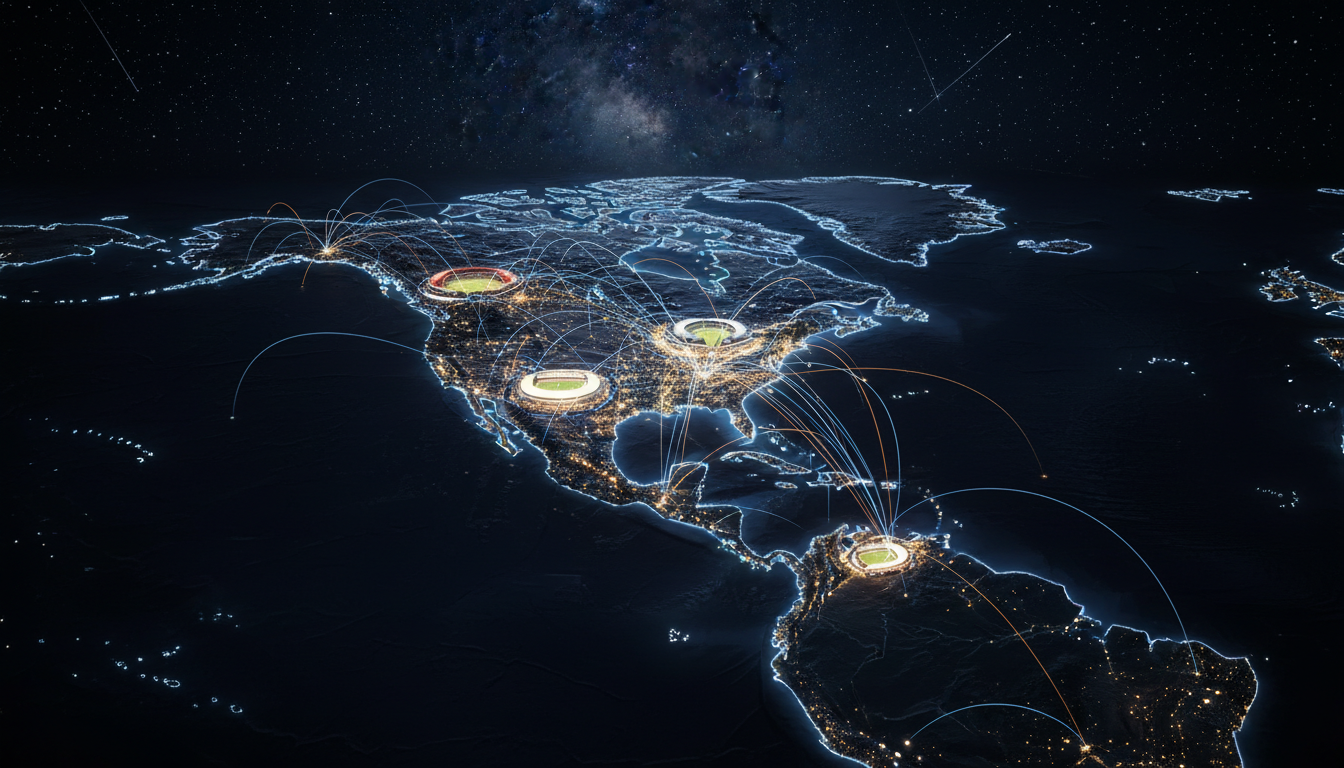
The 2026 FIFA World Cup, set to commence on June 11, 2026, and conclude on July 19, 2026, marks a significant departure from previous tournaments, not least due to its unprecedented scale and innovative logistical framework. As the first major World Cup to be hosted across three nations—the United States, Canada, and Mexico—the sheer geographic breadth presents a formidable challenge. With 16 host cities spanning an immense 5000 kilometers from east to west and encompassing three distinct time zones, FIFA has engineered a sophisticated solution to manage the logistical complexities: the implementation of East, Central, and West regional clusters for the group stage.
This strategic partitioning is designed with a primary objective: to optimize team logistics and minimize travel fatigue during the critical initial phase of the tournament. The core principle dictates that group-stage travel for each participating team will be bounded at roughly 800 miles between matches. This constraint is intended to create a more consistent operational environment for the 48 competing nations, allowing for enhanced focus on tactical preparation rather than the rigors of extensive transcontinental travel. The implications of this approach extend beyond mere convenience, influencing everything from player recovery protocols to the strategic deployment of technical staff.
The Regional Imperative: Mitigating Geographic Scale
The decision to segment the group stage into regional clusters is a direct response to the colossal footprint of the 2026 World Cup. Previous tournaments, even those hosted across multiple cities within a single large nation, have never approached the geographic spread seen in 2026. The 16 host cities are distributed across a vast expanse, making traditional, unrestricted travel logistically onerous and potentially detrimental to player welfare. The 5000km east-west span alone necessitates careful planning to mitigate the effects of long-haul flights and significant time zone shifts, which can impact performance, recovery, and overall tournament experience.
By confining group-stage travel to within approximately 800 miles, FIFA aims to replicate, as much as possible, the conditions of a more compact tournament environment during the initial phase. This limits the need for teams to frequently cross multiple time zones or endure lengthy flights, thereby conserving player energy and maximizing training time. For the 26 players on each squad and their accompanying 27 technical staff, this means a more stable routine, less disruption to sleep patterns, and reduced travel-related stress. The strategic clustering is not merely about convenience; it is a foundational element in ensuring competitive integrity and player readiness across what will be an exhaustive 104 matches scheduled over 39 days for the finalists.
Deconstructing the Clusters: East, Central, and West
The three regional clusters have been meticulously defined, each encompassing a distinct set of host cities that allow for the 800-mile travel cap to be maintained. Understanding the composition of these clusters is crucial for anticipating the initial competitive landscapes and logistical considerations for participating nations.
-
East Cluster: This cluster comprises the cities of Boston, NY/NJ, Philadelphia, Atlanta, and Miami. Geographically, these cities form a relatively contiguous corridor along the Eastern Seaboard and into the Southeast United States. Teams assigned to this cluster will experience matches within a concentrated region, likely benefiting from shorter flight times and minimal time zone changes, predominantly remaining within the Eastern Time Zone or transitioning to Central Time for Atlanta. The proximity of these major metropolitan areas allows for efficient movement between venues, facilitating smoother operations for both teams and tournament organizers.
-
Central Cluster: The Central cluster is the most geographically diverse, incorporating Dallas, Houston, Kansas City in the United States, along with Mexico City and Monterrey in Mexico, and Toronto in Canada. This cluster spans a significant north-south axis and includes host cities from all three host nations. While adhering to the 800-mile travel limit, teams in this cluster might experience more varied climates and stadium environments. The inclusion of three different countries within one cluster highlights FIFA’s commitment to integrating all hosts while managing travel distances. Logistically, this cluster presents unique challenges and opportunities, particularly in terms of cross-border travel protocols, which will be streamlined for tournament participants.
-
West Cluster: The West cluster includes Los Angeles, the San Francisco Bay Area, Seattle, and Vancouver in North America, alongside Guadalajara in Mexico. This cluster predominantly covers the Pacific Coast of the United States and Canada, extending south into Mexico’s western region. Teams in this cluster will navigate cities primarily within the Pacific Time Zone, minimizing time zone disruptions. The travel within this cluster, though potentially covering significant distances along the coastline, will remain within the stipulated 800-mile boundary, ensuring that teams can focus on preparation rather than arduous journeys. The integration of Canadian and Mexican cities with major U.S. West Coast hubs underscores the collaborative spirit of this multi-nation tournament.
Tactical Implications of the 800-Mile Constraint
For national team coaches and their analytical staff, the 800-mile travel constraint during the group stage offers a unique tactical advantage. Reduced travel distances translate directly into more consistent training schedules and enhanced recovery periods. Players are less likely to experience cumulative fatigue associated with long flights, multiple airport transfers, and significant time zone shifts. This consistency allows for more focused tactical sessions, deeper analysis of opponents, and tailored physical preparation.
The ability to maintain a relatively stable base camp within a cluster, with minimal travel disruptions between matches, can be a significant factor in team cohesion and performance. Coaches can fine-tune strategies without the added variable of player exhaustion from travel. This also benefits the extensive support staff—the 27 technical staff members—who can operate more efficiently, dedicating their energy to player performance analysis, medical care, and logistical coordination rather than managing complex travel itineraries across vast distances. For teams aiming for deep runs in the tournament, preserving energy and minimizing external stressors during the group stage could prove invaluable.
Navigating the Knockout Stages: Broader Horizons and Strategic Seeding
While the group stage benefits from strict travel limitations, the demands of a progressive knockout tournament necessitate a different approach. From the Round of 32 onwards, the 800-mile travel cap is lifted, and teams may be flown anywhere within the expansive host region. This shift marks a significant logistical pivot, requiring teams to adapt quickly to potentially longer journeys and greater time zone variations.
However, FIFA has incorporated a crucial element to manage this transition: the Round of 16 includes geographic seeding. This seeding mechanism is designed to keep first-round knockout travel manageable, even as the strict mileage cap is removed. While teams will face broader travel demands as they advance, the initial seeding aims to prevent extreme cross-continental flights immediately after the group stage. As the tournament progresses through the Round of 16, Quarter-finals, and Semi-finals, the travel demands will intensify, culminating in the ultimate test of endurance and adaptability for the finalists who will have played 104 matches across 39 days.
Operational Framework for an Expanded Tournament
The 2026 FIFA World Cup represents an unprecedented logistical undertaking, a true testament to international coordination. With 104 matches scheduled across 39 days for the finalists, the operational demands are immense. The regional clustering strategy for the group stage is a foundational element in making this expanded format feasible. It provides a structured, manageable start to a tournament that will eventually require teams to traverse the full breadth of the host nations.
The meticulous planning for player welfare, exemplified by the 800-mile travel cap and the allocation of 26 players per squad plus 27 technical staff, underscores a proactive approach to managing the inherent challenges of scale. From coordinating training facilities within each cluster to ensuring seamless border crossings for teams in the Central and West clusters, the framework is designed to support peak performance. This integrated approach, combining regional focus with strategic seeding for later stages, aims to deliver a World Cup that is both grand in scale and meticulously managed in execution, setting a new benchmark for global sporting events.
The architectural design of the 2026 FIFA World Cup’s group stage, with its East, Central, and West regional clusters, represents a pragmatic and forward-thinking solution to the logistical challenges posed by an expanded tournament across three vast host nations. By limiting initial travel to approximately 800 miles, FIFA has prioritized player welfare and competitive integrity, allowing teams to concentrate on their on-field performance rather than the rigors of long-distance journeys. As the tournament transitions into the knockout stages, the strategic geographic seeding for the Round of 16 further demonstrates a considered approach to managing travel, ensuring that even as the scale of the competition grows, the operational framework remains robust and supportive of the world’s elite footballing talent on their quest for glory from June 11 to July 19, 2026.
Sources: FIFA — Match schedule, Wikipedia — 2026 FIFA World Cup

Related news
Mexico 2-0 South Africa: Quiñones, Jiménez and Three Red Cards in a Historic Opener
Mexico beat South Africa 2-0 at Estadio Azteca on Thursday 11 June to open the 2026…
17 Days Out: The 2026 World Cup Squad Announcement Week Is Complete
Brazil, Switzerland, Germany, England and Spain have all submitted their final 26. Argentina's cut lands 2…
Manuel Neuer’s Comeback at 40: Inside Germany’s Most Talked-About Goalkeeper Decision
Manuel Neuer has come out of international retirement to be Germany's No. 1 at the 2026…