Hugo Ekitike Out of the 2026 World Cup with Ruptured Achilles
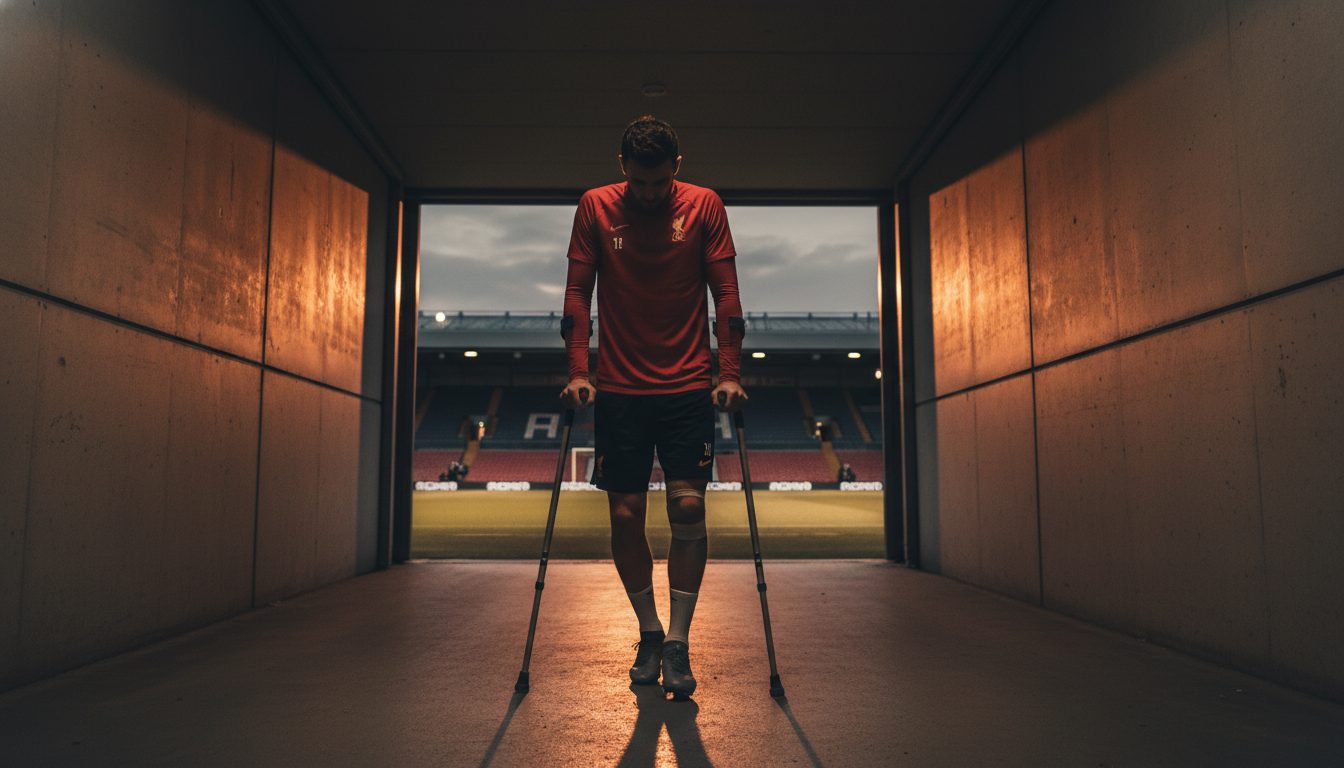
The football world was rocked this week by the news that Liverpool’s Hugo Ekitike has ruptured his Achilles tendon, an injury that will sideline him for the remainder of the 2025-26 season and, crucially, rule him out of the 2026 FIFA World Cup in the United States, Canada, and Mexico. The incident occurred during Liverpool’s Champions League encounter against Paris Saint-Germain at Anfield, a match that saw the young striker collapse on the turf in the first half after slipping, immediately signaling the severity of the issue. Ekitike himself confirmed the chilling moment, stating he heard his Achilles snap, a sound often associated with the most severe form of this debilitating injury.
The confirmation from both Liverpool and the French Football Federation swiftly followed, extinguishing any lingering hopes of a quick return or participation in the upcoming global showpiece, which is set to run from June 11 to July 19, 2026. Liverpool head coach Arne Slot has since confirmed that Ekitike underwent successful surgery to repair the damage. However, the road to recovery for an Achilles rupture is notoriously long and arduous, with an estimated minimum recovery period of nine months. This timeline projects Ekitike’s return to competitive play potentially as late as 2027, a significant blow for a player who is just 23 years old and was on the cusp of his first major international tournament.
The Devastating Blow: Ekitike’s Injury and Recovery Timeline
The circumstances surrounding Ekitike’s injury are particularly cruel. Slipping on the Anfield turf, a seemingly innocuous moment, led to a catastrophic outcome. The immediate pain and Ekitike’s own description of hearing the tendon snap underscore the sudden and severe nature of the rupture. An Achilles tendon rupture is one of the most feared injuries in professional sports, demanding extensive rehabilitation that tests an athlete’s physical and mental fortitude. For a striker, whose game relies heavily on explosive power, acceleration, and quick changes of direction, the integrity of the Achilles is paramount.
The medical consensus on recovery for such an injury typically involves an initial period of immobilization, followed by a gradual, meticulously managed rehabilitation program. This process targets restoring strength, flexibility, and proprioception in the affected limb. The nine-month minimum recovery period is often just the initial phase, focusing on a return to training. Full match fitness and the psychological confidence required to perform at the elite level can take even longer. For Ekitike, this means not only missing the climax of the current club season but also the entirety of the French national team’s World Cup campaign, effectively sidelining him from competitive action for well over a year if the return to play extends into 2027, as projected. The impact on a 23-year-old’s development and career trajectory, particularly one who was establishing himself at a top club like Liverpool, cannot be overstated. The immediate focus will be on the successful completion of his rehabilitation, ensuring a robust and confident return to the pitch, whenever that may be.
The Void in Deschamps’ Plans: Ekitike’s Projected Role
While Hugo Ekitike was not projected to be a starter for Didier Deschamps’ formidable French squad, his absence creates a significant tactical void. The 23-year-old was earmarked as a backup striker, primarily behind established figures like Olivier Giroud and Marcus Thuram, or as a crucial rotation option. In the demanding environment of a World Cup, where squads face compressed schedules, varying opposition styles, and the inevitable risk of injuries or suspensions, depth is not merely a luxury but a necessity. Ekitike offered a specific profile that Deschamps valued.
As a backup, his role would have been multifaceted. He could have been introduced from the bench to provide fresh legs, a different attacking dimension, or to hold up play against tiring defenses. In group stage matches, particularly against perceived weaker opponents, rotation options become vital to manage player fatigue and ensure key personnel are fresh for the knockout rounds. Ekitike’s potential inclusion provided Deschamps with flexibility, allowing him to rest starters or adapt tactics without a significant drop-off in quality. His youth and energy would have been assets, offering a dynamic alternative to the more experienced options. The loss of such a player, even one not in the starting XI, shrinks the pool of available talent and reduces Deschamps’ tactical options, forcing him to reconsider the balance and composition of his attacking contingent. The importance of a reliable third or fourth-choice striker in a major tournament cannot be underestimated, particularly when considering the potential for extra time in knockout fixtures and the need for fresh impetus off the bench.
Randal Kolo Muani: The Frontrunner for a Crucial Spot
With Ekitike now definitively out of contention, the focus of speculation immediately shifts to who Didier Deschamps will select to fill the vacated spot in his 23-man squad. Randal Kolo Muani has emerged as the leading candidate to take Ekitike’s place. This designation as the “leading candidate” suggests that Kolo Muani possesses attributes highly valued by Deschamps and fits within the tactical framework the manager envisions for his squad. While specific details of Kolo Muani’s recent form or club affiliations are not provided, his status implies a strong track record and a profile that aligns with the needs of the national team.
Deschamps is known for his pragmatic approach to squad selection, prioritizing players who demonstrate versatility, a strong work ethic, and tactical discipline, alongside their inherent talent. Kolo Muani’s emergence as the frontrunner indicates he likely offers a blend of these qualities, potentially providing pace, aerial ability, or a robust physical presence that Deschamps seeks in his attacking options. The French manager will announce his final squad on May 14, leaving him a little over a month from now to finalize his decision. This period will undoubtedly involve careful consideration of Kolo Muani’s current readiness, his ability to integrate seamlessly into the squad, and how his skill set complements the other attacking players already considered locks for the World Cup roster. The pressure on Deschamps to make the correct call is immense, as squad balance and depth are often determining factors in a nation’s ability to navigate the rigors of a global tournament successfully.
France’s World Cup Ambitions: Undeterred but Tested
Despite the setback of Ekitike’s injury, France remains firmly entrenched as one of the co-favourites to lift the 2026 World Cup trophy, sharing +500 odds with Spain. This position reflects the immense depth of talent at Deschamps’ disposal across all areas of the pitch, a testament to the country’s robust player development system. The core of their squad boasts world-class individuals, and their recent tournament performances have solidified their status as perennial contenders. While Ekitike’s absence is a blow to squad depth, it is unlikely to fundamentally alter the overall perception of France’s chances, given the sheer quality available to Deschamps.
However, even for a squad as deep as France’s, injuries to key backup players can introduce an element of risk. The psychological impact on the squad, witnessing a teammate suffer such a severe injury on the eve of a major tournament, can also be a subtle factor. Deschamps will need to ensure the team maintains its focus and unity. The expectation is that the collective strength and experience of the squad will absorb this loss, with other players stepping up to fill the void. The challenge for France is not merely to replace Ekitike but to ensure that the chosen replacement seamlessly integrates and provides the same level of tactical flexibility and option off the bench. Their co-favourite status is well-earned, built on a foundation of talent, tactical acumen, and tournament experience. While Ekitike’s injury tests that foundation, it is not expected to crumble it, but rather prompt a strategic adjustment from the manager.
Navigating Group I: Senegal, Norway, and Iraq Await
France’s path in the 2026 World Cup begins in Group I, where they are set to face Senegal, Norway, and Iraq. This group presents a varied challenge, demanding tactical adaptability and robust performances from the French squad. Senegal, known for their physicality, athleticism, and disciplined defensive structure, will undoubtedly pose a formidable opening test. Matches against African teams in major tournaments are often characterized by intense battles and require a high degree of focus and resilience. Norway, with their emerging talent and organized approach, will offer a different kind of tactical puzzle, likely relying on strong collective play and potentially dangerous counter-attacks.
Iraq, while perhaps considered the underdog in the group, cannot be entirely dismissed. Every team at the World Cup has earned its place, and underdogs often play with immense passion and a desire to cause an upset. Deschamps will need to ensure his team respects every opponent and approaches each match with the necessary intensity. The loss of Ekitike, even as a backup, could subtly impact how France approaches these diverse challenges. Having a range of attacking options, each with a slightly different profile, is crucial for unlocking stubborn defenses or exploiting tired legs in the later stages of group matches. The ability to rotate strikers or introduce a specific type of forward from the bench might be particularly valuable against opponents like Senegal, who are difficult to break down, or Norway, who might sit deep. France’s ambition will be to top Group I, securing a potentially more favorable draw in the knockout stages, and successful navigation of this group will underscore their status as tournament favourites.
The Broader Impact on Attacking Depth and Tactical Flexibility
The injury to Hugo Ekitike, while affecting a projected backup role, has broader implications for Didier Deschamps’ attacking depth and overall tactical flexibility. In a tournament as grueling as the World Cup, managers rely heavily on their entire squad to navigate the various challenges. Substitutions are not merely about replacing a tired player but often about changing the flow of a game, exploiting an opponent’s weakness, or providing a different dimension in attack. Ekitike’s specific profile, even as a secondary option, would have contributed to this strategic depth.
With his absence, Deschamps might find his options slightly more constrained, particularly if injuries or suspensions affect his primary strikers during the tournament. This situation could compel the manager to consider other players who might previously have been on the fringes of contention or to adjust his tactical formations to compensate for the missing profile. The importance of having diverse attacking profiles cannot be overstated; some matches might call for a target man, others for pace in behind, and still others for a player who can link play effectively. While France possesses an abundance of talent, ensuring the right blend of attributes across the attacking unit is a delicate balancing act. The next month will be critical for Deschamps to assess his remaining options, solidify his choices, and ensure that the French squad traveling to North America is as robust and adaptable as possible to mount a serious challenge for the World Cup title.
The road ahead for Hugo Ekitike is undeniably long and challenging, marked by the arduous process of rehabilitation from one of football’s most severe injuries. His immediate focus will shift entirely from World Cup dreams to a meticulous recovery, aiming for a strong and confident return to the pitch in 2027. For the French national team, while the loss of Ekitike is a blow to their squad depth, their status as co-favourites remains intact, underpinned by a wealth of talent. Didier Deschamps now faces the critical task of identifying the optimal replacement, with Randal Kolo Muani currently leading the race, as the May 14 squad announcement looms. The incident serves as a stark reminder of the fine margins and unpredictable nature inherent in elite sport, where a single slip can alter a player’s trajectory and influence a nation’s World Cup aspirations.
Sources: ESPN — Ekitike ruptures Achilles, to miss World Cup, Sky Sports — Liverpool striker suffers serious ruptured Achilles, Yahoo Sports — France’s Ekitike set to miss World Cup, Goal.com — Slot delivers surgery update, World Soccer Talk — Who can take Ekitike’s spot with France
Sources

Related news
17 Days Out: The 2026 World Cup Squad Announcement Week Is Complete
Brazil, Switzerland, Germany, England and Spain have all submitted their final 26. Argentina's cut lands 2…
Manuel Neuer’s Comeback at 40: Inside Germany’s Most Talked-About Goalkeeper Decision
Manuel Neuer has come out of international retirement to be Germany's No. 1 at the 2026…
Lennart Karl Makes Germany’s 26: Bayern’s Teenage Attacker Earns His World Cup Call
Lennart Karl, Bayern Munich's teenage attacking midfielder, has made Julian Nagelsmann's final Germany 26. Alongside Cologne's…