Germany Push Squad Announcement to 21 May to Buy Time on Injuries
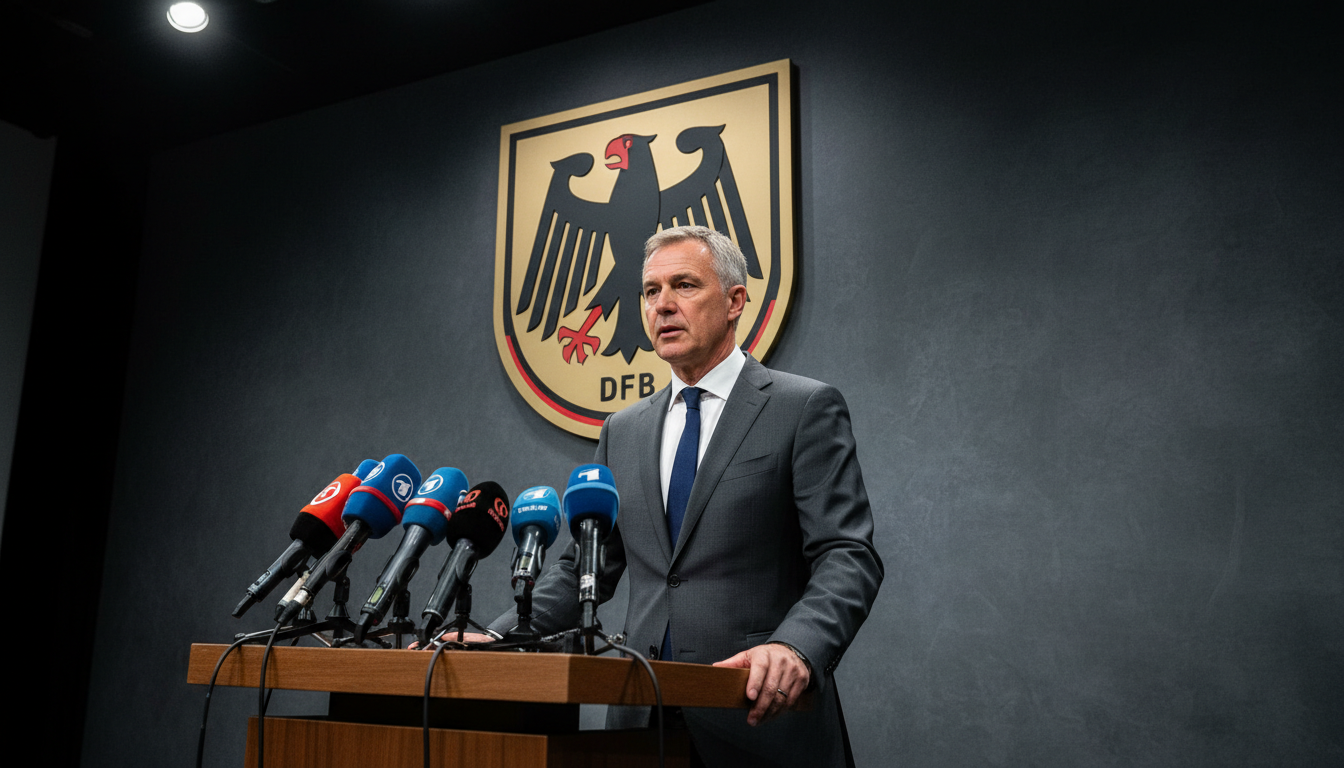
Germany Push Squad Announcement to 21 May to Buy Time on Injuries
Julian Nagelsmann was due to name Germany’s 2026 World Cup squad in Frankfurt on 12 May. He has now pushed the announcement back nine days to 21 May to give borderline injured players another window to prove fitness.
The decision by the German Football Association, under the stewardship of Julian Nagelsmann, to delay their final 26-man World Cup squad announcement is a calculated maneuver aimed at maximizing player fitness and strategic flexibility. Originally slated for 12 May, the reveal has been postponed by nine days, moving the critical date to 21 May. This adjustment is not merely a logistical shift but a direct response to the demands of a high-stakes tournament preparation cycle, specifically requested to accommodate the conclusion of the Bundesliga’s 2025-26 season on 16 May. The intervening period between the domestic league’s finale and the new squad announcement date becomes a crucial window for Nagelsmann and his medical staff to assess the condition of players whose availability hangs in the balance due to injury concerns.
The implications of this nine-day delay are substantial, particularly for those athletes currently grappling with fitness issues. For a national team manager, the balance between selecting proven talent and ensuring peak physical condition is paramount, especially when facing the rigors of a major international tournament like the FIFA World Cup. The extra time affords Nagelsmann a clearer picture of player recovery trajectories, allowing for more informed decisions rather than speculative ones. This strategic pause underscores the meticulous planning required at the highest echelons of international football, where every marginal gain in preparation can significantly influence tournament performance. The focus on accommodating the Bundesliga’s last day highlights the reliance on domestic talent and the desire to evaluate players in their most recent competitive form before making definitive selections for the global showpiece event.
The Strategic Delay and Bundesliga Alignment
The shift in Germany’s World Cup squad announcement date from 12 May to 21 May represents a deliberate strategic adjustment by Julian Nagelsmann, directly influenced by the conclusion of the Bundesliga season. The 2025-26 Bundesliga campaign is scheduled to conclude on 16 May, just five days before the new squad announcement. This tight turnaround is precisely what Nagelsmann and his technical team sought to leverage, ensuring that players participating in the domestic league have every opportunity to prove their fitness in competitive environments or demonstrate significant progress in their rehabilitation programs. The nine-day delay, therefore, is not merely a postponement but a carefully orchestrated move to align the selection process with the most current available data on player health and form.
For players on the cusp of selection, particularly those recovering from injuries, this additional window is invaluable. A player who might have been deemed a significant doubt on 12 May could, with an extra week of focused rehabilitation and medical assessment, demonstrate sufficient recovery by 21 May to warrant inclusion. This flexibility is critical for a manager navigating the complexities of squad building, especially when dealing with the physical demands of modern football. The decision reflects a pragmatic approach, prioritizing comprehensive medical evaluation over an earlier, potentially riskier, announcement. It allows for a more thorough understanding of each player’s readiness, reducing the element of guesswork that often accompanies major tournament selections.
The Bundesliga’s status as a top-tier European league means that many of Germany’s key national team players ply their trade within its ranks. Their performance and physical state in the final matchdays of the season, or their progress in recovery post-season, are crucial indicators for Nagelsmann. By waiting until after 16 May, the coaching staff can gather final performance data and medical updates directly from club environments, providing the freshest possible insights. This commitment to waiting for the most up-to-date information underscores a data-forward approach to squad selection, aiming to mitigate risks associated with carrying players who are not at their optimal physical condition into a demanding tournament schedule. The nine-day cushion is therefore a testament to Nagelsmann’s desire for precision in his final roster decisions.
Navigating FIFA Deadlines and Medical Assessments
Julian Nagelsmann’s decision to push Germany’s World Cup squad announcement to 21 May is strategically positioned within FIFA’s established deadlines, granting him enhanced flexibility. FIFA mandates a provisional 35-man squad by 11 May, a deadline that will have passed before Germany’s revised announcement date. This means that while Nagelsmann will have submitted his initial, broader list to FIFA, the delay pertains specifically to the public unveiling of the final 26-man roster. The critical FIFA deadline for the final 26-man squad is 30 May. By announcing on 21 May, Nagelsmann provides himself with a nine-day buffer between his public reveal and the ultimate submission to FIFA. This cushion is invaluable for making tight medical calls and for any unforeseen developments in the immediate pre-tournament period.
The nine-day cushion between the new announcement date of 21 May and FIFA’s final submission deadline of 30 May offers Nagelsmann significant latitude. This period can be utilized for a variety of purposes, including further monitoring of players whose fitness remains a concern even after the 21 May announcement. It also provides a brief window for any last-minute adjustments, although such changes are typically reserved for extreme circumstances, such as an injury occurring during a pre-tournament training camp. More commonly, this buffer allows for internal discussions, fine-tuning of tactical plans based on confirmed player availability, and ensuring all administrative requirements are met without undue pressure.
The core rationale for the delay, however, remains centered on medical assessments. For players identified as “borderline injured,” an additional week of evaluation can make a profound difference. Medical teams can conduct further diagnostic tests, assess recovery rates, and monitor participation in light training sessions. The decision-making process for these players involves a delicate balance: the desire to include key talent versus the risk of carrying a player who might not be fully fit for the duration of the tournament. The prolonged assessment period reduces the speculative element, allowing Nagelsmann to make choices based on more concrete evidence of recovery and match readiness. This meticulous approach to player health is fundamental for a nation aiming for deep progression in the World Cup.
Implications for Squad Composition and Player Profiles
The targeted delay in Germany’s squad announcement directly impacts the potential composition of Julian Nagelsmann’s final 26-man roster, particularly concerning players recovering from injuries. While specific player names are not available, the concept of “borderline injured” players encompasses a range of scenarios. These could include athletes returning from muscle strains, ligament issues, or even more complex recoveries where match fitness and sharpness are still being regained. For such players, an additional nine days can mean the difference between being deemed a significant risk and a calculated gamble, or even a fully recovered asset.
The extra time allows for a more comprehensive evaluation of a player’s ability to withstand the intense physical demands of a World Cup. This is not solely about being able to walk onto the pitch, but about being able to perform at an elite level for 90 minutes, potentially multiple times over a short period, and to recover effectively between matches. Nagelsmann and his medical team will be assessing not just the absence of pain, but also strength, agility, endurance, and psychological readiness. An extra week of training and rehabilitation can significantly improve these parameters, potentially elevating a player from the “doubtful” category to “available for selection.”
Furthermore, the delay influences the strategic balance of the squad. If a key player in a specific position recovers sufficiently, it might negate the need to select a more conservative, fit-but-less-experienced alternative. This could free up a squad spot for an additional tactical option, a specialist in another area, or a younger player who provides depth. Conversely, if a “borderline” player does not meet the fitness criteria by 21 May, Nagelsmann will have had ample time to consider alternatives and integrate them into his strategic thinking without last-minute panic. The decision to wait, therefore, is about optimizing the quality and depth of the squad by making the most informed choices possible regarding player availability and overall contribution.
Germany’s Tournament Outlook and Group Stage Path
Germany enters the 2026 FIFA World Cup with a clear objective of deep progression, following a quarter-final exit in Euro 2024 where they were eliminated by Spain in extra-time. This recent tournament performance provides a contextual backdrop for Nagelsmann’s current squad selections, highlighting the pressure to deliver a stronger showing on the global stage. Germany has been drawn into Group E, alongside Curaçao, Côte d’Ivoire, and Ecuador. This group presents a varied challenge, requiring adaptability and tactical discipline from the German squad. Their opening match will be against Curaçao on 14 June at NRG Stadium in Houston, a fixture that will be crucial for establishing early momentum in the tournament.
From a betting perspective, Germany’s outright odds for the World Cup currently stand at +1400, placing them seventh on the board. This valuation by bookmakers and analysts suggests that while Germany is considered a legitimate contender, they are not among the absolute favorites. Their position as seventh implies a tier below the perceived top-tier nations, reflecting a cautious assessment of their current competitive standing. The +1400 odds translate to a specific implied probability of success, a metric that informs both public perception and internal strategic planning. It indicates a team with significant potential, but also one with clear challenges to overcome if they are to lift the trophy on July 19th.
The relatively favorable group stage draw, with Curaçao as their initial opponent, offers Germany an opportunity to build confidence and refine their tactical approach before facing potentially tougher challenges. However, the World Cup format demands consistent performance against all opponents, irrespective of their perceived strength. Côte d’Ivoire and Ecuador represent formidable opponents, capable of upsetting established hierarchies if Germany is not fully prepared. Nagelsmann’s meticulous approach to squad selection, exemplified by the delay in the announcement, is therefore critical in ensuring that the team sent to the World Cup is not only talented but also physically robust and strategically cohesive, ready to navigate both their group stage challenges and the subsequent knockout rounds.
Comparative Timelines and Managerial Calculus
Germany’s decision to delay its World Cup squad announcement contrasts with the timelines set by other prominent football federations, highlighting Julian Nagelsmann’s unique strategic calculus. France, for instance, has set its announcement date for 14 May, a full week before Germany’s revised schedule. Spain and England, similarly, have yet to confirm their specific dates, indicating a varied approach across the top footballing nations. This divergence in timelines underscores that while FIFA sets overarching deadlines, the precise timing of a public squad reveal is a strategic choice, tailored to each nation’s specific circumstances, player pool, and managerial philosophy.
The earlier announcement by France suggests a potential confidence in their core player availability or perhaps a desire to establish squad cohesion sooner. In contrast, Nagelsmann’s choice to delay signals a clear priority on maximizing the assessment period for borderline injured players, a decision evidently driven by specific concerns within the German camp. This patient approach implies that the perceived benefits of additional medical evaluations and recovery time outweigh any potential advantages of an earlier public declaration, such as generating early team buzz or allowing more time for media interactions with selected players.
Managerial calculus in such situations is complex, balancing multiple factors: player fitness, tactical requirements, team morale, and external expectations. For Nagelsmann, the nine-day cushion is a tool to ensure that when the final 26 names are announced on 21 May, they represent the strongest possible contingent, free from avoidable fitness uncertainties. This decision, while perhaps causing a brief period of extended anticipation for fans and media, is fundamentally about optimizing the team’s chances on the pitch. It reflects a manager who is willing to adapt the administrative schedule to serve the overarching goal of competitive success, demonstrating a calculated and data-driven approach to the monumental task of World Cup preparation.
Julian Nagelsmann’s strategic decision to push back Germany’s World Cup squad announcement to 21 May is a clear demonstration of a manager prioritizing player fitness and medical certainty over an earlier public declaration. This nine-day delay, requested specifically to accommodate the Bundesliga’s conclusion, provides a critical window for assessing borderline injured players, aligning the selection process with the most current data available. Positioned carefully within FIFA’s deadlines, this move grants Nagelsmann vital flexibility for tight medical calls and ensures that Germany’s final 26-man roster will be as robust and prepared as possible for their Group E challenges against Curaçao, Côte d’Ivoire, and Ecuador, commencing with their first match on 14 June in Houston. The methodical approach underscores Germany’s intent to optimize every aspect of their preparation as they aim to improve upon their Euro 2024 performance and contend for the World Cup trophy.
Sources: Washington Post — Germany delays squad reveal, Republic World — Germany postpone announcement due to injuries, Foot Africa — Nagelsmann postpones squad announcement
Sources

Related news
Mexico 2-0 South Africa: Quiñones, Jiménez and Three Red Cards in a Historic Opener
Mexico beat South Africa 2-0 at Estadio Azteca on Thursday 11 June to open the 2026…
17 Days Out: The 2026 World Cup Squad Announcement Week Is Complete
Brazil, Switzerland, Germany, England and Spain have all submitted their final 26. Argentina's cut lands 2…
Manuel Neuer’s Comeback at 40: Inside Germany’s Most Talked-About Goalkeeper Decision
Manuel Neuer has come out of international retirement to be Germany's No. 1 at the 2026…