Eder Militão Hamstring Surgery: Brazil’s Defence Loses Its Anchor
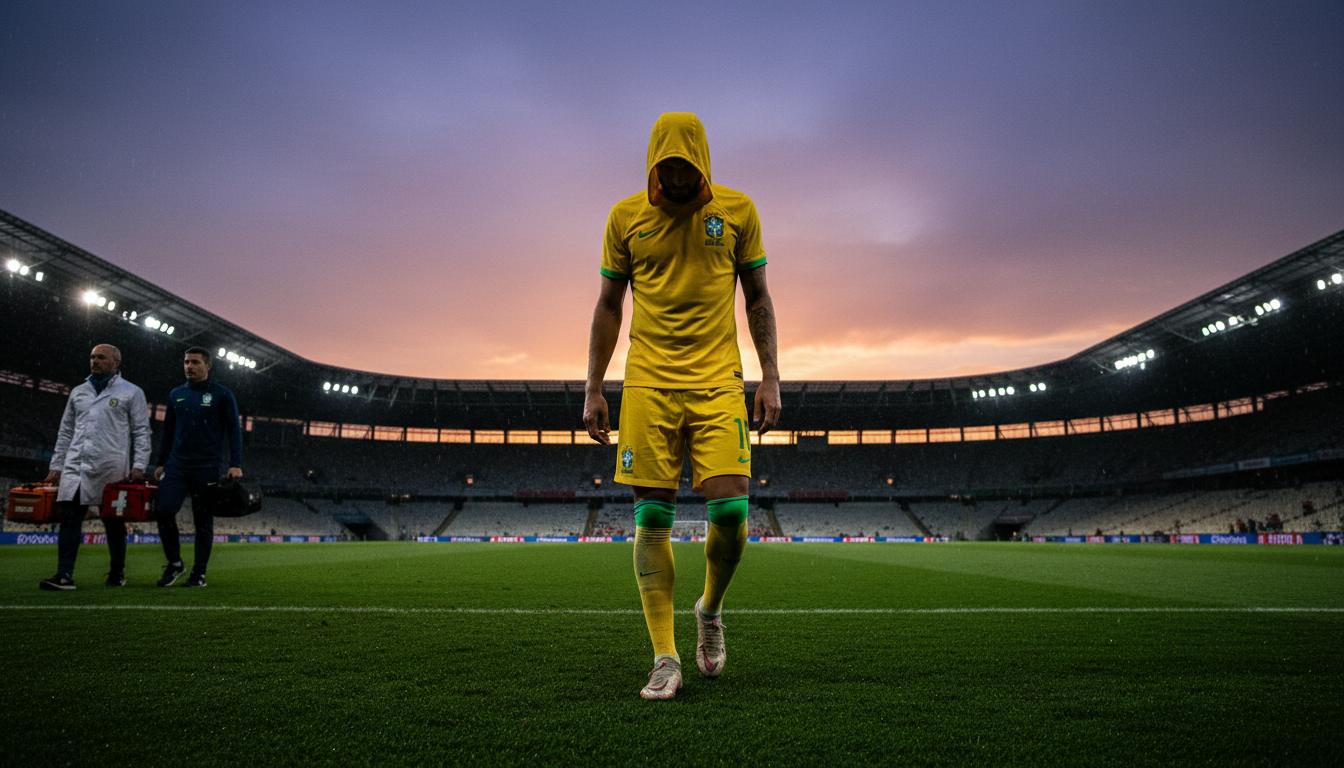
The landscape of Brazil’s 2026 FIFA World Cup aspirations has been significantly altered following the confirmation that Real Madrid centre-back Eder Militão has sustained a hamstring injury requiring surgery. This severe setback means Militão will be unavailable for the upcoming global tournament, a critical blow to manager Dorival Junior’s defensive plans just weeks before the competition commences. The 2026 World Cup, set to run from 11 June to 19 July across the United States, Canada, and Mexico, now looms large with a key figure missing from the Seleção‘s backline. Militão, widely regarded as a pivotal component of Brazil’s defensive structure, leaves a void that will necessitate immediate and effective adjustments from the coaching staff.
The timing of this injury, occurring in April 2026, is particularly inopportune, offering minimal time for Dorival Junior to fully integrate a new defensive partnership or to test alternative tactical configurations in high-stakes environments. The loss of a player of Militão’s calibre, who combines physical prowess with astute positional awareness and strong aerial ability, fundamentally shifts the defensive dynamic for a nation that consistently enters major tournaments as a leading contender. The immediate consequence is a reliance on Marquinhos of Paris Saint-Germain and Gabriel Magalhães of Arsenal to form the central defensive pairing, a duo that, while individually talented, has not had the extensive partnership development that Militão might have provided with either. This unforeseen change introduces a layer of uncertainty into Brazil’s preparations, potentially impacting their strategic approach to Group C fixtures against Morocco, Haiti, and Scotland.
The Blow to Brazil’s Defensive Spine
Eder Militão has consistently demonstrated his credentials as one of the elite central defenders in European football, anchoring the defence for Real Madrid with a blend of aggression, speed, and intelligence. His absence from the Brazil squad is not merely a numerical reduction but a qualitative deficit that will reverberate through the team’s structure. Militão’s ability to cover ground quickly, his proficiency in one-on-one duels, and his composure in possession have been crucial attributes for both club and country. He offers an assurance at the back that allows full-backs to push forward and midfielders to commit to offensive phases with greater confidence, knowing that a robust last line of defence is in place. His presence also brings a degree of leadership and experience from high-pressure club matches, an intangible asset that is difficult to replace. The tactical flexibility Militão provided, being comfortable defending a high line or dropping deep, will also be missed, potentially forcing Dorival Junior into more rigid defensive setups.
With Militão sidelined, the defensive responsibilities now fall squarely on the shoulders of Marquinhos and Gabriel Magalhães. Marquinhos, captain of Paris Saint-Germain, brings extensive experience from the highest levels of club football, including deep runs in the UEFA Champions League, and has been a consistent fixture for Brazil for many years. His leadership, tactical discipline, and ability to read the game are undeniable strengths, making him a natural choice for one of the central roles. Gabriel Magalhães, meanwhile, has established himself as a dominant force in the Premier League with Arsenal, renowned for his physical presence, aerial dominance, and left-footed distribution. His aggressive style and proficiency in stepping out to intercept could complement Marquinhos’s more measured approach. While both are top-tier defenders in their own right, their potential synergy as a primary partnership for Brazil in a World Cup scenario is less tested than a combination involving Militão would have been. The challenge for Dorival Junior will be to forge a seamless understanding between them in a compressed timeframe, ensuring their individual strengths coalesce into a cohesive and impenetrable unit, capable of withstanding the diverse attacking threats presented by World Cup opponents. This includes establishing clear communication lines, understanding each other’s positioning in various game states, and developing a shared rhythm in defensive transitions.
Compounding Injury Woes: The Rodrygo Effect
Militão’s injury does not occur in isolation; it compounds an already significant injury crisis for the Brazilian national team. Earlier this month, the squad was rocked by the news that another Real Madrid starter, forward Rodrygo, had suffered an ACL and meniscus rupture, effectively ruling him out of the 2026 World Cup. The loss of two pivotal Real Madrid starters within a span of three weeks represents an unprecedented challenge for Brazil’s preparations. Rodrygo’s absence depletes Brazil’s attacking options, removing a player capable of providing pace, directness, and crucial goal contributions from wide areas or as a secondary striker. His versatility and ability to unlock defences with individual brilliance would have been a significant asset in the tournament’s knockout stages, particularly against entrenched defences. Rodrygo’s capacity to operate effectively across the front line provided Dorival Junior with valuable tactical flexibility, allowing for various offensive schemes that now must be reconsidered.
The cumulative impact of losing both Militão and Rodrygo cannot be overstated. It forces Dorival Junior to re-evaluate not just specific positions but potentially the entire tactical framework of the team. The defensive stability provided by Militão and the offensive dynamism offered by Rodrygo were integral to many potential game plans. Their simultaneous unavailability means that other players, who might have been seen as rotational options or impact substitutes, will now be thrust into starting roles, carrying a greater burden of expectation. This scenario places immense pressure on the remaining squad members to step up and perform at their peak, while also testing the depth and resilience of the entire Brazilian contingent. The psychological impact of losing two key figures from the same club, especially one as prominent as Real Madrid, could also be a factor that Dorival Junior must manage carefully, ensuring that focus remains squarely on the task at hand and confidence within the squad is maintained. The need for new attacking combinations to gel quickly, alongside the defensive re-alignment, means that Brazil’s preparation period will be intensely focused on establishing fundamental understandings across the pitch.
Assessing the Centre-Back Depth Chart
Beyond the likely starting duo of Marquinhos and Gabriel Magalhães, Brazil’s depth at centre-back for the 2026 World Cup will be critical, especially in light of Militão’s absence. Dorival Junior will now turn to a pool of backup options, each bringing different attributes and levels of experience to the squad. The primary candidates for these reserve roles include Bremer of Juventus, Lucas Beraldo of Paris Saint-Germain, and Murillo of Nottingham Forest. These players represent a mix of seasoned professionals and emerging talents, and their readiness to step into a high-pressure World Cup environment will be a key consideration for the coaching staff. The quality of these backup options will be scrutinized, as they are now one injury or suspension away from a starting berth in the most prestigious tournament in football.
Bremer, known for his robust defending and physical strength in Serie A, offers a more traditional, uncompromising defensive profile. His experience in a demanding league and his ability to win aerial duels and make crucial interceptions could be invaluable, particularly in matches where Brazil might face direct attacking approaches or need to protect a lead. However, his integration into the national team’s specific tactical system, especially if a more possession-based or high-line approach is preferred, will need to be seamless, as his style can sometimes be more reactive than proactive. Lucas Beraldo, a teammate of Marquinhos at PSG, represents a younger generation of centre-backs. His exposure to top-tier European football at a major club, even if relatively recent, provides a foundation. His potential inclusion would likely signify a belief in his technical ability and composure under pressure, albeit with less senior international experience than Militão or Marquinhos. Beraldo’s comfort on the ball could be an asset for Brazil’s build-up play, but his defensive maturity in high-pressure World Cup moments remains to be fully tested.
Murillo, playing for Nottingham Forest, offers another dimension. His performances in the Premier League have highlighted his athleticism and defensive capabilities, particularly in a league known for its intensity and physicality. Murillo’s pace and ability to recover could be valuable against fast attackers, and his aggressive tackling style can disrupt opposition play. The challenge for Murillo, as with Beraldo, will be the significant step up in stakes and scrutiny that a World Cup entails, especially if called upon in crucial moments. The tactical demands of playing for Brazil, which often involves defending large spaces due to attacking full-backs, will require these backups to adapt quickly. The collective experience level of these backups, while respectable, does not match the proven World Cup and Champions League pedigree that Militão brought to the table. This disparity means that any injury or suspension to either Marquinhos or Gabriel Magalhães during the tournament would necessitate a significant tactical adjustment and place immense pressure on the next in line. Dorival Junior’s strategy will therefore need to account for the possibility of needing to rotate or introduce a less experienced centre-back, requiring meticulous preparation and clear communication regarding roles and responsibilities. The depth chart, while containing quality, now appears thinner at the very top, potentially limiting tactical flexibility and increasing the risk profile for the Brazilian defence during the tournament.
Brazil’s World Cup Group and Opening Challenge
Brazil finds itself in Group C for the 2026 FIFA World Cup, alongside Morocco, Haiti, and Scotland. While Brazil will undoubtedly be considered favorites to advance from this group, the absence of Eder Militão introduces a new variable that Dorival Junior and his squad must account for, particularly in their opening fixtures. The World Cup opener against Morocco on 13 June at MetLife Stadium will be a crucial test, not only for securing an early advantage in the group but also for assessing the new defensive partnership under competitive pressure. This match will serve as the first real barometer for how well Marquinhos and Gabriel Magalhães have gelled and how effectively Brazil can cope without Militão’s presence.
Morocco, having demonstrated their capabilities in previous international tournaments, will present a disciplined and potentially tactically astute challenge. Their ability to organize defensively and launch swift counter-attacks could expose any nascent vulnerabilities in Brazil’s reconfigured backline. The opening match is often characterized by nerves and a desire to make a strong statement, and Brazil will need their defence to be rock-solid from the first whistle. Militão’s robust presence and experience in such high-stakes encounters would have been invaluable in containing opposing forwards and dictating defensive transitions. Without him, Marquinhos and Gabriel Magalhães will be tasked with immediately establishing a commanding presence and communication flow against a motivated opponent. The tactical battle in midfield and defence will be pivotal, as Morocco will likely aim to frustrate Brazil and exploit any defensive disorganisation.
Subsequent matches against Haiti and Scotland, while potentially less challenging on paper, still require utmost professionalism and defensive vigilance. Haiti, known for their athleticism and unpredictable attacking bursts, could cause discomfort if Brazil’s defence is not entirely settled, particularly if they are afforded space to run into. Scotland, typically characterized by their physical approach and resolute team play, will demand a strong aerial presence and disciplined marking, areas where Militão excelled. Their set-piece threat and commitment to pressing could also test Brazil’s new defensive pairing and their ability to withstand sustained pressure. The World Cup group stage is not merely about accumulating points; it is also a period for teams to build rhythm, confidence, and tactical cohesion. For Brazil, with a key defensive component missing, the group stage takes on added importance as a proving ground for their revised defensive unit, highlighting the immediate challenges Dorival Junior faces in ensuring his team is prepared for all eventualities and can navigate potential pitfalls without their primary defensive anchor.
Managerial Challenge and Outright Odds
The dual loss of Eder Militão and Rodrygo presents Dorival Junior with one of the most significant managerial challenges of his tenure at a critical juncture. His immediate task is multifaceted: not only must he find suitable replacements and establish new partnerships, but he must also manage the psychological impact of these high-profile absences on the squad. Integrating Marquinhos and Gabriel Magalhães into a seamless defensive unit, while simultaneously ensuring the backup options are prepared for immediate deployment, will require astute coaching and clear communication. Tactical flexibility will be paramount, as Brazil may need to adapt their playing style to compensate for the specific attributes that Militão brought to the team, such as his recovery pace and ability to defend in space, potentially requiring more defensive cover from midfield.
The betting markets have reacted to Brazil’s recent setbacks, with the nation’s outright odds for winning the 2026 World Cup now standing at +800, placing them fourth on the board. This position, while still indicating Brazil as a strong contender, reflects a slight recalibration of expectations following the injuries to two key starters. Prior to these developments, Brazil might have been viewed with shorter odds, but the perceived weakening of both their defensive spine and attacking thrust has evidently influenced the market’s assessment of their chances. The odds are a quantitative reflection of the increased uncertainty surrounding Brazil’s campaign, signaling that while they possess immense talent, the path to lifting the trophy has become demonstrably more challenging. The market’s adjustment indicates that the perceived probability of Brazil winning has decreased, placing a greater emphasis on other leading nations.
Dorival Junior’s leadership will be under intense scrutiny. His ability to foster resilience, adapt tactics, and instill confidence in the revised squad will be crucial. The challenge extends beyond the pitch; it involves uniting a team that has faced significant disruption, ensuring that the focus remains on collective performance rather than dwelling on the absences. The pressure to perform at a World Cup is always immense for Brazil, and these injuries only amplify that pressure. How Dorival Junior navigates these choppy waters will be a defining factor in Brazil’s pursuit of a sixth World Cup title, and the outright odds serve as a tangible measure of the task that lies ahead for the manager and his squad. His decisions regarding team selection, tactical adjustments, and motivational strategies will be dissected, with every choice carrying significant weight in the context of these crucial absences.
Real Madrid’s Unprecedented Injury Crisis
While the focus for Brazil is squarely on their World Cup campaign, the injuries to Eder Militão and Rodrygo are also symptomatic of a broader, unprecedented injury crisis at their club, Real Madrid. The 2025-26 season has been particularly harsh on the Spanish giants, who have now lost Militão, Rodrygo, and Arda Güler to significant injuries. This record injury count for Real Madrid underscores the demanding nature of modern football and the fine margins upon which national team preparations can be undone. For a club of Real Madrid’s stature, accustomed to competing on multiple fronts at the highest level, such a sustained period of key player absences is highly unusual and deeply impactful, both for their own seasonal objectives and, as now evident, for international football. The cumulative physical toll on elite athletes, managing club and international commitments, is increasingly a topic of discussion, and Real Madrid’s current situation provides a stark example of its consequences.
The impact of this club-level crisis extends directly to national teams like Brazil. When a single club contributes multiple starters to a national squad, any significant injury cluster within that club inevitably creates a ripple effect. For Brazil, losing two players of the calibre of Militão and Rodrygo from the same club means not only are two individual talents missing, but also that potential club-level understanding and chemistry that might have translated to the national team are forfeited. Players who are accustomed to playing alongside each other week in and week out bring a certain cohesion that is difficult to replicate in the limited time afforded to national teams. The fact that Real Madrid has faced such a “record injury count” highlights a potential systemic issue, whether related to fixture congestion, training methodologies, or sheer misfortune, that has directly undermined Brazil’s World Cup ambitions. This situation serves as a stark reminder of the interconnectedness of club and international football, where the misfortunes of one can directly dictate the fate of the other on the grandest stages. The ripple effect demonstrates how club-level challenges can cascade into significant problems for national team managers, forcing last-minute strategic overhauls and testing the depth of even the most talent-rich squads.
Eder Militão’s absence due to hamstring surgery represents a profound setback for Brazil’s 2026 World Cup campaign, particularly when viewed in conjunction with Rodrygo’s earlier injury. The defensive anchor is gone, and a vital attacking threat is also missing, forcing Dorival Junior to reconfigure his plans fundamentally. While Marquinhos and Gabriel Magalhães offer a strong foundation, and depth options exist, the challenge of building new chemistry and managing the squad through the pressures of a World Cup without two Real Madrid starters is significant. Brazil’s outright odds reflect this increased difficulty, but the
Sources

Related news
17 Days Out: The 2026 World Cup Squad Announcement Week Is Complete
Brazil, Switzerland, Germany, England and Spain have all submitted their final 26. Argentina's cut lands 2…
Manuel Neuer’s Comeback at 40: Inside Germany’s Most Talked-About Goalkeeper Decision
Manuel Neuer has come out of international retirement to be Germany's No. 1 at the 2026…
Lennart Karl Makes Germany’s 26: Bayern’s Teenage Attacker Earns His World Cup Call
Lennart Karl, Bayern Munich's teenage attacking midfielder, has made Julian Nagelsmann's final Germany 26. Alongside Cologne's…