England’s 2026 World Cup Squad Reveal: The Tuchel Selection Calendar
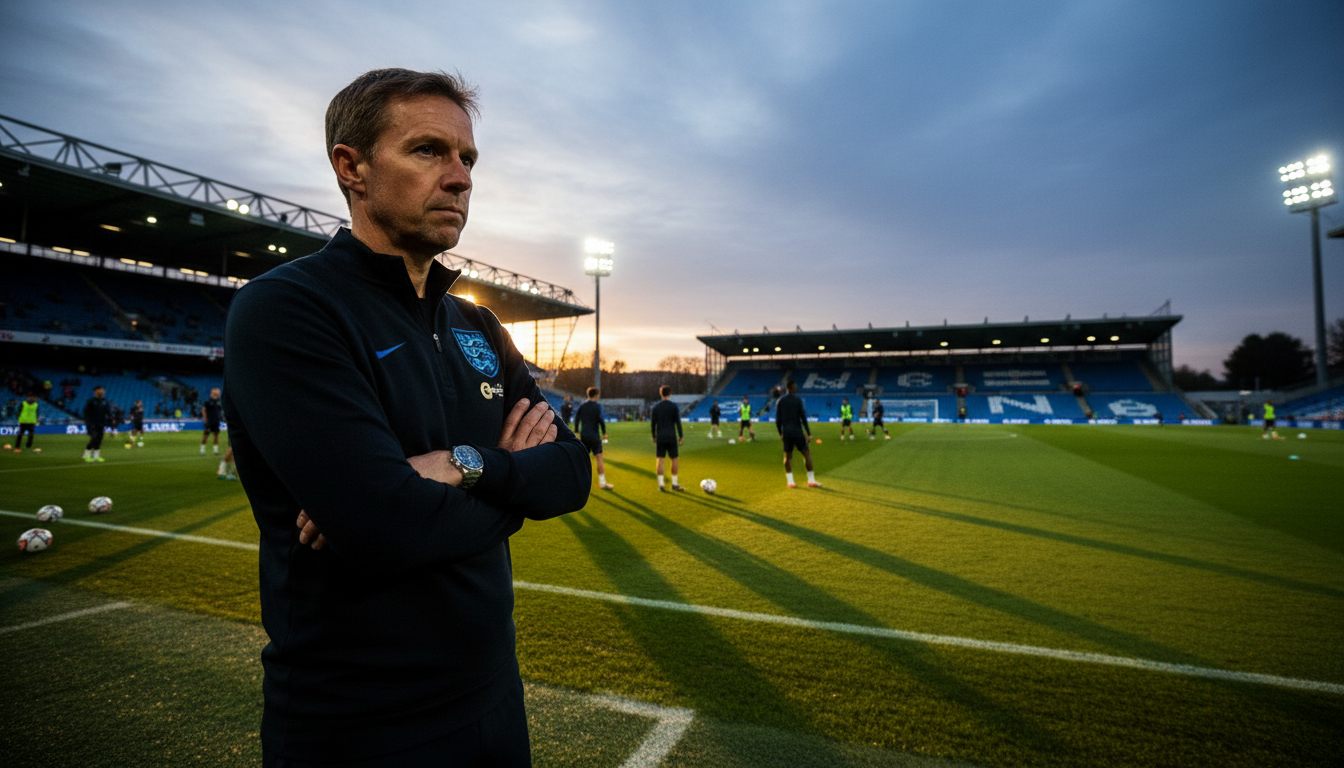
The 2026 FIFA World Cup looms large, and for England manager Thomas Tuchel, the next six weeks represent a critical period of selection, strategy, and ultimate decision-making. With the tournament kicking off on 11 June, the timeline for finalising England’s squad is remarkably compressed, presenting unique challenges and opportunities for a manager who only took the reins in November 2024. The weight of expectation, reflected in England’s outright odds of +650 – placing them third on the board – underscores the significance of every choice.
The Calendar Crunch: Provisional Squad to Final Cut
The immediate focus for Tuchel and his staff is the preliminary squad submission. FIFA requires England to submit a provisional list of 35 to 55 players by 11 May. This extensive roster serves multiple purposes. Firstly, it allows Tuchel to keep a broad pool of players aware of their potential involvement, maintaining motivation and readiness. It also provides a crucial buffer against unforeseen injuries that may occur in the final weeks of the domestic season. The Premier League season concludes on 24 May 2026, meaning players will have just completed a demanding schedule, making injury concerns a very real factor. Tuchel will undoubtedly be monitoring player fitness and form across this larger group, assessing their readiness for the rigours of a World Cup campaign.
The strategic advantage of a 35-55 player list lies in its flexibility. It permits Tuchel to include players who might be carrying minor knocks but could recover in time, or those who are on the cusp of a breakthrough performance in their final club games. The decision to include a player on this preliminary list does not guarantee a spot in the final 26, but it does signal that they are firmly in consideration. This phase allows for continuous evaluation without the immediate pressure of making definitive cuts, providing a window to observe how players handle the end-of-season pressure and any lingering physical issues.
The real crunch comes just under three weeks later. The definitive submission deadline for the final 26-man squad is 30 May, with the public announcement expected on 1 June. This period is particularly fraught with tension and critical decisions. Tuchel must navigate the challenge of potential player involvement in the UEFA Champions League final, which is scheduled for 30 May at the Puskás Aréna in Budapest. Any England international participating in that showpiece event will have their fitness, form, and mental state scrutinised right up to the wire, with virtually no recovery time before the final squad is locked in. This presents a logistical and strategic headache for Tuchel, who must balance the desire to include key players with the need for a fully fit and prepared squad from day one of the World Cup preparations.
The final roster itself carries specific parameters: it must consist of 23 to 26 players, and crucially, at least three goalkeepers. This constraint means that even with the maximum 26 spots, Tuchel will have 23 field players to distribute across various positions, demanding versatility and strategic depth. The marginal calls made in the days leading up to 30 May will shape England’s tactical options and resilience throughout the tournament.
The Warm-Up Window: New Zealand and Costa Rica
Once the final squad is announced on 1 June, attention will immediately shift to the two warm-up friendlies scheduled for early June. England will face New Zealand on 6 June in Tampa Bay, followed by a match against Costa Rica on 10 June in Orlando. The timing of these fixtures is paramount: they occur after the final 26-man squad has been named and just before the World Cup officially begins on 11 June. This means their purpose is not for player selection, but rather for tactical refinement, fitness management, and building cohesion within the chosen group.
The match against New Zealand will serve as the initial opportunity for Tuchel to see his selected squad in action together. It will be a chance to integrate players, test tactical setups, and ensure that the team’s understanding of his system is solidifying. Given the proximity to the tournament, Tuchel will likely be focused on minimising injury risk while maximising performance. He may experiment with different combinations, particularly in areas where there might be tactical nuances or competition for starting berths.
The second friendly, against Costa Rica on 10 June, holds even greater significance as it takes place just one week before the tournament proper. This fixture will be the final dress rehearsal for England. Tuchel will likely use this game to fine-tune his preferred starting XI, practice set-pieces, and ensure the squad is mentally and physically primed for their opening World Cup fixture. The focus will be on achieving peak match sharpness, maintaining tactical discipline, and instilling confidence. Managing player minutes will be crucial, ensuring key individuals are not overexerted but are sufficiently conditioned. The performance in Orlando will be the last public indicator of England’s readiness before they embark on their Group L campaign.
Tuchel’s Blueprint: The Settled Spine and Its Echoes
Thomas Tuchel’s tenure as England manager, having commenced in November 2024, has allowed him sufficient time to establish a core philosophy and identify a ‘settled spine’ for his team. This foundation provides a critical framework for the rest of the squad selection and tactical approach. The established spine consists of Jordan Pickford in goal, John Stones anchoring the defence alongside a yet-to-be-confirmed centre-back partner, Declan Rice and Jude Bellingham forming the midfield pivot, and Bukayo Saka, Harry Kane, and Phil Foden leading the attack.
This spine reveals several key aspects of Tuchel’s strategic thinking. In Pickford, he has a goalkeeper known for his distribution and shot-stopping, providing a reliable last line of defence. Stones’s inclusion highlights a preference for a ball-playing centre-back, capable of initiating attacks from deep. The identity of his partner will be a crucial decision, as it will dictate the balance of the central defence – whether Tuchel seeks another progressive passer, a more traditional stopper, or someone with pace to cover. The Rice-Bellingham partnership in midfield offers a potent blend of defensive solidity, ball retention, progressive carrying, and offensive thrust, providing the engine room for the team.
Further up the pitch, the attacking trio of Saka, Kane, and Foden represents a formidable force. Saka’s directness and wide play, Kane’s prolific goalscoring and link-up abilities (reflected in his +700 Golden Boot odds as second favourite), and Foden’s creativity and ability to operate in tight spaces offer a multi-faceted threat. This attacking core suggests a team built to dominate possession, create chances through intricate passing and individual brilliance, and be clinical in front of goal. Tuchel’s challenge now is to build around this formidable spine, ensuring adequate depth, tactical versatility, and cover for all positions to sustain a deep run in the tournament.
Marginal Calls and Positional Battles
With the settled spine occupying seven key positions, approximately 19 to 22 spots remain open within the final 26-man squad, assuming Tuchel opts for the maximum allowance. These remaining positions are where the most intense scrutiny and difficult decisions will lie, particularly given the definitive submission deadline of 30 May. The Premier League season’s conclusion on 24 May will offer the last significant competitive assessment of players’ form and fitness, with Tuchel’s staff undoubtedly conducting exhaustive analysis.
The search for John Stones’s centre-back partner is perhaps the most significant defensive question. Tuchel will be weighing options based on complementary skill sets. Does he favour a left-footed defender for balance, a more dominant aerial presence, or someone with exceptional recovery pace? The chosen player will need to demonstrate not only defensive acumen but also comfort in possession to align with Stones’s style. Beyond the starting pair, at least two more central defenders will be required for depth, offering different profiles to adapt to various opponents or tactical shifts.
Full-back positions will also present a complex picture. Tuchel will need reliable starters on both flanks who can contribute defensively and offensively, as well as versatile backups capable of playing on either side or even tucking into midfield if required. The modern game demands full-backs who can influence play in the final third, and Tuchel will be looking for individuals who can consistently deliver in this regard.
In midfield, beyond Rice and Bellingham, Tuchel will require a blend of attributes. This includes a dedicated defensive midfielder who can deputise for Rice, a more creative number eight capable of unlocking defences, and a high-energy box-to-box presence. The ability to control tempo, win second balls, and provide tactical flexibility will be paramount. Some players might offer the versatility to operate in wide attacking roles or even as auxiliary full-backs, which is invaluable in a 26-man squad.
For the attacking roles beyond Saka, Kane, and Foden, Tuchel will be seeking players who can provide different dimensions. This could include wingers with blistering pace and directness, a different profile of striker to offer an alternative to Kane, or attacking midfielders who can operate between the lines. The capacity to change a game from the bench, whether through individual brilliance or tactical adaptation, will be a key consideration. The final weeks of the Premier League season will be critical for these hopefuls to stake their claim.
Finally, the goalkeeping situation, while perhaps less dramatic than field player battles, still requires careful consideration. With Pickford as the established number one, Tuchel must select two reliable backups. These goalkeepers will need to be capable of stepping in seamlessly if required, maintaining high standards in training, and contributing positively to the squad dynamic. Their club performances leading up to the 24 May Premier League conclusion will be the primary data points for Tuchel’s assessment.
The Road to Group L: Tactical Considerations
England’s path in the World Cup begins in Group L, where they are drawn alongside Croatia, Ghana, and Panama. This presents a diverse set of challenges that Tuchel must prepare for, and his squad selection will undoubtedly reflect these tactical considerations. England will open their campaign on matchday 1, with the exact date to be confirmed following the final group draw schedule.
Croatia represent a familiar foe, known for their experienced midfield, tactical discipline, and ability to control games. Tuchel will need players who can match their technical prowess and physicality in the central areas. The Rice-Bellingham pivot will be crucial, but depth in midfield capable of influencing possession and breaking down a well-organised opponent will also be vital.
Ghana, on the other hand, will likely offer a more athletic and direct challenge, often relying on individual talent and quick transitions. England will need defensive solidity, particularly in wide areas, and players capable of handling pace and power. The ability to counter-press effectively and exploit any spaces left by Ghana’s attacking thrusts will be key.
Panama are expected to present a deep defensive block, aiming to frustrate opponents and potentially threaten on the counter-attack or from set-pieces. Tuchel’s squad will require creative players capable of breaking down stubborn defences, whether through intricate passing, individual dribbling, or effective crosses. Set-piece specialists, both offensively and defensively, will also be important against such an opponent. The balance of the squad, therefore, must account for these varying styles, ensuring Tuchel has the tactical levers to pull against each adversary.
Betting Market Insights: Pressure and Potential
The betting markets provide a clear indicator of the external pressure and high expectations surrounding England’s World Cup campaign. With outright odds of +650, England are positioned as the third favourite to lift the trophy. This places a significant onus on Thomas Tuchel to deliver a squad capable of reaching the latter stages and ultimately competing for the title. These odds reflect a perceived blend of talent, tactical stability under Tuchel, and a favourable group draw, but also acknowledge the fierce competition from other leading nations.
Individually, Harry Kane’s Golden Boot odds of +700, making him the second favourite, underscore his pivotal role in England’s attacking strategy. His continued prolific form, both for club and country, is a cornerstone of England’s offensive threat. The market’s confidence in Kane suggests that he is expected to be a primary source of goals, which in turn places an even greater emphasis on Tuchel building a supporting cast that can provide him with service and alleviate defensive pressure. The success of the England squad will, to a significant extent, be tied to Kane’s ability to maintain his elite scoring record on the biggest stage.
These market positions highlight the twin pressures on Tuchel: to select a squad that justifies the ‘third favourite’ tag and to construct a team that maximises the output of key individuals like Kane. Every selection decision, from the final centre-back partner for Stones to the depth options in midfield and attack, will be viewed through the lens of whether it enhances England’s chances of converting potential into ultimate success.
As April draws to a close, Thomas Tuchel faces a period of intense scrutiny and critical decision-making. The upcoming weeks, marked by the provisional squad deadline, the conclusion of the domestic season, the Champions League final, and the final squad announcement, will shape England’s World Cup destiny. His choices will reflect his tactical philosophy, his assessment of form and fitness, and his strategic vision for navigating a challenging group and aiming for the ultimate prize. The blend of established talent and crucial marginal calls will define England’s readiness for the global stage.
Sources: Sports Mole — When will England’s squad be announced, FourFourTwo — When is England’s WC 2026 squad announced, Yahoo Sports — England warm-ups vs New Zealand and Costa Rica confirmed, Sky Sports — Tuchel’s England squad: who’s on plane
Sources

Related news
Mexico 2-0 South Africa: Quiñones, Jiménez and Three Red Cards in a Historic Opener
Mexico beat South Africa 2-0 at Estadio Azteca on Thursday 11 June to open the 2026…
17 Days Out: The 2026 World Cup Squad Announcement Week Is Complete
Brazil, Switzerland, Germany, England and Spain have all submitted their final 26. Argentina's cut lands 2…
Manuel Neuer’s Comeback at 40: Inside Germany’s Most Talked-About Goalkeeper Decision
Manuel Neuer has come out of international retirement to be Germany's No. 1 at the 2026…