PSG 5-4 Bayern Munich: How a Champions League Semi-Final Reshaped the World Cup Player Pool
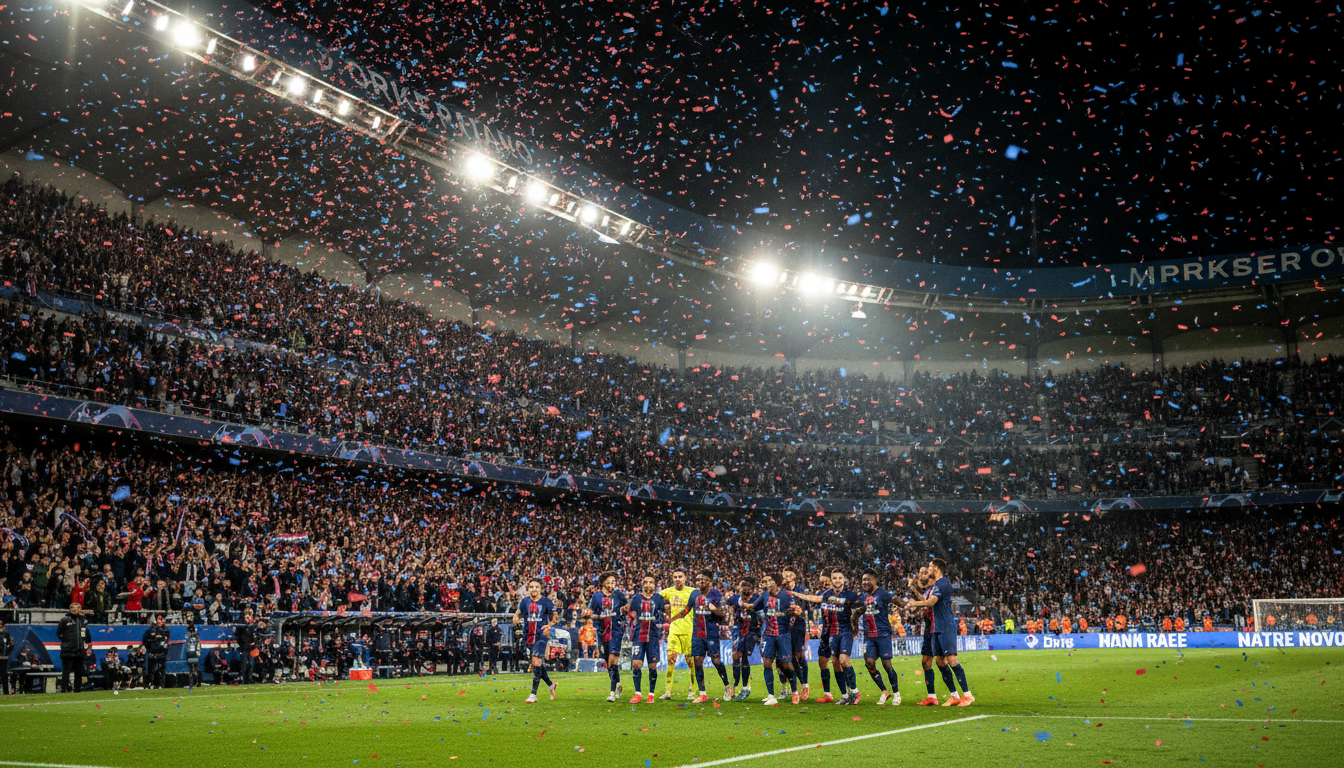
PSG’s 5-4 first-leg win at Parc des Princes was the most goal-heavy Champions League semi-final since 2017 — and it reshaped the World Cup player pool. Achraf Hakimi’s hamstring tear, Kylian Mbappé’s sharpness, and the Bavarian core preparing for Germany’s 21 May squad reveal all contributed to a narrative that extends far beyond the immediate Champions League tie. This late April 2026 clash, played out under the Parisian lights, has sent ripples through at least five major national team camps, forcing coaches to re-evaluate plans just weeks ahead of the 2026 FIFA World Cup, which commences on 11 June.
The nine-goal spectacle was not merely an exhibition of attacking prowess; it was a high-stakes audition, a crucible where World Cup aspirations were either forged or fractured. With PSG holding a precarious one-goal aggregate lead as they prepare to travel to Munich for the second leg on 6 May, the intensity of the tie is only set to escalate. Every tackle, every sprint, every decision made on the pitch becomes a data point for national team selectors. For players like Hakimi, the stakes were tragically high, culminating in an injury that casts a long shadow over Morocco’s World Cup ambitions. For others, it was an opportunity to assert their indispensable value, to prove their form and resilience in the most demanding club competition on the planet, with squad announcements looming for France, Germany, and England in the coming weeks.
The Nine-Goal Thriller and Its Tactical Echoes
The 5-4 scoreline in the Champions League semi-final first leg between Paris Saint-Germain and Bayern Munich was extraordinary, a testament to both teams’ offensive capabilities and, perhaps, their defensive vulnerabilities. Played in late April 2026 at Parc des Princes, the match saw PSG emerge with a slender one-goal aggregate advantage, setting the stage for a dramatic second leg in Munich on 6 May. For analysts and national team coaches alike, this kind of high-scoring affair offers a unique set of data points. It is a match where individual contributions, both positive and negative, are amplified, and where tactical approaches are put under immense pressure. The sheer volume of goals meant that every attacking player had ample opportunity to showcase their finishing, link-up play, and decision-making in the final third, while defenders and goalkeepers faced relentless scrutiny.
The open nature of the game, with nine goals exchanged, suggests a willingness from both sides to commit players forward, perhaps at the expense of defensive solidity. This aggressive philosophy, while thrilling for spectators, provides a critical lens for national team coaches. How did key players perform under this intense offensive pressure? Did midfielders track back effectively? Were defenders able to cope with rapid transitions? For players like Vitinha and Nuno Mendes for PSG, or Joshua Kimmich and Leon Goretzka for Bayern, their ability to influence both phases of play in such a chaotic environment is paramount. Their endurance, tactical discipline, and mental fortitude would have been thoroughly tested across 90 minutes. The result ensures that the second leg will be equally, if not more, intense, providing another crucial test for these World Cup hopefuls just weeks before their respective national team camps begin to finalize their rosters.
Achraf Hakimi’s Race Against Time: A Moroccan Dilemma
Perhaps the most significant and immediate World Cup impact of the PSG-Bayern encounter came in the 88th minute, when Achraf Hakimi, PSG’s influential right-back, suffered a hamstring tear. The Moroccan international completed the match only because PSG had already utilized all of their available substitutions, a testament to his determination but a grim forecast for his immediate future. The timing of this injury could not be worse for Hakimi and for Morocco, who are set to participate in the 2026 FIFA World Cup. With the tournament opener scheduled for 11 June, featuring Mexico against South Africa, Hakimi’s potential World Cup debut is now under severe threat. Sources indicate a recovery timeline that places his return approximately 38 days before the World Cup begins, a narrow window that leaves little margin for error or setbacks.
A hamstring tear, especially for a player whose game relies so heavily on explosive speed and relentless overlapping runs, is a significant concern. Even if Hakimi were to return within the estimated timeframe, his match fitness and ability to perform at peak intensity would be legitimate questions. For Morocco, Hakimi is not just a right-back; he is a vital attacking outlet, a defensive anchor, and a leader on the pitch. His absence, or even a diminished capacity, would necessitate a significant tactical rethink for the Moroccan coaching staff. They will now be meticulously evaluating their defensive depth and considering contingency plans, understanding that rushing a player back from such an injury carries substantial risks of re-injury. The Champions League semi-final, while a club affair, has thrust Morocco’s World Cup preparations into a state of considerable uncertainty, with the nation holding its breath regarding their star defender’s recovery.
French Aspirations: Doué, Dembélé, and Upamecano Under the Microscope
The high-octane clash between PSG and Bayern Munich also provided a critical platform for several French internationals, whose World Cup fate will be decided when Didier Deschamps announces his squad on 14 May. For PSG, Bradley Barcola and Ousmane Dembélé were under particular scrutiny, alongside Bayern’s Dayot Upamecano. The prompt notes that Doué and Dembélé’s fitness is “already known” by the French camp, which suggests their physical condition was not a primary concern going into this semi-final, shifting the focus entirely to their performance and tactical contribution.
Dembélé, known for his electrifying dribbling and ability to create chances, would have been assessed on his end product, consistency, and defensive work rate in such a demanding fixture. His capacity to perform under the immense pressure of a Champions League semi-final is a key indicator for Deschamps, who values players who can deliver on the biggest stages. Similarly, Doué, a younger prospect, would have been judged on his composure, decision-making, and ability to impact the game against elite opposition. For both players, this match represented one of the final, high-profile opportunities to stake a claim for a spot in a fiercely competitive French squad, especially given the rapid approach of the 14 May announcement date.
On the Bayern side, Dayot Upamecano’s performance in the heart of defense would have been meticulously analyzed. Conceding four goals, even in a high-scoring game, will inevitably lead to questions about defensive organization and individual duels. Upamecano’s physical presence and recovery pace are undeniable assets, but his decision-making and consistency have, at times, been points of discussion. Deschamps will be weighing Upamecano’s overall contribution, his ability to contain world-class attackers like those of PSG, and his partnership with potential national team colleagues. With the France squad announcement just over two weeks away from the second leg, the performances of these key French players in both legs of this semi-final will undoubtedly carry significant weight in Deschamps’ final World Cup selection.
Germany’s Core: Bayern’s Influence on Nagelsmann’s 21 May Reveal
For Germany’s national team coach Julian Nagelsmann, the Champions League semi-final provided a crucial assessment opportunity for his Bayern Munich contingent, particularly Jamal Musiala, Joshua Kimmich, and Leon Goretzka. These three players form a significant part of Germany’s potential World Cup core, and their performances in this high-stakes club competition directly influence Nagelsmann’s decisions ahead of the 21 May squad announcement. The fact that this announcement comes after the Champions League semi-finals (second leg 6 May) and potentially just before the Champions League Final (30 May at Puskás Aréna, Budapest) means that their form and fitness in these critical matches will be fresh in Nagelsmann’s mind.
Jamal Musiala, with his dazzling dribbling and creative flair, is expected to be a key figure for Germany. His ability to unlock defenses and operate effectively between the lines would have been a primary focus of Nagelsmann’s observation. In a 5-4 game, Musiala’s moments of brilliance, as well as his defensive contributions and stamina, would have been thoroughly scrutinised. For Kimmich and Goretzka, their partnership in Bayern’s midfield is often mirrored in the national setup. Kimmich’s tactical intelligence, passing range, and leadership, combined with Goretzka’s box-to-box dynamism and goal threat, are vital components for Germany. Their capacity to control the tempo, protect the defense, and contribute to offensive transitions in such an open game against a high-calibre opponent like PSG will be heavily weighted.
The collective performance of this Bayern trio, particularly how they reacted to conceding four goals and how they drove their team’s offensive response, offers Nagelsmann invaluable insights into their mental fortitude and tactical understanding under pressure. Should Bayern progress to the Champions League Final on 30 May, these players will have one more high-intensity match to prove their readiness, a mere three weeks before the World Cup opener. The potential for injury in the final, or simply fatigue, could also influence Nagelsmann’s final selections, making the 21 May announcement a delicate balancing act between current form, proven pedigree, and the desire to avoid late complications.
Kane and the England Equation; Portugal’s Vitinha and Mendes
Harry Kane, Bayern Munich’s prolific striker, entered the Champions League semi-final as an undisputed leader for both club and country. His performance in the 5-4 first leg, contributing to Bayern’s four goals, would have been closely monitored by England manager Gareth Southgate, especially with the England squad announcement targeted for 1 June. Kane’s ability to consistently deliver goals and assists in high-pressure matches is a cornerstone of England’s World Cup strategy. In a game with nine goals, his involvement in Bayern’s attacking play, his link-up with teammates like Musiala, and his clinical finishing would have reaffirmed his status as England’s talisman. While injuries or dramatic dips in form are typically the only factors that would dislodge Kane from the England squad, his continued sharpness and physical condition in such an intense tie provide reassurance to Southgate.
On the PSG side, two Portuguese internationals, Vitinha and Nuno Mendes, also had significant opportunities to impress their national team coach. Vitinha, operating in midfield, would have been assessed on his control, distribution, and defensive contributions in a game that often bypassed the midfield. His ability to maintain composure and dictate play against Bayern’s formidable engine room is a strong indicator of his readiness for the international stage. Nuno Mendes, at left-back, is known for his blistering pace and attacking runs. In a high-scoring game, his defensive responsibilities would have been amplified, requiring him to balance his offensive forays with diligent tracking back against Bayern’s wide threats. Both players are key components of PSG’s structure, and their performances in a Champions League semi-final, demonstrating their quality and resilience against top-tier opposition, will undoubtedly bolster their cases for inclusion in Portugal’s World Cup squad. The experience gained in such a high-stakes encounter is invaluable, refining their decision-making and temperament ahead of the global tournament.
The Champions League semi-final first leg between PSG and Bayern Munich was far more than just a club fixture; it was a pivotal moment in the lead-up to the 2026 FIFA World Cup. From Achraf Hakimi’s devastating injury to the intense scrutiny on French, German, and Portuguese hopefuls, the 5-4 thriller has irrevocably altered the landscape for numerous national teams. As the second leg in Munich approaches on 6 May, and with squad announcements for France, Germany, and England looming in the subsequent weeks, the ripples from this nine-goal epic will continue to be felt across the international football stage, shaping the final decisions that will define the World Cup campaigns of several nations.
Sources: World Soccer Talk — Hakimi hamstring tear, beIN Sports — Hakimi ruled out, Bolavip — Hakimi 38 days before WC debut
Sources

Related news
France vs Senegal Preview: Mbappé’s First World Cup Match Lands at MetLife
France open their 2026 World Cup campaign against Senegal at MetLife Stadium on Tuesday 16 June.…
Five Days In: Where Matchday 1 Has Left the 2026 World Cup Favourites
Mexico routine, USA emphatic, Germany sensational. But Brazil were second-best for stretches against Morocco, Switzerland could…
Scotland 1-0 Haiti: Scotland’s First World Cup Win Since 1998
Scotland beat Haiti 1-0 at Gillette Stadium in Boston on Sunday 14 June for their first…