Portugal vs Nigeria, 10 June: The Last Warm-Up Test for Roberto Martínez’s Side
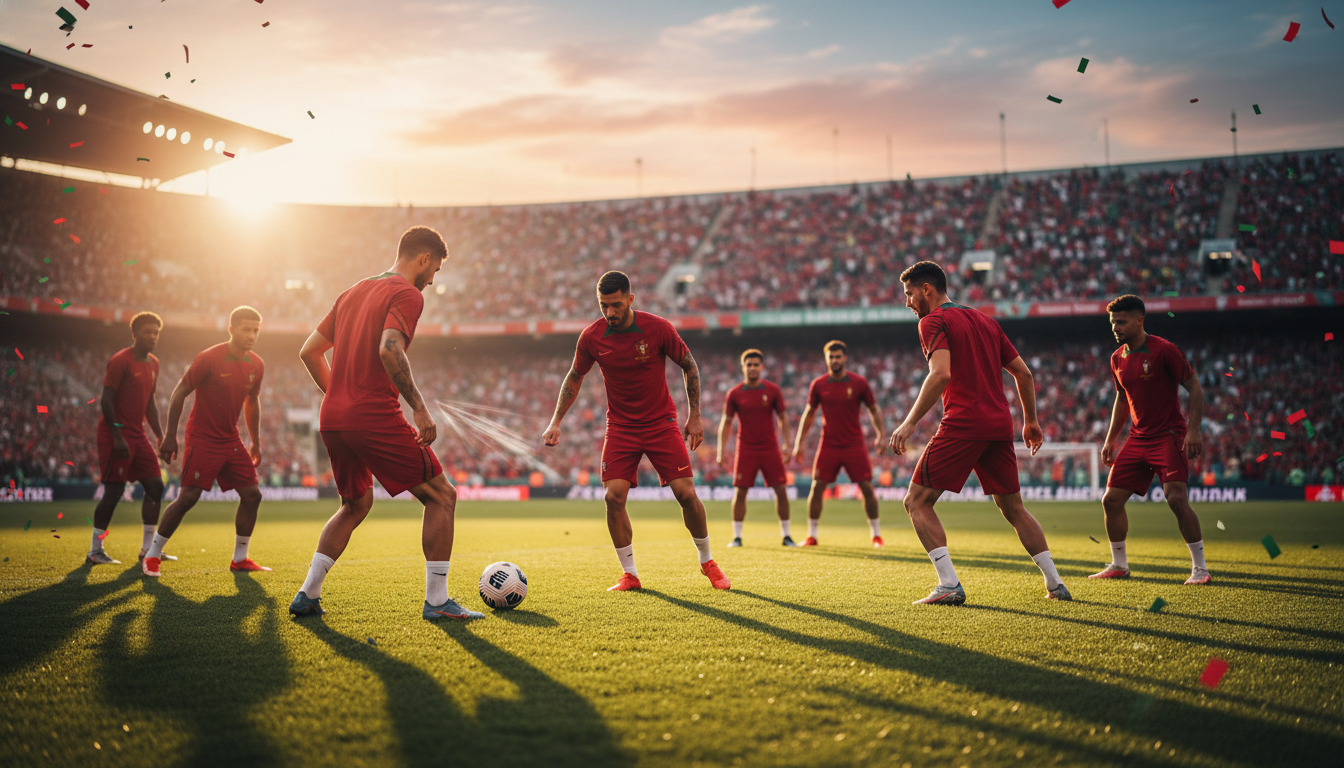
Portugal will face Nigeria on 10 June as their final pre-tournament friendly — one day before the World Cup opener and 17 days before they kick off Group K. The match doubles as a fitness test for Cristiano Ronaldo and a chance to settle the tactical front three. This fixture represents the culmination of Roberto Martínez’s preparations, offering a critical final opportunity to fine-tune his squad and solidify his strategic vision before the 2026 FIFA World Cup officially commences. The timing of the match, just hours before the global spectacle begins, places an unusual but potentially galvanizing pressure on the Portuguese side, demanding a performance that instills confidence and showcases readiness for the challenges ahead. It is more than just a warm-up; it is a statement of intent, a dress rehearsal under the brightest pre-tournament lights.
The significance of this friendly cannot be overstated. With the World Cup opening ceremony slated for 11 June, Portugal’s encounter with Nigeria on the preceding day serves as their absolute last chance to test combinations, assess player fitness in a competitive environment, and iron out any lingering tactical uncertainties. For Martínez, this game is less about the result itself and more about the process. He will be looking for cohesion, disciplined execution of his 4-3-3 system, and individual brilliance within that framework. The spotlight will be particularly intense on the front three, where Cristiano Ronaldo’s fitness and integration alongside João Félix and Rafael Leão remain key points of interest. This is the moment to transition from training ground theories to practical application, ensuring every player understands their role and every segment of the team operates in perfect synchronicity. The stakes are high, not for points, but for momentum and psychological readiness.
The Final Tune-Up: Context and Opposition
Scheduled for 10 June, the friendly against Nigeria is strategically positioned to be the ultimate litmus test for Portugal. It arrives at a juncture where physical conditioning should be peaking, and tactical understanding should be ingrained. The proximity to the World Cup opener on 11 June means that while the tournament officially begins for others, Portugal will still be in their final competitive preparation phase, with their own Group K opener looming 17 days later. This allows for a brief period of recovery and final adjustments post-Nigeria, but also demands that the squad is near peak performance for this fixture. The choice of opponent, Nigeria, is notable. While Nigeria regrettably failed to qualify for the 2026 World Cup, with South Africa securing their CAF Group’s spot, they still represent a formidable African footballing nation known for their athleticism and unpredictable flair. This provides Portugal with a robust, if not World Cup-bound, opponent to truly test their defensive solidity and offensive creativity without the full pressure of a knockout stage participant. Martínez will undoubtedly use this opportunity to simulate the intensity of a tournament match, pushing his players to maintain focus and execute under pressure, regardless of Nigeria’s World Cup status. The objective is not simply to win, but to demonstrate a comprehensive readiness that transcends the quality of the opposition, focusing instead on Portugal’s own internal standards and strategic objectives.
Martínez’s Tactical Blueprint: The 4-3-3 and Midfield Core
Under Roberto Martínez, Portugal has consistently deployed a 4-3-3 tactical setup, a system designed to maximize both defensive stability and offensive fluidity. Central to this formation is Bruno Fernandes operating as the No. 10, a role that grants him significant creative license and demands a high work rate both in attack and defense. Fernandes’s ability to link midfield and attack, his vision for through balls, and his potent long-range shooting make him the fulcrum of Portugal’s offensive movements. His presence allows the wide attackers to stretch play and the central striker to focus on finishing, while also providing an additional goal threat from deeper positions. The success of this system heavily relies on the quality and synergy of the midfield spine, which for Portugal is exceptionally strong. Players like Bernardo Silva, Vitinha, João Neves, and Rúben Neves form a dynamic and versatile unit. Bernardo Silva brings unparalleled control, dribbling ability, and tactical intelligence, capable of dictating tempo and unlocking defenses from various positions. Vitinha offers relentless energy, excellent ball retention, and incisive passing, acting as a crucial link player. João Neves, a burgeoning talent, provides defensive solidity, astute positioning, and a calm presence under pressure, often breaking up opposition play and initiating attacks. Rúben Neves, with his deep-lying playmaking abilities and powerful long-range passing, can control the tempo from the base of midfield, shielding the defense and launching attacks with precision. This collective strength in midfield ensures Portugal maintains possession, dictates the flow of the game, and provides a constant supply line to the front three, making the 4-3-3 an incredibly effective and balanced formation for Martínez’s ambitions. The interplay between these midfielders, particularly in supporting Bruno Fernandes in the No. 10 role, will be a key area of focus during the Nigeria friendly, as Martínez seeks to perfect the rhythm and understanding that will be vital in Group K and beyond.
Forging the Front Three: Ronaldo, Félix, and Leão
The attacking trident for Portugal is slated to feature Cristiano Ronaldo, João Félix, and Rafael Leão, a combination that promises both firepower and flair but also requires careful calibration. For Martínez, settling this front three is a primary objective for the Nigeria friendly. Cristiano Ronaldo, despite his advanced age, remains a central figure, evidenced by his Golden Boot odds of +2000. This indicates that while he may not be the outright favorite, bookmakers still recognize his enduring goal-scoring prowess and the potential for a prolific tournament, especially given Portugal’s favorable Group K draw. His fitness will be meticulously monitored against Nigeria, not just for his ability to play ninety minutes, but for his explosiveness and predatory instincts in the box. Ronaldo’s role will likely be as the primary target man, leveraging his experience and finishing ability. Alongside him, Rafael Leão offers blistering pace and directness from the wing, capable of stretching defenses and creating chances through his dribbling. His ability to drive into the box and either score or provide assists will be crucial for breaking down compact defenses. João Félix, on the other hand, brings creativity, intelligent movement, and a knack for finding pockets of space between the lines. His link-up play with both Ronaldo and Leão, as well as with Bruno Fernandes from the No. 10 position, will be vital for Portugal’s attacking cohesion. Félix’s capacity to drop deep, carry the ball, and thread passes complements the more direct approaches of Leão and the finishing focus of Ronaldo. The Nigeria friendly will be essential for these three to develop an intuitive understanding, practicing their rotations, runs, and defensive responsibilities. Martínez will be looking for seamless transitions between their individual strengths, ensuring they operate as a cohesive unit rather than three disparate talents. The collective performance of this front three, particularly their ability to create and convert chances, will significantly influence Portugal’s World Cup trajectory, and their display against Nigeria will offer crucial insights into their readiness.
The Defensive Backbone and Goalkeeping Reliance
While the attacking prowess often captures headlines, the foundation of any successful tournament run lies in a robust defense. For Portugal, the central defensive pairing of Rúben Dias and Gonçalo Inácio provides a formidable barrier. Rúben Dias is a commanding presence, known for his leadership, exceptional defensive positioning, aerial dominance, and strong tackling. He brings a level of composure and authority that anchors the entire backline. His ability to read the game and anticipate danger is crucial in snuffing out opposition attacks before they escalate. Partnering him, Gonçalo Inácio represents a more modern center-back profile, combining defensive solidity with excellent ball-playing capabilities. His composure in possession, accurate passing from the back, and ability to break lines with his distribution are vital for initiating Portugal’s attacks from deep. The synergy between Dias’s rugged defending and Inácio’s cultured play allows Portugal to be both defensively sound and progressive in their build-up. Their partnership against Nigeria will be key for Martínez to assess their communication, their ability to cover for each other, and their overall understanding in a match scenario. Behind them, Diogo Costa stands as the undisputed number one goalkeeper. Costa has established himself as a reliable and agile shot-stopper, possessing excellent reflexes and strong command of his penalty area. His distribution skills are also a significant asset, fitting well with Martínez’s desire for building play from the back. The goalkeeper’s ability to make crucial saves, organize the defense, and initiate counter-attacks with his distribution will be paramount. The Nigeria friendly offers a final opportunity for this defensive unit, including the full-backs who will likely be rotated, to solidify their understanding and demonstrate their readiness to withstand pressure. A clean sheet and a composed defensive performance against Nigeria would provide a significant confidence boost for the entire squad ahead of their World Cup campaign, reinforcing the belief in their collective defensive strength and their ability to execute Martínez’s tactical vision from front to back.
Tournament Ambitions: Group K and Outright Value
Portugal enters the 2026 World Cup with significant aspirations, buoyed by their recent triumph in the UEFA Nations League 2025, a clear indication of their capabilities under Roberto Martínez. Their outright odds are currently listed at +1100, placing them sixth on the board, a position that has been tagged by analysts as ‘Value’. This designation suggests that, while five teams are considered stronger contenders, Portugal possesses a higher probability of success than their odds might imply, offering an attractive proposition for bettors. This assessment is partly rooted in their draw for Group K, which is widely seen as the kindest top-eight draw on paper. Placed alongside Uzbekistan, Colombia, and DR Congo, Portugal has a clear path to topping their group. This favorable draw presents several strategic advantages: it allows Martínez to potentially rotate players, manage card accumulation, and even rest key individuals if qualification is secured early, ensuring they are fresh for the more demanding knockout stages. It also offers an opportunity to build goal difference, which could be crucial in tie-breaking scenarios, and to fine-tune tactical elements against varied opposition without the immediate threat of elimination. The historical context of Portugal’s recent World Cup performances – knocked out by Uruguay in the Round of 16 in 2018 and by Morocco in the quarterfinals in 2022 – underscores a consistent progression but also highlights a ceiling they are eager to break. The Nations League victory provides a blueprint for success in a competitive international tournament, injecting the squad with confidence and validating Martínez’s system. The ‘Value’ tag on their outright odds reflects this blend of recent success, a strong squad, and a manageable group stage, positioning Portugal as a dark horse with genuine potential to go deep into the tournament, perhaps even challenging for the ultimate prize. The Nigeria friendly, therefore, is not just about individual performances but about demonstrating the collective strength and strategic intelligence that underpins these high expectations.
The Road Ahead: Building Momentum for Group K
The Nigeria friendly on 10 June is more than just a procedural warm-up; it is a crucial psychological and tactical launchpad for Portugal’s 2026 World Cup campaign. For Roberto Martínez, the objectives extend beyond a simple victory. He will be looking for a comprehensive performance that showcases tactical discipline, fluid attacking movements, and unwavering defensive solidity. It is an opportunity to build critical momentum, ensuring the squad carries a winning mentality and a shared sense of purpose into their Group K opener 17 days later. The ability to control possession, create clear-cut chances, and convert them efficiently will be paramount, especially against an athletic Nigerian side. Furthermore, Martínez will be closely monitoring player fitness, particularly that of Cristiano Ronaldo, to ensure all key personnel are in optimal condition for the rigorous tournament schedule. The collective understanding within the 4-3-3 system, from the defensive pairing of Rúben Dias and Gonçalo Inácio to the creative output of Bruno Fernandes and the finishing prowess of the front three, must be seamless. The friendly also provides a final chance to address any minor tactical deficiencies or individual errors in a competitive, yet consequence-free, environment. A strong showing against Nigeria, characterized by both individual brilliance and collective cohesion, will not only instill confidence within the squad but also send a clear message to their Group K opponents—Uzbekistan, Colombia, and DR Congo—that Portugal is a force to be reckoned with. The blend of experienced campaigners and emerging talents, fresh off a UEFA Nations League triumph, is poised to make a deep run in the tournament. The final whistle against Nigeria will not just mark the end of their preparations; it will signal the beginning of their World Cup journey, hopefully on a high note that propels them towards success.
The 10 June friendly against Nigeria is Roberto Martínez’s final opportunity to put his Portugal squad through its paces before the 2026 FIFA World Cup. With Group K offering a clear path, and outright odds of +1100 tagged as ‘Value’, the stage is set for a deep tournament run. This match will be instrumental in confirming Cristiano Ronaldo’s fitness, solidifying the dynamic front three, and embedding the 4-3-3 system, ensuring Portugal arrives in the United States, Canada, and Mexico fully prepared and brimming with confidence.
Sources: FIFA — 10 international friendlies to watch, WorldFootball — FIFA Friendlies schedule

Related news
France vs Senegal Preview: Mbappé’s First World Cup Match Lands at MetLife
France open their 2026 World Cup campaign against Senegal at MetLife Stadium on Tuesday 16 June.…
Five Days In: Where Matchday 1 Has Left the 2026 World Cup Favourites
Mexico routine, USA emphatic, Germany sensational. But Brazil were second-best for stretches against Morocco, Switzerland could…
Scotland 1-0 Haiti: Scotland’s First World Cup Win Since 1998
Scotland beat Haiti 1-0 at Gillette Stadium in Boston on Sunday 14 June for their first…