Germany 7-1 Curaçao: Havertz Brace, Musiala, Schlotterbeck — Nagelsmann’s Statement
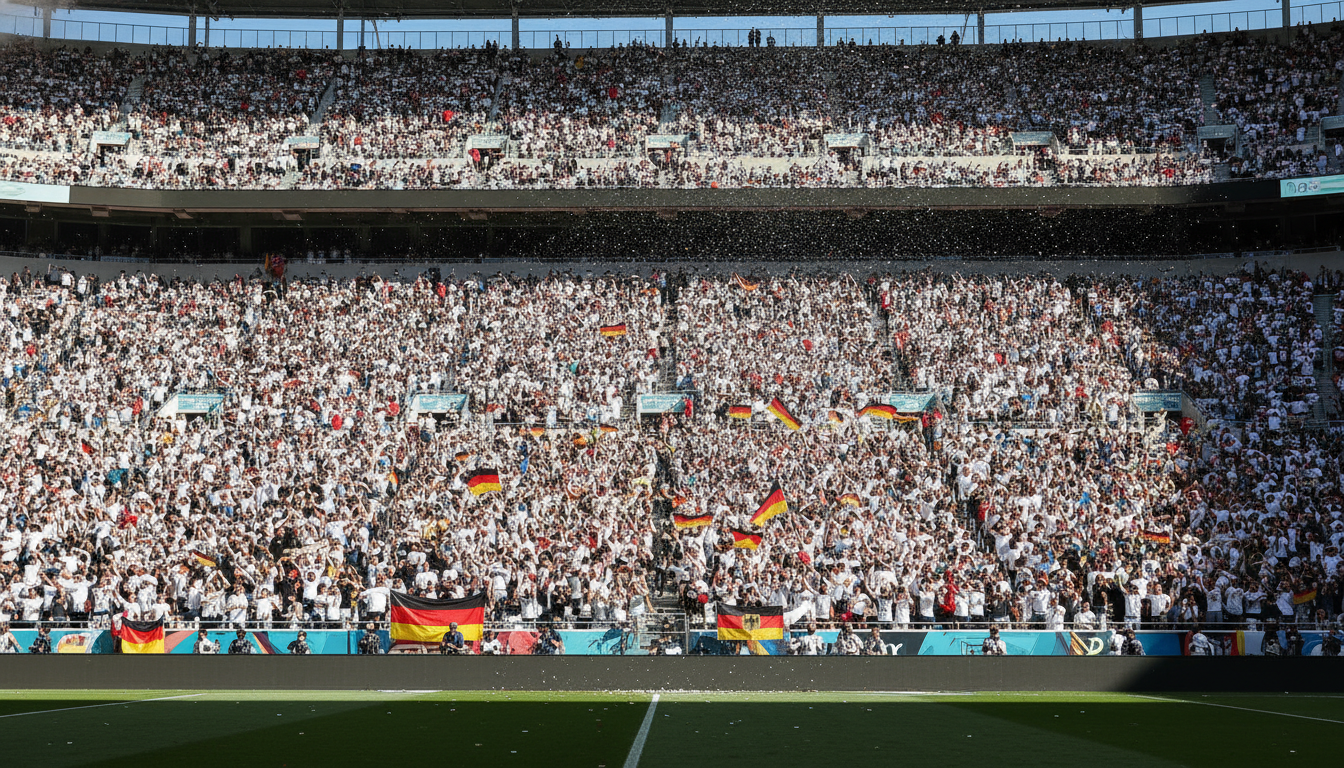
Germany delivered a resounding statement of intent in their 2026 FIFA World Cup opener, overwhelming tournament debutants Curaçao with a dominant 7-1 victory at NRG Stadium in Houston on Friday, June 14, 2026. The match, kicking off at 12:00 ET local time, saw Julian Nagelsmann’s side establish an early foothold in Group E, sending a clear message to their upcoming opponents, Côte d’Ivoire and Ecuador. Kai Havertz spearheaded the German attack with a brace, while Jamal Musiala, Nico Schlotterbeck, Felix Nmecha, Brown, and Undav each contributed to the comprehensive scoreline. Curaçao, playing in their first-ever World Cup match, experienced a brief moment of parity through Comenecia’s 21st-minute equalizer, but Germany’s relentless offensive pressure proved too much, transforming their historic debut into a challenging ordeal.
The pre-tournament outright odds had Germany sitting at +1400, placing them seventh on the board among contenders. This emphatic victory, therefore, serves not only as a crucial three points but also as a significant re-evaluation point for those assessing Germany’s championship credentials. The margin of victory, combined with the clinical nature of their finishing, suggests a squad that is both tactically astute under Nagelsmann and brimming with individual talent capable of executing his 4-2-3-1 tactical setup with devastating efficiency. For Curaçao, the experience at the 72,000-capacity NRG Stadium, while undoubtedly historic, quickly devolved into a lesson in the unforgiving realities of elite international football, highlighting the vast chasm in experience and quality against a footballing giant.
Dominant Opening Statement: Nagelsmann’s Germany Unloads on Debutants
Julian Nagelsmann’s tactical blueprint for Germany’s World Cup campaign was laid bare in Houston, demonstrating a clear intent to dominate possession, press high, and exploit defensive vulnerabilities with pace and precision. The 4-2-3-1 formation provided a solid defensive base while allowing the attacking quartet of Havertz, Musiala, and others to operate with significant freedom in the final third. The early kick-off time at noon ET, under the potentially intense Houston sun, did little to dampen Germany’s energy, as they immediately asserted control over the tempo and flow of the game. This immediate assertion of dominance was critical for a German side looking to banish memories of recent tournament disappointments and establish themselves as genuine contenders from the outset.
The opening goal, arriving just six minutes into the contest, encapsulated Germany’s proactive approach. Felix Nmecha found the back of the net, providing the perfect start and settling any nascent nerves within the German squad. This early strike was crucial for setting the tone, forcing Curaçao to abandon any deep-lying defensive strategies they might have harbored and instead chase the game. Nmecha’s ability to arrive in dangerous areas and convert demonstrated the offensive prowess that Nagelsmann has cultivated, ensuring that threats could emerge from various positions across the attacking line. The goal was a testament to Germany’s quick transitions and their ability to capitalize on the slightest defensive lapse, a hallmark of their attacking philosophy under Nagelsmann.
The significance of an early goal against a debutant team cannot be overstated. It immediately put Curaçao on the back foot, compelling them to adjust their game plan and potentially open up spaces that Germany’s technically gifted players could exploit. The atmosphere at NRG Stadium, though perhaps leaning towards German support given the large international presence in the US, would have been electric for Curaçao’s first World Cup moment. Nmecha’s goal served to temper that excitement for the minnows, replacing it with the immediate pressure of trailing against a formidable opponent. This early indicator of Germany’s intent was a psychological blow as much as a numerical advantage, setting the stage for the relentless pressure that would follow.
Clinical Attack and Early Markers: Schlotterbeck, Havertz, and the First Half Surge
Despite Nmecha’s early opener, Curaçao managed to conjure a moment of unexpected joy. Comenecia’s equalizer in the 21st minute temporarily leveled the score at 1-1, providing a glimmer of hope for the tournament newcomers and a brief jolt for the German defense. This moment, however fleeting, underscored the unpredictable nature of tournament football and served as a reminder that even against heavily favored opposition, a single moment of brilliance or a lapse in concentration can alter the narrative. For Germany, it was a momentary blip, a signal that while their attack was potent, defensive focus needed to be maintained throughout the ninety minutes, even against less experienced opponents.
Germany’s response to the equalizer was swift and decisive, demonstrating their mental fortitude and unwavering commitment to their attacking principles. Centre-back Nico Schlotterbeck restored Germany’s lead in the 38th minute, showcasing the team’s threat from set-pieces or his ability to join the attack from deep. A defender finding the net further illustrates the collective offensive philosophy embraced by Nagelsmann, where contributions are expected from all areas of the pitch. Schlotterbeck’s goal was crucial in re-establishing Germany’s dominance before halftime, deflating any momentum Curaçao might have gained from their equalizer and reinforcing the narrative that Germany was in complete control of their destiny in this match.
The first half culminated with Kai Havertz adding Germany’s third goal from the penalty spot in the fifth minute of first-half stoppage time (45+5 pen). This penalty, awarded just before the break, was a significant psychological blow to Curaçao. It not only extended Germany’s lead to 3-1 but also ensured they went into the locker room with considerable momentum, having effectively nullified Curaçao’s brief period of parity. Havertz, tasked with leadership in the attack, calmly converted, showcasing the composure and clinical finishing that Nagelsmann relies upon from his key offensive players. This goal was the first of his brace, setting the stage for a standout individual performance that would continue into the second half.
Curaçao’s Fleeting Hope and Germany’s Swift Response
The brief period of a 1-1 tie, following Comenecia’s goal, was the high point for Curaçao in their World Cup debut. It was a moment that etched their name onto the tournament’s scoresheets and provided their supporters with a memory to cherish, despite the eventual outcome. For a team making its first appearance on such a grand stage, scoring against a footballing titan like Germany is an achievement in itself, speaking to the individual quality within their squad and their determination not to be completely overwhelmed. However, Germany’s immediate and forceful reaction underlined the difference in class and experience, ensuring that any notion of an upset was quickly extinguished.
Germany emerged from the halftime interval with renewed vigor and an undeniable hunger to secure a commanding victory. Jamal Musiala, a player whose talent has been long recognized and whose impact on the German squad is profound, scored the second-half opener in the 47th minute. This goal, coming just two minutes after the restart, was a devastating blow to Curaçao’s hopes and effectively killed the game as a contest. Musiala’s ability to find space and execute under pressure highlights his burgeoning maturity and his crucial role in Nagelsmann’s attacking system. The quick succession of goals around the halftime mark—Havertz’s penalty and Musiala’s strike—demonstrated Germany’s capacity to inflict damage at critical junctures, preventing opponents from regrouping.
Musiala’s goal was a testament to Germany’s tactical discipline and their relentless pursuit of offensive opportunities. It showcased the team’s ability to maintain high intensity levels throughout the match, a crucial attribute for any side with aspirations of a deep tournament run. The goal also served to further underline the narrative of Nagelsmann’s statement performance. It was not enough for Germany to simply win; they sought to dominate, to leave no doubt about their superiority, and to maximize their goal difference in a group that also features strong teams like Côte d’Ivoire and Ecuador. This focus on efficiency and relentless attack will be a defining characteristic of Germany’s approach in this tournament.
Squad Depth and Tactical Flexibility: Second Half Onslaught
As the second half progressed, Germany continued to press their advantage, showcasing the depth of their squad and the tactical flexibility at Nagelsmann’s disposal. The introduction of fresh legs or players eager to make an impact against a tiring Curaçao defense led to further goals. Brown scored Germany’s fifth goal in the 68th minute, further extending the lead and illustrating the continuous threat posed by different German attackers. This goal, arriving relatively late in the second half, highlighted Germany’s sustained pressure and their ability to maintain a high offensive output for the majority of the match. It underscored the physical conditioning and mental resolve instilled by Nagelsmann.
Undav then added his name to the scoresheet in the 78th minute, making it 6-1. The contributions from multiple goalscorers throughout the match are a clear indicator of Germany’s diverse attacking options and the collective effort in front of goal. This spread of goalscorers ensures that opponents cannot focus solely on neutralizing one or two key players, as threats can emerge from various positions and individuals across the pitch. Nagelsmann’s management of the squad, potentially rotating players or making strategic substitutions, would have been aimed at both maintaining offensive impetus and managing player workloads early in the tournament.
The comprehensive nature of Germany’s performance was capped off by Kai Havertz, who completed his brace in the 88th minute, bringing the score to 7-1. Havertz’s second goal was a fitting conclusion to a dominant individual display and a relentless team effort. A brace in the opening match of the World Cup is a significant achievement for any forward, setting a strong precedent for his personal tournament aspirations. It also solidifies his position as a crucial component of Nagelsmann’s attacking scheme, capable of both creating and converting chances under pressure. The late goal further cemented Germany’s superior goal difference, a factor that could prove vital in the tightly contested Group E standings.
Beyond the goal scorers, Nagelsmann’s squad selection for the tournament had already generated discussion. The inclusion of Said El Mala, after a long-discussed period of speculation and debate, points to Nagelsmann’s willingness to integrate players who might offer unique attributes or solutions to specific tactical challenges. Similarly, the presence of Lennart Karl, a Bayern Munich teenager, on the bench for this opening fixture speaks volumes about Nagelsmann’s long-term vision and his faith in emerging talent. While Karl did not feature against Curaçao, his inclusion in the matchday squad for a World Cup opener signals that he is considered a valuable prospect and a potential future asset for the national team, providing invaluable experience even from the sidelines.
Group E Implications and Tournament Outlook
Germany’s emphatic 7-1 victory over Curaçao has immediate and significant implications for Group E. With Côte d’Ivoire and Ecuador also vying for progression, a substantial goal difference could prove to be a decisive factor in determining group standings, particularly if multiple teams finish on the same points. This dominant performance not only secured three points but also provided a substantial boost to Germany’s goal difference, positioning them favorably from the very first match. It sends a clear and unambiguous message to their group rivals: Germany is here to compete at the highest level and will not be taking any matches lightly.
For Côte d’Ivoire and Ecuador, watching Germany dismantle Curaçao will undoubtedly necessitate a re-evaluation of their own tactical approaches when facing Nagelsmann’s side. The sheer volume of goals and the clinical efficiency displayed by Germany will serve as a stark warning, forcing these teams to consider both defensive solidity and offensive ambition in their subsequent fixtures. The psychological impact of such a dominant win can be considerable, instilling confidence within the German camp while potentially sowing seeds of doubt among their opponents. This opening statement sets a high bar for performance within Group E.
Prior to the tournament, Germany’s outright odds of +1400 placed them seventh among the favorites, suggesting that while they were considered contenders, they were not necessarily seen as the primary frontrunners. This 7-1 demolition of Curaçao may prompt a re-calibration of those expectations. Such a commanding performance in the opening fixture, especially against a team making its debut, often signals a side that is hitting its stride at the right time and possesses the depth and quality to challenge for the ultimate prize. While it is only one match, the nature of the victory suggests Germany could be a more formidable force than their pre-tournament odds indicated, hinting at potential value for bettors.
Veteran Presence and Youthful Promise: Neuer and the Next Generation
The German squad for the 2026 World Cup is a blend of seasoned veterans and exciting young talents, a balance that Nagelsmann appears keen to strike. At 40 years old, Manuel Neuer, the iconic Bayern Munich goalkeeper, stood between the posts for Germany. His presence in goal at such an advanced age for a World Cup opener is a testament to his enduring quality, leadership, and the trust placed in him by Nagelsmann. While the scoreline suggests he was largely untroubled for much of the match, Neuer’s experience and command of his area would have been invaluable, particularly during Curaçao’s brief period of resurgence and any subsequent counter-attacks. His calm demeanor and ability to organize the defense remain crucial assets for Germany.
Conversely, the inclusion of Lennart Karl, the Bayern Munich teenager, on the bench highlights Nagelsmann’s commitment to nurturing the next generation of German talent. While he did not make an appearance, being part of a World Cup matchday squad at such a young age provides invaluable experience and exposure to the demands of elite international football. This approach ensures a pipeline of talent and demonstrates Nagelsmann’
Sources

Related news
France vs Senegal Preview: Mbappé’s First World Cup Match Lands at MetLife
France open their 2026 World Cup campaign against Senegal at MetLife Stadium on Tuesday 16 June.…
Five Days In: Where Matchday 1 Has Left the 2026 World Cup Favourites
Mexico routine, USA emphatic, Germany sensational. But Brazil were second-best for stretches against Morocco, Switzerland could…
Scotland 1-0 Haiti: Scotland’s First World Cup Win Since 1998
Scotland beat Haiti 1-0 at Gillette Stadium in Boston on Sunday 14 June for their first…