Colombia in Group K: The James Generation’s Last Roll, and the Portugal Test
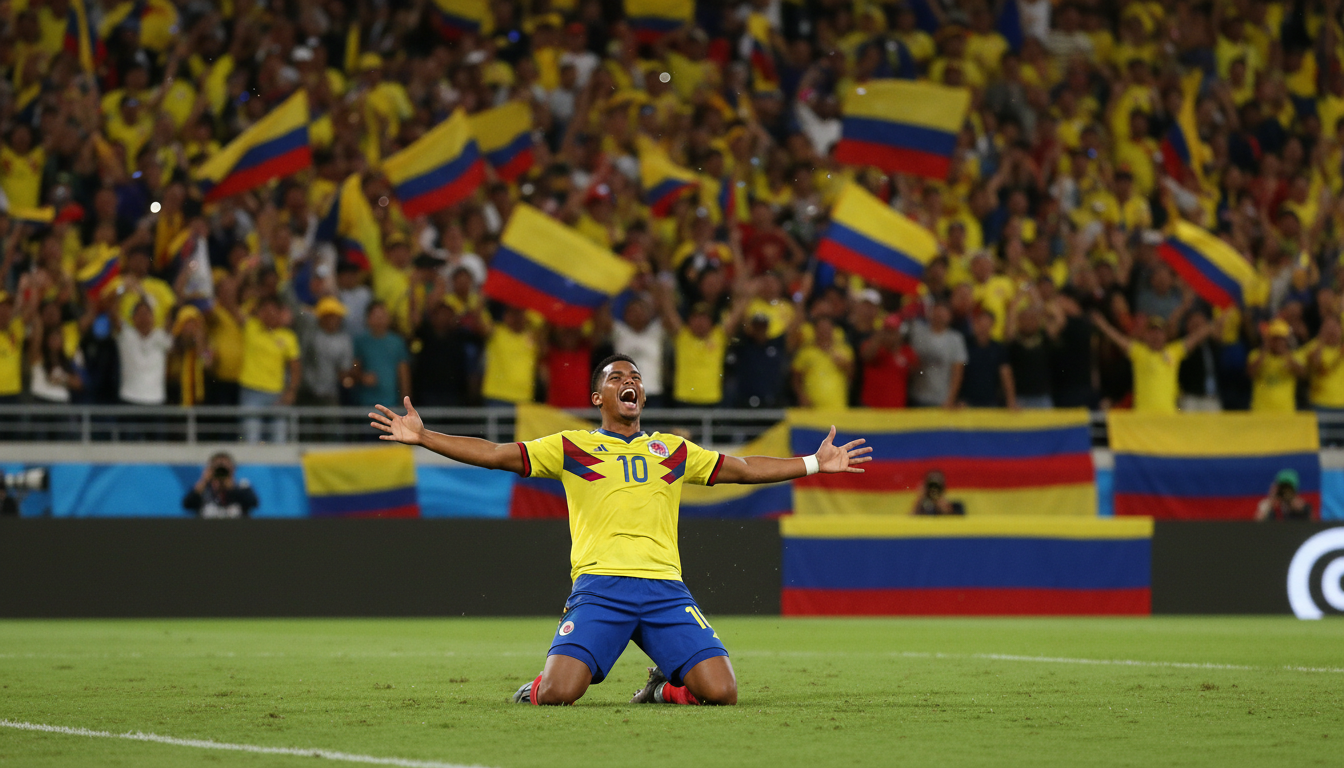
Colombia in Group K: The James Generation’s Last Roll, and the Portugal Test
Colombia drew Portugal in Group K. Néstor Lorenzo’s side reached the 2024 Copa América final and have a James Rodríguez on a redemption arc. The Portugal matchday-2 fixture defines their tournament.
The 2026 FIFA World Cup, set to commence on June 11, 2026, across the United States, Canada, and Mexico, presents a pivotal moment for several national teams. Among them, Colombia enters with a compelling narrative, a blend of recent success and the potential for a final, significant push from a generation of talent. Drawn into Group K alongside perennial contenders Portugal, and less daunting opponents Uzbekistan and DR Congo, Néstor Lorenzo’s squad faces a clear, defining challenge early in the tournament. The trajectory of their World Cup campaign will likely be shaped by their performance against Portugal, a fixture that arrives on matchday two and carries immense weight for group positioning and knockout stage momentum. This is not merely another international tournament for Colombia; it is an opportunity to validate their recent rise and potentially etch a lasting legacy for a core group of players, spearheaded by the enduring presence of James Rodríguez.
Colombia’s journey to the 2026 World Cup is underscored by a recent, significant achievement: reaching the 2024 Copa América final. Although they ultimately lost to Argentina in extra time, that deep run demonstrated a robustness and tactical discipline under Néstor Lorenzo that had been building for some time. The experience of navigating a demanding knockout tournament, overcoming various challenges, and competing against one of the world’s elite teams on such a grand stage will undoubtedly serve as a crucial foundation for their World Cup aspirations. This performance was not an anomaly but rather the culmination of Lorenzo’s strategic implementation, which has steadily transformed the squad into a cohesive unit capable of executing complex game plans. The ability to perform under high pressure, to absorb setbacks, and to adapt tactically throughout a tournament is invaluable, and Colombia proved their mettle in the Copa América. This experience offers a mental edge, instilling confidence that they can compete with the best, a psychological boost that can be just as important as technical skill on the global stage.
The tactical identity forged under Lorenzo is quite distinct and will be crucial for their World Cup hopes. In possession, Colombia typically adopts a 4-3-3 formation, designed to maximize width, facilitate intricate passing sequences in the midfield, and create numerical advantages in attacking areas. This system allows for fluid movement, with wingers often drifting inside and full-backs providing overlapping runs, ensuring multiple avenues for progression. The midfield trio is instrumental in maintaining control, dictating tempo, and distributing the ball effectively to the attacking third. However, Lorenzo’s pragmatism is evident in their defensive setup. Out of possession, the team seamlessly transitions into a more compact 4-1-4-1 structure. This shift provides an additional layer of protection in front of the back four, with a dedicated holding midfielder screening the defense and the wide players dropping back to form a solid bank of four across the midfield. This dual tactical approach allows Colombia to be both expressive and defensively resilient, adapting their shape based on the phase of play and the opponent’s possession. This flexibility will be vital in navigating the diverse challenges presented by Group K, particularly against a technically proficient side like Portugal.
The Context: A Team Forged in Fire
Néstor Lorenzo’s tenure as manager has been characterized by a gradual but significant evolution of the Colombian national team. His approach has focused on building a coherent system while integrating a blend of experienced stalwarts and emerging talents. The run to the 2024 Copa América final was a watershed moment, affirming the efficacy of his methods and significantly boosting the squad’s collective belief. Losing to Argentina in extra time, while undoubtedly painful, served as a stark reminder of the fine margins at the elite level and, crucially, provided invaluable experience in high-stakes environments. This journey was not just about reaching the final; it was about the resilience shown throughout the tournament, the ability to grind out results, and the tactical adaptability displayed against varied opposition. The team absorbed pressure, executed game plans, and showcased a collective spirit that suggests a robust mental fortitude, a critical attribute for World Cup success. The lessons learned from that intense final, especially regarding managing fatigue and maintaining focus through prolonged periods of high-intensity play, will be directly applicable to the rigorous demands of a World Cup campaign. Lorenzo’s challenge now is to harness that experience, refine the tactical nuances, and ensure the squad peaks at the right moment in June and July.
The foundation of this team’s success lies in its disciplined structure and the quality of its individual components. Luis Díaz, the dynamic forward from Liverpool, stands out as the most decisive attacking threat within Lorenzo’s framework. His blistering pace, exceptional dribbling ability, and keen eye for goal make him a constant menace to opposition defenses. Díaz’s role is not confined to a single position; he operates with freedom, often cutting in from the left wing to unleash powerful shots or create opportunities for teammates. His ability to change the complexion of a game with a single moment of brilliance makes him indispensable. Beyond Díaz, the squad possesses a depth that allows for tactical variations and injury cover, a necessity in a demanding tournament format. Lorenzo has cultivated a team where collective effort is paramount, but individual brilliance, particularly from players like Díaz, is encouraged and leveraged. The midfield, often the engine room of a successful team, has shown a commendable balance of defensive solidity and creative impetus, facilitating the transitions that are key to Lorenzo’s tactical philosophy. This blend of individual quality and systemic cohesion positions Colombia as a formidable opponent for any team in the tournament.
Group K Dynamics: Navigating the Early Stages
Colombia’s placement in Group K alongside Portugal, Uzbekistan, and DR Congo immediately sets up a clear hierarchy and a defining fixture. Portugal, with their established pedigree and depth of talent, are the undisputed favorites to top the group. This reality means that Colombia’s primary objective in the group stage will be to secure the second qualification spot, a task that appears highly probable given the strength differential with Uzbekistan and DR Congo. The match against Portugal, scheduled for matchday two, will be the acid test and the most significant determinant of their group-stage performance. A positive result against Portugal, even a draw, would not only provide a significant confidence boost but also offer a buffer against any potential slip-ups in the other two fixtures. Conversely, a substantial loss could dent morale and place undue pressure on the subsequent matches, though qualification would still be expected.
The fixtures against Uzbekistan and DR Congo, while seemingly straightforward, demand professional execution and tactical discipline. Neither opponent should be underestimated, as World Cups are replete with examples of unfancied teams causing upsets. Uzbekistan, while not a traditional footballing powerhouse, often displays a resilient defensive setup and a capacity for disciplined counter-attacking. DR Congo, similarly, can bring a physical intensity and individual flair that, on their day, can pose problems. For Colombia, these matches will be opportunities to fine-tune their tactical system, build rhythm, and manage player rotation where appropriate, all while securing the necessary points. Goal difference could become a factor, particularly if there is an unexpected result in the group, so maximizing scoring opportunities while maintaining a clean sheet will be important. Lorenzo’s tactical flexibility will be tested in how he approaches these games, balancing the need for points with the imperative to conserve energy and avoid injuries ahead of the knockout rounds.
Assuming Colombia progresses as the second-placed team in Group K, their path in the Round of 32 is already projected. They would face the runner-up from Group L, which is anticipated to be either Croatia or Ghana. This potential matchup presents an intriguing set of challenges. Croatia, known for their technical proficiency, experienced midfield, and tournament pedigree, would offer a stern test of Colombia’s tactical discipline and mental resilience. They are a team that excels at controlling possession and exploiting defensive lapses. Ghana, on the other hand, would present a more physically demanding contest, characterized by pace, power, and direct attacking play. Both potential opponents require distinct strategic approaches, underscoring the importance of Lorenzo’s tactical preparation. The ability to scout and adapt to either of these styles will be paramount for Colombia to navigate the first hurdle of the knockout stage. This projected path highlights the importance of securing second place efficiently, allowing the coaching staff to focus their analytical resources on two specific, high-quality opponents.
Tactical Blueprint: Lorenzo’s System and Key Personnel
Néstor Lorenzo’s tactical philosophy for Colombia is built on a foundation of adaptability and strategic balance, allowing the team to dictate play when in possession and remain defensively resolute when out of it. The 4-3-3 formation in possession is designed to create numerical advantages in wide areas and through the central channels. This system typically involves a single pivot midfielder who screens the defense and initiates attacks, flanked by two more advanced central midfielders who offer both defensive support and creative output. The wingers are crucial in this setup, providing width and stretching opposition defenses, while also having the freedom to cut inside and combine with the central striker. This fluidity ensures that Colombia is not predictable in its attacking movements, capable of building through intricate passing sequences or launching rapid transitions. The emphasis on possession control in the middle third allows them to dictate the tempo of the game, wearing down opponents and creating openings through sustained pressure.
When the ball is lost, Colombia quickly transitions into a 4-1-4-1 defensive shape. This shift is critical for maintaining compactness and limiting space for opponents. The wingers drop back to form a flat midfield line of four, while the central striker often presses the opposition’s deepest playmaker or center-backs. The single pivot midfielder, positioned just in front of the back four, becomes the primary shield, breaking up play and intercepting passes. This defensive structure is designed to funnel opponents into less dangerous areas, forcing them wide or encouraging speculative long-range efforts. The discipline required to execute this transition seamlessly, both individually and collectively, is a hallmark of Lorenzo’s coaching. It ensures that even against teams that excel in possession, Colombia can remain defensively sound and difficult to break down, minimizing clear-cut chances and creating opportunities for quick counter-attacks once possession is regained. This tactical duality provides a robust framework for navigating the various challenges of a World Cup.
Central to Colombia’s attacking potency is Luis Díaz, whose role as the most decisive forward is undisputed. Operating primarily from the left wing, Díaz’s exceptional acceleration and close control allow him to beat defenders in one-on-one situations, creating space for himself and his teammates. His directness and willingness to take on opponents are vital for breaking down organized defenses. Beyond his dribbling, Díaz possesses a powerful shot and an improving ability to make decisive runs into the box, contributing significantly to the team’s goal tally. His work rate is also commendable, as he actively participates in the defensive transition, tracking back to support the full-back and maintaining the integrity of the 4-1-4-1 shape. The tactical system is designed, in part, to maximize Díaz’s impact, providing him with the freedom and support needed to unleash his attacking prowess. His ability to produce moments of individual brilliance, often in tight games, will be a key factor in Colombia’s progression through the tournament.
While Díaz represents the present and future of Colombia’s attack, the continued presence of James Rodríguez offers a unique dimension to Lorenzo’s squad. His experience and vision, even if his explosive pace has waned, remain valuable assets. James’s ability to unlock defenses with a single pass, his set-piece delivery, and his capacity to control the tempo of play from a deeper or more central attacking role provide a crucial alternative to the team’s otherwise direct approach. His understanding of the game and his leadership qualities, honed over years at the highest level, make him an influential figure both on and off the pitch. Lorenzo will likely deploy James strategically, perhaps as an impact substitute in games where creativity is needed to break down a stubborn defense, or in certain starting roles where his passing range can dictate play. The blend of Díaz’s raw dynamism and James’s cultured artistry creates a diverse attacking threat that can adapt to different match scenarios and opponent profiles.
James Rodríguez: The Last Dance?
The narrative surrounding James Rodríguez in the build-up to the 2026 World Cup is one of a potential swansong, a final opportunity for a player who once captivated the world stage to make a significant impact. Still a member of the squad and currently plying his trade for São Paulo in Brazil, James embodies a redemption arc for many Colombian fans. His career has been marked by dazzling highs and periods of relative quiet, but his ability to produce moments of pure footballing magic has never been entirely extinguished. At São Paulo, he continues to demonstrate flashes of the creative genius that made him a global star, albeit with a different physical profile than in his younger years. Lorenzo’s decision to keep James in the squad speaks volumes about the value he
Related news
France vs Senegal Preview: Mbappé’s First World Cup Match Lands at MetLife
France open their 2026 World Cup campaign against Senegal at MetLife Stadium on Tuesday 16 June.…
Five Days In: Where Matchday 1 Has Left the 2026 World Cup Favourites
Mexico routine, USA emphatic, Germany sensational. But Brazil were second-best for stretches against Morocco, Switzerland could…
Scotland 1-0 Haiti: Scotland’s First World Cup Win Since 1998
Scotland beat Haiti 1-0 at Gillette Stadium in Boston on Sunday 14 June for their first…