France Name Their 2026 World Cup Squad on 14 May: The Watchlist Going In
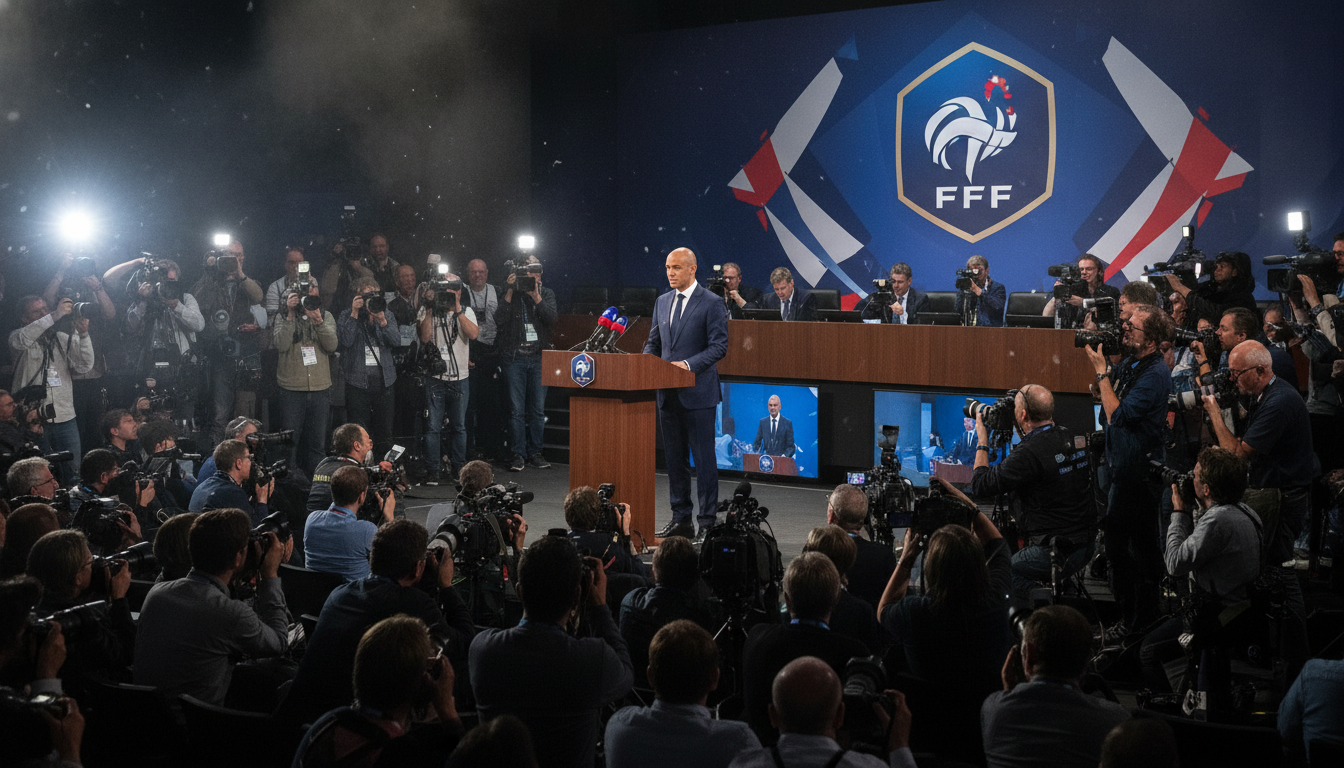
Didier Deschamps will reveal France’s provisional squad on 14 May. With Ekitike out, Mbappé fit and Camavinga back from his ankle, here are the marginal calls Deschamps must make in his final tournament as France manager.
France Name Their 2026 World Cup Squad on 14 May: The Watchlist Going In
The anticipation for the 2026 FIFA World Cup is building, and for France, one of the co-favourites at +500 alongside Spain, the critical initial step will be taken on 14 May 2026. On this date, manager Didier Deschamps will announce his provisional squad, a list that must adhere to FIFA’s 35-man provisional squad deadline of 11 May. This announcement is particularly significant as it marks Deschamps’ final tournament at the helm of the French national team, adding an additional layer of scrutiny and expectation to his selections.
The period between the provisional squad announcement and the final 26-man squad deadline on 30 May will be crucial for players to solidify their positions. This two-week window allows for final assessments of fitness, form, and tactical suitability, especially for those returning from injury or vying for the marginal spots. France is set to compete in Group I, facing Senegal, Norway, and Iraq, a draw that demands a versatile squad capable of adapting to different tactical challenges and opponent profiles.
Deschamps’ Swan Song: The Context and Pressure
Didier Deschamps’ confirmation that this 2026 World Cup will be his final tournament as France manager casts a unique light on his squad selection. Having led France to significant success, the pressure to conclude his tenure on a high note is immense. This context might influence his approach, potentially favouring players with whom he has a long-standing relationship and trust, or conversely, making bold decisions to inject fresh talent if he believes it offers a decisive advantage. The stakes are undeniably high, not just for the players aiming to represent their nation on the grandest stage, but for Deschamps himself as he seeks to cement his legacy.
The status of France as co-favourites at +500 with Spain underscores the high expectations placed upon the squad. This designation reflects the perceived strength and depth of French talent, but it also amplifies the pressure to perform. Every selection, particularly those on the fringes, will be scrutinised for its potential impact on the team’s balance, cohesion, and ability to navigate a challenging tournament. The squad announced on 14 May will provide the first clear indication of Deschamps’ strategy to meet these formidable expectations in what will be his final major international competition.
The group stage draw, pitting France against Senegal, Norway, and Iraq, presents a varied set of challenges. While specific tactical details of these opponents are not to be invented, the general understanding of international football suggests that a squad must be prepared for different styles of play, ranging from potentially physically demanding encounters to those requiring intricate technical skill and tactical discipline. Deschamps’ provisional squad will need to demonstrate the depth and versatility to address these diverse match scenarios effectively, ensuring France can adapt and progress through the initial phase of the tournament.
The Core of the Squad: Undisputed Starters and Key Returns
Fortunately for France, several key positions appear to be settled, providing a strong foundation for the squad. In goal, Mike Maignan is the undisputed number one, bringing a vital presence and reliability between the posts. His consistent performances have solidified his position, offering a crucial element of stability to the defensive unit. The importance of a world-class goalkeeper in a tournament setting cannot be overstated, and Maignan’s presence instils confidence throughout the team.
The central defensive pairing is also well-established, with Dayot Upamecano and William Saliba expected to form the bedrock of France’s backline. Their partnership provides a blend of physical prowess, aerial dominance, and ball-playing ability, which is essential for both defensive solidity and initiating attacks from deep. The synergy between these two centre-backs will be critical for France’s defensive resilience against the varied attacking threats they will encounter in Group I and beyond.
Midfield stability is further assured by the fitness of Aurélien Tchouaméni, who is confirmed to be fit and starting. His role as a deep-lying midfielder is pivotal, offering defensive cover, ball recovery, and control in the engine room. Crucially, Tchouaméni will be partnered by Eduardo Camavinga, who is returning from an ankle injury. Camavinga’s return is a significant boost, as his dynamism, technical skill, and ability to drive forward from midfield add another dimension to France’s play. The timing of his return, just ahead of the squad announcement, suggests he will have sufficient time to regain match sharpness, making their partnership a central component of Deschamps’ midfield plans.
The attacking trident also features established stars, with Kylian Mbappé, Ousmane Dembélé, and Bradley Barcola (Doué) forming the presumptive starting front line. Mbappé’s full fitness after his late-March knee scare is perhaps the most significant positive development for France. As a generational talent and the team’s primary offensive threat, his availability is paramount to France’s World Cup aspirations. His pace, goal-scoring ability, and leadership will be central to their attacking strategy. Dembélé and Barcola (Doué) complement Mbappé with their individual brilliance, pace, and ability to create opportunities from wide areas, promising a formidable attacking force that can unlock even the most stubborn defences.
Attacking Options: Filling the Ekitike Void and the Third Striker Debate
While the starting front line appears settled, the injury to Hugo Ekitike presents a significant challenge for Didier Deschamps. Ekitike has been confirmed out of the tournament due to an Achilles rupture, leaving a void in France’s attacking depth. His absence necessitates a clear replacement, and Randal Kolo Muani has emerged as the leading candidate to fill this role. Kolo Muani offers a different profile, but his ability to contribute across the front line and his work rate make him a compelling option for Deschamps. His inclusion in the provisional squad on 14 May would signal Deschamps’ confidence in his capacity to step into a crucial backup role.
Beyond the primary replacement for Ekitike, one of the most keenly watched “marginal calls” for Deschamps will be the selection of the third-choice striker. This decision will likely come down to a choice between the experienced Olivier Giroud and the more dynamic Marcus Thuram. Each player offers distinct attributes that could benefit the squad in different match situations. Giroud, a veteran presence, provides a traditional centre-forward option, known for his hold-up play, aerial ability, and clinical finishing. His experience in major tournaments could be invaluable, especially in tight games where a different attacking focal point is required. His presence could offer a crucial alternative to the pace and movement of the primary attacking trio, providing a plan B for Deschamps.
Conversely, Marcus Thuram offers a more versatile and mobile option. While he can play through the middle, his ability to operate effectively across the front line, including on the wings, could provide tactical flexibility. His direct running and ability to press from the front align with modern attacking trends. The choice between Giroud and Thuram will therefore hinge on Deschamps’ specific tactical requirements for a third-choice striker: whether he prioritises an established target man with a proven tournament record or a younger, more adaptable forward who can offer different dimensions to the attack. This decision will be a significant indicator of Deschamps’ strategic thinking for the knockout stages, where different profiles of attackers can be decisive.
Midfield Dynamics: Camavinga’s Return and the Third Central Midfielder
The return of Eduardo Camavinga from his ankle injury to partner Aurélien Tchouaméni provides France with a robust and dynamic central midfield pairing. Their complementary skill sets – Tchouaméni’s defensive acumen and progressive passing, combined with Camavinga’s ball-carrying ability, energy, and technical proficiency – form a formidable core. This partnership is expected to be central to France’s control of games, both in breaking up opposition attacks and in dictating the tempo of their own offensive movements. The timing of Camavinga’s return is optimal, allowing him to integrate fully before the intense demands of the World Cup.
However, the depth behind this starting duo is where another “marginal call” will be made: the selection of the third-choice central midfielder. While specific names are not provided in the ground truth, the importance of this position cannot be overstated. A World Cup tournament demands significant squad depth, especially in midfield, where injuries, suspensions, and tactical variations can quickly deplete options. The third-choice central midfielder must be capable of stepping in seamlessly, whether to cover for the starters, to provide fresh legs in demanding fixtures, or to offer a different tactical profile depending on the opposition.
This player will need to possess a blend of defensive responsibility, passing range, and positional awareness. They might be called upon to anchor the midfield, drive play forward, or provide a more combative presence. Deschamps will be looking for a player who can maintain the high standards set by Tchouaméni and Camavinga, ensuring that the midfield engine room remains robust throughout the tournament. The selection will reflect Deschamps’ assessment of the tactical needs for Group I, which includes varied opponents like Senegal, Norway, and Iraq, and the subsequent knockout rounds, where adaptability becomes paramount. This choice will be a critical factor in maintaining the squad’s balance and resilience over a potentially seven-game campaign.
Defensive Depth: The Backup Full-Back to Theo Hernández
In the defensive unit, while the centre-back pairing is settled, another key “marginal call” revolves around securing a reliable backup full-back to Theo Hernández. Hernández is a vital component of France’s defensive and offensive strategies, known for his attacking prowess, pace, and ability to create chances from the left flank. His presence allows France to stretch opposition defences and provides an important outlet in transition. However, the demands of a World Cup campaign, with its compressed schedule and high intensity, mean that no single player can be expected to play every minute without risk of fatigue or injury. Therefore, a capable understudy is essential.
Deschamps will be meticulously evaluating candidates for this backup role. The ideal player would not only offer defensive solidity but also possess the attributes to contribute effectively in the attacking phase, mirroring Hernández’s style of play where possible, or offering a different tactical option. This player must be ready to step in at a moment’s notice and perform at the highest level. The selection will consider not only individual form but also tactical fit within Deschamps’ system. The ability to defend resolutely, track back effectively, and provide width and delivery in attack will be paramount for any player hoping to secure this crucial spot. The decision here will reflect Deschamps’ strategy for managing player workload and ensuring that France maintains strength in depth across all positions, particularly in the demanding full-back roles that require immense physical output.
Goalkeeping Stability and Overall Squad Balance
With Mike Maignan firmly established as the starting goalkeeper, France’s goalkeeping department appears to be a source of stability. Maignan’s performances have consistently demonstrated his capability to command the penalty area, make crucial saves, and distribute the ball effectively. His leadership from the back will be a foundational element for France’s defensive organisation throughout the World Cup. While the ground truth does not specify the backup goalkeepers, the presence of a clear number one alleviates one significant selection headache for Deschamps, allowing him to focus his attention on the more contested positions.
Ultimately, Didier Deschamps’ provisional squad announcement on 14 May will provide the first comprehensive look at his vision for France’s 2026 World Cup campaign. With Mbappé fit, Camavinga returning, and key defensive and midfield partnerships established, the framework of a formidable team is in place. However, the marginal calls for the third-choice striker, the third central midfielder, and the backup full-back to Theo Hernández will be decisive in shaping the depth, versatility, and overall resilience of a squad aiming to go all the way in Deschamps’ final tournament. These choices will underpin France’s bid to navigate Group I against Senegal, Norway, and Iraq, and to justify their status as co-favourites for the trophy.
Sources: Sports Mole — When will Deschamps unveil his squad, ESPN — France championship odds, World Soccer Talk — Who can take Ekitike’s spot
Sources

Related news
Mexico 2-0 South Africa: Quiñones, Jiménez and Three Red Cards in a Historic Opener
Mexico beat South Africa 2-0 at Estadio Azteca on Thursday 11 June to open the 2026…
17 Days Out: The 2026 World Cup Squad Announcement Week Is Complete
Brazil, Switzerland, Germany, England and Spain have all submitted their final 26. Argentina's cut lands 2…
Manuel Neuer’s Comeback at 40: Inside Germany’s Most Talked-About Goalkeeper Decision
Manuel Neuer has come out of international retirement to be Germany's No. 1 at the 2026…