Heat, Altitude and Afternoon Kick-Offs: The Climate Map Bettors Are Underpricing
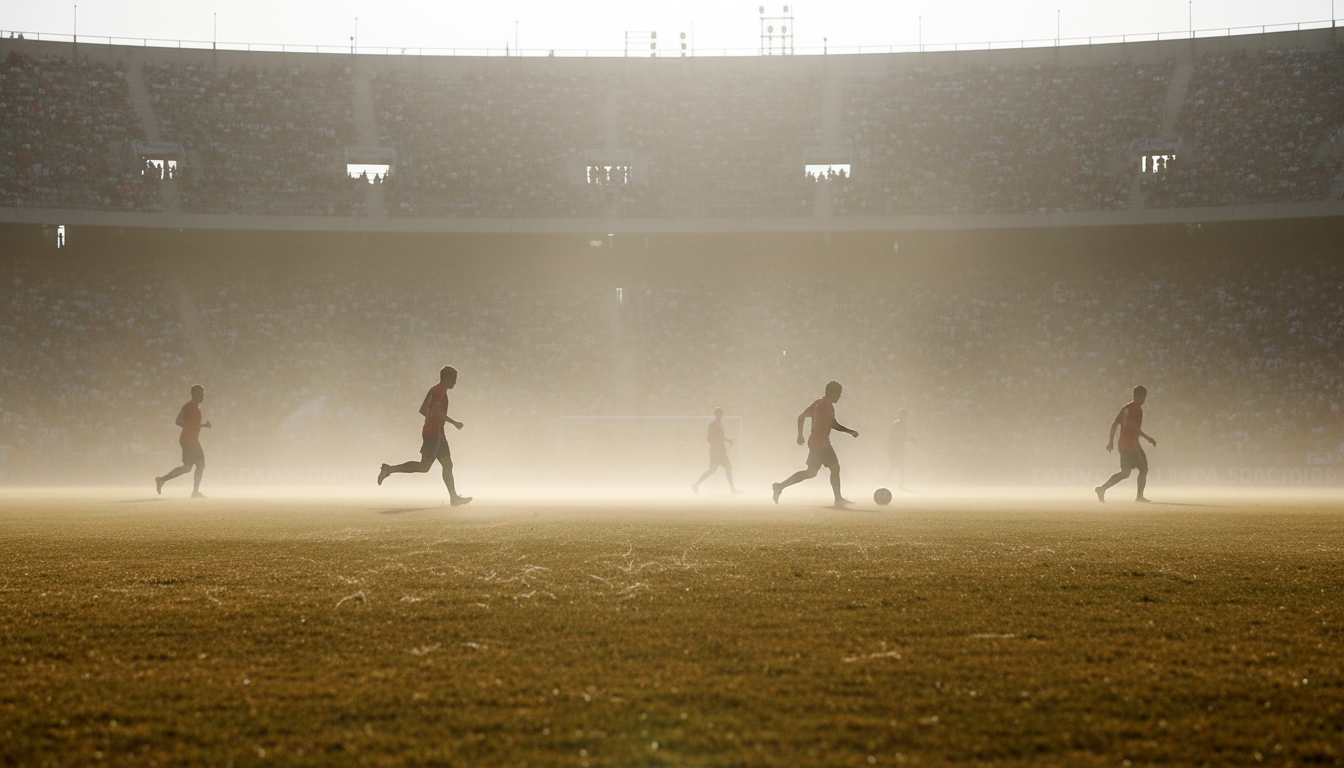
A 12pm ET kick-off in Atlanta or Dallas in mid-June is roughly 32°C and humid. Mexico City sits at 2,200m. Vancouver at sea-level temperate. The 2026 World Cup is the most climate-variable in modern memory — and the markets have not fully priced it.
The upcoming 2026 FIFA World Cup, set to commence on June 11 and conclude on July 19, 2026, across North America, presents an unprecedented array of environmental challenges for competing nations. With 16 host cities spanning a monumental 5000 kilometers east-west and encompassing three distinct time zones, the logistical and physiological demands on players will be immense. While the spectacle of a continent-wide tournament is undeniable, the nuanced impact of varying climates — from extreme altitude to intense heat and humidity — remains a significant, and arguably underappreciated, factor in pre-tournament analysis and betting markets. Understanding these microclimates and their systemic effects is crucial for identifying genuine competitive edges.
The Geographic Tapestry and Its Microclimates
The sheer scale of the 2026 World Cup is a primary driver of its climate variability. The tournament’s footprint stretches from Vancouver on the Pacific coast of Canada to Miami on the Atlantic coast of the United States, and south to Mexico City in the high central plateau of Mexico. This expansive geography ensures that teams will encounter a spectrum of environmental conditions, often within a short turnaround between fixtures. These conditions are not merely aesthetic background but represent tangible physiological stressors that will influence player performance, tactical approaches, and ultimately, match outcomes. Bettors accustomed to the more uniform conditions of recent European or Middle Eastern World Cups must recalibrate their models to account for these drastic shifts.
The host cities can be broadly categorized into three distinct climate zones, each presenting unique challenges. Firstly, the high-altitude venues in Mexico, most notably Mexico City. Secondly, the hot and humid southern U.S. cities like Atlanta, Dallas, Houston, and Miami. Finally, the temperate, sea-level locations such as Vancouver, Toronto, Boston, and Seattle. These variations are not trivial; they represent fundamental differences in atmospheric pressure, temperature, and humidity that directly impact human physiology and athletic performance. The interplay of these factors, combined with rigorous travel schedules, will test the depth and adaptability of every squad.
Altitude’s Unseen Tax: The Mexico City Anomaly
Mexico City’s Estadio Azteca stands as the most prominent physiological challenge of the tournament, situated at a staggering 2200 meters above sea level. For players unacclimatized to such conditions, the impact on aerobic capacity is immediate and severe, with a documented loss of 10-15% within the first 30 minutes of exertion. This reduction in oxygen uptake directly translates to diminished stamina, increased fatigue, and a reduced ability to maintain high-intensity pressing or repeated sprints.
While Mexico City presents the most extreme case, other Mexican host cities also feature significant elevation. Guadalajara is situated at 1566 meters, and Monterrey at 537 meters. Though less extreme than Mexico City, these elevations still impose a physiological burden that can subtly affect performance, particularly in the later stages of a match or tournament. For teams drawn into groups with matches in these locations, adequate preparation and understanding of altitude’s effects will be paramount. Historically, Mexican national teams and club sides have demonstrated a systemic altitude advantage when playing home matches in Mexico City, a factor that will almost certainly extend to any international team with a strong contingent of players familiar with these conditions, or those who undertake dedicated acclimatization protocols. This inherent familiarity and physiological adaptation could prove a decisive, yet underweighted, advantage in specific fixtures.
The Scorching Midday Sun: Heat and Humidity in the South
A significant portion of the tournament’s early-round matches, particularly those scheduled in the southern United States, will be played under conditions of intense heat and oppressive humidity. Cities such as Atlanta, Dallas, Houston, and Miami experience average daytime temperatures of 30-35°C in mid-June, often accompanied by high levels of humidity. These conditions severely impede the body’s ability to regulate temperature through sweating, leading to rapid dehydration, increased core body temperature, and accelerated fatigue.
Compounding this challenge is the scheduling of several matches for 12pm ET local time kick-offs. This timing places games directly in the hottest part of the day, a decision largely driven by the desire to align with prime-time international broadcast windows in Europe and Asia. While commercially beneficial, this scheduling choice places an immense physical burden on players. The historical precedent of the 1994 USA World Cup provides a stark reminder, where the Republic of Ireland’s manager, Jack Charlton, famously voiced his strong complaints about the debilitating effects of midday kick-offs in similar conditions. The tactical impact of such heat is undeniable: it fundamentally slows pressing intensity, forcing teams to adopt more conservative, possession-based strategies to conserve energy. Teams that rely heavily on high-octane, gegenpressing styles may find their primary weapons blunted in these conditions, necessitating a tactical pivot or risking early fatigue and injury.
Temperate Havens: The Northern and Coastal Comfort Zones
In stark contrast to the extreme conditions found in Mexico and the southern United States, host cities like Vancouver, Toronto, Boston, and Seattle offer a significantly more temperate and low-stress climate. These sea-level locations, particularly Vancouver and Seattle on the Pacific Northwest coast, are known for their mild summer temperatures and lower humidity. For teams fortunate enough to play a majority of their group stage matches, or even subsequent knockout ties, in these regions, the physical demands will be considerably less taxing.
This climatic distinction is not merely a comfort factor; it represents a tangible competitive advantage. Players competing in temperate conditions will experience less physiological stress, allowing for higher sustained intensity, quicker recovery between matches, and a reduced risk of heat-related illness. A team that navigates its early fixtures in these cooler environments may arrive at the knockout stages with a fresher squad compared to a competitor who has endured multiple matches in the punishing heat of Dallas or the thin air of Mexico City. This disparity in physical expenditure and recovery capacity could become a critical differentiator in the later rounds, particularly as the tournament progresses into July. Bettors should evaluate match schedules not just for opponents, but for the sequence of environmental demands. A team transitioning from a temperate zone to a high-heat zone, or vice-versa, will face unique adaptation challenges.
Tactical Shifts and Physiological Demands
The diverse climatic map of the 2026 World Cup will necessitate significant tactical adjustments from coaching staffs. As noted, intense heat demonstrably slows pressing intensity. Teams that typically rely on a high defensive line and aggressive counter-pressing will find their energy reserves rapidly depleted in 30-35°C temperatures with high humidity. In these conditions, a more conservative, organized defensive block, coupled with patient build-up play, may become the more effective strategy. The emphasis will shift from relentless running to intelligent positioning and efficient ball retention.
Conversely, altitude rewards possession over running. In the thin air of Mexico City, any unnecessary expenditure of energy is heavily penalized. Teams that can dominate possession, control the tempo of the game, and force opponents to chase the ball will hold a distinct advantage. High-intensity sprints and repeated runs off the ball become unsustainable over 90 minutes. This implies that teams with technically proficient midfielders and patient attacking structures may thrive in altitude, while those reliant on explosive transitions and direct play might struggle to maintain their rhythm. The strategic deployment of substitutes will also be critical, not just for tactical changes but for managing player fatigue and mitigating the physiological toll of the environment. Coaches who demonstrate flexibility and a deep understanding of these environmental impacts on tactical execution will be well-positioned for success.
The Logistical Gauntlet: Travel and Recovery Challenges
Beyond the immediate match-day conditions, the sheer distances involved in the 2026 World Cup present a formidable logistical challenge that will directly impact player recovery and overall squad freshness. Teams may face travel distances exceeding 4000+ kilometers between fixtures, particularly when moving from earlier group stage matches to the expanded round-of-32. Such extensive travel, often crossing multiple time zones, contributes significantly to player fatigue, disrupts sleep patterns, and reduces crucial recovery time.
While FIFA has made provisions to help mitigate these challenges, such as allowing 26-man squads and a 27-person technical staff, these measures do not eliminate the fatigue gap. A larger squad provides more options for rotation, but the cumulative effect of long-haul travel, coupled with extreme environmental shifts, will still take its toll. The ability of medical and conditioning staff to optimize recovery protocols, manage jet lag, and adapt training regimes to changing climates will be paramount. Teams with robust sports science departments and meticulous travel planning will possess a significant, albeit often overlooked, competitive advantage. The cumulative fatigue from travel and environmental stressors could lead to a higher incidence of late-game errors or injuries, particularly in the knockout stages where margins are razor-thin. This is a factor ripe for exploitation by astute bettors.
The 2026 FIFA World Cup is set to be a tournament where environmental variables play a more decisive role than in any recent memory. From the oxygen-depleting altitudes of Mexico City to the energy-sapping heat and humidity of the southern U.S., and the contrasting comfort of the northern temperate zones, the conditions will challenge every aspect of preparation and performance. The markets, in their current state, appear to be underpricing the profound impact these factors will have on match dynamics, player endurance, and ultimately, who progresses through the tournament. Identifying teams that are strategically positioned to mitigate these challenges, or those whose playing styles are inherently favored by specific conditions, represents a clear opportunity for informed bettors to find significant value. Success in 2026 will not just be about footballing prowess, but also about mastery of the climate map.
Sources: FIFA — Match schedule and stadiums, FOX Sports — Mexico City matches and kick-off times, Olympics.com — Full list of stadiums
Sources
Related news
France vs Senegal Preview: Mbappé’s First World Cup Match Lands at MetLife
France open their 2026 World Cup campaign against Senegal at MetLife Stadium on Tuesday 16 June.…
Five Days In: Where Matchday 1 Has Left the 2026 World Cup Favourites
Mexico routine, USA emphatic, Germany sensational. But Brazil were second-best for stretches against Morocco, Switzerland could…
Scotland 1-0 Haiti: Scotland’s First World Cup Win Since 1998
Scotland beat Haiti 1-0 at Gillette Stadium in Boston on Sunday 14 June for their first…