Mohamed Salah Hamstring Injury: Egypt’s 2026 World Cup Talisman in Doubt
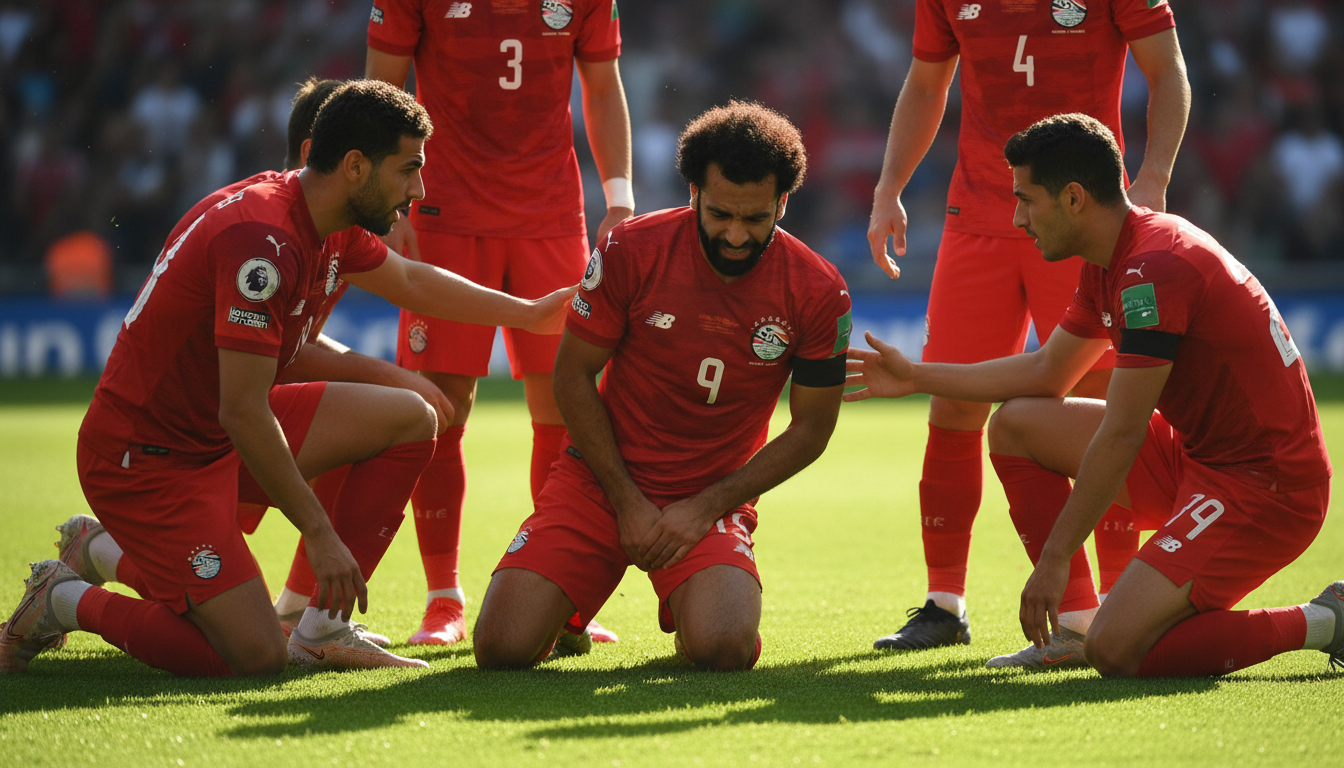
The footballing world, particularly the fervent supporters of Egypt and Liverpool, holds its breath following the confirmation of a hamstring injury sustained by Mohamed Salah during Liverpool’s recent victory over Crystal Palace. As April 2026 unfolds, the timing of this setback could scarcely be more critical, placing the 33-year-old superstar in a desperate race against the clock to achieve fitness ahead of Egypt’s pivotal 2026 FIFA World Cup opener. The tournament, scheduled to run from June 11 to July 19 across the United States, Canada, and Mexico, represents the pinnacle of international football, and for the Pharaohs, their aspirations rest disproportionately on the availability and form of their talisman.
Egypt finds itself drawn into Group G, a challenging quartet alongside perennial European powerhouse Belgium, the resilient Asian contenders Iran, and the spirited Oceania representatives New Zealand. While Egypt qualified comfortably as Group D winners in the CAF qualifying campaign, showcasing their strength and cohesion, that journey was navigated with Salah at the peak of his powers. Now, with the specter of his absence or diminished capacity looming, the narrative of Group G shifts dramatically. The implications extend far beyond mere individual performance; they touch the very core of Egypt’s tactical identity, their psychological fortitude, and indeed, their realistic chances of progression from a group that now appears significantly more formidable.
The Echo of 2018: A Familiar Nightmare for Egypt
For Egyptian football fans, the news of Salah’s hamstring injury carries a chilling resonance, an unwelcome echo of a painful historical parallel. Eight years prior, ahead of the 2018 FIFA World Cup in Russia, Salah also found himself sidelined by injury. On that occasion, a shoulder injury sustained in the UEFA Champions League final against Real Madrid cast a long shadow over Egypt’s preparations. Despite a valiant effort to return, Salah was not at 100% for the tournament, and his compromised fitness proved to be a significant factor in Egypt’s group stage exit. The team, heavily reliant on his brilliance, struggled to compensate for his reduced impact, ultimately failing to register a single point in Russia.
The current situation, while distinct in its specifics, evokes a profound sense of déjà vu. The injury, a hamstring strain, is different, but the timing – so close to a major tournament – and the player’s indispensable status remain tragically consistent. At 33 years old, Salah’s recovery trajectory might be inherently different from that of a younger athlete. While modern sports medicine has made remarkable strides, the demands of a hamstring injury, particularly for a player whose game relies heavily on explosive acceleration and deceleration, are considerable. The memory of 2018 serves as a stark reminder of the potential consequences of a national team entering a World Cup without its most crucial player at full strength. It fuels anxieties that the lessons from that disappointing campaign, particularly regarding the need for robust contingency planning and a less concentrated reliance on one individual, may not have been fully internalized or, more accurately, are simply impossible to implement given Salah’s unique stature.
The 2018 experience taught Egypt a harsh lesson about the fragility of World Cup dreams when built predominantly upon the shoulders of one superstar. The psychological burden on Salah then was immense, and it is arguably even greater now, given his age and the heightened expectations surrounding this iteration of the Egyptian squad. The comfortable qualification as Group D winners in CAF demonstrated a collective strength, but the fundamental question remains: can that strength manifest on the global stage without its primary catalyst? The historical precedent suggests a challenging path, and the emotional weight of that past disappointment will undoubtedly be a factor for both the squad and the nation as they navigate the coming weeks.
The Weight of a Nation: Salah’s Indispensable Role
To understand the profound impact of Mohamed Salah’s injury on Egypt’s World Cup prospects, one must first grasp the sheer magnitude of his role within the national team. Salah is not merely a key player; he is, unequivocally, Egypt’s all-time top scorer and the team’s primary creative outlet. This dual responsibility places an almost unparalleled burden on him to both finish chances and conjure them for his teammates. His goalscoring record for Egypt is a testament to his clinical ability, but his influence extends far beyond mere statistics. He is the focal point of every attacking move, the player around whom opposition defenses must constantly scheme, and the individual capable of unlocking the tightest of backlines with a moment of individual brilliance.
The void left by his potential absence or reduced capacity is therefore immense, a chasm that few, if any, other players in the squad possess the capability to fill. His ability to draw multiple defenders creates space for others; his incisive runs stretch defenses; his vision and passing unlock opportunities that might otherwise not exist. Without Salah, Egypt’s offensive structure loses its central pillar. The goals he scores, the assists he provides, and the overall attacking impetus he generates are irreplaceable commodities. The phrase that Egypt’s tournament hopes rest disproportionately on Salah’s fitness is not hyperbole; it is a clinical assessment of the team’s reliance on a singular, world-class talent.
Furthermore, Salah’s importance is not confined to the international arena. He is also Liverpool’s all-time leading scorer, a statistic that underscores his consistent elite-level performance and his enduring impact at club level. His continued pivotal role in Liverpool’s 2025-26 Premier League title push further illustrates his status as one of the game’s most influential figures. This dual responsibility, leading both club and country, speaks volumes about his quality and the demands placed upon him season after season. His presence elevates the performance of those around him, instilling confidence and belief. His absence, conversely, risks deflating those same qualities, forcing teammates to shoulder responsibilities they are not accustomed to or equipped for at this elite level.
Group G Dynamics: A Shifting Landscape
The composition of Group G, featuring Belgium, Iran, and New Zealand alongside Egypt, presented a challenging but navigable path for the Pharaohs with a fully fit Mohamed Salah. Belgium, with their pedigree and established reputation, were already considered the favourites to top the group. However, the battle for the second qualification spot was anticipated to be a fierce contest, with Egypt, powered by Salah, holding a strong claim. His injury fundamentally alters this dynamic, transforming the group into a far more unpredictable and open affair for all involved.
Without Salah, Egypt’s offensive threat is significantly blunted, making them a less daunting proposition for their opponents. This shift in perception has immediate implications for Iran and New Zealand. For Iran, a team renowned for its defensive solidity and tactical discipline, Salah’s absence removes the primary individual threat that could dismantle their organised backline. This could embolden them to adopt a more adventurous approach, or at least to feel more confident in their ability to contain Egypt’s attack and seek opportunities on the counter. Similarly, for New Zealand, considered the underdog in the group, Salah’s injury offers a glimmer of hope. Their chances of securing points, particularly in a direct confrontation with Egypt, are incrementally improved, as the most potent weapon they would have faced is now potentially sidelined.
The market’s perception of Group G will undoubtedly reflect this. While Belgium remain clear favourites, the second qualification spot is now genuinely wide open. This means that the contest between Egypt, Iran, and New Zealand for that crucial second berth becomes even more intense and finely balanced. Each match within the group, particularly those not involving Belgium, gains added significance as points become exponentially more valuable. Egypt will need to find new ways to break down defenses, to create chances, and to score goals, all without the player who has consistently performed these functions for years. The challenge is not merely about replacing Salah’s output but about recalibrating the entire team’s strategy to compete effectively in a group that has suddenly become far more competitive for the second qualification place.
Tactical Conundrum: Hossam Hassan’s Race Against Time
The immediate and most pressing challenge falls squarely upon the shoulders of Egypt manager Hossam Hassan. With the World Cup mere weeks away in April 2026, he now has severely limited time to plan and implement a tactical alternative that can mitigate the colossal impact of Mohamed Salah’s potential absence. This is not a simple matter of swapping one player for another; it demands a comprehensive re-evaluation of Egypt’s entire strategic approach, from formation and personnel to offensive philosophy and defensive transitions.
Hassan’s task is multifaceted. Firstly, he must identify who, if anyone, can partially fill the void in terms of goal contributions and creative output. No single player within the Egyptian squad possesses Salah’s unique blend of pace, dribbling ability, clinical finishing, and vision. Therefore, the solution is unlikely to be a like-for-like replacement but rather a collective effort. This could involve redistributing creative responsibilities among multiple midfielders and forwards, or perhaps shifting to a system that emphasizes collective movement and interplay rather than individual brilliance. For instance, a more compact formation that prioritizes defensive solidity and relies on quick transitions might be considered, but this fundamentally alters the attacking identity that saw Egypt qualify comfortably as Group D winners.
Secondly, Hassan must decide whether to adapt his existing players to new roles or to introduce less experienced individuals who might offer a different skill set. This decision carries significant risk, as integrating new systems or players so close to a major tournament leaves little room for error or experimentation. The pressure to find a cohesive and effective tactical setup that can compete against teams like Belgium, Iran, and New Zealand, without their primary offensive weapon, is immense. It requires not only tactical acumen but also strong leadership to instill confidence in a squad that will inevitably feel the psychological blow of their captain’s injury. The time constraint is perhaps the most critical factor; there are no prolonged training camps or multiple friendly matches left to fine-tune a completely new approach. Hassan must make decisive choices and hope his squad can execute them under the immense pressure of the global stage.
Betting Implications: Golden Boot Hopes and Group Odds
For those engaged in the analytical sports betting landscape, Mohamed Salah’s hamstring injury presents a significant market disruption, forcing a rapid re-evaluation of various pre-tournament odds and futures. Prior to this setback, Salah’s individual brilliance was reflected in his Golden Boot odds, which stood at +5500. These odds, while not placing him among the absolute favourites, positioned him as a credible dark horse, a player with the capacity to go on a scoring run if Egypt progressed deep enough into the tournament. They represented the market’s confidence in his individual scoring prowess and his role as the primary goalscorer for a team expected to compete for a spot in the knockout stages.
The injury fundamentally alters these prospects. While specific new odds cannot be stated, it is clear that his chances of securing the Golden Boot have diminished considerably, if not entirely evaporated, depending on the severity of the injury and his recovery timeline. A player needing to manage a hamstring injury through a demanding tournament is unlikely to be at his peak, a prerequisite for challenging for such a prestigious individual award. For bettors who had already placed wagers on Salah for the Golden Boot, this news represents a significant blow, underlining the inherent volatility and risk associated with long-term futures markets.
Beyond individual accolades, the injury also has profound implications for Egypt’s group qualification odds. As previously established, Belgium are favourites in Group G. With Salah, Egypt was seen as a strong contender for the second spot. Without him, or with him at significantly reduced capacity, their chances are objectively weaker. The market will undoubtedly adjust, increasing the implied probability (and thus lowering the odds) for Iran and New Zealand to advance, and conversely, increasing Egypt’s odds to qualify, reflecting a diminished likelihood of progression. This shift creates new opportunities and risks for bettors, necessitating a thorough re-assessment of outright group bets and head-to-head match-ups involving Egypt. The group, which was already intriguing, has now become a complex puzzle, with Salah’s fitness being the missing piece that could unlock considerable value or unforeseen losses for the informed bettor.
The situation for Egypt and Mohamed Salah is undeniably precarious as the 2026 World Cup approaches. His hamstring injury is not merely a personal setback but a national crisis for Egyptian football, potentially echoing the disappointments of the past and forcing a rapid, difficult tactical re-think from manager Hossam Hassan. With Salah’s indispensable role as Egypt’s all-time top scorer and primary creative outlet, his absence or limited effectiveness would profoundly diminish their prospects in Group G, transforming a challenging but navigable path into a far more arduous journey against Belgium, Iran, and New Zealand. The World Cup without a fully fit Mohamed Salah is, for Egypt, a prospect fraught with uncertainty and the very real possibility of another premature exit from the global stage.
Sources: Al Jazeera — Will Yamal, Salah and Ekitike miss the World Cup, OneFootball — Injury curse: Players set to miss 2026 World Cup, beIN Sports — World Cup 2026 Blow: Stars set to miss out
Sources

Related news
France vs Senegal Preview: Mbappé’s First World Cup Match Lands at MetLife
France open their 2026 World Cup campaign against Senegal at MetLife Stadium on Tuesday 16 June.…
Five Days In: Where Matchday 1 Has Left the 2026 World Cup Favourites
Mexico routine, USA emphatic, Germany sensational. But Brazil were second-best for stretches against Morocco, Switzerland could…
Scotland 1-0 Haiti: Scotland’s First World Cup Win Since 1998
Scotland beat Haiti 1-0 at Gillette Stadium in Boston on Sunday 14 June for their first…