Morocco at +5000: The Dark-Horse Case Built on Qatar’s Semi-Final Defence
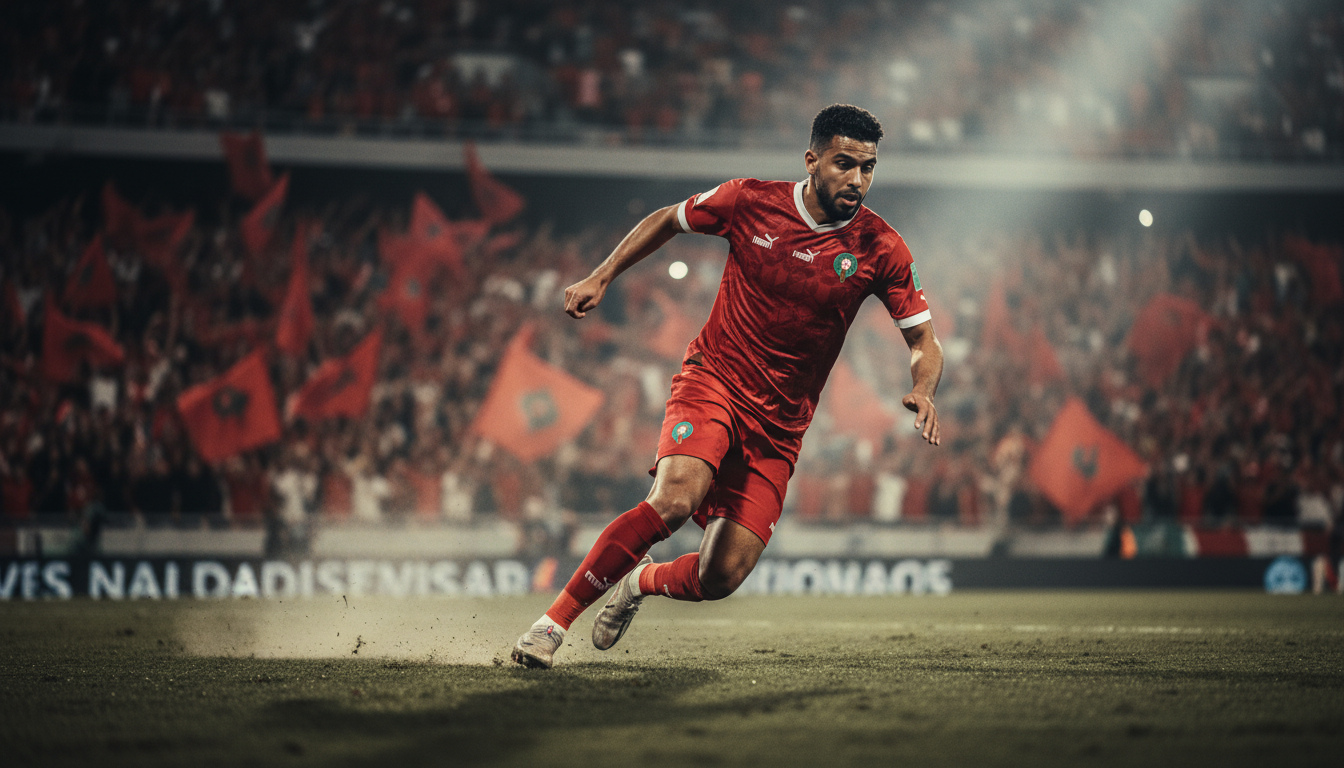
Morocco shocked the world reaching the 2022 semi-finals. The 2026 squad is older, more decorated, and arguably better. At +5000, the dark-horse case for the Atlas Lions is more compelling than the price suggests.
As the 2026 FIFA World Cup approaches, set to kick off on June 11th across the United States, Canada, and Mexico, the betting markets are beginning to solidify their outlooks. While perennial favorites like Brazil, France, and Argentina sit atop the board, the ‘Dark Horse’ tag, as identified by most major sportsbooks, has been firmly affixed to Morocco. Their outright odds of +5000 place them twelfth on the board, implying a mere 2.0% chance of lifting the trophy. However, a deeper dive into their tactical setup, squad evolution, and group-stage draw reveals a narrative far more robust than these odds suggest. The memory of their historic 2022 run, where they became the first African team ever to reach a World Cup semi-final, is not just a historical footnote; it serves as a foundational blueprint for what Walid Regragui’s side is capable of achieving once again.
The Atlas Lions enter this tournament not as an unknown quantity but as a proven entity, albeit one still underestimated by the broader market. Their journey to the semi-finals in Qatar was built on a formidable defensive structure, tactical discipline, and moments of individual brilliance. What makes the 2026 proposition so intriguing is the continuity of that successful formula, coupled with significant enhancements to the squad’s attacking prowess and overall experience. This is not simply a repeat performance; it is an evolution, a refinement of a system that has already demonstrated its capacity to disrupt the established hierarchy of international football. For those looking for value beyond the top contenders, Morocco presents a compelling, data-driven argument for a significant deep run.
Defensive Foundations and Tactical Continuity Under Regragui
The bedrock of Morocco’s success in Qatar 2022 was an unyielding defensive structure, a philosophy that Walid Regragui has meticulously maintained and refined. The team operates predominantly in a 4-1-4-1 defensive shape, with Sofyan Amrabat serving as the pivotal holding midfielder. This formation, identical to the one that frustrated some of the world’s most potent attacks in the previous tournament, provides a robust shield in front of the backline, suffocating opposition creativity in central areas and forcing play wide. Amrabat’s ability to break up play, cover vast swathes of the pitch, and distribute the ball effectively from deep is central to this system’s efficacy. His continued presence and consistent form are non-negotiable for Morocco’s tactical stability.
Complementing Amrabat’s defensive screen is the world-class talent of Achraf Hakimi at right-back. Hakimi is not merely a defender; he is a dynamic force who combines blistering pace with exceptional crossing ability and defensive tenacity. His role in the 4-1-4-1 is dual-faceted: providing defensive solidity on his flank while simultaneously acting as a crucial attacking outlet, often pushing high to create overloads and deliver dangerous balls into the box. The consistency of this defensive core, led by Regragui’s unwavering tactical vision, offers a significant advantage. Unlike many teams that undergo managerial changes or significant tactical overhauls between World Cups, Morocco benefits from a settled identity and a clear understanding of their strengths.
The defensive unit, which proved so difficult to break down in 2022, has matured further. The experience gained from high-pressure knockout matches against elite opposition has instilled a deeper sense of composure and tactical awareness. This is not a team that will be overawed by the occasion or by the pedigree of their opponents. Instead, they will rely on their well-drilled system, their collective resilience, and the individual brilliance of players like Hakimi to absorb pressure and launch swift counter-attacks. The continuity under Regragui ensures that the players understand their roles implicitly, allowing for seamless transitions between defensive organization and offensive thrusts, a hallmark of their previous deep run.
Evolving Offensive Arsenal: A Blend of Flair and Clinicality
While Morocco’s defensive solidity is a given, their offensive capabilities for 2026 present a more diverse and arguably more potent threat than in Qatar. The attack is spearheaded by a blend of established talent and exciting new additions, promising a greater capacity for goal-scoring and creative output within the disciplined 4-1-4-1 framework. At the forefront of this evolution is Brahim Díaz, whose inclusion adds a layer of technical brilliance, dribbling prowess, and goal-scoring instinct that can unlock stubborn defenses. Díaz’s ability to operate in tight spaces, link play, and produce decisive moments provides a crucial dimension to Morocco’s attack, offering a dynamic alternative or complement to their more direct approaches.
Hakim Ziyech, a veteran of the 2022 campaign, continues to be a central figure, providing creativity from wide areas, exceptional vision, and a lethal left foot for set-pieces and long-range efforts. His experience in major tournaments and his ability to deliver key passes under pressure will be invaluable. Alongside him, Bilal El Khannous represents the future, an emerging talent whose intelligence, passing range, and composure belie his relative youth. El Khannous’s ability to dictate tempo and thread incisive passes through defensive lines offers another dimension to Morocco’s midfield and attack, ensuring that the team is not solely reliant on individual moments of magic but can also build sustained periods of possession and pressure.
Leading the line is Youssef En-Nesyri, whose aerial presence, tireless work rate, and poaching instincts make him a constant threat in the box. En-Nesyri’s ability to hold up play and finish chances, particularly from crosses delivered by Hakimi or Ziyech, will be crucial. The synergy between Hakimi’s overlapping runs and delivery, Ziyech’s wide playmaking, Díaz’s central influence, El Khannous’s midfield craft, and En-Nesyri’s finishing offers a multifaceted attack. This offensive group, operating within Regragui’s structured system, has the potential to convert defensive stability into meaningful goal threats. The progression from 2022, where goals were often at a premium, to a more varied and dangerous attacking unit in 2026 is a significant factor in Morocco’s dark-horse credentials.
Group C Dynamics and the Crucial Brazil Opener
Morocco finds itself in Group C for the 2026 World Cup, alongside footballing giants Brazil, and fellow contenders Haiti and Scotland. The draw presents a clear challenge, particularly with the opening fixture. On June 13th, at MetLife Stadium, Morocco will face Brazil, a match that the market has surprisingly priced as 50/50. This assessment underscores the respect Morocco has garnered following their 2022 performance and suggests that oddsmakers view this as a genuinely competitive encounter, rather than a foregone conclusion for the five-time champions.
The Brazil-Morocco opener is not just any group stage match; it could be the defining fixture of Group C. A positive result for Morocco – whether a win or a hard-fought draw – would dramatically alter the group dynamics and provide an immense psychological boost. It would immediately position them as strong contenders to top the group, a crucial objective for their potential path to a deep run. A key individual battle within this match will undoubtedly be Achraf Hakimi against Brazil’s Vinícius Júnior. Hakimi’s exceptional pace and defensive acumen, combined with his attacking threat, match up remarkably well against the explosive dribbling and goal-scoring ability of Vinícius Júnior. This direct confrontation on the flank will be a microcosm of the larger tactical battle, and Hakimi’s ability to neutralize Brazil’s primary wide threat while still contributing to Morocco’s offense will be paramount.
Beyond Brazil, Morocco’s fixtures against Haiti and Scotland, while not to be underestimated, present opportunities to secure maximum points. Haiti, making their first appearance in a major tournament in decades, and Scotland, a resilient but often defensively minded side, will require different tactical approaches. However, Morocco’s experience and tactical discipline under Regragui should allow them to navigate these matches effectively. The market’s 50/50 pricing for the Brazil opener is a significant indicator. It suggests that Morocco, despite their underdog status in the broader tournament, is seen as capable of going toe-to-toe with one of the favorites. Securing a strong start in Group C will be the first, and arguably most critical, step in validating their dark-horse credentials and setting a trajectory for the knockout stages.
Navigating the Knockout Stages: A Potential Path to Glory
The path to a deep run in any World Cup is fraught with challenges, yet Morocco’s projected route, contingent on topping Group C, offers a tangible, albeit demanding, progression. Should Morocco achieve their objective of finishing first in their group, their Round of 32 opponent would likely be either Switzerland or Bosnia. Both are well-organized European sides capable of frustrating opponents, but crucially, they are teams against whom Morocco’s structured defense and tactical discipline could prove decisive. Switzerland, known for their defensive solidity and compact midfield, would present a familiar challenge, mirroring some of the European opponents Morocco overcame in 2022. Bosnia, while perhaps less defensively rigid, possesses individual attacking talent that Regragui’s system would be well-equipped to contain.
Successfully navigating the Round of 32 would then set up a formidable Round of 16 clash, most likely against either England or France. This is where the true test of Morocco’s tournament aspirations would lie. Both England and France represent the pinnacle of European football, boasting squads replete with world-class talent across every position. However, it is precisely these kinds of matchups where Morocco has historically thrived, particularly in 2022. Their run to the semi-finals saw them dispatch Spain and Portugal, two European powerhouses, demonstrating their capacity to not only compete with but also defeat teams of this caliber. The tactical blueprint for such encounters remains the same: defensive resilience, disciplined pressing, and lethal counter-attacks, often leveraging the pace of Hakimi and the creativity of Ziyech and Díaz.
The experience of overcoming such hurdles in Qatar means that the prospect of facing England or France will not be met with trepidation, but with a strategic understanding of what it takes to succeed. Regragui’s ability to galvanize his squad, instill belief, and execute a game plan that neutralizes superior individual talent has been proven. While the odds of progressing against such opponents are undoubtedly slim on paper, Morocco has consistently defied expectations. Their potential path, while difficult, is not insurmountable, especially for a team that has already demonstrated its capability to upset the established order. The key will be maintaining peak physical condition and tactical cohesion through the group stage to arrive at the knockout rounds prepared for the ultimate challenge.
The Set-Piece Advantage: A Hidden Weapon
In the tight, often cagey affairs that characterize World Cup knockout football, set-pieces frequently emerge as crucial differentiators. For Morocco, this aspect of the game is not merely an auxiliary tool but a significant strategic advantage, as evidenced by their qualifying campaign where a remarkable 40% of their goals originated from set-piece situations. This statistic unequivocally tags them as a set-piece specialist, a designation that holds considerable weight in a tournament where margins are razor-thin and open-play goals can be scarce.
The ability to consistently score from set-pieces provides Morocco with multiple benefits. Firstly, it offers an alternative route to goal when their structured defensive block makes open-play attacking difficult, particularly against stronger opponents who dominate possession. Secondly, it can break deadlocks in evenly matched games, providing the decisive moment that propels a team into the next round. Thirdly, it adds another layer of unpredictability to their attack, forcing opponents to dedicate significant training time and tactical focus to defending free-kicks and corners, potentially diverting attention from other threats.
The presence of players like Hakim Ziyech, known for his pinpoint delivery from wide areas and direct free-kicks, is central to this strength. His ability to whip in dangerous crosses or strike directly at goal provides a constant threat. Coupled with the aerial prowess of players like Youssef En-Nesyri and other strong headers from the defensive unit, Morocco possesses the personnel to convert these opportunities. Regragui’s tactical acumen undoubtedly extends to meticulous planning of set-piece routines, maximizing their effectiveness. In a tournament where one goal can separate victory from defeat, having such a reliable and potent weapon from dead-ball situations significantly enhances Morocco’s dark-horse appeal and their capacity to spring upsets against higher-ranked teams. This specialized skill could be the key to unlocking stubborn defenses in the crucial stages of the competition.
Considering the continuity under Walid Regragui, the evolution of a more potent attacking unit featuring Brahim Díaz and Bilal El Khannous alongside established talents, and the proven defensive solidity anchored by Sofyan Amrabat and Achraf Hakimi, Morocco’s +5000 outright odds appear to undervalue their true potential. Their group stage, while challenging, presents a 50/50 opener against Brazil that could set a powerful tone. Furthermore, their demonstrated ability to navigate tough knockout draws, coupled with a significant set-piece advantage, suggests that the Atlas Lions are far more than just a sentimental pick. They are a tactically astute, experienced, and increasingly dangerous squad poised to once again defy expectations and make a profound impact on the 2026 FIFA World Cup, offering compelling value for the astute bettor.
Sources: ESPN — World Cup outright odds, Oddspedia — World Cup 2026 outright odds, FOX Sports — World Cup Power Rankings
Sources
Related news
France vs Senegal Preview: Mbappé’s First World Cup Match Lands at MetLife
France open their 2026 World Cup campaign against Senegal at MetLife Stadium on Tuesday 16 June.…
Five Days In: Where Matchday 1 Has Left the 2026 World Cup Favourites
Mexico routine, USA emphatic, Germany sensational. But Brazil were second-best for stretches against Morocco, Switzerland could…
Scotland 1-0 Haiti: Scotland’s First World Cup Win Since 1998
Scotland beat Haiti 1-0 at Gillette Stadium in Boston on Sunday 14 June for their first…