Sweden and Tunisia in Group F: Two Different Routes to a Round-of-16 Spot
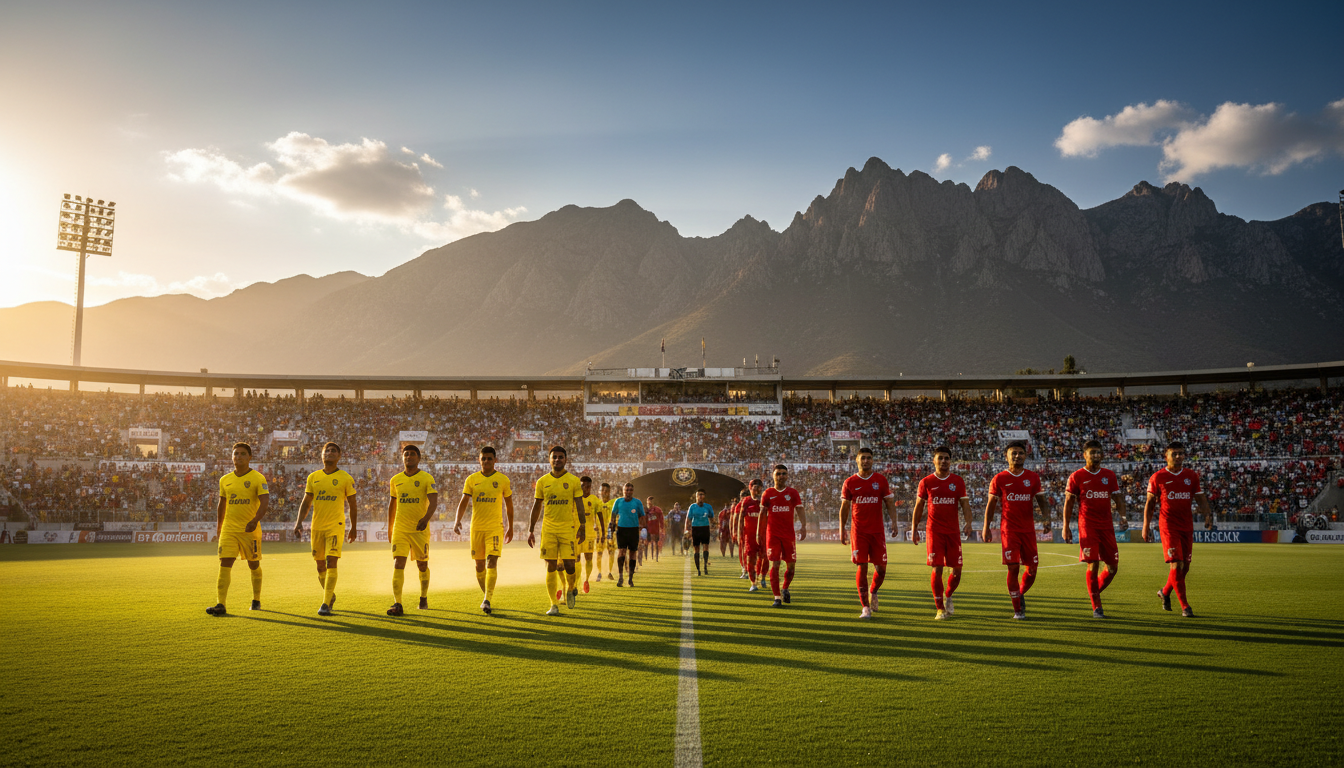
The 2026 FIFA World Cup Group F, featuring heavyweights Netherlands and Japan, sets the stage for a pivotal encounter between Sweden and Tunisia. This ‘second-tier’ match-up, scheduled for 14 June at Estadio BBVA in Monterrey, holds immense significance for both nations as they vie for a coveted spot in the round of 16. With the tournament running from 11 June to 19 July across the United States, Canada, and Mexico, every point will be fiercely contested, and for Sweden and Tunisia, this fixture represents a foundational opportunity to build momentum and stake a claim in a challenging group.
The landscape of Group F is undeniably shaped by the presence of two highly-regarded footballing nations. Netherlands, with their rich World Cup history and consistent pedigree, are widely expected to contend for the top spot. Japan, having established themselves as a formidable force in recent international tournaments, bring a blend of technical skill, tactical discipline, and a proven ability to upset more fancied opponents. This dynamic means that for Sweden and Tunisia, their head-to-head clash is not merely about three points; it is a critical strategic battle that could define their tournament trajectory. A positive result here could provide the necessary buffer or springboard to navigate the subsequent, more daunting fixtures against the group’s perceived leaders, keeping their round-of-16 aspirations alive and tangible. Conversely, a defeat would leave either side with an extremely steep uphill climb, potentially requiring improbable results against the group favorites.
Sweden’s European Pedigree and Tomasson’s Vision
Sweden arrives in the 2026 World Cup having comfortably navigated their continental qualification route, a testament to their established consistency and competitive structure. Under the guidance of manager Jon Dahl Tomasson, the Scandinavian side has cultivated a reputation for tactical pragmatism combined with moments of individual brilliance. Tomasson, known for his analytical approach and ability to maximize player potential, will undoubtedly have meticulously prepared his squad for the unique challenges posed by Group F. His strategic blueprint for this tournament will likely revolve around a disciplined defensive shape, efficient transitions, and the potent attacking threat of his most decisive attacker, Alexander Isak.
Isak represents the sharp end of Sweden’s offensive capabilities. His role in Tomasson’s system is not merely as a poacher; he is expected to be a focal point, linking play, drawing defenders, and creating space for teammates, all while possessing the clinical finishing ability to convert chances. His capacity to operate both as a lone striker and as part of a more fluid attacking setup provides Tomasson with valuable tactical flexibility. The success of Sweden’s attacking endeavors in Monterrey will hinge significantly on Isak’s performance – his ability to hold up the ball, dribble past opponents, and crucially, to find the back of the net. The pressure on him to deliver decisive moments will be immense, particularly in a match where goals could be at a premium and a narrow margin might separate the two sides.
A significant marker of Sweden’s recent competitive strength is their performance at Euro 2024, where they successfully reached the round of 16. While their journey concluded with a defeat to Spain, a perennial European powerhouse, the experience of navigating a tough group stage and competing in the knockout rounds against an elite opponent offers invaluable lessons. This experience against top-tier opposition, even in defeat, fosters resilience, sharpens tactical awareness, and builds confidence within the squad. It demonstrates that Sweden possesses the organizational structure and player quality to compete at the highest level of European football. Tomasson will be keen to leverage this recent competitive exposure, ensuring his players understand the intensity and unforgiving nature of tournament football. The lessons learned from the Euro 2024 campaign, particularly regarding game management and execution against technically superior teams, will be central to their strategy in Mexico.
Sweden’s comfortable qualification for the World Cup further underscores their current standing. This smooth passage through their preliminary rounds indicates a team that is well-drilled, consistent, and capable of performing under pressure over an extended period. It suggests a squad with depth and a clear understanding of Tomasson’s tactical philosophy. The challenge now is to translate this continental success and qualification form onto the global stage, starting with a critical opening fixture against Tunisia. The strategic decisions made by Tomasson, particularly concerning how to unleash Isak’s potential while maintaining defensive solidity against Tunisia’s compact structure, will be paramount.
Tunisia’s African Ascent and Kadri’s Compact System
Tunisia arrives at the 2026 World Cup as one of Africa’s most consistent representatives, having also qualified comfortably from their continental route. Their journey to Mexico is underpinned by a strong showing in the 2024 Africa Cup of Nations, where they reached the final before ultimately falling to Côte d’Ivoire. This deep run in a highly competitive continental tournament is a significant indicator of their quality, resilience, and tactical discipline. Under the stewardship of manager Jalel Kadri, Tunisia has forged a reputation as a well-organized and tactically astute side, capable of frustrating opponents and executing their game plan effectively.
Kadri’s preferred tactical setup is a 4-3-3 formation, characterized by a particularly compact midfield. This specific detail provides considerable insight into Tunisia’s approach. A compact midfield in a 4-3-3 serves multiple purposes. Defensively, it aims to deny opponents space in central areas, forcing them wide and making it difficult to play through the lines. This creates a formidable barrier in front of the defense, limiting clear-cut chances and disrupting the rhythm of opposition play. The three central midfielders work in close proximity, covering passing lanes, pressing aggressively, and recovering possession, making Tunisia a difficult team to break down through the middle.
Offensively, this compact midfield can also be a springboard for attacks. By winning possession in central zones, Tunisia can quickly transition, utilizing the wide players and a central striker to launch counter-attacks. The close proximity of the midfielders facilitates quick, short passing exchanges, allowing them to retain possession and build attacks methodically when the opportunity arises. This blend of defensive solidity and potential for rapid transitions makes Tunisia a dangerous opponent, particularly against teams that prefer to dominate possession and play through the center. Kadri’s system prioritizes collective effort and tactical adherence, ensuring that every player understands their role within the structure.
The achievement of reaching the 2024 AFCON final is a powerful testament to the team’s capabilities. Navigating the demanding group stages and subsequent knockout rounds of an AFCON tournament requires not only technical skill but also immense mental fortitude, tactical flexibility, and physical endurance. Competing in such high-stakes matches, often in challenging conditions, prepares a team for the intensity of the World Cup. The experience of performing under pressure on such a grand stage, even in a final defeat, will undoubtedly instill confidence and reinforce the belief in Kadri’s system among his players. It proves that Tunisia can compete with the best within their confederation and that their tactical approach is robust enough to carry them deep into major tournaments.
Tunisia’s comfortable qualification for the World Cup reinforces the notion of a well-drilled and consistent squad. Their ability to secure their spot without undue stress speaks volumes about the stability within the team and the effectiveness of Kadri’s leadership. As they prepare to face Sweden, the challenge will be to impose their compact midfield structure and disciplined play against a European opponent known for its physical presence and the individual brilliance of players like Isak. The tactical battle in the midfield will be particularly fascinating, as Tunisia aims to stifle Sweden’s creativity and exploit any opportunities that arise from their defensive solidity.
The Midfield Chess Match: Sweden’s Attack vs. Tunisia’s Structure
The encounter between Sweden and Tunisia at Estadio BBVA promises to be a compelling tactical battle, largely dictated by the contrasting approaches of Jon Dahl Tomasson and Jalel Kadri. For Sweden, the strategy will likely revolve around how effectively they can break down Tunisia’s formidable and compact 4-3-3 midfield. Tomasson will task his players with finding solutions to penetrate this dense central block, utilizing width, intelligent movement, and the individual brilliance of Alexander Isak. The challenge will be to stretch Tunisia’s defensive shape without exposing themselves to counter-attacks.
Sweden’s midfield and wide players will need to demonstrate exceptional patience and precision. Crosses into the box might be one avenue, but against a well-organized defense, quality over quantity will be key. More importantly, Sweden will need to create quick passing combinations and clever runs to draw Tunisian players out of position, opening up pockets of space for Isak to exploit. Isak’s ability to drop deep and link play, or to make incisive runs in behind, will be crucial. If Sweden can isolate Isak against one or two defenders, his technical ability and finishing prowess could prove decisive. However, Tunisia’s compact midfield is designed specifically to prevent such isolation and provide immediate defensive cover.
Tunisia, on the other hand, will aim to impose their defensive discipline from the outset. Their compact 4-3-3 midfield will seek to suffocate Sweden’s central playmakers, deny Isak service, and force Sweden into predictable wide areas or long-range efforts. The three central midfielders will work tirelessly to close down space, intercept passes, and win second balls, disrupting Sweden’s rhythm and preventing them from building sustained pressure. Their defensive strategy will not be passive; it will involve an active pressing scheme designed to dispossess Sweden in their own half or force errors, creating immediate opportunities for transition.
When Tunisia wins possession, particularly in their own half, their focus will shift to quick transitions. The wide players in their 4-3-3 will be vital in these moments, providing outlets for counter-attacks. Their ability to carry the ball forward rapidly and link up with the central striker will test Sweden’s defensive recovery. Sweden’s full-backs and defensive midfielders will need to be extremely vigilant to prevent Tunisia from exploiting any spaces left open during their attacking phases. The tactical discipline of both sides, especially in maintaining shape during transitions, will be a major determinant of the game’s outcome. The team that manages to impose its will on the midfield battle, either by breaking through or by stifling, will gain a significant advantage.
Altitude’s Subtle Influence in Monterrey
The Estadio BBVA in Monterrey, situated at an altitude of 537 meters, presents a unique, albeit modest, environmental factor that both Sweden and Tunisia will need to consider. While not as extreme as some high-altitude venues, 537 meters is certainly noticeable for visiting players, particularly those accustomed to sea-level conditions. This elevation can have subtle yet significant impacts on player physiology and, consequently, on tactical execution throughout the 90 minutes.
The primary effect of even a modest altitude is a slight reduction in oxygen availability. This can lead to increased fatigue rates, particularly during high-intensity periods of play such as pressing, sprinting, and repeated accelerations. Players may find themselves tiring more quickly than usual, which can impact their decision-making, technical execution, and ability to maintain tactical discipline late in the game. For teams like Tunisia, relying on a compact and industrious midfield, the physical demands of maintaining that intensity for the full match could be amplified. Similarly, for Sweden’s attackers who rely on bursts of speed and sustained pressure, the cumulative effect of the altitude could be a factor.
Managers Jon Dahl Tomasson and Jalel Kadri will undoubtedly factor this into their preparation and in-game management. For Sweden, a side that often combines physical prowess with tactical structure, managing player exertion will be crucial. Tomasson might consider a slightly more conservative start to conserve energy, or plan for strategic substitutions to inject fresh legs and maintain intensity. For Tunisia, whose 4-3-3 with a compact midfield demands relentless running and defensive solidity, the altitude could be a double-edged sword. While it might make it harder for their opponents to sustain attacking pressure, it also places greater physical demands on their own system, particularly the midfield three.
Beyond physiology, the altitude can also subtly affect the flight of the ball. The thinner air offers less resistance, which can lead to the ball traveling faster and further, particularly on long passes, crosses, and shots. Goalkeepers and defenders will need to adjust their judgment for aerial balls, and strikers might find shots carrying more power or swerving differently. Free-kick takers could also find an advantage in the reduced air resistance. While these effects are generally less pronounced at 537 meters compared to higher altitudes, they are still factors that professional players and coaching staff will acknowledge and try to adapt to. The team that manages these subtle environmental challenges more effectively, perhaps through strategic pacing, careful substitution planning, and quick adaptation to ball dynamics, could gain a marginal but potentially decisive advantage in this critical Group F fixture.
Navigating the Group F Gauntlet
The Sweden vs. Tunisia match is not just an isolated fixture; it is a critical component of the broader Group F narrative, which is heavily influenced by the presence of Netherlands and Japan. For both Sweden and Tunisia, this opening encounter holds the key to navigating what promises to be a challenging group stage and keeping their hopes of a round-of-16 berth alive. The prevailing expectation is that Netherlands and Japan, given their established international reputations and recent performances, will contend for the top two spots, making the remaining fixtures for Sweden and Tunisia akin to cup finals.
A victory in Monterrey on 14 June would be transformative for either side. For Sweden, three points would provide a crucial psychological boost and a tangible foundation before facing the formidable challenges posed by Netherlands and Japan. It would allow them to approach those subsequent matches with a degree of confidence and potentially even the luxury of playing for a draw in one of them, depending on other group results. Similarly, for Tunisia, a win would validate their tactical approach and the confidence gained from their AFCON run, giving them a vital platform from which to challenge the group favorites. Three points against a direct competitor for a potential second-place finish would be invaluable, easing the pressure slightly for the more daunting tasks ahead.
Conversely, a draw, while not catastrophic, would leave both teams in a more precarious position. Sharing the points would mean that both would need to extract results, perhaps even wins, from their matches against Netherlands and Japan, a significantly taller order. A draw would maintain competitive parity between Sweden and Tunisia, but at the cost of giving the perceived group leaders a clearer path. The pressure on both sides to perform against the higher-ranked teams would intensify dramatically, leaving less room for error. A defeat, however, would be the most damaging outcome. Losing this head-to-head would place the defeated team under immense pressure, likely requiring them to secure at least a point, if not a win, against one of the group’s powerhouses, a scenario that is inherently difficult.
The implications extend beyond just points. Goal difference, which can often be a decisive factor in World Cup group stages, will also be on the minds of both managers. A clean sheet and a narrow win, or even a high-scoring draw, could have long-term ramifications for qualification. As such, the tactical decisions made in this match will not only be about securing the immediate three points but also about managing the risk and reward against the backdrop of the entire group. Both Sweden and Tunisia understand that while Netherlands and Japan are formidable, the path to the round of 16 often hinges on securing maximum points from the matches against direct competitors. This match is, therefore, not just a game, but a strategic opening gambit in the high-stakes chess match of the 2026 FIFA World Cup Group F.
The fixture between Sweden and Tunisia is more than just a Group F encounter; it is a critical juncture for two nations with genuine aspirations of advancing to the knockout stages of the 2026 FIFA World Cup. With contrasting tactical philosophies – Sweden’s reliance on the decisive attacking prowess of Alexander Isak under Jon Dahl Tomasson, pitted against Tunisia’s disciplined 4-3-3 with a compact midfield orchestrated by Jalel Kadri – the match promises a fascinating tactical duel. Both teams arrive in Mexico having comfortably qualified and demonstrated strong performances in their respective continental championships, highlighting their competitive readiness. The subtle environmental factor of Monterrey’s altitude adds another layer to an already complex equation. Ultimately, the outcome of this match on 14 June will not only provide a vital three points to the victor but will also significantly shape the narrative and prospects for both Sweden and Tunisia as they navigate a challenging Group F, where every decision and every play will have magnified importance in the pursuit of a round-of-16 spot.
Sources: FIFA — Match schedule, RotoWire — Group previews
Related news
France vs Senegal Preview: Mbappé’s First World Cup Match Lands at MetLife
France open their 2026 World Cup campaign against Senegal at MetLife Stadium on Tuesday 16 June.…
Five Days In: Where Matchday 1 Has Left the 2026 World Cup Favourites
Mexico routine, USA emphatic, Germany sensational. But Brazil were second-best for stretches against Morocco, Switzerland could…
Scotland 1-0 Haiti: Scotland’s First World Cup Win Since 1998
Scotland beat Haiti 1-0 at Gillette Stadium in Boston on Sunday 14 June for their first…