Switzerland in Group B: Yakın’s Quiet Tournament Team and the Round-of-16 Math
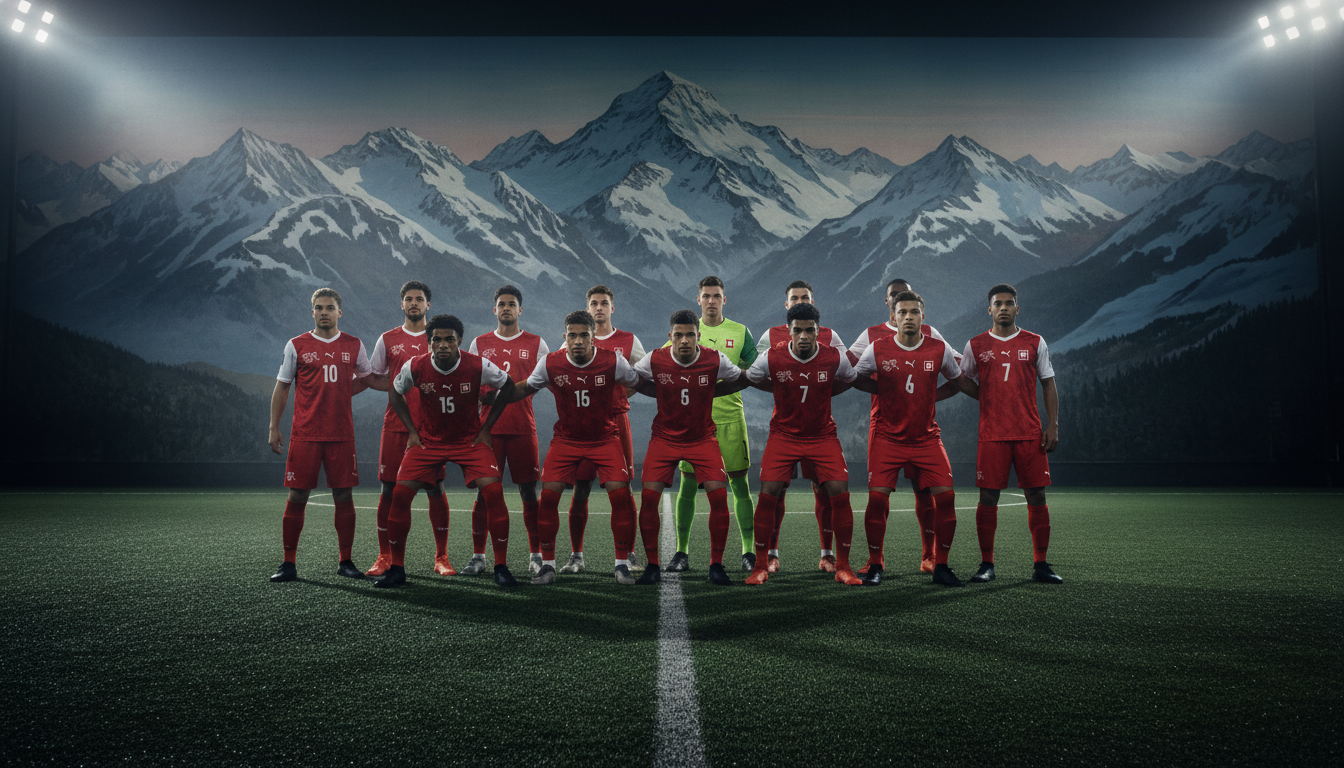
Switzerland approaches the 2026 FIFA World Cup in the United States, Canada, and Mexico with a quiet confidence, having secured their place comfortably and landing in what many observers consider one of the more favorable group draws. Under the steady hand of manager Murat Yakın, the national team has cultivated a consistent tactical identity, centered around a disciplined 4-2-3-1 formation and anchored by the experienced Granit Xhaka in midfield. This settled approach, combined with a core group of players who have significant tournament experience, positions Switzerland as a formidable, if not flashy, contender for progression. The expectation within the analytical community is clear: reaching the Round of 16 is not just a hope but a realistic and achievable target for this Swiss side.
The journey to the World Cup began with a robust qualification campaign in Europe, where Switzerland navigated a group that included Romania and Israel with relative ease. This comfortable qualification speaks volumes about the team’s consistency and Murat Yakın’s ability to extract reliable performances from his squad. It allowed for a smoother build-up, reducing the pressure of last-minute qualification battles and providing ample time for tactical refinement and player preparation. Such an untroubled path is invaluable in the demanding landscape of international football, fostering cohesion and confidence ahead of a major tournament. The team’s form leading into April 2026 suggests a well-drilled unit, ready to execute Yakın’s strategic vision on the grandest stage.
Yakın’s Tactical Blueprint: Stability in the 4-2-3-1
Murat Yakın’s tenure as manager has been characterized by a commitment to a specific tactical framework: the 4-2-3-1. This formation is not merely a default choice but a carefully implemented system designed to maximize the strengths of his key players while providing defensive solidity and attacking versatility. At its heart, the 4-2-3-1 allows Switzerland to maintain a compact shape out of possession, with two central midfielders providing a crucial shield for the defense. In attack, it offers multiple avenues for progression, utilizing wide players and an attacking midfielder to support a lone striker.
Granit Xhaka is the undisputed lynchpin of this system. Operating as one of the two deeper central midfielders, his role extends far beyond simple ball winning. Xhaka is the primary orchestrator of Switzerland’s play, dictating the tempo, distributing possession with precision, and switching the play to exploit space. His leadership, both vocal and by example, is indispensable, especially in high-pressure tournament matches. He provides the crucial link between defense and attack, ensuring that the team remains balanced and transitions effectively. His ability to control the midfield tempo and break up opposition attacks allows the more creative players ahead of him to flourish.
Further up the pitch, Breel Embolo leads the line as the central striker. Embolo’s game is built on a combination of physical power, intelligent movement, and a keen eye for goal. In Yakın’s 4-2-3-1, he is tasked not only with finishing chances but also with holding up the ball, bringing wide players and the attacking midfielder into play, and pressing opposition defenders. His presence offers a focal point for long passes and allows the team to play through the middle when opportunities arise. On the right wing, Dan Ndoye provides pace, directness, and a significant attacking threat. Ndoye’s ability to beat defenders one-on-one, deliver crosses, and cut inside to shoot adds a dynamic dimension to Switzerland’s offensive maneuvers. His energy and willingness to track back also contribute to the team’s defensive structure, making him a vital component of the overall system. The consistent deployment of these players within a well-rehearsed structure ensures that Switzerland arrives at the World Cup with a clear identity and established on-field relationships.
Group B Analysis: A Path to the Knockouts
Switzerland’s placement in Group B alongside Canada, Qatar, and Bosnia-Herzegovina is arguably one of the most favorable draws for a seeded European nation. This assessment is based on a comparative analysis of opponent strengths relative to other groups, and it underpins the strong expectation for Switzerland to progress. While no World Cup group is without its challenges, Group B presents a clear pathway for Murat Yakın’s side to secure one of the top two spots.
Canada, as a co-host nation, will undoubtedly bring passion and intensity, buoyed by local support. Their qualification campaign likely showcased a blend of athleticism and tactical discipline, making them a potentially tricky opponent. However, their experience at this level, while growing, may still be considered less extensive than that of Switzerland. The Swiss tactical solidity and tournament pedigree will be crucial in neutralizing any early Canadian momentum and asserting control over the match.
Qatar, the reigning Asian champions, will be aiming to improve upon their previous World Cup performance. As the host nation for the 2022 tournament, they gained invaluable experience, which they will undoubtedly carry into this competition. While they will be playing in the San Francisco Bay Area, the collective experience of playing on home soil (albeit a different continent) could still be a factor in their approach. Their opener against Switzerland will be particularly significant for both sides, setting the tone for their respective campaigns. For Switzerland, a strong performance against Qatar is paramount for building confidence and establishing dominance in the group.
Bosnia-Herzegovina represents another European challenge within the group. Teams from the same continent often possess a degree of familiarity with each other’s playing styles, which can lead to finely balanced contests. Bosnia-Herzegovina will likely rely on a combination of individual talent and collective resilience. Switzerland’s disciplined approach and ability to control the midfield will be key in breaking down any defensive setups and imposing their game against this opponent. The nature of this group suggests that Switzerland, with its established system and experienced core, should be capable of securing positive results against all three adversaries.
The Crucial Opener: Switzerland vs. Qatar in San Francisco
The opening match for Switzerland against Qatar on 13 June at Levi’s Stadium in the San Francisco Bay Area carries immense significance. In tournament football, the first game often dictates the momentum and confidence for the remainder of the group stage. A strong performance and, crucially, a victory against Qatar would immediately place Switzerland in a commanding position in Group B, alleviating early pressure and providing a platform for subsequent matches.
For Murat Yakın’s side, this match is an opportunity to execute their tactical plan from the outset and demonstrate their readiness. Qatar, while not among the traditional footballing powerhouses, will be motivated and well-prepared. Playing against a team that has recent World Cup experience, even if that experience was challenging, demands respect and a focused approach. The specific venue, Levi’s Stadium, offers a neutral ground, and Switzerland’s players will need to adapt quickly to the environment and the demands of the occasion.
Winning the opener is not just about the three points; it’s about setting a psychological precedent. It allows the team to approach the following matches with greater freedom and less anxiety, potentially enabling more fluid and confident performances. Conversely, a poor result could introduce unnecessary pressure and complicate the path to the Round of 16. Therefore, the strategic preparation for this specific encounter will be intense, with Yakın undoubtedly emphasizing defensive solidity, efficient possession, and clinical finishing to secure a vital early advantage in Group B.
Tournament Pedigree and the Round of 16 Math
Switzerland’s recent tournament history provides a solid foundation for their 2026 World Cup aspirations. The team has consistently demonstrated an ability to navigate the group stages and reach the knockout rounds. At the 2022 FIFA World Cup in Qatar, they successfully progressed from their group before ultimately succumbing to Portugal in the Round of 16, a match where they lost 6-1. While the scoreline was decisive, the fact of reaching the knockout stage itself underscored their competitive pedigree. This was further reinforced at Euro 2024, where Switzerland advanced to the quarter-finals, only to be eliminated by England on penalties after a hard-fought contest.
These experiences are invaluable. They have exposed the current core of the squad to the unique pressures and demands of knockout football, offering critical lessons in managing high-stakes situations, tactical adjustments, and mental fortitude. Murat Yakın will undoubtedly draw upon these past performances, both the successes and the setbacks, to fine-tune his team’s approach for 2026. The 6-1 defeat to Portugal, in particular, will serve as a stark reminder of the unforgiving nature of the elite level and the absolute necessity of maintaining defensive discipline and concentration for the full 90 minutes.
When considering the “Round of 16 math” for Group B, Switzerland’s path appears clear. To comfortably secure qualification, a team typically aims for at least six points, often seven, from their three group stage matches. Given the composition of Group B, Switzerland will be targeting victories against Qatar and Bosnia-Herzegovina. A draw or even a narrow defeat against Canada, depending on other results, could still be sufficient if the other two matches yield maximum points. The emphasis will be on securing wins against the perceived weaker opposition and ensuring a positive goal difference, which can become a critical tie-breaker in tightly contested groups. Yakın’s settled 4-2-3-1 formation, known for its defensive organization, is well-suited to accumulating points through disciplined performances and minimizing goal concessions. The team’s ability to grind out results, coupled with the attacking contributions of players like Embolo and Ndoye, makes their progression to the knockout stages a highly probable outcome.
Learning from Past Knockouts: The Path Beyond the Group Stage
The experiences from Qatar 2022 and Euro 2024 are not just historical footnotes; they are crucial learning opportunities for Switzerland as they eye progression beyond the group stage in 2026. The 6-1 loss to Portugal in the Round of 16 at the last World Cup highlighted the gap that can exist between strong group stage performances and the clinical demands of elite knockout football. It underscored the importance of concentration, defensive resilience against top-tier attacking talent, and the need for a ruthless edge in front of goal when opportunities arise.
Similarly, the quarter-final exit at Euro 2024 against England, decided by penalties, demonstrated the fine margins that define success and failure in major tournaments. This experience will have instilled a deeper understanding of tactical nuances, game management in tight contests, and the mental strength required to perform under extreme pressure. Murat Yakın and his staff will have meticulously analyzed these encounters, identifying areas for improvement in preparation for potential knockout clashes in 2026.
For Switzerland, the objective will be to leverage their established tactical identity and experienced core to navigate these high-stakes scenarios more effectively. Granit Xhaka’s leadership will be vital in maintaining composure and discipline when matches inevitably become fraught. The consistent 4-2-3-1 setup, which prioritizes a strong defensive foundation, aims to mitigate the kind of defensive lapses that can prove fatal in the knockout rounds. Furthermore, the team will be focused on maximizing their offensive output, ensuring that the chances created by Embolo, Ndoye, and others are converted efficiently. The journey beyond the group stage demands not just talent, but also tactical adaptability, mental toughness, and the ability to perform optimally when the stakes are highest. Switzerland’s past experiences provide a robust framework for addressing these challenges, making their potential deep run in the tournament a compelling narrative to watch.
As the 2026 FIFA World Cup approaches, Switzerland stands as a testament to consistent planning and strategic execution under Murat Yakın. With a settled tactical system, a core of experienced players, and a group draw that presents a clear opportunity for progression, the stage is set for a strong tournament showing. The focus will be on leveraging their strengths, learning from past tournament experiences, and executing their disciplined approach from the opening whistle against Qatar. The Round of 16 is a realistic minimum expectation, with the potential for further advancement if they can translate their collective strength into decisive knockout performances.
Sources: RotoWire — Group previews, FIFA — Match schedule
Related news
France vs Senegal Preview: Mbappé’s First World Cup Match Lands at MetLife
France open their 2026 World Cup campaign against Senegal at MetLife Stadium on Tuesday 16 June.…
Five Days In: Where Matchday 1 Has Left the 2026 World Cup Favourites
Mexico routine, USA emphatic, Germany sensational. But Brazil were second-best for stretches against Morocco, Switzerland could…
Scotland 1-0 Haiti: Scotland’s First World Cup Win Since 1998
Scotland beat Haiti 1-0 at Gillette Stadium in Boston on Sunday 14 June for their first…