What’s New in 2026: The Eight-Second Goalkeeper Rule, Captains-Only Protocol, and Semi-Automated Offside
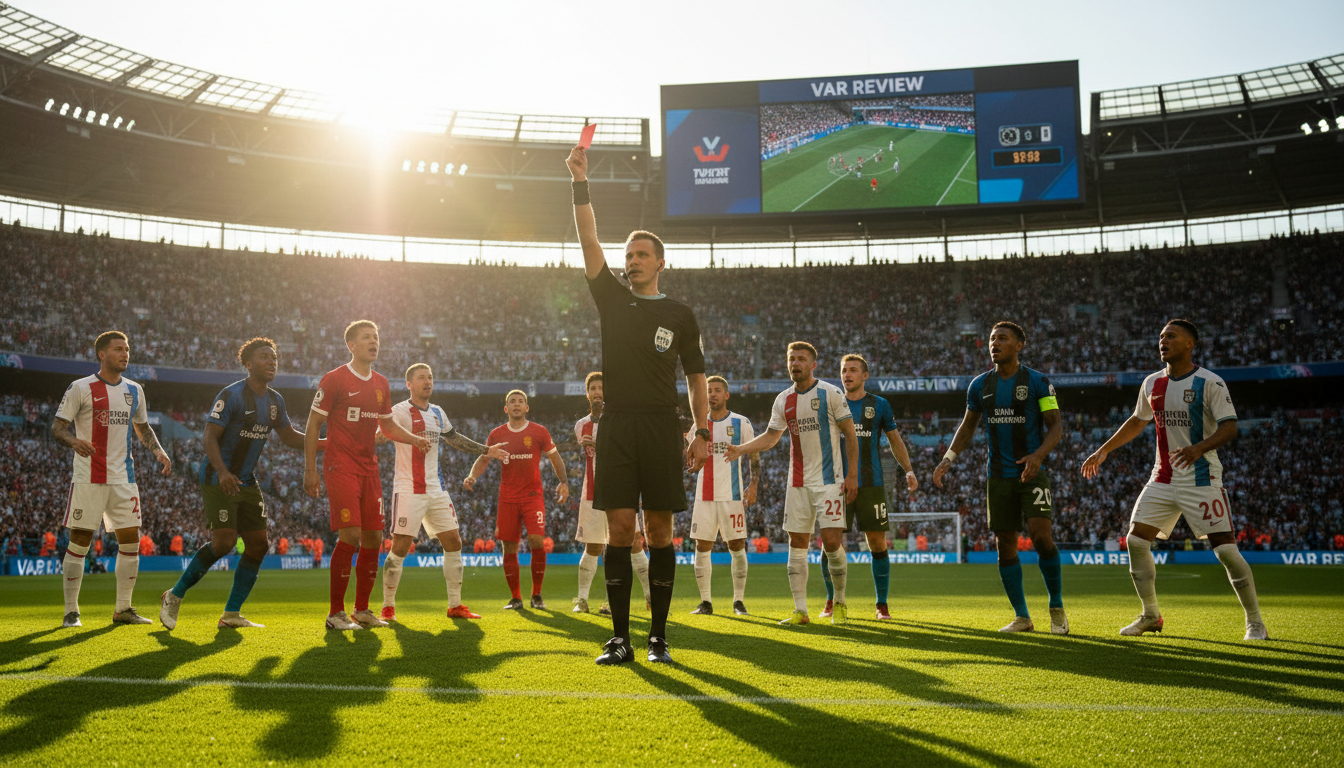
The 2026 FIFA World Cup, set to commence on 11 June 2026 across 16 venues in the United States, Canada, and Mexico, introduces a trio of significant rule enforcements confirmed by FIFA. These adjustments – the eight-second goalkeeper holding rule, the Euro 2024 captains-only protocol, and the widespread implementation of semi-automated offside technology – are poised to reshape game dynamics and, critically, influence betting markets. As we stand in April 2026, with the tournament merely weeks away, understanding the granular implications of these changes is paramount for informed analysis and strategic wagering.
The scale of the 2026 tournament is unprecedented, expanding to 104 matches, a substantial increase from the 64 matches played at Qatar 2022. This expansion necessitates a robust officiating structure, and FIFA has responded by confirming a match-officials list on 9 April 2026, comprising 52 referees, 88 assistant referees, and 30 video assistant referees. For context, Qatar 2022 utilized 36 referees for its 64 matches. This larger pool of officials, particularly the 30 video assistant referees, is designed to ensure full rest cycles between assignments, a factor that could contribute to more consistent and accurate decision-making across the demanding schedule. The integration of these new rules with an expanded, well-rested officiating team forms the crucible in which the 2026 World Cup will be contested, presenting both challenges and opportunities for teams and bettors alike.
The Eight-Second Goalkeeper Rule: A New Dimension for Possession and Set Pieces
The introduction of the eight-second rule for goalkeepers marks a definitive shift in how the game’s restart from the goalkeeper’s possession will be managed. Under this regulation, a goalkeeper cannot hold the ball for more than eight seconds. A first infraction will result in a warning, but a second offence will lead to a corner kick being awarded to the opposition. This is a more stringent enforcement than previous guidelines, which often allowed for more leeway, and it carries a direct and tangible consequence for repeated breaches.
For bettors, the implications of this rule are multifaceted. Firstly, it places immediate pressure on goalkeepers and their defensive units to initiate play more quickly. Teams that traditionally favor a slower build-up from the back, relying on their goalkeeper to survey options and dictate tempo, will need to adapt their strategies. This could manifest in several ways: a greater propensity for long clearances under pressure, an increased urgency in passing out from the back, or a higher risk of turnovers in dangerous areas if passes are rushed. The compressed timeframe for decision-making might lead to more hurried clearances or passes, potentially increasing the likelihood of errors that could translate into attacking opportunities for the opposition.
The most direct impact on betting markets, however, concerns set pieces. The threat of conceding a corner after a second offence is significant. Corner kicks are high-value situations in modern football, often leading to goal-scoring opportunities, and their frequency is a key metric for in-game betting. We could see an uptick in corner counts, particularly against teams whose goalkeepers are less adept at quick distribution or who are prone to time-wasting. This rule effectively formalizes a penalty for excessive ball retention by the goalkeeper, creating a direct pathway to a set-piece situation. Consequently, betting on ‘over’ markets for total corners in matches involving teams with less agile goalkeeping distribution could become a more viable strategy. Furthermore, the psychological pressure on goalkeepers to release the ball promptly might lead to more speculative or risky passes, which, if intercepted, could generate additional attacking phases for the opposition, indirectly influencing other markets such as shots on target or even first-half goals.
The interpretation and consistency of refereeing will also be critical. While the rule is seemingly straightforward, the precise moment the eight-second count begins and ends could be subject to slight variations between officials. Early tournament matches, particularly in the group stage, might see a learning curve for both players and referees, potentially leading to a higher number of initial infractions as teams adjust. This period of adaptation could present early opportunities for bettors who closely monitor referee tendencies and team responses. The underlying principle of tightened rule enforcement, as historical data indicates, often correlates with an increase in card totals across various markets. While this specific rule directly penalizes with a corner rather than a card, its stricter application contributes to an overall environment of heightened scrutiny, which can indirectly influence the broader flow of the game and referee tolerance for other minor infringements, potentially leading to more stoppages and a more fragmented game. The direct impact of conceding a corner, however, is a quantifiable and immediate consequence that bettors should track closely.
Captains-Only Protocol: Refining Player-Official Interaction and Card Markets
The captains-only protocol, a measure carried over from Euro 2024, is designed to streamline player-official interactions and reduce instances of dissent. Under this rule, only the designated team captain is permitted to approach the referee for clarifications or discussions regarding decisions. The intent is clear: to prevent multiple players from surrounding officials, thereby minimizing aggressive confrontations and allowing referees to manage the game more effectively without undue pressure. This protocol reflects a broader trend towards stricter enforcement of player conduct.
The direct implication for betting markets, particularly those related to disciplinary actions, is substantial. Historical data consistently shows that card totals over markets tend to rise in tournaments where rule enforcement is tightened. The captains-only protocol is a prime example of such a tightening. In previous tournaments, it was not uncommon for several players to express their displeasure vociferously, often resulting in multiple yellow cards for dissent within a single incident. With this new protocol, non-captains who approach the referee risk immediate disciplinary action, likely a yellow card, for violating the rule. This could lead to an increase in dissent-related bookings for players other than the captain.
Conversely, the captain’s role becomes even more critical. They are now the sole conduit for communication with the referee, bearing the responsibility of representing their team’s grievances while maintaining a respectful demeanor. This elevated responsibility might see captains exercising greater caution in their interactions, or it could lead to them being more frequently booked if they are perceived to be overstepping their bounds. The pressure on captains to manage both their team’s emotions and their own interactions with officials will be immense. Bettors should monitor teams with particularly vocal or confrontational non-captains, as these players are now at a higher risk of receiving cards for infractions that might have gone unpunished or received only a warning in previous tournaments.
The Euro 2024 experience provides a valuable precedent. While specific statistics from that tournament are not provided, the general observation regarding rule tightening and card totals holds. The protocol aims to create a more disciplined environment, and discipline often comes with a cost in the form of increased bookings during the initial adjustment phase. Teams that struggle to adapt to this stricter communication framework, especially those with players prone to emotional outbursts or a collective tendency to challenge decisions, are likely to see their card counts rise. This could influence markets for total cards, individual player bookings, and even game-changing red cards if players accumulate yellows for dissent. The enforcement will also test the temperament of referees, who must apply the rule consistently across all matches, ensuring that the disciplinary threshold for non-captains approaching them is clear and uniformly applied. This consistency, or lack thereof, will be a key factor for bettors to observe and integrate into their models.
Semi-Automated Offside: Precision, Pace, and the Rise of Set-Piece Goals
The 2026 FIFA World Cup will feature semi-automated offside technology live in all 16 host stadiums. This advanced system, building on previous VAR implementations, uses specialized cameras and sensors to rapidly and accurately determine offside positions, providing real-time data to VAR officials. The goal is to minimize the time taken for offside decisions and enhance their accuracy, thereby reducing controversy and ensuring a fairer outcome. This technological leap has profound implications for the pace of the game, goal-scoring patterns, and, crucially, betting markets.
A primary consequence of tougher offside review, as historical trends indicate, is an increase in the rate of set-piece goals. This might seem counterintuitive at first glance, but the mechanism is clear: highly accurate offside decisions mean fewer goals are wrongly awarded due to marginal offside calls. When a goal is disallowed for offside, possession is returned to the defending team via an indirect free-kick. This defensive free-kick, often taken from a deeper position, provides an opportunity for the defending team to reset, build an attack, or win a set piece further up the field. More precise offside calls inherently lead to more stoppages that result in free-kicks for the defending side, thus increasing the total number of set-piece situations over the course of a match. Moreover, the enhanced accuracy means that attacking teams will face a higher bar for legitimate goals, potentially leading to more situations where play is stopped just outside the penalty area for offside, again creating a set-piece opportunity for the opposition.
For bettors, this translates into a heightened focus on set-piece goal markets. Betting on specific players to score from set pieces, or on the total number of goals from set plays, could become more attractive. Teams with strong aerial threats and well-drilled set-piece routines may find an increased advantage under this system. Conversely, teams that rely heavily on intricate attacking movements that frequently push the boundaries of the offside line might see a higher percentage of their attacking phases curtailed by the precise technology. The speed of decision-making also means less ‘wait time’ for VAR reviews, which can maintain the flow of the game more effectively than previous, more manual VAR processes. However, the sheer accuracy will likely lead to a higher number of marginal calls being correctly identified as offside, impacting goal totals and potentially leading to more ‘under’ bets on total match goals in certain scenarios, particularly for matches involving teams whose attacking philosophy relies on exploiting tight offside margins.
The semi-automated offside system promises a level of consistency and objectivity in offside calls that has not been previously achievable. This consistency is a double-edged sword: while it reduces human error and controversy, it also removes the element of ‘benefit of the doubt’ that attackers might have received from human linesmen. This could shift the tactical approach of attacking coaches, encouraging more direct play or a greater emphasis on staying clearly onside. Bettors should pay close attention to how teams adapt their attacking strategies in the early stages of the tournament. The comprehensive implementation across all 16 venues ensures a uniform application of this technology, meaning no team will have an advantage or disadvantage based on the stadium they are playing in. This widespread integration underscores FIFA’s commitment to leveraging technology for precision, and its impact on the statistical landscape of the tournament, particularly concerning set-piece outcomes, is expected to be significant.
Expanded Tournament, Expanded Officiating: Consistency in a Larger Field
The 2026 FIFA World Cup represents a monumental expansion, with the tournament growing from 64 matches in Qatar 2022 to an unprecedented 104 matches across three host nations. This significant increase in fixtures naturally demands a corresponding expansion and careful management of the officiating team. FIFA’s confirmation on 9 April 2026 of 52 referees, 88 assistant referees, and 30 video assistant referees reflects a proactive approach to maintaining high standards of officiating across the expanded schedule. For comparison, Qatar 2022 utilized 36 referees for its 64 matches, underscoring the scale of this new deployment.
The larger pool of officials, particularly the 30 video assistant referees, is a critical component in ensuring the quality and consistency of decisions throughout the tournament. With 104 matches, the demands on VARs would be immense if the pool were not adequately expanded. The ground truth explicitly states that this number of VARs allows for “full rest cycles between assignments.” This detail is crucial. Well-rested officials are less prone to fatigue-induced errors, which can directly impact the accuracy and consistency of their decisions. In a tournament where semi-automated offside is being deployed and other rules are being tightened, the clarity and reliability of VAR interventions are paramount. For bettors, this suggests a potentially more predictable and less controversial application of VAR, which can reduce the variance associated with officiating errors and allow for more focused analysis of team performance and tactical execution.
The expanded roster of referees and assistant referees also aims to ensure that no single official is over-assigned, preserving their sharpness and judgment. Distributing 104 matches among 52 referees means each referee will, on average, officiate two matches, plus potential fourth official duties, allowing for adequate recovery and preparation. This structured approach to official management is designed to foster greater consistency in rule application across the entire tournament, from the group stages through to the final. Consistency in officiating is a key factor for bettors, as it helps to establish clear parameters for what constitutes a foul, a cardable offense, or an offside position. When officiating is consistent, betting models can more accurately predict outcomes related to disciplinary actions, set-piece counts, and overall game flow.
While the sheer number of matches presents logistical challenges, FIFA’s investment in a comprehensive and well-managed officiating team aims to mitigate risks associated with fatigue and inconsistency. The integration of advanced technology like semi-automated offside, coupled with a larger, better-rested human element, signifies a concerted effort to elevate the standard of officiating in line with the tournament’s expanded scope. For bettors, this should instill a degree of confidence in the fairness and accuracy of decisions, allowing for a sharper focus on team strengths, weaknesses, and tactical approaches rather than undue concern over officiating discrepancies. The success of this system will be a major determinant in the narrative of the 2026 World Cup.
The 2026 FIFA World Cup promises to be a tournament defined by its scale and its commitment to evolving the game through specific rule enforcements and technological advancements. The eight-second goalkeeper rule, the captains-only protocol, and semi-automated offside technology are not merely procedural adjustments; they are fundamental shifts that will directly influence match dynamics, player behavior, and, consequently, the landscape of betting markets. From increased corner counts and heightened card totals to a rise in set-piece goal opportunities, the astute bettor will meticulously track these changes and their real-time impact as the tournament unfolds from 11 June to 19 July 2026. The expanded pool of officials, designed to ensure consistency and rest, underpins FIFA’s ambition to deliver a World Cup that is both expansive and impeccably officiated, setting the stage for a compelling and analytically rich spectacle.
Sources: FIFA — official site, Wikipedia — 2026 FIFA World Cup
Related news
Mexico 2-0 South Africa: Quiñones, Jiménez and Three Red Cards in a Historic Opener
Mexico beat South Africa 2-0 at Estadio Azteca on Thursday 11 June to open the 2026…
17 Days Out: The 2026 World Cup Squad Announcement Week Is Complete
Brazil, Switzerland, Germany, England and Spain have all submitted their final 26. Argentina's cut lands 2…
Manuel Neuer’s Comeback at 40: Inside Germany’s Most Talked-About Goalkeeper Decision
Manuel Neuer has come out of international retirement to be Germany's No. 1 at the 2026…