Xavi Simons ACL Rupture Ends Netherlands’ 2026 World Cup Plans
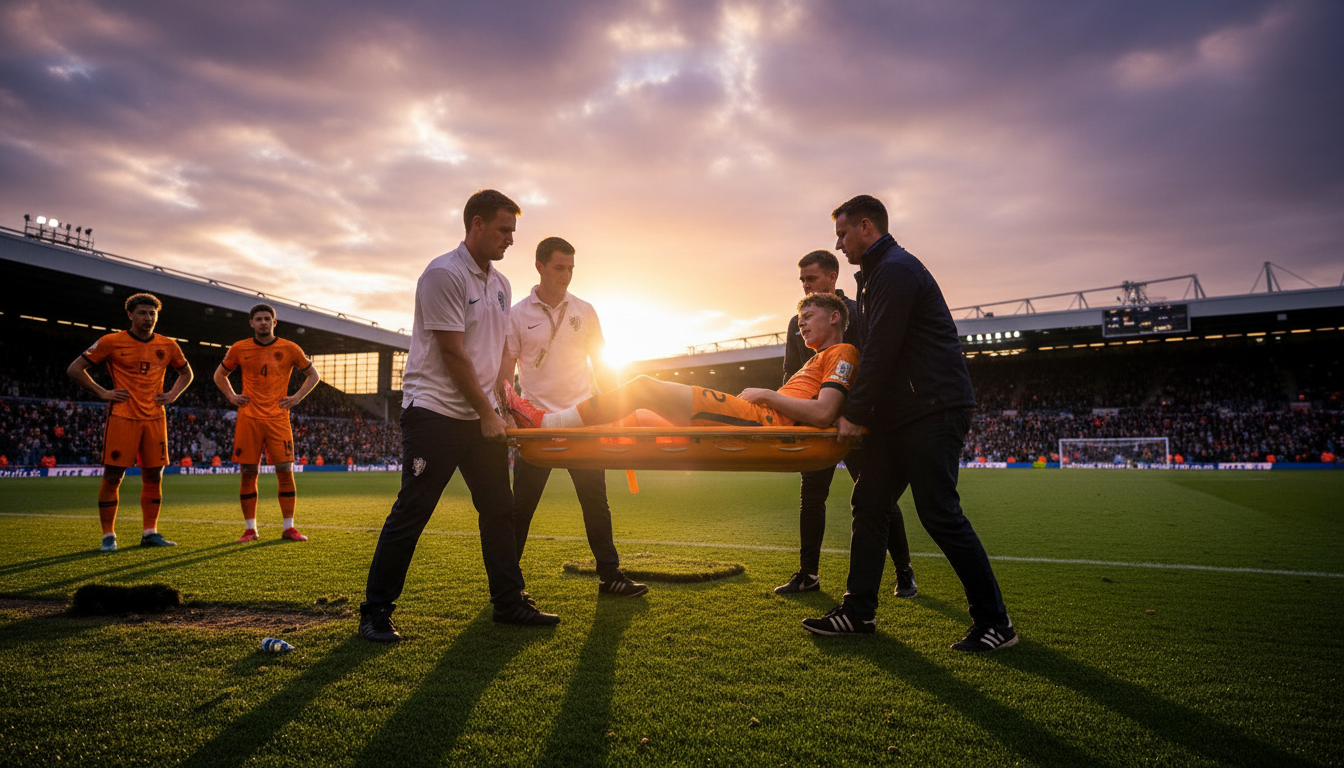
The footballing world, particularly the Netherlands national team setup and Tottenham Hotspur, is reeling from the devastating news that Xavi Simons has ruptured the anterior cruciate ligament (ACL) in his right knee. The injury, sustained in the second half of Tottenham’s Premier League match against Wolverhampton Wanderers on Saturday, immediately casts a long shadow over the 23-year-old playmaker’s immediate future and profoundly impacts two major campaigns: Tottenham’s desperate fight for Premier League survival and the Netherlands’ 2026 FIFA World Cup aspirations.
With the 2026 World Cup commencing in just six weeks, running from June 11 to July 19 across the United States, Canada, and Mexico, Simons’ absence represents a catastrophic blow for the Oranje. The projected starting No. 10, a player increasingly central to manager Ronald Koeman’s tactical vision, now faces an approximate 8-month recovery timeline. This duration ensures he will not only miss the remainder of the 2025-26 Premier League season but, more significantly, the entire global showpiece event. His social media post, expressing that he is ‘heartbroken’ to miss this critical period, encapsulates the personal toll of such an injury at a pivotal moment in his career and for his national team.
The Immediate Fallout for Tottenham’s Relegation Battle
For Tottenham, the timing of Simons’ injury could scarcely be worse. The club finds itself precariously positioned in the Premier League relegation zone, sitting third-to-last and two points adrift of safety with a mere four games remaining in the season. Losing a player of Simons’ calibre, a creative force and a key component of their attacking transitions, for these crucial fixtures severely complicates their already arduous task of avoiding the drop to the Championship. In a relegation dogfight, every player’s contribution is magnified, and the absence of a player who can unlock defences or provide moments of individual brilliance is keenly felt.
The remaining four matches represent a high-stakes sprint for survival, where psychological resilience and tactical adaptability will be paramount. Tottenham’s coaching staff must now scramble to reconfigure their midfield and attacking strategies, identifying players capable of stepping into the void left by Simons’ creativity and work rate. The psychological impact on the squad, already under immense pressure, of losing a prominent teammate to such a severe, season-ending injury cannot be understated. It adds another layer of adversity to an already challenging situation, demanding an even greater collective effort from the remaining fit players.
Compounding the immediate despair is the longer-term uncertainty surrounding Simons’ return to club football. With an 8-month recovery period, he is not expected back on the pitch until December 2026, at the earliest. By that time, Tottenham’s league status will have been long decided. The stark reality is that when Simons eventually makes his return, he could be playing in the Championship. This potential scenario adds a complex dimension to his rehabilitation and future career trajectory. A player of his talent and potential would undoubtedly be a significant asset in the second tier, but the prospect of returning from a career-altering injury to a different league context presents a unique set of challenges, both for the player and the club.
A Devastating Blow for the Oranje’s World Cup Hopes
While Tottenham grapples with domestic concerns, the reverberations of Simons’ injury are felt most acutely within the Netherlands national team. Manager Ronald Koeman now faces the unenviable task of completely reworking his attacking midfield plans just weeks before the World Cup kicks off. Simons, at 23, was not merely a squad player; he was a dynamic, youthful presence expected to be a pivotal creative engine for the Dutch side, linking midfield with attack and providing the inventive spark often crucial in major tournaments. His ability to operate in tight spaces, dictate tempo, and provide incisive passes makes him a unique asset that is difficult to replicate.
The World Cup represents the pinnacle of international football, a stage where individual brilliance often determines collective success. For a rising star like Simons, this was set to be his opportunity to stamp his authority on the global game. Missing out on such an experience due to injury is not just a physical setback but a profound emotional one, as his social media post clearly indicates. The timing is particularly cruel, coming so close to the tournament, leaving Koeman with minimal time to experiment and solidify new combinations. The tactical adjustments will extend beyond simply replacing one player; it could necessitate a broader rethinking of the team’s offensive structure and how they intend to break down opponents in Group F.
The Oranje have historically been known for their expressive, attacking football, often relying on creative midfielders and wingers to unlock defences. Simons embodied this tradition with a modern flair. His absence forces Koeman to re-evaluate the balance between creativity, control, and defensive solidity in the middle of the park. The manager must now not only select a replacement but also ensure that the chosen player can integrate seamlessly into the existing squad dynamics and tactical framework, all under the intense pressure of a World Cup countdown. This late-stage disruption introduces an element of uncertainty that no manager desires when preparing for the most important competition in international football.
Netherlands’ Group F Challenge and the Opening Match
The Netherlands’ path in the 2026 World Cup begins on June 14, when they open their Group F campaign against Japan at AT&T Stadium in Dallas. This opening fixture is always critical, setting the tone for a team’s tournament aspirations and often dictating the momentum for the subsequent matches. A strong performance and a positive result against Japan would be vital for building confidence and asserting their authority in a group that also features Sweden and Tunisia.
Group F presents a varied challenge for the Dutch. Japan, known for their technical proficiency and disciplined approach, will offer a stern test, particularly in the opening match where nerves and tactical surprises are often prevalent. Sweden, typically a physically robust and well-organized side, will demand a different kind of tactical response, likely involving a battle for midfield control and set-piece prowess. Tunisia, representing African football, will bring their own brand of athleticism and tactical unpredictability, often thriving on counter-attacks and energetic play. Each opponent requires a nuanced approach, and Simons’ ability to adapt his play and influence different phases of a game would have been invaluable.
Without Simons, Koeman must now assess how the team can maintain its creative edge and tactical flexibility against these diverse opponents. The emphasis will shift to other players to step up and provide the necessary spark. The opening match against Japan is even more critical now, as it will be the first competitive outing for the reconfigured Dutch midfield. The performance in Dallas will offer the first real indication of how well Koeman has managed to adapt to the significant loss, and whether the new midfield composition can effectively control the game and create goal-scoring opportunities against a well-drilled opponent. The psychological weight of starting the tournament without a key player adds another layer of pressure to an already high-stakes encounter.
The Road Ahead: Simons’ Grueling Recovery
An ACL rupture is one of the most severe injuries a footballer can sustain, demanding not only extensive physical rehabilitation but also immense mental fortitude. The approximate 8-month recovery timeline for Xavi Simons is a standard but challenging period, typically broken down into several distinct phases, each with its own specific demands and milestones. The initial phase involves reducing swelling, regaining full range of motion, and protecting the surgically repaired ligament. This is often followed by a period focused on rebuilding muscle strength, particularly in the quadriceps and hamstrings, which are crucial for knee stability.
As recovery progresses, Simons will transition to more sport-specific drills, gradually increasing intensity and complexity. This includes agility work, changes of direction, and eventually, ball work. The final stages involve reintegrating into team training, initially with non-contact drills, before progressing to full contact and competitive situations. Even after the 8-month mark, returning to peak match fitness and the psychological confidence required to compete at the highest level can take additional time. The mental aspect of recovery is often as challenging as the physical. Overcoming the fear of re-injury, trusting the repaired knee, and regaining the explosive power and agility that define an elite No. 10 requires immense dedication and resilience.
At 23 years old, Simons is at an age where his body is generally robust and capable of making a full recovery. However, the impact of such a significant injury on a player in their early prime cannot be underestimated. This period, from his early to mid-twenties, is often when players solidify their status and reach new heights in their careers. Missing a World Cup and a substantial portion of a club season at this juncture could potentially disrupt his development trajectory. Nevertheless, modern rehabilitation techniques and dedicated medical support offer a strong prognosis for a complete return to form. The challenge for Simons will be to maintain focus, adhere strictly to his rehabilitation program, and emerge from this setback stronger, both physically and mentally, ready to resume his career, potentially in a new league context with Tottenham.
Koeman’s Conundrum: Reworking the Midfield
Ronald Koeman’s immediate priority is to identify and integrate a suitable replacement for Simons in the attacking midfield role. The national team manager’s options are now under intense scrutiny, with several players likely to benefit from the unfortunate circumstance. The ground truth points to Tijjani Reijnders, Quinten Timber, or a younger No. 10 option as the likely beneficiaries. Each presents a different profile and tactical consideration for Koeman.
Tijjani Reijnders, a player who has shown consistent form and an ability to contribute both defensively and offensively, could offer a more balanced approach in the No. 10 role or as part of a midfield pivot with greater attacking license. His work rate and passing range might provide a different kind of control and link-up play than Simons. If selected, Koeman might lean towards a system that emphasizes collective movement and a slightly deeper creative presence, leveraging Reijnders’ ability to drive forward from midfield.
Quinten Timber, another promising talent, could provide a more direct and energetic presence. His attributes might lend themselves to a more dynamic, box-to-box No. 10, capable of breaking lines with runs and contributing to defensive pressing. Timber’s inclusion might suggest a slightly more aggressive, high-energy approach in the attacking midfield, potentially sacrificing some of the intricate playmaking Simons offered for more direct thrusts and physical presence. Koeman would need to weigh the benefits of his drive against the established rhythm of the team.
The mention of a ‘younger No. 10 option’ is also intriguing. This suggests Koeman might look to a player who perhaps hasn’t had as much senior international exposure but possesses the inherent creative attributes and vision to fill the void. This could be a gamble, introducing an unproven element into a World Cup squad, but it might also unearth a hidden gem. The tactical implications of such a choice would be significant, potentially requiring the team to adapt to a player still developing their understanding of international football, or conversely, benefiting from the fearless approach of youth.
Ultimately, Koeman’s decision will hinge on the tactical philosophy he wishes to employ for Group F and beyond. Does he prioritize a like-for-like replacement in terms of creative output, or does he opt for a different midfield dynamic, perhaps one that offers more defensive solidity or a greater directness in attack? The challenge is not just about individual talent but about how the chosen player integrates into the broader team structure, maintaining cohesion and ensuring the Netherlands can still compete at the highest level without their projected starting playmaker. The remaining weeks before the June 14 opener against Japan will be critical for Koeman to finalize his plans and instill confidence in his reconfigured midfield.
The unfortunate injury to Xavi Simons is a stark reminder of the fragility of sporting careers and the profound impact a single moment can have on both club and national team ambitions. For Tottenham, the loss deepens an already desperate fight for Premier League survival, potentially altering the club’s trajectory for the coming season. For the Netherlands, it necessitates a rapid and significant recalibration of their World Cup plans, forcing Ronald Koeman to navigate a major international tournament without a key creative force. As Simons embarks on his arduous 8-month recovery, the footballing world will watch closely to see how both his club and country adapt to this monumental setback in the demanding weeks and months ahead.
Sources: Sky Sports — Simons to miss rest of season and World Cup, FOX Sports — Simons out of World Cup and Tottenham’s relegation fight, Al Jazeera — ACL injury ends Simons’ World Cup dream, World Soccer Talk — Netherlands deal major blow
Sources

Related news
17 Days Out: The 2026 World Cup Squad Announcement Week Is Complete
Brazil, Switzerland, Germany, England and Spain have all submitted their final 26. Argentina's cut lands 2…
Manuel Neuer’s Comeback at 40: Inside Germany’s Most Talked-About Goalkeeper Decision
Manuel Neuer has come out of international retirement to be Germany's No. 1 at the 2026…
Lennart Karl Makes Germany’s 26: Bayern’s Teenage Attacker Earns His World Cup Call
Lennart Karl, Bayern Munich's teenage attacking midfielder, has made Julian Nagelsmann's final Germany 26. Alongside Cologne's…